 Arabic
| Key Takeaways |
| The Arabic dual (المثنى, Al-Muthanna) is a dedicated grammatical number category, distinct from singular and plural, used exclusively for exactly two of anything. |
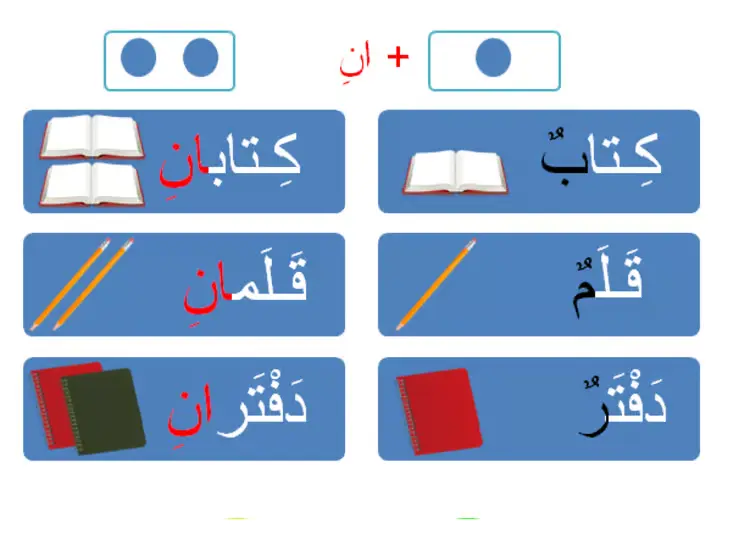
| Forming the dual adds the suffix ـانِ (-āni) in the nominative case and ـيْنِ (-ayni) in the accusative and genitive cases to the singular noun. |
| Dual nouns in Arabic agree with verbs, adjectives, and pronouns — all must carry dual markers for grammatically correct sentences. |
| Broken plurals in Arabic do not apply to the dual — the dual form is always regular and predictable, making it one of the easiest Arabic grammar rules to master. |
Arabic is one of the few languages on earth that grammatically distinguishes between one, two, and many — and that middle category, the dual, trips up almost every English speaker we teach. English simply doesn’t have it.
In Arabic grammar, the dual (المثنى, Al-Muthanna) is a fully systematic, rule-governed form. Once you learn its two suffixes and understand how they interact with case, gender, and sentence structure, you can form and read dual nouns in Arabic with complete confidence — in conversation, in reading, and in the Quran itself.
Table of Contents:
What Are Dual Nouns in Arabic?
The Arabic dual (المثنى, Al-Muthanna — literally “the doubled one”) is a grammatical number category that refers to exactly two of something. Al-Muthanna sits between the singular (المفرد, Al-Mufrad) and the plural (الجمع, Al-Jam’), and it is mandatory — you cannot use any other number form when referring to precisely two.
This is the first thing we emphasize in our Arabic Grammar Course at Buruj Academy: the dual is not optional in Arabic the way “both” or “a pair of” are optional in English. If there are two of something, Arabic grammar requires the dual form — no exceptions.
The Three Arabic Number Categories Compared
| Category | Arabic Term | Transliteration | Example (كتاب / book) |
| Singular | المفرد | Al-Mufrad | كِتَابٌ (kitābun) — a book |
| Dual | المثنى | Al-Muthanna | كِتَابَانِ (kitābāni) — two books |
| Plural | الجمع | Al-Jam’ | كُتُبٌ (kutubun) — books |
The dual is always formed from the singular base — not from the plural. This is particularly important because Arabic plurals are often irregular (broken plurals), while the dual is always regular and predictable.
Understand the Arabic Grammar with Buruj’s free trial lesson

How Do You Form Dual Nouns in Arabic Grammar?
Forming the dual in Arabic requires adding one of two suffixes to the singular noun, depending on grammatical case. The Arabic grammatical term for case is الإعراب (Al-I’rāb), and the dual has two distinct case endings.
At Buruj Academy, our Al-Azhar-trained Arabic instructors teach this as a two-suffix system from day one — because once students see the pattern, they can apply it to virtually any noun immediately.
The Two Dual Suffixes in Arabic
| Grammatical Case | Case Name (Arabic) | Transliteration | Suffix Added | Example (بيت / house) |
| Nominative (subject) | حالة الرفع | Hālat Al-Raf’ | ـانِ (-āni) | بَيْتَانِ (baytāni) |
| Accusative / Genitive (object / after preposition) | حالة النصب والجر | Hālat Al-Naṣb wal-Jarr | ـيْنِ (-ayni) | بَيْتَيْنِ (baytayni) |
The nominative suffix ـانِ (-āni) is used when the dual noun is the subject of the sentence (الفاعل, Al-Fā’il, or the topic in a nominal sentence).
The accusative/genitive suffix ـيْنِ (-ayni) is used when the dual noun is the object of a verb (المفعول به, Al-Maf’ūl bihi) or follows a preposition (حرف الجر, Ḥarf Al-Jarr).
How to Build a Dual Noun in Arabic?
- Start with the singular noun in its base form
- Remove any nunation (تنوين, tanwīn) from the end
- Add ـانِ for nominative or ـيْنِ for accusative/genitive
Masculine Dual Nouns in Arabic with Examples
Masculine nouns (المذكر, Al-Mudhakkar) are the straightforward starting point. The suffix attaches directly to the singular base.
In our sessions with beginners at Buruj Academy, we start with concrete, everyday words before moving to abstract nouns — the mental image of two specific objects anchors the grammar rule far better than abstract explanation.
Masculine Dual Examples Table
| Singular | Meaning | Dual (Nominative) | Dual (Acc./Gen.) | Meaning |
| وَلَدٌ (waladun) | a boy | وَلَدَانِ (waladāni) | وَلَدَيْنِ (waladayni) | two boys |
| كِتَابٌ (kitābun) | a book | كِتَابَانِ (kitābāni) | كِتَابَيْنِ (kitābayni) | two books |
| مُعَلِّمٌ (mu’allimun) | a teacher | مُعَلِّمَانِ (mu’allimāni) | مُعَلِّمَيْنِ (mu’allimayni) | two teachers |
| بَابٌ (bābun) | a door | بَابَانِ (bābāni) | بَابَيْنِ (bābayni) | two doors |
| يَوْمٌ (yawmun) | a day | يَوْمَانِ (yawmāni) | يَوْمَيْنِ (yawmayni) | two days |
Masculine Dual in Full Sentences
جَاءَ الْمُعَلِّمَانِ
Jā’a al-mu’allimāni.
The two teachers came.
Here, المعلمان is the subject (مرفوع, marfū’), so it takes ـانِ.
رَأَيْتُ الْمُعَلِّمَيْنِ
Ra’aytu al-mu’allimayni.
I saw the two teachers.
Here, المعلمين is the object (منصوب, manṣūb), so it takes ـيْنِ.
ذَهَبْتُ مَعَ الْمُعَلِّمَيْنِ
Dhahabtu ma’a al-mu’allimayni.
I went with the two teachers.
After the preposition مع (ma’a), the noun is majrūr (مجرور), so it also takes ـيْنِ.
Our Arabic Classes for Kids follow exactly this immersive, pattern-first approach before introducing grammatical terminology.
Book a FREE Arabic trial for your Child

Feminine Dual Nouns in Arabic with Examples
Feminine nouns (المؤنث, Al-Mu’annath) follow the same dual suffix pattern, with one important step: the feminine marker ة (tā’ marbūṭa) must first be converted to ت (tā’ maftūḥa) before the dual suffix is added.
This is the step most students miss in self-study. Understanding Arabic grammar basics thoroughly before tackling noun morphology saves significant confusion at this stage.
Formation Rule for Arabic Feminine Dual Nouns
Singular with ة → Remove ة → Write ت → Add ـانِ or ـيْنِ
Example: مَدْرَسَةٌ (madrasatun, school) → مَدْرَسَـ + تَانِ = مَدْرَسَتَانِ (madrasatāni) — two schools
Arabic Feminine Dual Examples Table
| Singular | Meaning | Dual (Nominative) | Dual (Acc./Gen.) | Meaning |
| بِنْتٌ (bintun) | a girl | بِنْتَانِ (bintāni) | بِنْتَيْنِ (bintayni) | two girls |
| مَدْرَسَةٌ (madrasatun) | a school | مَدْرَسَتَانِ (madrasatāni) | مَدْرَسَتَيْنِ (madrasatayni) | two schools |
| غُرْفَةٌ (ghurfatun) | a room | غُرْفَتَانِ (ghurfatāni) | غُرْفَتَيْنِ (ghurfatayni) | two rooms |
| سَيَّارَةٌ (sayyāratun) | a car | سَيَّارَتَانِ (sayyāratāni) | سَيَّارَتَيْنِ (sayyāratayni) | two cars |
| جَامِعَةٌ (jāmi’atun) | a university | جَامِعَتَانِ (jāmi’atāni) | جَامِعَتَيْنِ (jāmi’atayni) | two universities |
Master the Arabic Language
Join our expert-led courses and build a strong foundation in Classical and Modern Arabic.
Get Your Free TrialArabic Feminine Dual in Full Sentences
فِي الْبَيْتِ غُرْفَتَانِ
Fī al-bayti ghurfatāni.
In the house, there are two rooms.
غُرْفَتَانِ is the subject-complement in a nominal sentence, so it takes ـانِ.
فَتَحْتُ الْغُرْفَتَيْنِ. (Fataḥtu al-ghurfatayni.) — “I opened the two rooms.” — Object position → ـيْنِ.
Examples of Singular, Dual, and Plural in Arabic Side by Side
One of the most effective teaching tools we use is the full three-way comparison table. Seeing singular, dual, and plural together — especially with broken plurals — reveals exactly how distinctive and regular the dual form is.
For anyone working through learning Arabic vocabulary, this table is a reference to keep close.
Singular, Dual, and Plural Comparison Table
| Singular | Meaning | Dual | Plural (Broken/Sound) | Plural Meaning |
| كِتَابٌ (kitābun) | book | كِتَابَانِ / كِتَابَيْنِ | كُتُبٌ (kutubun) | books |
| وَلَدٌ (waladun) | boy | وَلَدَانِ / وَلَدَيْنِ | أَوْلَادٌ (awlādun) | boys |
| مَدِينَةٌ (madīnatun) | city | مَدِينَتَانِ / مَدِينَتَيْنِ | مُدُنٌ (mudunun) | cities |
| رَجُلٌ (rajulun) | man | رَجُلَانِ / رَجُلَيْنِ | رِجَالٌ (rijālun) | men |
| طَالِبٌ (ṭālibun) | student | طَالِبَانِ / طَالِبَيْنِ | طُلَّابٌ (ṭullābun) | students |
| يَدٌ (yadun) | hand | يَدَانِ / يَدَيْنِ | أَيْدٍ (aydin) | hands |
Notice that while the plural forms change dramatically and unpredictably (broken plural), the dual is always formed the same way — ـانِ or ـيْنِ on the singular base.
How Do Dual Nouns Behave in Arabic Sentence Structure?
Arabic dual nouns are not grammatically isolated — they trigger agreement (المطابقة, Al-Muṭābaqa) across the entire sentence. Verbs, adjectives, and pronouns must all reflect the dual when the noun they refer to is dual.
Understanding Arabic sentence structure is essential here, because dual agreement operates differently depending on whether the sentence is verbal (جملة فعلية, Jumla Fi’liyya) or nominal (جملة اسمية, Jumla Ismiyya).
1. Dual Agreement: Verbs with Dual Subjects
In a verbal sentence, when the subject is dual and precedes the verb, the verb must also carry the dual marker.
الطَّالِبَانِ يَدْرُسَانِ
Aṭ-ṭālibāni yadrusāni.
The two students study.
Both the subject (طالبان) and the verb (يدرسان) carry dual markers.
البِنْتَانِ تَلْعَبَانِ. (Al-bintāni tal’abāni.) — “The two girls play.”
Note: When the verb comes before the subject in Arabic, the verb stays singular — this is a separate rule of Arabic verbal agreement worth studying alongside the dual.
2. Dual Agreement: Adjectives with Dual Nouns
Adjectives (النعت, Al-Na’t) must match the noun they describe in number, gender, and definiteness.
طَالِبَانِ مُجْتَهِدَانِ
ṭālibāni mujtahidāni
two hardworking students”
Masculine dual noun + masculine dual adjective
طَالِبَتَانِ مُجْتَهِدَتَانِ
ṭālibatāni mujtahidatāni
two hardworking female students
Feminine dual noun + feminine dual adjective
Key Differences of Dual Nouns in Arabic and English
English speakers learning Arabic consistently make the same errors around the dual — and we see this pattern repeatedly across students from the UK, US, Canada, and Australia in our Buruj Academy online Arabic classes.
Book your FREE Arabic trial online Arabic class at Buruj

The Four Most Common Dual Errors English Speakers Make
Error 1 — Using the plural instead of the dual.
English speakers instinctively reach for the plural when referring to two things, because English has no dual. In Arabic, “two books” is كِتَابَانِ — never كُتُبٌ.
Error 2 — Forgetting case change from ـانِ to ـيْنِ.
Students learn the nominative form first, then apply it everywhere. After a preposition or as an object, the form must change to ـيْنِ.
Error 3 — Skipping the ة → ت conversion in feminine nouns.
Writing مَدْرَسَةَانِ instead of مَدْرَسَتَانِ is a visible error that points to a missed rule.
Error 4 — Failing to apply dual agreement to the verb or adjective.
Saying الطَّالِبَانِ يَدْرُسُ instead of يَدْرُسَانِ treats the dual noun as singular.
Discover the Buruj Academy Difference
Step into our virtual classrooms and see how our expert instructors make learning Quran and Arabic intuitive and clear. We focus on overcoming the specific hurdles non-native speakers face, building your confidence and connection with the Quran.
Master Arabic Grammar with Buruj Academy’s Expert Instructors
Arabic grammar rules like the dual become permanent when taught in context, with immediate correction and guided practice. Buruj Academy’s Arabic Grammar Course is built for exactly this — systematic, practitioner-led instruction by Al-Azhar University graduates with 12+ years of experience teaching non-native speakers.
- Ijazah-certified instructors and Al-Azhar graduates
- The Buruj Method: Context-before-abstraction for genuine comprehension
- Personalized 1-on-1 online sessions with real-time correction
- Flexible 24/7 scheduling for students worldwide
- Clear progression from beginner to advanced Arabic mastery
- A dedicated Arabic for Beginners course for those starting from zero
Book your free trial lesson today at Buruj Academy and experience structured Arabic grammar instruction that actually sticks.
Begin your transformation today by choosing the path that fits your goals:
- Online Arabic Classes (General & Comprehensive)
- Arabic Course for Beginners
- Arabic Alphabet Learning Course
- Online Arabic Classes for Kids
- Arabic Classes for Adults
- Arabic Grammar Course (Nahw & Sarf)
- Intermediate Arabic Course (B1/B2)
- Arabic Speaking Course (Conversational Fluency)
- Arabic Reading Course (Literary Excellence)
- Learn Arabic Writing Course (Calligraphy & Composition)
Ready to speak with confidence? Join the global community at Buruj Academy and book your free placement interview today!
Master the Arabic Language
Join our expert-led courses and build a strong foundation in Classical and Modern Arabic.
Get Your Free TrialConclusion
The Arabic dual (المثنى, Al-Muthanna) is one of the most elegant features of Arabic grammar — precise, regular, and deeply embedded in both everyday speech and Quranic language. With just two suffixes (ـانِ and ـيْنِ), a clear formation rule for feminine nouns, and an understanding of grammatical agreement, you gain the ability to correctly form and read every dual noun you encounter.
Mastering the dual also opens a direct window into Quranic comprehension, where Al-Muthanna appears throughout in passages of profound meaning. Build this foundation carefully, practice with real sentences, and the dual will become second nature — Insha’Allah.
Frequently Asked Questions About Dual Nouns in Arabic
What Is the Difference Between Dual and Plural in Arabic Grammar?
The dual (المثنى, Al-Muthanna) refers to exactly two of something and is always formed regularly by adding ـانِ or ـيْنِ to the singular. The plural (الجمع, Al-Jam’) refers to three or more and often takes unpredictable broken plural forms. You cannot use the plural when referring to two — Arabic grammar requires the dual form.
How Do You Form the Dual of a Feminine Noun in Arabic?
To form the dual of a feminine noun ending in ة (tā’ marbūṭa), convert the ة to ت (tā’ maftūḥa), then add ـانِ (nominative) or ـيْنِ (accusative/genitive). For example: غُرْفَةٌ (room) → غُرْفَتَانِ (two rooms, subject) or غُرْفَتَيْنِ (two rooms, object/after preposition).
When Do You Use ـانِ vs. ـيْنِ for Dual Nouns in Arabic?
Use ـانِ (-āni) when the dual noun is the subject of the sentence (nominative/مرفوع case). Use ـيْنِ (-ayni) when it is the object of a verb (accusative/منصوب) or follows a preposition (genitive/مجرور). Both forms mean “two,” but case determines which suffix is grammatically required.
Do Verbs and Adjectives Change When Used with Dual Nouns in Arabic?
Yes — Arabic requires full grammatical agreement (المطابقة, Al-Muṭābaqa). When a dual noun is the subject, the verb must carry the dual marker (e.g., يَدْرُسَانِ for masculine dual, تَدْرُسَانِ for feminine dual). Adjectives describing a dual noun must also take the dual suffix matching the noun’s gender and case.
Is the Dual Used in the Quran, and Why Does It Matter?
The Quran uses the dual extensively — recognizing ـانِ and ـيْنِ in Quranic text directly improves comprehension of verse meanings and grammatical structure. Verses like Ar-Rahman 55:46 (جَنَّتَانِ — “two gardens”) are grammatically built on the dual. For anyone studying Quranic Arabic, Al-Muthanna is an essential early milestone.