 Quran
Quran
Illness, grief, anxiety, and hardship are part of every human life — and Muslims have always turned to the Quran as their first and deepest source of relief. The Quran describes itself explicitly as a healing (shifa) for what resides in the hearts, and authentic hadith traditions confirm specific surahs carry extraordinary healing properties.
The best Quran surah for healing is Surah Al-Fatiha, known classically as Ash-Shifa — the Cure. Alongside it, Surah Al-Baqarah, Ayat Al-Kursi, and the three Quls (Al-Ikhlas, Al-Falaq, An-Nas).
Table of Contents:
What Makes a Surah a Healing Surah in the Quran?
A healing surah (surah shifa) in the Quran is one whose healing status is confirmed by authentic hadith, Quranic self-description, or consensus among classical Islamic scholars — not popular tradition or cultural practice alone. The Quran states in Surah Al-Isra:
وَنُنَزِّلُ مِنَ ٱلْقُرْءَانِ مَا هُوَ شِفَآءٌ وَرَحْمَةٌ لِّلْمُؤْمِنِينَ
Wa nunazzilu minal-Qur’ani ma huwa shifa’un wa rahmatun lil-mu’minin
“And We send down of the Quran that which is a healing and a mercy to the believers.” (Al-Isra 17:82)
Healing is a foundational quality of the Quran itself. What distinguishes the best healing surahs is the directness and authenticity of prophetic endorsement.
At Buruj Academy, our Quran Recitation course teaches students not only how to recite these surahs but why — connecting the spiritual purpose of each surah to the practitioner’s emotional and physical state during recitation.
Book your first FREE recitation lesson
Which Surah in the Quran Is for Healing?
The Prophet Muhammad ﷺ identified specific surahs for healing through practice and explicit statement. These are not scholarly opinions — they are Prophetically established.
Surah Al-Fatiha is The Greatest Healing Surah in the Quran
Surah Al-Fatiha is the single most authenticated healing surah in the entire Quran. The Prophet ﷺ himself confirmed its healing power through direct instruction and living example.
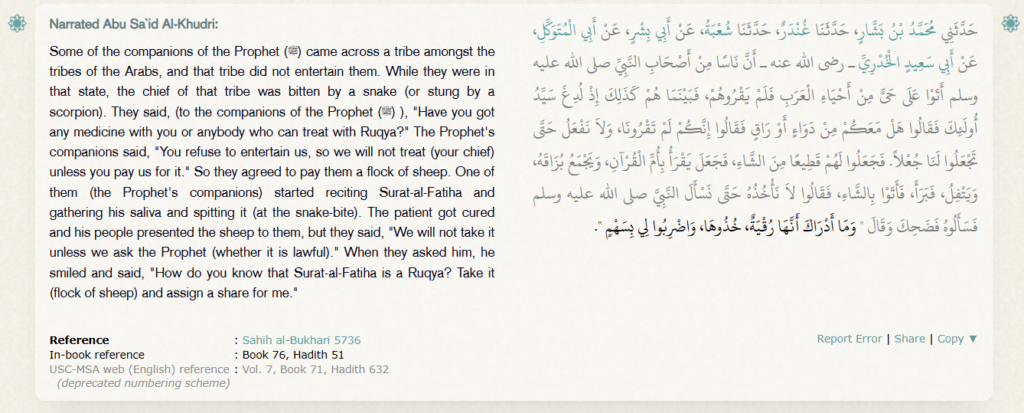
In Sahih al-Bukhari 5736, a companion performed ruqyah on a snake-bitten man by reciting Al-Fatiha over him, and the man was cured. When the Prophet ﷺ learned of this, he said: “How did you know that it is a ruqyah?” — thereby affirming the practice.
The surah is known among classical scholars by several names, including Ash-Shifa (the Cure), Ar-Ruqyah (the Incantation), and Umm Al-Kitab (the Mother of the Book).
بِسْمِ ٱللَّهِ ٱلرَّحْمَٰنِ ٱلرَّحِيمِ ﴿١﴾ ٱلْحَمْدُ لِلَّهِ رَبِّ ٱلْعَٰلَمِينَ ﴿٢﴾ ٱلرَّحْمَٰنِ ٱلرَّحِيمِ ﴿٣﴾ مَٰلِكِ يَوْمِ ٱلدِّينِ ﴿٤﴾ إِيَّاكَ نَعْبُدُ وَإِيَّاكَ نَسْتَعِينُ ﴿٥﴾ ٱهْدِنَا ٱلصِّرَٰطَ ٱلْمُسْتَقِيمَ ﴿٦﴾ صِرَٰطَ ٱلَّذِينَ أَنْعَمْتَ عَلَيْهِمْ غَيْرِ ٱلْمَغْضُوبِ عَلَيْهِمْ وَلَا ٱلضَّآلِّينَ ﴿٧﴾
Bismi Allahi alrrahmani alrraheemi (1) Alhamdu lillahi rabbi alAAalameena (2) Alrrahmani alrraheemi (3) Maliki yawmi alddeeni (4) Iyyaka naAAbudu waiyyaka nastaAAeenu (5) Ihdina alssirata almustaqeema (6) Sirata allatheena anAAamta AAalayhim ghayri almaghdoobi AAalayhim wala alddalleena (7)
“In the name of Allah, the Entirely Merciful, the Especially Merciful. (1) [All] praise is [due] to Allah, Lord of the worlds – (2) The Entirely Merciful, the Especially Merciful, (3) Sovereign of the Day of Recompense. (4) It is You we worship and You we ask for help. (5) Guide us to the straight path – (6) The path of those upon whom You have bestowed favor, not of those who have evoked [Your] anger or of those who are astray. (7)” (Al-Fatiha 1:1–2)
Recited with full presence of heart — this is the opening of every authentic ruqyah
What makes Al-Fatiha uniquely powerful as a healing surah is its completeness: it opens with hamd (praise), moves through tawassul (seeking means through Allah’s Names), and concludes with du’a (supplication for guidance).
This is the full arc of a believer’s relationship with Allah — compressed into seven verses.
Read also: Quran Surahs for Anxiety and Depression
Surah Al-Baqarah is The Quran Surah for Good Health and Protection
Surah Al-Baqarah is the longest surah in the Quran and carries a specific protective and healing function confirmed by authentic hadith. The Prophet ﷺ described it as a zahra — a radiant light — and warned that Shaytan flees from homes where it is recited.
In Sahih Muslim 804a, the Prophet ﷺ said: “Recite Surah Al-Baqarah, for taking to it is a blessing and giving it up is a cause of grief.” This framing — barakah for those who hold it, hasra (loss) for those who abandon it — places Al-Baqarah in a unique category: a surah whose absence itself causes harm.
For students in our Online Hifz Program, we consistently observe that those who memorize Al-Baqarah report increased emotional stability and a measurable reduction in anxiety during life stress — a pattern our Al-Azhar-trained instructors attribute to the surah’s daily presence in the student’s heart and mind.
Start Hifz today with a FREE trial session
The surah contains Ayat Al-Kursi (2:255) — widely recognized as the greatest single verse in the Quran for spiritual protection and health recovery.
ٱللَّهُ لَآ إِلَٰهَ إِلَّا هُوَ ٱلْحَىُّ ٱلْقَيُّومُ ۚ لَا تَأْخُذُهُۥ سِنَةٌ وَلَا نَوْمٌ ۚ لَّهُۥ مَا فِى ٱلسَّمَٰوَٰتِ وَمَا فِى ٱلْأَرْضِ ۗ مَن ذَا ٱلَّذِى يَشْفَعُ عِندَهُۥٓ إِلَّا بِإِذْنِهِۦ ۚ يَعْلَمُ مَا بَيْنَ أَيْدِيهِمْ وَمَا خَلْفَهُمْ ۖ وَلَا يُحِيطُونَ بِشَىْءٍ مِّنْ عِلْمِهِۦٓ إِلَّا بِمَا شَآءَ ۚ وَسِعَ كُرْسِيُّهُ ٱلسَّمَٰوَٰتِ وَٱلْأَرْضَ ۖ وَلَا يَـُٔودُهُۥ حِفْظُهُمَا ۚ وَهُوَ ٱلْعَلِىُّ ٱلْعَظِيمُ ﴿٢٥٥﴾
Allahu la ilaha illa huwa alhayyu alqayyoomu la takhuthuhu sinatun wala nawmun lahu ma fee alssamawati wama fee alardi man tha allathee yashfaAAu AAindahu illa biithnihi yaAAlamu ma bayna aydeehim wama khalfahum wala yuheetoona bishayin min AAilmihi illa bima shaa wasiAAa kursiyyuhu alssamawati waalarda wala yaooduhu hifthuhuma wahuwa alAAaliyyu alAAatheemu (255)
“Allah – there is no deity except Him, the Ever-Living, the Sustainer of [all] existence. Neither drowsiness overtakes Him nor sleep. To Him belongs whatever is in the heavens and whatever is on the earth. Who is it that can intercede with Him except by His permission? He knows what is [presently] before them and what will be after them, and they encompass not a thing of His knowledge except for what He wills. His Kursi extends over the heavens and the earth, and their preservation tires Him not. And He is the Most High, the Most Great. (255)” (Al-Baqarah 2:255)
Al-Qayyum — the Self-Sustaining Sustainer of all — is the Name that scholars connect most directly to healing: He who upholds all existence can restore any part of it.
Excel in Your Quranic Studies
Join Buruj Academy and master the Quran with our structured, professional curriculum.
Book Your Free TrialThe Three Quls Are the Healing Surah Quran Triad for Daily Protection
The three Quls — Surah Al-Ikhlas (112), Surah Al-Falaq (113), and Surah An-Nas (114) — form the most commonly practiced healing and protection recitation in the Prophetic tradition. Together, they address the three primary sources of harm: theological corruption, external evil, and internal evil.
| Surah | Primary Function | What It Heals/Protects Against |
| Al-Ikhlas (112) | Affirming Allah’s absolute oneness | Spiritual misguidance, theological confusion, weak faith |
| Al-Falaq (113) | Seeking refuge from external harm | Evil eye, envy, witchcraft, physical illness |
| An-Nas (114) | Seeking refuge from internal whispering | Anxiety, waswas (intrusive thoughts), emotional disturbance |
In Sahih al-Bukhari 5017, A’isha (may Allah be pleased with her) narrated that the Prophet ﷺ would blow over his body after reciting the three Quls every night before sleep — cupping his hands, reciting, and passing them over his body three times. This is the most authenticated physical healing practice connected to these surahs.
Students who enroll in our Short Surah Memorization course begin with Juz 30, which includes all three Quls. Our instructors ensure that students understand the meaning and function of each surah — not merely its pronunciation.
Book Your Kid’s First Session in Buruj’s Juz 30 Memorization Course
How to Recite the Healing Surahs: The Correct Practice of Ruqyah
Ruqyah is the Islamic practice of reciting Quranic verses and authentic supplications for healing — for oneself or another. It is a prophetically established Sunnah, not superstition. The conditions for valid, effective ruqyah are clear in classical scholarship.
Three foundational conditions apply:
The recitation must be from the Quran or authentic prophetic supplications. It must be in Arabic, recited correctly and clearly. The reciter and the person being recited upon must have firm belief (yaqeen) that healing comes from Allah alone — the Quran is the means, not the source.
In our sessions at Buruj Academy, the most consistent observation our instructors make is this: students who recite healing surahs with Tajweed accuracy — proper makhraj (articulation point), correct madd (elongation), and conscious meaning — report a qualitatively different experience than those who rush through them mechanically.
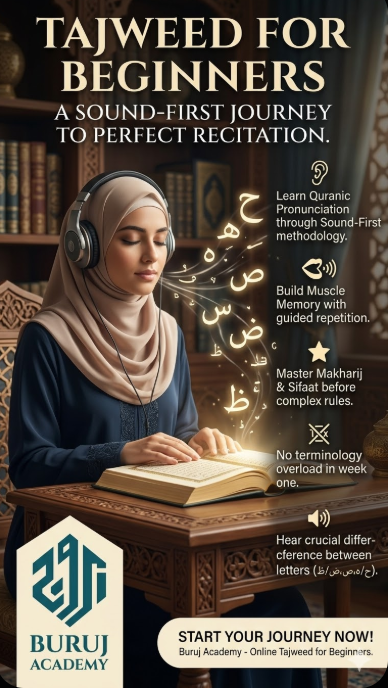
If you want to strengthen your recitation of these surahs, our Tajweed for Beginners course provides the foundation — starting from sound recognition before rule memorization, exactly as the Buruj Method prescribes.
Book Your FREE Trial Lesson to Begin Your Tajweed Journey
Connect Healing to Consistent Quran Reading for Long-Term Spiritual Health
The healing properties of Quran surahs are not a one-time remedy — they are amplified through consistent, daily engagement with the Quran. The Prophet ﷺ’s companions did not recite Al-Fatiha only when ill; they lived with these surahs as daily companions.
If you are still building your reading foundation, our guide on reading the Quran for the first time provides a structured, anxiety-free starting point for complete beginners.
And for those who want to understand how consistent recitation transforms the spiritual state over time, the benefits of reading Quran covers the full Islamic and practical picture.
For those pursuing memorization of these healing surahs, learning how to memorize Quran faster ensures that what enters the memory also enters the heart — which is precisely where healing begins.
Read also: Best Quran Surah for Success
Discover the Buruj Academy Difference
Step into our virtual classrooms and see how our expert instructors make learning Quran and Arabic intuitive and clear. We focus on overcoming the specific hurdles non-native speakers face, building your confidence and connection with the Quran.
Begin Your Journey with Buruj Academy’s Expert Quran Instructors
The healing surahs of the Quran are most powerful when recited correctly, consistently, and with understanding. Mispronunciation of Al-Fatiha — even in a single letter — can alter meaning. This is why proper instruction matters.
Buruj Academy offers personalized Online Quran Recitation courses taught by Ijazah-certified, Al-Azhar University graduates with 12+ years of experience teaching non-Arabic speaking Muslims globally.
Our instructors ensure you recite every healing surah with correct Tajweed, proper understanding, and confident daily practice.
- Flexible 1-on-1 online sessions, 24/7 scheduling
- The Buruj Method: Sound-before-rules, Patience-before-performance
- Real-time correction tailored to your accent and level
- Proven progression from beginner to confident recitation
Book your free trial lesson today and begin reciting these surahs the way the Prophet ﷺ intended.
Take the next step in your learning journey today by enrolling in one of our specialized programs:
- Online Quran Classes
- Online Quran Classes for Beginners
- Online Quran Classes for Adults
- Online Quran Classes for Ladies
- Online Quran Classes for Kids
- Quran Reading Course
- Quran Recitation Course
- Online Ijazah Course
- Online Qirat Course
Don’t wait to transform your relationship with the Holy Quran. Join our global community of students and book your free evaluation session now!
Excel in Your Quranic Studies
Join Buruj Academy and master the Quran with our structured, professional curriculum.
Book Your Free TrialConclusion
The Quran’s healing power is not metaphorical — it is doctrinally established, Prophetically modeled, and experientially confirmed across fourteen centuries of Islamic scholarship and practice. Surah Al-Fatiha leads as the most directly authenticated healing surah, flanked by Al-Baqarah, Ayat Al-Kursi, and the three Quls as a complete daily practice.
What makes the difference between recitation that heals and recitation that is merely habitual is intention, accuracy, and consistency.
Recite these surahs with proper Tajweed, hold firm belief that Allah is the Healer, and return to them daily — not only in illness, but as a permanent spiritual practice. Alhamdulillah, the cure has already been sent down.
Frequently Asked Questions About Healing Surahs in the Quran
Which Surah in the Quran Is Specifically Called the Cure?
Surah Al-Fatiha carries the classical name Ash-Shifa — the Cure. The Prophet ﷺ affirmed its use in ruqyah when a companion healed a snake-bite victim by reciting it. No other surah carries this specific designation in the same direct prophetic manner.
Can I Recite Healing Surahs for Someone Else?
Yes — reciting upon another person with their knowledge and consent is a confirmed Sunnah. The companion in the ruqyah hadith performed Al-Fatiha over a man who was not from his family. The conditions are: authentic Quranic recitation, Arabic language, and firm belief that Allah alone heals.
Is Reciting Surah Yasin for the Sick an Authentic Practice?
The specific hadith recommending Surah Yasin for the sick is classified as weak (da’if) by hadith scholars. Reciting it carries general Quranic blessing and reward, but it should not replace the authenticated healing surahs — Al-Fatiha, Ayat Al-Kursi, and the three Quls — in a structured healing practice.