 Quran
Quran

| Key Takeaways |
| Understanding the Quran is accessible to non-Arabic speakers through structured study of Quranic Arabic grammar and vocabulary. |
| Allah states in Surah Al-Qamar that He has made the Quran easy for remembrance, encouraging every Muslim to engage with its meaning. |
| Most dedicated adult learners can grasp the meaning of frequently recited Surahs within three to six months of structured study. |
| Skipping Quran understanding costs Muslims direct access to guidance, spiritual depth, and the full reward of conscious, meaningful recitation. |
Every Muslim recites the Quran in prayer, yet millions finish Salah without fully grasping what they just said to Allah. That gap — between recitation and understanding — is one of the most quietly painful experiences in a Muslim’s spiritual life.
Understanding the Quran is genuinely within reach for non-Arabic speakers. It requires the right approach, realistic expectations, and consistent structured effort — not years of immersion or prior Arabic knowledge. With a focused method, meaningful comprehension begins far sooner than most students expect.
Table of Contents:
Is It Easy to Understand the Quran?
Understanding the Quran is neither effortlessly simple nor impossibly difficult — it sits at a realistic middle ground that most motivated non-Arabic speakers can reach. Allah describes it in four separate verses in Surah Al-Qamar as “easy for remembrance” (Al-Qamar 54:17), and classical scholars interpreted this to include both recitation and comprehension.
The Quran uses a relatively concentrated vocabulary, and its grammatical structures — while classical — are learnable systematically.
What makes Quran understanding accessible is the nature of Quranic Arabic itself. Unlike conversational Arabic dialects or even Modern Standard Arabic, Quranic Arabic draws repeatedly from a core vocabulary.
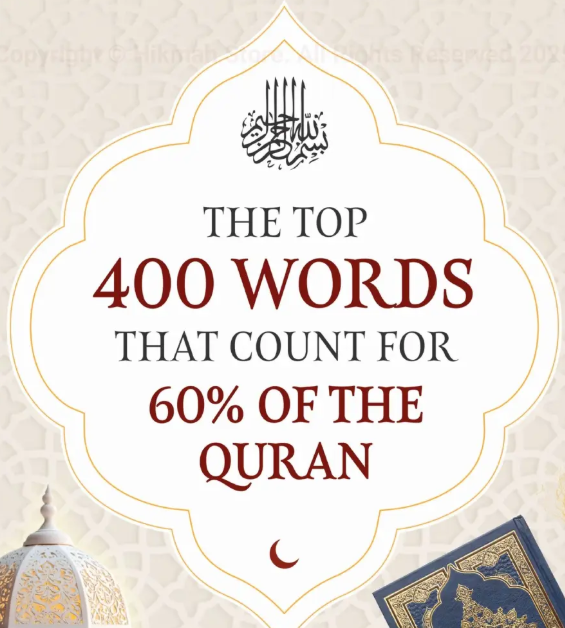
Research into Quranic word frequency shows that approximately 400 root words account for around 60–70% of the Quran’s total text. That is a manageable foundation for any serious student.
What makes it require genuine effort is that Quranic Arabic is a classical language with grammatical rules — I’rab (case endings), verb conjugation patterns, and classical idiomatic expressions — that require structured instruction to master. Self-study without guidance frequently leads to misinterpretation, which carries spiritual risk.
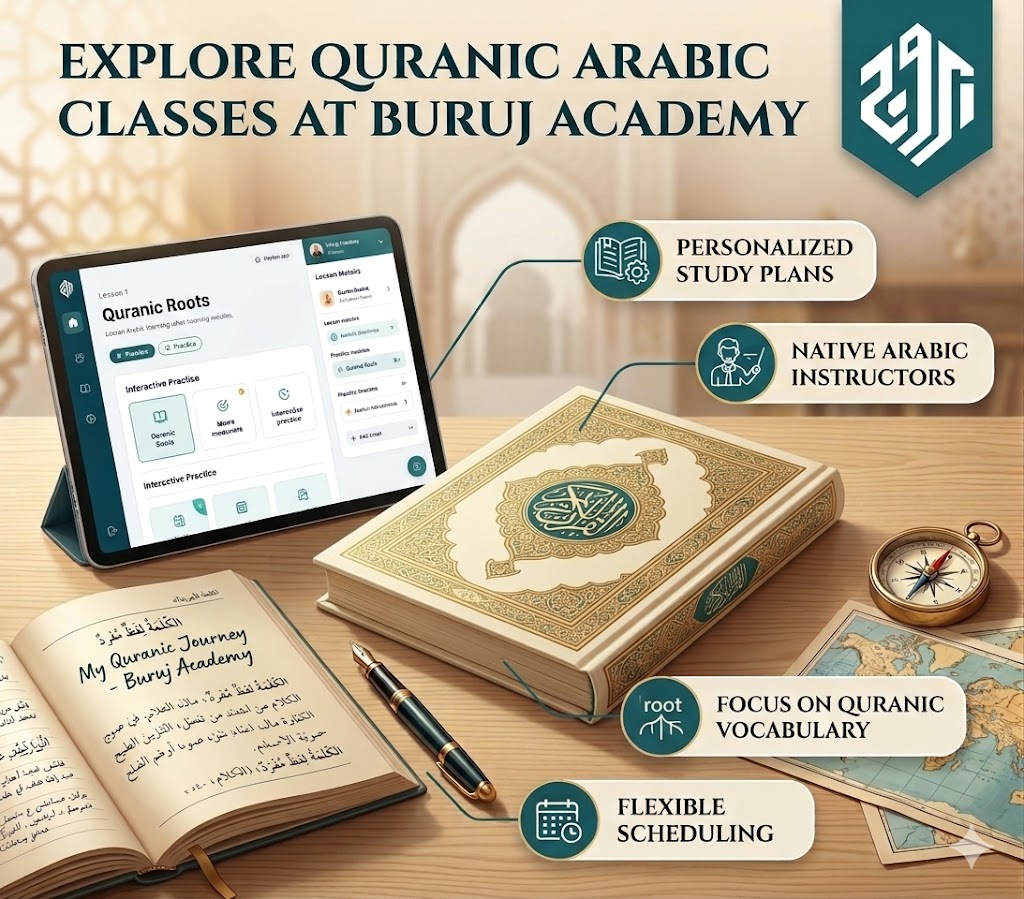
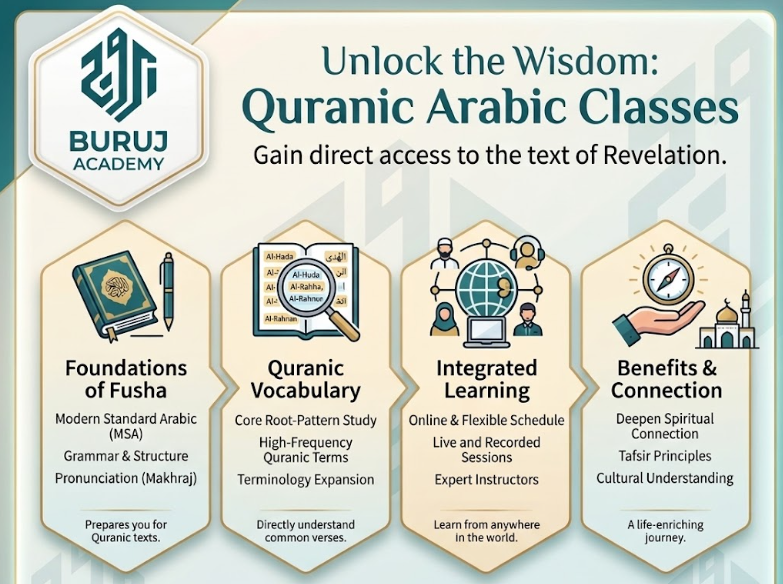
At Buruj Academy, our Quranic Arabic course is specifically designed for non-Arabic speakers who want to understand the Quran directly — not merely read transliterations or rely entirely on translations.
Begin Understanding Quranic Arabic with a FREE Lesson
Which Is the Easiest Way to Understand the Quran?
The easiest way to understand the Quran is to study Quranic Arabic vocabulary and grammar systematically, prioritizing high-frequency words before advancing to complex grammatical structures.
This vocabulary-first approach delivers early wins — meaningful comprehension of familiar Surahs — while building the grammatical foundation needed for deeper study.
1. Start with High-Frequency Quranic Vocabulary
Quranic vocabulary is not random. Certain words appear hundreds of times across the text. Words like الله (Allah), رَبّ (Rabb — Lord), يَوْم (Yawm — Day), عَمَل (‘Amal — deed), and نَار (Nar — Fire) appear so frequently that knowing even 150–200 core roots unlocks recognition across hundreds of verses.
We recommend students begin with frequency-ranked word lists rather than starting from page one of a dictionary.
The Scribd document “Top 400 Words of the Quran” compiles this data in a learner-friendly format. Both resources draw from the standard Uthmani rasm of the Quran.
Download Top 400 Words of The Quran PDF
2. Use Translation Alongside Arabic, Not Instead of It
A common mistake we see at Buruj Academy is students relying entirely on English translations without engaging with the Arabic text at all. Translations, even the most accurate ones like Sahih International, carry the interpretive choices of translators.
Engaging with both the Arabic and the translation simultaneously builds direct comprehension skills and highlights where Arabic nuance exceeds what English can convey.
3. Study Quranic Grammar Purposefully
Quranic Arabic grammar — specifically I’rab, the system of case endings — governs how words relate to one another in a verse.
Without it, a student may recognize individual words but misread the sentence’s meaning.
Grammar study need not be academic; at Buruj Academy, our instructors teach grammar through Quranic examples directly, so rules are always anchored in real verses rather than abstract drills.
Get Your Free Trial Quranic Arabic Grammar Lesson
| Learning Approach | Advantage | Limitation |
| Translation-only reading | Fast access to meaning | No Arabic engagement; dependent on translator’s choices |
| Vocabulary memorization first | Early comprehension wins | Incomplete without grammar |
| Grammar-first study | Structural understanding | Slow start; can feel disconnected from real text |
| Vocabulary + Grammar together | Balanced, sustainable progress | Requires structured instruction |
| Guided Quranic Arabic course | Systematic, error-corrected | Requires time commitment |
The most effective path combines vocabulary building with contextual grammar instruction, guided by a qualified teacher who can correct misunderstandings before they become entrenched habits.
How Long Does It Take to Understand the Quran?
How long it takes to understand the Quran depends on your starting level, study consistency, and method — but realistic milestones are achievable far earlier than most students assume.
A dedicated adult studying three to four hours per week can typically understand the meaning of Juz ‘Amma (the 30th section) within three to four months, and develop functional comprehension of frequently recited Surahs within six months.
| Student Profile | Weekly Study Hours | Functional Comprehension | Deeper Understanding |
| Complete beginner, no Arabic | 3–4 hours | 4–6 months (Juz ‘Amma) | 2–3 years |
| Basic Arabic alphabet knowledge | 3–4 hours | 2–4 months (short Surahs) | 1.5–2 years |
| Some MSA background | 4–5 hours | 1–2 months | 1–1.5 years |
| Previous Quranic study | 3 hours | Weeks to months | Under 1 year |
These are instructors’ experience-based estimates from teaching non-Arabic speakers at Buruj Academy over 12+ years — not researched statistics. Individual results vary based on consistency, learning style, and the quality of instruction received.
Excel in Your Quranic Studies
Join Buruj Academy and master the Quran with our structured, professional curriculum.
Book Your Free TrialWhat “Understanding” Actually Means at Each Stage
There is an important distinction between levels of Quran understanding that students often overlook.
Basic word recognition — knowing what individual words mean as you encounter them — comes relatively quickly. Grammatical comprehension — understanding how words relate within a verse — takes longer.
And Tafsir-level understanding — grasping historical context, variant interpretations, and thematic depth — is a lifelong pursuit even for scholars.
Most students aiming for a meaningful connection to their recitation in prayer are seeking the first two levels. That goal is genuinely achievable within months of consistent, structured effort.
If you are interested in deeper Quranic engagement, our article on reading the Quran for the first time addresses how to build that initial connection before advancing to comprehension study.
Begin Understanding Quranic Arabic with a FREE Lesson
Read also: What Is the Quran About?
What Will I Lose If I Don’t Understand the Quran?
Not understanding the Quran means reciting Allah’s words without grasping their meaning — a significant spiritual loss that affects prayer quality, personal guidance, and the depth of your relationship with your Creator. It is not a sin, but it is a missed opportunity of immense magnitude.
1. The Loss of Conscious Prayer
Salah is the pillar of Muslim life, and every Salah contains multiple Quranic recitations. A Muslim who does not understand what they are reciting may complete their prayers correctly in form while missing the interior experience of khushu’ (attentiveness and humility) that transforms prayer from ritual into genuine conversation with Allah.
The Prophet ﷺ described prayer performed without attentiveness in terms that emphasize the importance of conscious engagement in worship.
2. The Loss of Direct Guidance
The Quran describes itself as “a guidance for people” (Al-Baqarah 2:2). When you understand its Arabic, that guidance becomes direct — not filtered through a translator’s choices or limited to whatever a scholar explains in a lecture.
Non-understanding Muslims are dependent on secondary sources for access to what Allah is saying directly to them. That dependency is not spiritually neutral; it creates distance.
3. The Loss of Emotional Resonance
Many Muslims report that when they begin understanding Quranic Arabic, their emotional experience of the Quran changes dramatically.
Verses that once washed over them during recitation begin to land with weight. This is not coincidence — it is the natural result of meaning connecting to sound.
The Quran’s rhetorical structure (balaghah) is designed to move the heart, but it moves the heart most powerfully when understood in its original language.
If the Quran Has Been Made Easy to Understand, Why Does It Feel Difficult?
Allah’s statement that He has made the Quran easy for remembrance (Al-Qamar 54:22) is true — but “easy” in the Quranic sense refers to accessibility, not the absence of effort. The Quran is not locked away behind impossibly arcane language. Its door is open. But walking through that door requires stepping forward.
The perceived difficulty for non-Arabic speakers comes from three specific barriers, not from the Quran’s inherent complexity.
1. The Barrier of Script Unfamiliarity
Arabic script reads right to left, uses an alphabet of 28 letters, and connects letters differently based on their position in a word. For students from Latin-script backgrounds, this unfamiliarity creates an initial steep curve.
Once the script is internalized — which typically takes four to eight weeks of consistent practice — this barrier dissolves entirely.
Our Tajweed for beginners course builds script comfort alongside correct pronunciation from day one.
Book Your FREE Trial Lesson to Begin Your Tajweed Journey
2. The Barrier of No Vocabulary Bridge
English and Arabic share almost no common vocabulary roots. French speakers learning Spanish have thousands of cognates to anchor new words. English speakers learning Quranic Arabic begin with a blank slate.
This is real but manageable — it means the early weeks require deliberate vocabulary retention before recognition begins to feel natural.
3. The Barrier of Incorrect Method
Perhaps the most common barrier we see is students approaching Quranic Arabic with the wrong tools — studying conversational Arabic, using children’s resources, or attempting to self-study grammar from academic textbooks.
Quranic Arabic is its own field. A method designed specifically for it, taught by instructors who understand both the language and the pedagogical needs of non-Arabic speakers, removes this barrier efficiently.
| Barrier | Why It Exists | How to Overcome It |
| Script unfamiliarity | Different alphabet and writing direction | Dedicated script practice (4–8 weeks) |
| No vocabulary bridge | Arabic and English share no cognate roots | High-frequency word memorization first |
| Incorrect method | Wrong tools for Quranic Arabic specifically | Purpose-built Quranic Arabic instruction |
| No teacher feedback | Errors go uncorrected and compound | 1-on-1 guided instruction |
Discover the Buruj Academy Difference
Step into our virtual classrooms and see how our expert instructors make learning Quran and Arabic intuitive and clear. We focus on overcoming the specific hurdles non-native speakers face, building your confidence and connection with the Quran.
You Understand Quran with Confidence with Buruj Academy Today
Understanding the Quran is not a destination reserved for scholars — it is an act of worship every Muslim deserves access to. Buruj Academy’s Quranic Arabic course is built specifically for non-Arabic speaking Muslims who want to move from recitation to comprehension.
Our Al-Azhar University graduates and Ijazah-certified instructors bring 12+ years of experience teaching Quranic Arabic to English speakers globally.
The Buruj Method — Context-before-abstraction — means you encounter grammar through real Quranic verses, not isolated drills.
Take the next step in your learning journey today by enrolling in one of our specialized programs:
- Online Quran Classes
- Online Quran Classes for Beginners
- Online Quran Classes for Adults
- Online Quran Classes for Ladies
- Online Quran Classes for Kids
- Quran Reading Course
- Quran Recitation Course
- Online Ijazah Course
- Online Qirat Course
Don’t wait to transform your relationship with the Holy Quran. Join our global community of students and book your free evaluation session now!
Every session is 1-on-1, scheduled around your life, with real-time feedback that ensures you build correct understanding from day one.
Book your free trial lesson and take the first step toward understanding Allah’s words directly.
Excel in Your Quranic Studies
Join Buruj Academy and master the Quran with our structured, professional curriculum.
Book Your Free TrialRead also: The 400 Most Common Words in the Quran
Conclusion
The question of whether the Quran is easy to understand has a grounded, honest answer: it is accessible, but it rewards structured effort. Allah has opened the door wide — the language is learnable, the vocabulary is concentrated, and the reward for engaging with it is immeasurable.
What makes the difference is not raw intelligence or Arabic heritage; it is method, consistency, and guidance from teachers who understand both the language and the learner.
For non-Arabic speaking Muslims, understanding the Quran transforms every prayer, every recitation, and every moment of reflection.
That transformation is not out of reach. It begins with a single, deliberate step toward structured Quranic Arabic study — and it is one of the most spiritually enriching investments a Muslim can make.
Frequently Asked Questions About Understanding the Quran
Can I Understand the Quran Without Learning Arabic?
You can access the Quran’s meaning through translations, but true understanding requires engaging with its Arabic. Translations carry a translator’s interpretive choices and cannot fully convey Arabic’s grammatical nuances, rhetorical structures, or word-level precision. Even basic Quranic Arabic vocabulary study significantly deepens comprehension beyond what any translation provides.
Is Quranic Arabic the Same as Modern Standard Arabic?
Quranic Arabic and Modern Standard Arabic share the same script and many grammatical roots, but they differ meaningfully. Quranic Arabic is classical, uses specific grammatical structures not common in MSA, and contains vocabulary and idiomatic expressions unique to the Quran’s historical context. Studying MSA alone will not give you direct Quran comprehension without supplementary classical study.
How Many Words Do I Need to Know to Understand the Quran?
Knowing approximately 400 high-frequency root words gives you recognition across a significant portion of the Quranic text — some estimates suggest around 60-70% of total word occurrences. That does not mean full grammatical comprehension, but it means encountering familiar vocabulary frequently as you build toward deeper understanding. Vocabulary-first study produces early, motivating results.
Is It Possible to Understand the Quran on My Own?
Self-study can build vocabulary recognition, but it carries a real risk of misinterpretation without teacher feedback. Quranic Arabic grammar — particularly I’rab — governs how words relate within a verse. Misreading grammatical relationships leads to misunderstanding meaning. A qualified instructor catches these errors before they become embedded habits. Guided study is significantly more reliable and efficient than self-directed learning alone.