 Quran
Quran
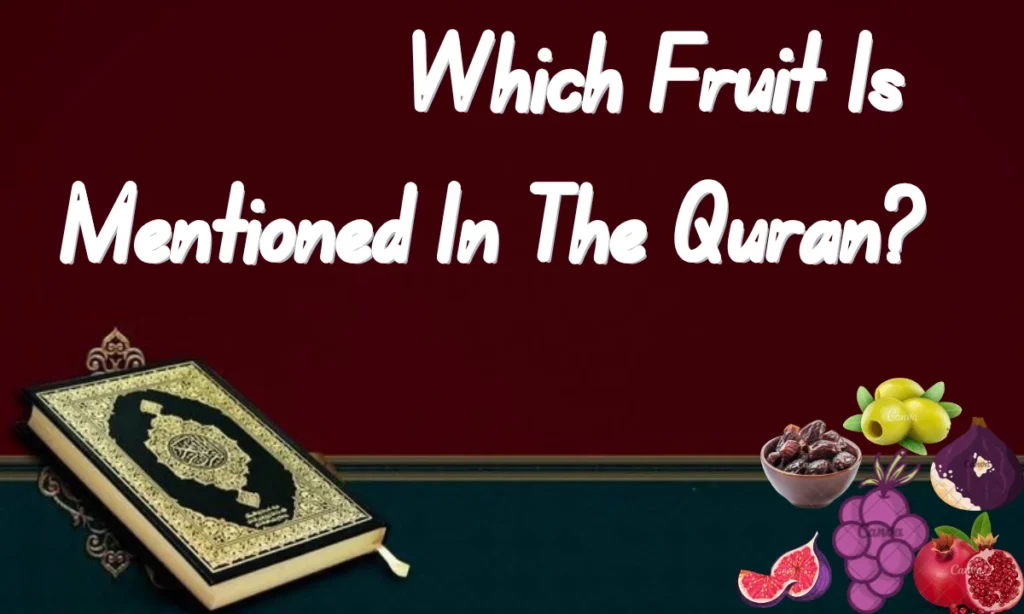
| Key Takeaways |
| The Quran mentions at least 6 specific fruits by name: grapes, dates, pomegranates, olives, figs, and bananas (mawz). |
| Dates and grapes are the most frequently mentioned fruits in the Quran, appearing across multiple surahs in varied contexts. |
| Pomegranate is mentioned three times in the Quran, always as a sign of Allah’s creative power and generosity. |
| Several fruits are described as rewards of Jannah (Paradise), reflecting their spiritual significance beyond mere nutrition. |
| The olive is mentioned in both earthly and symbolic contexts, including in Surah An-Nur as a metaphor for divine light. |
The Quran is not simply a book of rulings and theology — it is a text that draws our attention to the natural world as a source of reflection and gratitude. Among its most vivid references are the fruits that Allah placed on this earth and promised in the next life.
Table of Contents:
What Are the Fruits Mentioned in the Quran?
The Quran mentions dates, grapes, pomegranates, olives, figs, and bananas. These fruits appear across multiple surahs in contexts ranging from earthly sustenance to descriptions of Jannah. Dates and grapes are the most frequently cited, while figs and olives appear in oath-based verses that carry deep spiritual weight.
For students deepening their engagement with the Quran’s meanings, our Tafseer Al-Quran course at Buruj Academy explores exactly this kind of verse-by-verse contextual understanding, guided by Al-Azhar University graduates with 12+ years of teaching experience.
Begin Understanding Quran With a FREE Trial in
Buruj’s Tafseer Al-Quran Course

List of Fruits Mentioned in the Quran
The Quran mentions 6 main fruits by name. Each appears in a specific Quranic context, either as a sign of Allah’s mercy on earth or as a description of the bounties of Paradise.
1. Dates
Dates are the most frequently mentioned fruit in the Quran, appearing in numerous verses as a symbol of sustenance, blessing, and Paradise. They are referenced both as a worldly provision and as one of the fruits of Jannah.
وَمِن ثَمَرَٰتِ ٱلنَّخِيلِ وَٱلْأَعْنَٰبِ تَتَّخِذُونَ مِنْهُ سَكَرًا وَرِزْقًا حَسَنًا ۗ إِنَّ فِى ذَٰلِكَ لَءَايَةً لِّقَوْمٍ يَعْقِلُونَ
“And from the fruits of the palm trees and grapevines you take intoxicant and good provision. Indeed in that is a sign for a people who reason.” (An-Nahl 16:67)
This verse pairs dates and grapes as paired signs of divine provision, while drawing a moral distinction between lawful and unlawful use.
Dates also appear in the story of Maryam (Mary), when Allah commanded her to shake the palm tree after giving birth:
وَهُزِّىٓ إِلَيْكِ بِجِذْعِ ٱلنَّخْلَةِ تُسَٰقِطْ عَلَيْكِ رُطَبًا جَنِيًّا
“And shake toward you the trunk of the palm tree; it will drop upon you ripe, fresh dates.” (Maryam 19:25)
The word رُطَبًا — rutaban — specifically refers to fresh, ripe dates, a nutritional gift to Maryam at a moment of physical and emotional vulnerability.
2. Grapes (العنب)
Grapes are among the most frequently mentioned fruits in the Quran, consistently appearing alongside dates as paired signs of Allah’s provision. They are described as growing in gardens of the earth and as rewards in Paradise.
وَجَعَلْنَا فِيهَا جَنَّـٰتٍ مِّن نَّخِيلٍ وَأَعْنَـٰبٍ وَفَجَّرْنَا فِيهَا مِنَ ٱلْعُيُونِ
“And We placed therein gardens of palm trees and grapevines and caused to burst forth therefrom some springs.” (Ya-Sin 36:34)
Grapes here appear as part of Allah’s deliberate arrangement of the earth’s resources — not accidental abundance but intentional divine provision.
3. Pomegranates (الرمان)
Pomegranate is mentioned three times in the Quran — twice in Surah Al-An’am and once in Surah Ar-Rahman. It is always cited as one of the signs of Allah’s creative power, and in Ar-Rahman, it appears specifically as a fruit of Paradise.
وَهُوَ ٱلَّذِىٓ أَنزَلَ مِنَ ٱلسَّمَآءِ مَآءً فَأَخْرَجْنَا بِهِۦ نَبَاتَ كُلِّ شَىْءٍ فَأَخْرَجْنَا مِنْهُ خَضِرًا نُّخْرِجُ مِنْهُ حَبًّا مُّتَرَاكِبًا وَمِنَ ٱلنَّخْلِ مِن طَلْعِهَا قِنْوَانٌ دَانِيَةٌ وَجَنَّـٰتٍ مِّنْ أَعْنَابٍ وَٱلزَّيْتُونَ وَٱلرُّمَّانَ مُشْتَبِهًا وَغَيْرَ مُتَشَـٰبِهٍ
“And He it is who sends down rain from the sky, and We produce thereby the growth of all things. We produce from it greenery from which We produce grains arranged in layers. And from the palm trees — of its emerging fruit are clusters hanging low. And [We produce] gardens of grapevines and olives and pomegranates, similar yet varied.” (Al-An’am 6:99)
The phrase مُشْتَبِهًا وَغَيْرَ مُتَشَـٰبِهٍ — “similar yet varied” — is a remarkable botanical observation: fruits of the same species differ in taste, color, and quality, which is itself a sign.
The pomegranate appears again in Paradise:
فِيهِمَا فَـٰكِهَةٌ وَنَخْلٌ وَرُمَّانٌ
“In both of them are fruit and palm trees and pomegranates.” (Ar-Rahman 55:68)
4. Olives (الزيتون)
The olive holds a unique position in the Quran. It appears in contexts of earthly provision, in a powerful cosmic oath in Surah At-Tin, and — most remarkably — as a metaphor for divine light in Surah An-Nur.
وَٱلتِّينِ وَٱلزَّيْتُونِ
“By the fig and the olive.” (At-Tin 95:1)
Allah swears by the olive here — an oath that elevates the fruit to a level of cosmic significance in classical Tafsir.
The olive also appears in the famous Light Verse:
يُوقَدُ مِن شَجَرَةٍ مُّبَـٰرَكَةٍ زَيْتُونَةٍ لَّا شَرْقِيَّةٍ وَلَا غَرْبِيَّةٍ
“Lit from a blessed olive tree, neither of the east nor of the west.” (An-Nur 24:35)
Here the olive tree is described as مُّبَـٰرَكَةٍ — blessed — and used as an image of the purest, most luminous spiritual light. This is one of the most analyzed verses in classical Tafsir literature.
Excel in Your Quranic Studies
Join Buruj Academy and master the Quran with our structured, professional curriculum.
Book Your Free Trial5. Figs (التين)
The fig holds the distinction of being the only fruit in the Quran after which an entire surah is named — Surah At-Tin (Chapter 95). Allah opens the surah by swearing an oath by both the fig and the olive together.
وَٱلتِّينِ وَٱلزَّيْتُونِ
“By the fig and the olive.” (At-Tin 95:1)
Classical scholars of Tafsir, including Ibn Kathir, explain that swearing by the fig points to its extraordinary nutritional density and blessed nature.
Some scholars also interpret “the fig” as a reference to the region of Damascus, where figs were abundant, though the direct reference to the fruit itself is the primary understanding.
6. Bananas (الموز)
Bananas are mentioned once in the Quran, specifically in the context of the rewards of Paradise for the People of the Right Hand (Ashab al-Yamin).
The Arabic word used is طَلْحٍ (Talh), which classical commentators — including Ibn Abbas and Ibn Kathir — identify as the banana tree (Musa paradisiaca), known in Arabic as الموز.
وَطَلْحٍ مَّنضُودٍ
“And banana trees with fruit stacked high.” (Al-Waqi’ah 56:29)
The word مَّنضُودٍ — mandood — means “layered” or “piled up,” indicating an abundance of fruit within easy reach. This detail reflects the effortless, unlimited nature of Paradise’s bounties.
Read also: Countries Mentioned in the Quran
How Many Fruits Are Mentioned in the Quran?
Exactly 6 fruits are mentioned by specific name in the Quran: dates, grapes, pomegranates, olives, figs, and bananas (Talh/Mawz). Some scholars expand this count by including general references to “fruit” (فاكهة — fakihah) in Paradise descriptions, but these are not specific named fruits.
This count is based on named fruits. The Quran also uses the general word فاكهة (fakihah — “fruit”) many times in Paradise descriptions without specifying which fruit is meant.
In our teaching sessions at Buruj Academy, students often notice how frequently the date palm (النخل) appears — sometimes as a tree, sometimes as its fruit (رطب or تمر) — which is itself a reflection of how deeply embedded this fruit was in the lived context of Quranic revelation.
Discover the Buruj Academy Difference
Step into our virtual classrooms and see how our expert instructors make learning Quran and Arabic intuitive and clear. We focus on overcoming the specific hurdles non-native speakers face, building your confidence and connection with the Quran.
Fruits Mentioned in the Quran in Arabic: Key Vocabulary
For students of Arabic or Quranic Arabic, knowing these fruits in their original Arabic form enriches both language comprehension and Quran recitation. The table below lists each fruit with its Arabic name and root.
| Fruit | Arabic Name |
| Dates | ثمرات النخيل / رُطَب |
| Grapes | عِنَب |
| Pomegranate | رُمَّان |
| Olive | زَيْتُون |
| Fig | تِين |
| Banana (Talh) | طَلْح / مَوْز |
Students enrolled in Buruj Academy’s Quranic Arabic Classes regularly encounter these terms as part of vocabulary building — understanding root letters makes it far easier to recognize related words across the Quran.
Begin Understanding Quranic Arabic with a FREE Lesson

Is the Pomegranate Mentioned in the Quran?
Yes, the pomegranate (رمان — Rumman) is mentioned three times in the Quran. It appears twice in Surah Al-An’am (6:99 and 6:141) as part of earthly creation, and once in Surah Ar-Rahman (55:68) as a fruit of Paradise.
Its repeated mention alongside dates and grapes places it among the most honored fruits in the Quranic worldview.
Read also:Effective Quran Hifz Strategies for Men
List of Fruits and Vegetables Mentioned in the Quran
While this article focuses on named fruits, the Quran also references several other plants and food items that fall into broader food categories. These are worth noting for students seeking a complete picture.
| Category | Item | Arabic | Surah Reference |
| Fruits | Dates | ثمرات النخيل / رطب | Multiple |
| Fruits | Grapes | عنب | Multiple |
| Fruits | Pomegranate | رمان | Al-An’am, Ar-Rahman |
| Fruits | Olive | زيتون | Multiple |
| Fruits | Figs | تين | At-Tin |
| Fruits | Bananas (Talh) | طلح | Al-Waqi’ah |
| Vegetables/Plants | Garlic, onions, lentils, cucumbers | فوم، عدس، بصل، قثاء | Al-Baqarah 2:61 |
| Grains | Wheat / grain | حَبّ | Ya-Sin 36:33 |
| Other | Ginger | زنجبيل | Al-Insan 76:17 |
The vegetables mentioned in Al-Baqarah 2:61 appear in the context of the Israelites complaining during their time in the desert — asking for earthly food in place of the divine provision of manna and quail.
If you want to understand these Quranic references more deeply in context, reading the Quran for the first time with some background knowledge of the surahs makes these moments of natural description far more impactful.
Read also: How to Teach Kids Arabic Step by Step?
Deepen Your Quran Connection with Buruj Academy’s Expert Instructors
The fruits mentioned in the Quran are not random details — they are deliberate signs (آيات) inviting reflection on Allah’s provision. Studying them with proper Tafsir guidance transforms Quran reading from recitation into genuine understanding.
At Buruj Academy, our Al-Azhar University graduates and Ijazah-certified instructors bring 12+ years of experience teaching non-Arabic speaking Muslims globally.
Through our Online Islamic Studies Classes and Tafseer Al-Quran course, students explore the Quran’s meanings with authentic scholarly guidance.
We offer personalized 1-on-1 sessions with flexible 24/7 scheduling and learning plans tailored to your level.
Book your free trial lesson today and begin reading the Quran with eyes truly open to its signs.
Take the next step in your learning journey today by enrolling in one of our specialized programs:
- Online Quran Classes
- Online Quran Classes for Beginners
- Online Quran Classes for Adults
- Online Quran Classes for Ladies
- Online Quran Classes for Kids
- Quran Reading Course
- Quran Recitation Course
- Online Ijazah Course
- Online Qirat Course
Don’t wait to transform your relationship with the Holy Quran. Join our global community of students and book your free evaluation session now!
Excel in Your Quranic Studies
Join Buruj Academy and master the Quran with our structured, professional curriculum.
Book Your Free TrialConclusion
The Quran’s references to fruits are among the most vivid reminders that this earth — and everything Allah placed within it — is a sign pointing back to its Creator. From the humble date palm to the pomegranate of Paradise, each of these six fruits carries layers of meaning that reward careful, informed reading.
Knowing what the Quran says about these fruits is one thing. Understanding why it says it — the Tafsir, the context, the wisdom — is what makes the Quran genuinely transformative. That depth of understanding is what we work toward with every student at Buruj Academy, Insha’Allah.
Frequently Asked Questions About Fruits Mentioned in the Quran
How Many Fruits Are Mentioned in the Quran?
Six fruits are mentioned by specific name in the Quran: dates, grapes, pomegranates, olives, figs, and bananas (Talh). The general Arabic word فاكهة (fakihah), meaning “fruit,” also appears multiple times in descriptions of Paradise but without naming a specific fruit. Scholars are united on these six named fruits.
Is Pomegranate Mentioned in the Quran?
Yes. Pomegranate (رمان — Rumman) is mentioned three times in the Quran: in Surah Al-An’am 6:99, Surah Al-An’am 6:141, and Surah Ar-Rahman 55:68. In the first two verses it appears as an earthly creation, and in Ar-Rahman it is described as one of the fruits available in the gardens of Paradise.
Are There Vegetables Mentioned in the Quran Alongside the Fruits?
Yes. Surah Al-Baqarah 2:61 mentions garlic, onions, lentils, and cucumbers in the context of the Israelites requesting earthly food during their time in the desert. These appear as a contrast to the divine provision they had been given, rather than as praised foods — unlike the fruits, which are consistently presented as signs of Allah’s blessing and generosity.