 Quran
Quran
| Key Takeaways |
| Jesus (Isa, عيسى) is mentioned by name in the Quran 25 times across 15 different surahs. |
| The Quran affirms Jesus as a prophet, the Messiah, and “Word of God,” born of a virgin mother, Maryam. |
| The Quran confirms Jesus performed miracles — healing the blind, raising the dead — all by Allah’s permission. |
| Islam affirms Jesus will return before the Day of Judgment, a belief grounded in authentic Quranic and hadith sources. |
The Quran speaks about Jesus with remarkable depth and frequency — more than many Muslims realize, and certainly more than many non-Muslims expect. For English-speaking Muslims studying the Quran, understanding these passages is both spiritually enriching and intellectually important.
Yes, the Quran mentions Jesus extensively. He appears by name 25 times across 15 surahs, and entire passages are devoted to his birth, his mother Maryam, his miracles, his message, and his status before Allah — making him one of the most frequently mentioned prophets in the Quran.
Table of Contents:
Does the Quran Mention Jesus Directly by Name?
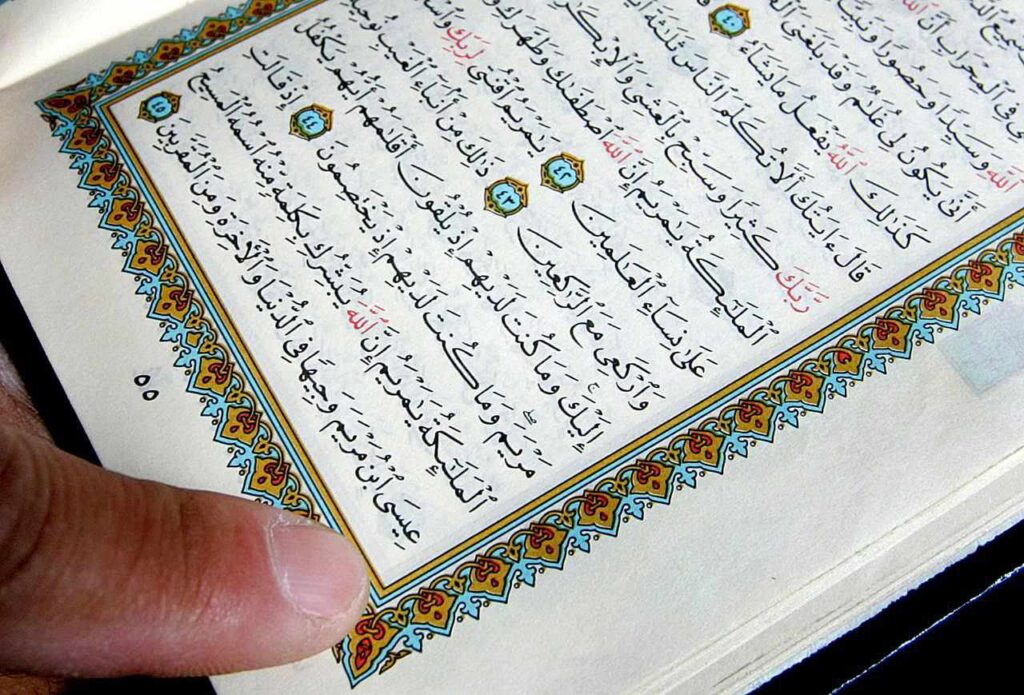
Yes, the Quran mentions Jesus directly by name 25 times, using the Arabic name عيسى (Isa). Jesus is also referred to by titles including Al-Masih (المسيح — the Messiah), which appears 11 times, and Ibn Maryam (son of Maryam), used repeatedly throughout the text. These references are distributed across 15 surahs, from early Meccan chapters to detailed Medinan passages.
This frequency places Jesus (peace be upon him) among the most prominent figures in the entire Quran.
By comparison, the Prophet Muhammad (peace be upon him) is mentioned by name only four times.
The Quran’s extensive treatment of Jesus reflects his profound importance in Islamic theology as a prophet, miracle-worker, and sign of Allah’s power.
For students beginning their Quranic study, our Quran Reading course at Buruj Academy helps build the foundational reading skills needed to approach these passages directly in Arabic.
Book your Free trial lesson and start reading the Quran
Where in the Quran Is Jesus Mentioned?
The Quran mentions Jesus (Isa, عيسى) by name in 25 verses across 15 surahs. Each mention carries specific theological weight — addressing his birth, his mission, his miracles, his nature, or his final status before Allah.
Below is every verse in which the name Isa (عيسى) appears directly, presented with context.
1. Al-Baqarah 2:87 — Jesus as a Messenger Given the Gospel and the Holy Spirit
This verse places Jesus within the chain of Israelite prophets, affirming that Allah gave him the Gospel and strengthened him with the Holy Spirit (Jibreel). It establishes his prophethood as continuous with those who came before him.
وَآتَيْنَا عِيسَى ابْنَ مَرْيَمَ الْبَيِّنَاتِ وَأَيَّدْنَاهُ بِرُوحِ الْقُدُسِ
Wa ātaynā ‘Īsā ibna Maryama al-bayyināti wa ayyadnāhu birūḥil-qudus
“And We gave Jesus, the son of Mary, clear proofs, and We supported him with the Pure Spirit.” (Al-Baqarah 2:87)
2. Al-Baqarah 2:136 — Jesus Named Among the Prophets Muslims Believe In
This verse is part of the foundational Islamic declaration of faith in all prophets without distinction. Jesus is listed explicitly alongside Ibrahim, Ismail, Ishaq, Yaqub, and Musa as a prophet Muslims must believe in.
وَمَا أُوتِيَ مُوسَىٰ وَعِيسَىٰ وَمَا أُوتِيَ النَّبِيُّونَ مِن رَّبِّهِمْ
Wa mā ūtiya Mūsā wa ‘Īsā wa mā ūtiyan-nabiyyūna mir-rabbihim
“And what was given to Moses and Jesus and what was given to the prophets from their Lord.” (Al-Baqarah 2:136)
2. Al-Baqarah 2:253 — Jesus Distinguished Among Messengers by the Holy Spirit
Allah singles out Jesus here as one of the messengers He elevated above others — specifically by granting him clear signs and supporting him with the Holy Spirit. This verse reinforces his extraordinary but fully human prophetic rank.
وَآتَيْنَا عِيسَى ابْنَ مَرْيَمَ الْبَيِّنَاتِ وَأَيَّدْنَاهُ بِرُوحِ الْقُدُسِ
Wa ātaynā ‘Īsā ibna Maryama al-bayyināti wa ayyadnāhu birūḥil-qudus
“And We gave Jesus, the son of Mary, clear proofs, and We supported him with the Pure Spirit.” (Al-Baqarah 2:253)
4. Al-Imran 3:45 — The Angel Announces Jesus’s Birth to Maryam
This is among the most significant Quranic verses about Jesus — the annunciation. The angels address Maryam directly, naming the child she will bear, his title as the Messiah, and his description as a Word from Allah.
إِذْ قَالَتِ الْمَلَائِكَةُ يَا مَرْيَمُ إِنَّ اللَّهَ يُبَشِّرُكِ بِكَلِمَةٍ مِّنْهُ اسْمُهُ الْمَسِيحُ عِيسَى ابْنُ مَرْيَمَ
Idh qālatil-malā’ikatu yā Maryamu innallāha yubashshiruki bikalimatin minhu ismuhu al-Masīḥu ‘Īsā ibnu Maryam
“When the angels said, ‘O Mary, indeed Allah gives you good tidings of a word from Him, whose name will be the Messiah, Jesus, the son of Mary.'” (Al-Imran 3:45)
5. Al-Imran 3:52 — Jesus Calls His Disciples to Support Allah’s Cause
When Jesus sensed disbelief among those around him, he turned directly to his disciples — the Hawariyyun — asking who would stand with him for Allah. This verse marks the formation of his inner circle of faithful followers.
فَلَمَّا أَحَسَّ عِيسَىٰ مِنْهُمُ الْكُفْرَ قَالَ مَنْ أَنصَارِي إِلَى اللَّهِ
Falammā aḥassa ‘Īsā minhumul-kufra qāla man anṣārī ilallāh
“But when Jesus felt their disbelief, he said, ‘Who are my supporters for Allah?'” (Al-Imran 3:52)
6. Al-Imran 3:55 — Allah Raises Jesus and Purifies Him from Slander
This verse records Allah’s direct address to Jesus, informing him that He will take him, raise him, and clear him of the false accusations made against him and his mother. It confirms the Islamic position that Jesus did not die on the cross.
إِذْ قَالَ اللَّهُ يَا عِيسَىٰ إِنِّي مُتَوَفِّيكَ وَرَافِعُكَ إِلَيَّ
Idh qālallāhu yā ‘Īsā innī mutawaffīka wa rāfi’uka ilayy
“When Allah said, ‘O Jesus, indeed I will take you and raise you to Myself and purify you from those who disbelieve.'” (Al-Imran 3:55)
7. Al-Imran 3:59 — The Creation of Jesus Compared to the Creation of Adam
This verse is the Quran’s definitive theological response to claims of Jesus’s divine nature. Allah draws a direct comparison: just as Adam was created from dust without parents, Jesus was created without a father — both by Allah’s command “Be,” and it is.
إِنَّ مَثَلَ عِيسَىٰ عِندَ اللَّهِ كَمَثَلِ آدَمَ خَلَقَهُ مِن تُرَابٍ
Inna mathala ‘Īsā ‘indallāhi kamathali Ādama khalaqahu min turāb
“Indeed, the likeness of Jesus with Allah is as the likeness of Adam. He created him from dust.” (Al-Imran 3:59)
8. An-Nisa 4:157 — The Quran Rejects the Crucifixion of Jesus
This verse directly addresses the Christian and Jewish claims regarding Jesus’s death. The Quran states unambiguously that Jesus was neither killed nor crucified, and that what was witnessed was a likeness made to appear so — a matter of profound interfaith theological significance.
وَمَا قَتَلُوهُ وَمَا صَلَبُوهُ وَلَٰكِن شُبِّهَ لَهُمْ
Wa mā qatalūhu wa mā ṣalabūhu wa lākin shubbiha lahum
“And they did not kill him, nor did they crucify him; but it was made to appear so to them.” (An-Nisa 4:157)
9. An-Nisa 4:163 — Jesus Listed Among the Prophets Given Revelation
In this verse, Allah addresses the Prophet Muhammad, informing him that revelation is not new — it was given to Ibrahim, Ismail, Ishaq, Yaqub, the tribes, Musa, and Jesus before him. Jesus is named as part of this unbroken prophetic chain.
وَأَوْحَيْنَا إِلَىٰ إِبْرَاهِيمَ وَإِسْمَاعِيلَ وَإِسْحَاقَ وَيَعْقُوبَ وَالْأَسْبَاطِ وَعِيسَىٰ
Wa awḥaynā ilā Ibrāhīma wa Ismā’īla wa Isḥāqa wa Ya’qūba wal-asbaṭi wa ‘Īsā
“And We revealed to Abraham, Ishmael, Isaac, Jacob, the descendants, and Jesus.” (An-Nisa 4:163)
10. An-Nisa 4:171 — The Quran Addresses the Trinity Directly
This is perhaps the most direct Quranic correction of Christian theology. It affirms Jesus as a messenger, a Word of Allah, and a Spirit from Him — while explicitly warning against saying “three” and firmly stating that Allah is one, without a son.
إِنَّمَا الْمَسِيحُ عِيسَى ابْنُ مَرْيَمَ رَسُولُ اللَّهِ وَكَلِمَتُهُ أَلْقَاهَا إِلَىٰ مَرْيَمَ وَرُوحٌ مِّنْهُ
Innamal-Masīḥu ‘Īsā ibnu Maryama rasūlullāhi wa kalimatuhu alqāhā ilā Maryama wa rūḥun minhu
“The Messiah, Jesus the son of Mary, was but a messenger of Allah and His word which He directed to Mary and a soul from Him.” (An-Nisa 4:171)
Book Your Free Trial Lesson with Burruj’s Hifz Course for Adults
11. Al-Maidah 5:46 — Allah Confirms the Gospel Given to Jesus
This verse describes the Gospel (Injil) as a confirmation of what came before it in the Torah, containing guidance and light. It positions Jesus’s revelation within the continuous line of divine scripture, fully consistent with Islamic belief in all revealed books.
وَقَفَّيْنَا عَلَىٰ آثَارِهِم بِعِيسَى ابْنِ مَرْيَمَ مُصَدِّقًا لِّمَا بَيْنَ يَدَيْهِ مِنَ التَّوْرَاةِ
Wa qaffaynā ‘alā āthārihim bi-‘Īsā ibni Maryama muṣaddiqan limā bayna yadayhi minat-tawrāh
“And We sent, following in their footsteps, Jesus, the son of Mary, confirming that which came before him in the Torah.” (Al-Maidah 5:46)
12. Al-Maidah 5:78 — Jesus and David Both Cursed Those Who Transgressed
This verse connects Jesus with Prophet Dawud (David) in delivering a divine curse upon those among the Children of Israel who persistently disobeyed. It affirms Jesus’s role as a judge and warner to his people, fully consistent with prophetic authority.
لُعِنَ الَّذِينَ كَفَرُوا مِن بَنِي إِسْرَائِيلَ عَلَىٰ لِسَانِ دَاوُودَ وَعِيسَى ابْنِ مَرْيَمَ
Lu’inal-ladhīna kafarū min banī Isrā’īla ‘alā lisāni Dāwūda wa ‘Īsā ibni Maryam
“Cursed were those who disbelieved among the Children of Israel by the tongue of David and of Jesus, the son of Mary.” (Al-Maidah 5:78)
Discover the Buruj Academy Difference
Step into our virtual classrooms and see how our expert instructors make learning Quran and Arabic intuitive and clear. We focus on overcoming the specific hurdles non-native speakers face, building your confidence and connection with the Quran.
13. Al-Maidah 5:110 — Allah Enumerates the Miracles Given to Jesus
This is one of the most detailed single verses about the miracles of Jesus in the entire Quran. Allah addresses Jesus directly, reminding him of every gift and miracle granted to him — from birth, to healing, to raising the dead — each one framed as divine bestowal, not personal divinity.
إِذْ قَالَ اللَّهُ يَا عِيسَى ابْنَ مَرْيَمَ اذْكُرْ نِعْمَتِي عَلَيْكَ
Idh qālallāhu yā ‘Īsā ibna Maryamadhkur ni’matī ‘alayk
“When Allah said, ‘O Jesus, son of Mary, remember My favor upon you and upon your mother.'” (Al-Maidah 5:110)
14. Al-Maidah 5:112 — The Disciples Ask Jesus for the Table Spread from Heaven
The Hawariyyun (disciples) request from Jesus a miraculous table sent down from heaven as a sign and a celebration. This verse captures the human side of the disciples — seeking reassurance through a tangible miracle — and Jesus’s response of sincere supplication to Allah.
إِذْ قَالَ الْحَوَارِيُّونَ يَا عِيسَى ابْنَ مَرْيَمَ هَلْ يَسْتَطِيعُ رَبُّكَ أَن يُنَزِّلَ عَلَيْنَا مَائِدَةً مِّنَ السَّمَاءِ
Idh qālal-ḥawāriyyūna yā ‘Īsā ibna Maryama hal yastaṭī’u rabbuka an yunazzila ‘alaynā mā’idatan minas-samā’
“When the disciples said, ‘O Jesus, son of Mary, can your Lord send down to us a table from the sky?'” (Al-Maidah 5:112)
15. Al-Maidah 5:114 — Jesus Supplicates Allah for the Table Spread
Jesus responds to his disciples’ request with a sincere, humble du’a — entirely consistent with his status as a servant of Allah, not a divine being. He asks Allah directly, acknowledging that the table would be a sign for all people and a mercy from Allah alone.
قَالَ عِيسَى ابْنُ مَرْيَمَ اللَّهُمَّ رَبَّنَا أَنزِلْ عَلَيْنَا مَائِدَةً مِّنَ السَّمَاءِ
Qāla ‘Īsā ibnu Maryamallāhumma rabbanā anzil ‘alaynā mā’idatan minas-samā’
“Jesus, the son of Mary, said, ‘O Allah, our Lord, send down to us a table from the sky.'” (Al-Maidah 5:114)
Excel in Your Quranic Studies
Join Buruj Academy and master the Quran with our structured, professional curriculum.
Book Your Free Trial16. Al-Maidah 5:116 — Allah Asks Jesus Whether He Told People to Worship Him
This verse presents a dramatic scene of the Last Day — Allah questioning Jesus directly about whether he instructed people to worship him and his mother. Jesus’s response is one of the most moving affirmations of monotheism in the Quran, as he disavows any such claim entirely.
وَإِذْ قَالَ اللَّهُ يَا عِيسَى ابْنَ مَرْيَمَ أَأَنتَ قُلْتَ لِلنَّاسِ اتَّخِذُونِي وَأُمِّيَ إِلَٰهَيْنِ مِن دُونِ اللَّهِ
Wa idh qālallāhu yā ‘Īsā ibna Maryama a-anta qulta lin-nāsit-takhidhūnī wa ummiya ilāhayni min dūnillāh
“And when Allah will say, ‘O Jesus, son of Mary, did you say to the people: Take me and my mother as deities besides Allah?'” (Al-Maidah 5:116)
Read also: How Many Times Is Muhammad Mentioned in the Quran?
17. Al-Anam 6:85 — Jesus Listed Among the Righteous Prophets
In this verse, Allah lists a group of prophets whom He guided and chose — among them Zakariyya, Yahya, Jesus, and Ilyas — all described as being among the righteous (Al-Salihin). The inclusion of Jesus in this honorable collective affirms his full standing among the greatest servants of Allah.
وَزَكَرِيَّا وَيَحْيَىٰ وَعِيسَىٰ وَإِلْيَاسَ كُلٌّ مِّنَ الصَّالِحِينَ
Wa Zakariyyā wa Yaḥyā wa ‘Īsā wa Ilyāsa kullun minas-ṣāliḥīn
“And Zechariah and John and Jesus and Elias — and all were of the righteous.” (Al-Anam 6:85)
For students who want to read and understand these passages directly in Arabic, Buruj Academy’s Quranic Arabic course builds exactly the skills needed — taught by Al-Azhar-trained instructors who specialize in Quranic comprehension for non-Arabic speakers.
Begin Understanding Quranic Arabic with a FREE Lesson
18. Maryam 19:34 — The Quran Declares This Is the True Account of Jesus
After the birth narrative, the speaking from the cradle, and the full account of Maryam, this verse closes the story with a definitive statement: this is Jesus, son of Mary, and this is the word of truth about him. It is the Quran’s own editorial seal on the narrative of Jesus.
ذَٰلِكَ عِيسَى ابْنُ مَرْيَمَ قَوْلَ الْحَقِّ الَّذِي فِيهِ يَمْتَرُونَ
Dhālika ‘Īsā ibnu Maryama qawlal-ḥaqqil-ladhī fīhi yamtarūn
“That is Jesus, the son of Mary — the word of truth about which they are in dispute.” (Maryam 19:34)
19. Al-Anbiya 21:91 — The Virgin Birth and Jesus as a Sign for All Humanity
This verse recalls the miracle of Maryam, into whom Allah breathed a spirit, resulting in the birth of Jesus. It describes both mother and son as a sign (ayah) for all the worlds — a miracle whose purpose extends beyond the Children of Israel to all of humanity.
وَالَّتِي أَحْصَنَتْ فَرْجَهَا فَنَفَخْنَا فِيهَا مِن رُّوحِنَا وَجَعَلْنَاهَا وَابْنَهَا آيَةً لِّلْعَالَمِينَ
Wallatī aḥṣanat farjahā fanafakhnā fīhā min rūḥinā wa ja’alnāhā wabnaha āyatan lil-‘ālamīn
“And she who guarded her chastity, so We blew into her of Our spirit, and We made her and her son a sign for the worlds.” (Al-Anbiya 21:91)
(Note: This verse references Jesus by relation — “her son” — rather than by name; it is included here for completeness of the Quranic portrait.)
20. Al-Ahzab 33:7 — Jesus Among the Five Greatest Prophets (Ulul Azm)
This verse names the five Prophets of Firm Resolve — the most resolute and distinguished messengers in Islamic theology — of whom Jesus is one. The five are Muhammad, Ibrahim, Musa, Nuh, and Jesus, listed together as those from whom Allah took a solemn covenant.
وَإِذْ أَخَذْنَا مِنَ النَّبِيِّينَ مِيثَاقَهُمْ وَمِنكَ وَمِن نُّوحٍ وَإِبْرَاهِيمَ وَمُوسَىٰ وَعِيسَى ابْنِ مَرْيَمَ
Wa idh akhadhnā minan-nabiyyīna mīthāqahum wa minka wa min Nūḥin wa Ibrāhīma wa Mūsā wa ‘Īsā ibni Maryam
“And when We took from the prophets their covenant and from you and from Noah and Abraham and Moses and Jesus, the son of Mary.” (Al-Ahzab 33:7)
21. Ash-Shura 42:13 — The One Religion Commanded to All the Great Prophets
Allah commands the Prophet Muhammad to establish the same religion He ordained for Nuh, Ibrahim, Musa, and Jesus. This verse places all five of the Ulul Azm prophets within a single, continuous divine mandate — the religion of pure monotheism.
شَرَعَ لَكُم مِّنَ الدِّينِ مَا وَصَّىٰ بِهِ نُوحًا وَالَّذِي أَوْحَيْنَا إِلَيْكَ وَمَا وَصَّيْنَا بِهِ إِبْرَاهِيمَ وَمُوسَىٰ وَعِيسَىٰ
Shara’a lakum minad-dīni mā waṣṣā bihi Nūḥan walladhī awḥaynā ilayka wa mā waṣṣaynā bihi Ibrāhīma wa Mūsā wa ‘Īsā
“He has ordained for you of religion what He enjoined upon Noah and that which We revealed to you and what We enjoined upon Abraham and Moses and Jesus.” (Ash-Shura 42:13)
22. Az-Zukhruf 43:63 — Jesus Declares His Prophetic Mission Directly
In this verse, Jesus speaks in the first person, announcing that he has come with wisdom and to clarify matters of dispute among the Children of Israel. It is a direct declaration of his prophetic authority and mission — making clear that he came as a messenger, not as a divine being.
وَلَمَّا جَاءَ عِيسَىٰ بِالْبَيِّنَاتِ قَالَ قَدْ جِئْتُكُم بِالْحِكْمَةِ
Wa lammā jā’a ‘Īsā bil-bayyināti qāla qad ji’tukum bil-ḥikma
“And when Jesus came with clear proofs, he said, ‘I have come to you with wisdom.'” (Az-Zukhruf 43:63)
23. Al-Hadid 57:27 — Allah Affirms the Prophethood and Gospel of Jesus
This verse confirms that Allah sent Jesus, gave him the Injil (Gospel), and placed compassion and mercy in the hearts of those who followed him. It also reflects on how monasticism — something Allah did not prescribe — was invented by followers after Jesus, and how even that was not properly observed.
ثُمَّ قَفَّيْنَا عَلَىٰ آثَارِهِم بِرُسُلِنَا وَقَفَّيْنَا بِعِيسَى ابْنِ مَرْيَمَ
Thumma qaffaynā ‘alā āthārihim birusulinā wa qaffaynā bi-‘Īsā ibni Maryam
“Then We sent following their footsteps Our messengers and followed with Jesus, the son of Mary.” (Al-Hadid 57:27)
24. As-Saff 61:6 — Jesus Foretells the Coming of the Prophet Muhammad
This is one of the most discussed verses in Islamic-Christian dialogue. Jesus explicitly foretells the coming of a messenger after him named Ahmad — a name of the Prophet Muhammad (peace be upon him). This verse is understood in Islamic tradition as the fulfillment of the prophecy Jesus made to his disciples.
وَإِذْ قَالَ عِيسَى ابْنُ مَرْيَمَ يَا بَنِي إِسْرَائِيلَ إِنِّي رَسُولُ اللَّهِ إِلَيْكُم مُّصَدِّقًا لِّمَا بَيْنَ يَدَيَّ مِنَ التَّوْرَاةِ وَمُبَشِّرًا بِرَسُولٍ يَأْتِي مِن بَعْدِي اسْمُهُ أَحْمَدُ
Wa idh qāla ‘Īsā ibnu Maryama yā banī Isrā’īla innī rasūlullāhi ilaykum muṣaddiqan limā bayna yadayya minat-tawrāti wa mubashshiran birasūlin ya’tī min ba’dī ismuhu Aḥmad
“And when Jesus, the son of Mary, said, ‘O Children of Israel, indeed I am the messenger of Allah to you confirming what came before me of the Torah and bringing good tidings of a messenger to come after me whose name is Ahmad.'” (As-Saff 61:6)
25. As-Saff 61:14 — The Disciples of Jesus Are Called Supporters of Allah
This verse concludes the account of Jesus in Surah As-Saff by addressing the believers — asking them to be supporters of Allah just as the disciples of Jesus responded to his call. It draws a direct parallel between the early followers of Jesus and the companions of the Prophet Muhammad.
يَا أَيُّهَا الَّذِينَ آمَنُوا كُونُوا أَنصَارَ اللَّهِ كَمَا قَالَ عِيسَى ابْنُ مَرْيَمَ لِلْحَوَارِيِّينَ
Yā ayyuhal-ladhīna āmanū kūnū anṣārallāhi kamā qāla ‘Īsā ibnu Maryama lil-ḥawāriyyīn
“O you who have believed, be supporters of Allah, as when Jesus, the son of Mary, said to the disciples, ‘Who are my supporters for Allah?'” (As-Saff 61:14)
Where Can I Study the Quranic Passages About Jesus in Depth?
The most accessible starting point is reading Surah Maryam (19), Surah Al-Imran (3), and Surah Al-Maidah (5) with a qualified teacher who can explain the Tafsir context.
Buruj Academy’s Quran for Beginners course provides structured guidance with Al-Azhar-trained instructors who help students read and understand these passages accurately from the start.
Begin Learning Quran With a FREE Trial Lesson
What Does the Quran Say About Jesus and His Miracles?
The Quran confirms that Jesus performed extraordinary miracles, always by the explicit permission of Allah — never by independent divine authority. This distinction is theologically precise in the Quranic text and is consistently emphasized.
The confirmed miracles include healing the blind, curing lepers, raising the dead, and creating a bird from clay.
Surah Al-Imran states:
وَيُعَلِّمُهُ الْكِتَابَ وَالْحِكْمَةَ وَالتَّوْرَاةَ وَالْإِنجِيلَ
Wa yu’allimuhu al-kitāba wal-ḥikmata wat-tawrāta wal-injīl
“And He will teach him writing and wisdom and the Torah and the Gospel.” (Al-Imran 3:48)
The table below summarizes the miracles of Jesus as confirmed in the Quran:
| Miracle | Quranic Reference | Key Phrase |
| Speaking from the cradle | Maryam 19:29–33 | Defending his mother as a newborn |
| Creating a bird from clay | Al-Imran 3:49 | “By the permission of Allah” |
| Healing the blind and leper | Al-Imran 3:49 | “By the permission of Allah” |
| Raising the dead | Al-Imran 3:49 | “By the permission of Allah” |
| Knowledge of what is hidden | Al-Imran 3:49 | Given by Allah, not intrinsic |
| The table spread from heaven | Al-Maidah 5:114 | Requested by disciples as a sign |
Every miracle is explicitly qualified with بِإِذْنِ اللَّهِ (bi-idhnillah — by the permission of Allah). This phrase is not incidental — it is the Quran’s consistent theological safeguard, affirming that miracles are signs of prophethood granted by Allah, never proof of independent divinity.
What Does the Quran Say About the Crucifixion of Jesus?
The Quran’s position on the crucifixion is one of the most discussed theological distinctions between Islam and Christianity. The Quran states clearly that Jesus was not killed on the cross, and that it was made to appear so to those who witnessed it. This is stated in Surah An-Nisa:
وَمَا قَتَلُوهُ وَمَا صَلَبُوهُ وَلَٰكِن شُبِّهَ لَهُمْ
Wa mā qatalūhu wa mā ṣalabūhu wa lākin shubbiha lahum
“And they did not kill him, nor did they crucify him; but it was made to appear so to them.” (An-Nisa 4:157)
The following verse states that Allah raised Jesus to Himself. Classical Islamic scholars hold that Jesus was raised bodily to heaven and did not experience death at that time.
Does the Quran Say Jesus Will Return?
The Quran strongly implies the return of Jesus before the Day of Judgment, and this is confirmed through authentic hadith. Surah Az-Zukhruf contains a verse that classical scholars interpret as indicating his return:
وَإِنَّهُ لَعِلْمٌ لِّلسَّاعَةِ
Wa innahu la-‘ilmun lis-sā’ah
“And indeed, he is a sign for the Hour.” (Az-Zukhruf 43:61)
The Prophet Muhammad (peace be upon him) stated explicitly that Jesus will descend near the end of time. This is recorded in Sahih Muslim 155, which describes Jesus descending, breaking the cross, and establishing justice — affirming his continued role as a sign and servant of Allah until the final hour.
Learn to Read and Understand the Quran with Buruj Academy’s Expert Instructors
The Quranic passages about Jesus are among the most theologically rich in the entire text — and reading them in Arabic, with proper recitation and understanding, is a goal every Muslim can reach.
Buruj Academy’s Online Quran Recitation course connects students with Al-Azhar University graduates and Ijazah-certified instructors with 12+ years of experience teaching non-Arabic speakers globally.
Whether you are reading the Quran for the first time or deepening your understanding of specific surahs, we offer personalized 1-on-1 sessions with flexible 24/7 scheduling.
The Buruj Method — built on patience before performance and context before abstraction — ensures you build real comprehension, not surface familiarity.
Book your free trial lesson today and begin engaging with the Quran on a deeper level.
Take the next step in your learning journey today by enrolling in one of our specialized programs:
- Online Quran Classes
- Online Quran Classes for Beginners
- Online Quran Classes for Adults
- Online Quran Classes for Ladies
- Online Quran Classes for Kids
- Quran Reading Course
- Quran Recitation Course
- Online Ijazah Course
- Online Qirat Course
Don’t wait to transform your relationship with the Holy Quran. Join our global community of students and book your free evaluation session now!
Excel in Your Quranic Studies
Join Buruj Academy and master the Quran with our structured, professional curriculum.
Book Your Free TrialConclusion
The Quran’s treatment of Jesus is extensive, precise, and theologically deliberate. With 25 named references, 11 mentions as Al-Masih, and dedicated passages across 15 surahs, Jesus holds a uniquely prominent place in Quranic revelation.
The Quran affirms his miraculous birth, his prophethood, his confirmed miracles, his elevation to Allah, and his future return — while consistently affirming his full servitude to Allah alone.
For Muslims engaging with interfaith questions or deepening their own Quranic knowledge, these passages reward careful, repeated study.
Frequently Asked Questions About Jesus in the Quran
How Many Times Is Jesus Mentioned in the Quran by Name?
Jesus is mentioned by the name Isa (عيسى) exactly 25 times in the Quran, distributed across 15 surahs. He is additionally referenced 11 times by the title Al-Masih (the Messiah) and multiple times as Ibn Maryam (son of Mary), placing him among the most frequently named prophets in the entire Quran.
Is Jesus Considered a Prophet in Islam?
Yes, Jesus is a prophet and messenger in Islam — one of the five greatest, known as Ulul ‘Azm (the Prophets of Firm Resolve), alongside Muhammad, Ibrahim, Musa, and Nuh. The Quran affirms his prophethood explicitly in Surah Maryam 19:30, where the infant Jesus identifies himself as Allah’s servant and prophet.
Does the Quran Say Jesus Is the Son of God?
No. The Quran explicitly and repeatedly rejects this claim. Surah Al-Ikhlas (112) states that Allah neither begets nor was begotten, and Surah An-Nisa 4:171 directly addresses this: “Do not say ‘three’ — cease, it is better for you.” The Quran affirms Jesus as the son of Maryam, created miraculously by Allah’s command, but not divine.
Which Surah Tells the Story of Jesus’s Birth in Most Detail?
Surah Maryam (Chapter 19) contains the most detailed Quranic account of Jesus’s birth. It describes Maryam’s seclusion, the angel Jibreel appearing to her, her delivery under a palm tree, and the infant Jesus speaking from his cradle — a passage of extraordinary literary and theological depth.