 Quran
Quran
| Key Takeaways |
| Listening to Quran recitation is a valid, rewarded act of worship explicitly commanded in Surah Al-A’raf (7:204). |
| Scholars including Ibn Baz confirmed that an attentive, sincere listener receives reward comparable to the reciter’s. |
| Listening does not fully replace reading — both are distinct acts of worship with their own virtues and purposes. |
| The Prophet ﷺ himself requested others to recite Quran aloud so he could listen, establishing Sunnah precedent. |
| Muslims who cannot yet read Arabic should actively listen while working toward building their own reading skills. |
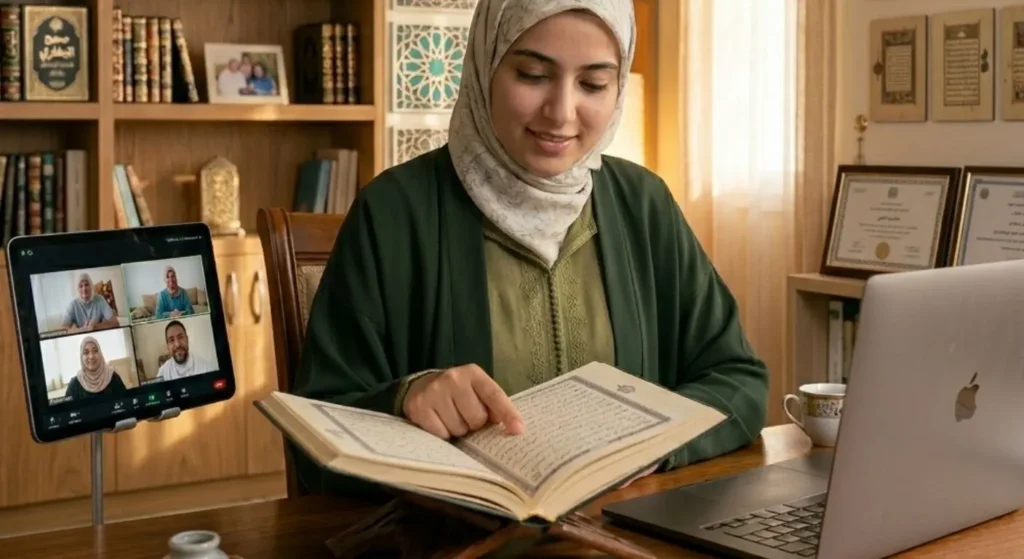
Many Muslims — especially those learning Quran later in life or still developing Arabic reading skills — genuinely wonder whether listening counts as a substitute for personal recitation. It’s one of the common questions we receive at Buruj Academy from adult beginners and new Muslims.
The wisest path is to do both: listen actively and work steadily toward reading. One supports and deepens the other.
Table of Contents:
Can I Listen to the Quran Instead of Reading It?
Yes, listening to the Quran instead of reading it is valid and rewarded, provided you listen with attentiveness and sincere intention.
Allah commands in the Quran:
وَإِذَا قُرِئَ الْقُرْآنُ فَاسْتَمِعُوا لَهُ وَأَنصِتُوا لَعَلَّكُمْ تُرْحَمُونَ
“And when the Quran is recited, listen to it and pay attention, that you may receive mercy.” (Al-A’raf 7:204)
Scholars affirm that this reward applies whether you listen directly or through a recording.
Listening and reading are not opposites — they are two complementary forms of engagement with the Quran.
However, listening to the Quran is not a permanent substitute for developing your own reading — both carry distinct, complementary reward.
If you are unable to read Arabic, listening is the right place to begin. If you can read, combining both gives you the fullest spiritual and cognitive benefit.
At Buruj Academy, we work with many adult students who started with listening before they could read a single Arabic letter.
Our Quran Reading course was specifically designed to move students from passive listeners to confident, independent readers — and the transition is far more achievable than most people expect.
Book your Free trial lesson and start reading the Quran

Is It Ok to Listen to Quran Instead of Reading?
Yes, it is ok to listen to the Quran instead of reading it. Classical and contemporary scholars are unified that listening to Quran recitation carries genuine reward.
The disagreement among scholars is not about whether listening is rewarded — it is about whether listening or reading carries greater reward.
Sheikh Ibn Baz (rahimahullah) stated clearly that the sincere listener shares in the reward of the reciter, comparing the two to partners in worship. He said that if a person listens with a righteous intention, seeking benefit and drawing closer to Allah, we hope their reward equals that of the one reciting.
Imam al-Nawawi noted in his commentary on Sahih Muslim that listening is more conducive to contemplation and understanding than reading, because the listener’s mind is free from the mechanics of pronunciation.
This is a meaningful pedagogical insight that we observe directly in our teaching: students who listen attentively often internalize meaning more deeply than those reading without comprehension.
| Scholar | Position on Listening |
| Imam al-Nawawi | Listening enables deeper contemplation than reading for many people |
| Sheikh Ibn Baz | Sincere listener hopes to receive reward equal to the reciter |
| Imam al-Tabari | Listening with attentiveness leads to mercy from Allah (per 7:204) |
The scholarly consensus treats listening as a serious, meritorious act — not a lesser alternative.
Discover the Buruj Academy Difference
Step into our virtual classrooms and see how our expert instructors make learning Quran and Arabic intuitive and clear. We focus on overcoming the specific hurdles non-native speakers face, building your confidence and connection with the Quran.
Did the Prophet ﷺ Listen to Quran Recitation from Others?
The Sunnah provides direct, powerful precedent for Quran listening. The Prophet ﷺ — to whom the Quran was revealed — would ask companions to recite so that he could listen. This is recorded in Sahih al-Bukhari from Abdullah ibn Mas’ud (رضي الله عنه):
“Recite to me. I said: Shall I recite to you when it was revealed to you? He said: I love to hear it from someone else.”
Ibn Mas’ud recited Surah An-Nisa until he reached the verse about witnesses on the Day of Judgment — and the Prophet’s eyes filled with tears. This hadith alone establishes that listening to Quran recitation is a profound spiritual act, not a shortcut or compromise.
Imam Ibn Battal explains that the Prophet ﷺ listened because the listener can focus entirely on meaning and reflection — free from the cognitive load of recitation itself.
Read also: Can You Listen to Quran in the Bathroom?
What Is the Reward for Listening to Quran Recitation?
The hadith recorded by Imam Ahmad from Abu Hurayrah (رضي الله عنه) states that whoever listens to even a single verse from the Book of Allah receives a multiplied reward, and that the one who recites it gains light on the Day of Judgment.
This indicates that both actions carry distinct, valuable spiritual returns.
Does Listening Give the Same Reward as Reading?
The position of Sheikh Ibn Baz is that a sincere, attentive listener hopes to receive reward equivalent to the reciter.
The word “hopes” here is not uncertainty — it reflects Islamic scholarly precision. The reward is connected to the quality of your intention and attentiveness.
What Conditions Make Listening Fully Rewarded?
Three conditions shape the reward of Quran listening:
| Condition | What It Means in Practice |
| Attentiveness (Istima’) | Active, focused listening — not background noise |
| Silence (Insat) | Refraining from talking or distraction while listening |
| Sincere Intention | Listening to draw closer to Allah, not merely for enjoyment |
Passive background listening — Quran playing while you scroll your phone — does not fulfill the conditions described in 7:204. True listening is an act of worship requiring presence of heart.
Excel in Your Quranic Studies
Join Buruj Academy and master the Quran with our structured, professional curriculum.
Book Your Free TrialCan You Listen to Quran Instead of Reading It When You Don’t Know Arabic?
If you cannot yet read Arabic, then listening is not just acceptable — it is the recommended starting point. The Islamic principle — what is within your capability is not abandoned because of what is beyond it — directly applies here. You engage with Quran through the means available to you.
We work with many adult beginners at Buruj Academy who arrive with zero Arabic reading ability.
Our approach is always the same: begin listening actively and intentionally while working to build reading skills in parallel. These are not competing activities — they reinforce each other.
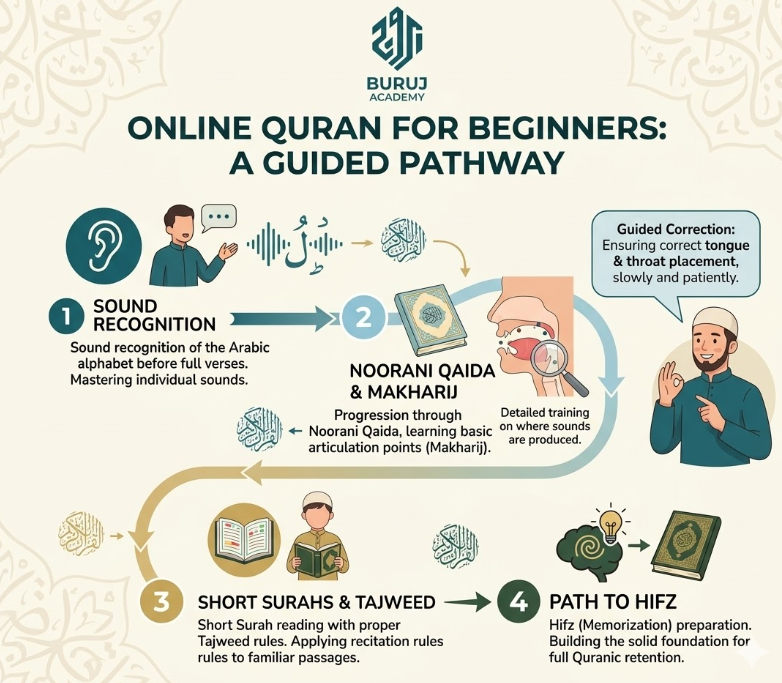
If you are at this stage, our Quran course for beginners gives you a structured path from complete beginner to independent Quran reader, with patient Al-Azhar-trained instructors who understand the specific challenges non-Arabic speakers face.
Begin Learning Quran With a FREE Trial Lesson
Is Listening to Recorded Quran (Recordings and Apps) Valid?
Yes listening to recorded Quran (recordings and apps) valid.The scholars who addressed this question, including Sheikh Ibn Baz, confirmed that the medium of listening does not change its validity.
Whether you listen to a reciter directly, through a radio broadcast, a recording, a phone app, or an online stream — the act of listening with attentiveness and intention carries the same reward.
This matters practically for busy Muslims. Listening to a qualified reciter like Sheikh Mahmoud Khalil Al-Hussary or Sheikh Abdul Basit Abd al-Samad during your commute, with focused attention, is a genuine act of worship.
One important note: listening to recitation with proper Tajweed trains your ear for correct pronunciation — and this benefit compounds when you eventually read yourself.
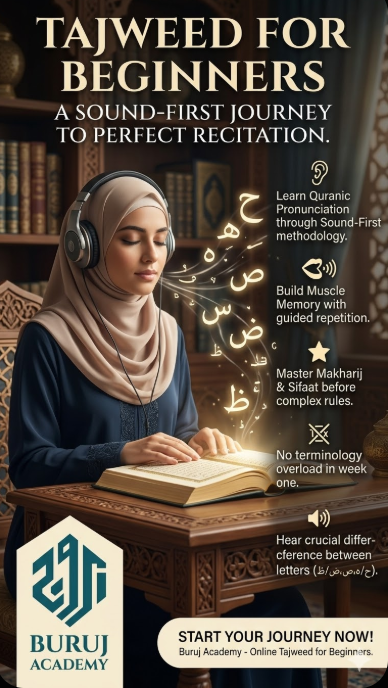
If you’re interested in understanding why reciters sound the way they do, our Online Tajweed Classes for Beginners break down every rule in clear, accessible English.
Book Your FREE Trial Lesson to Begin Your Tajweed Journey
Should I Still Learn to Read the Quran Myself?
Listening is rewarded and valid — and personal recitation carries its own distinct, irreplaceable reward. The hadith in Sunan al-Tirmidhi from Ibn Mas’ud establishes that every letter of Quran recitation carries ten good deeds. This reward is specifically tied to the act of reading and pronouncing.
The scholars who discussed this topic — including Imam al-Nawawi — did not say listening replaces reading. They said both carry virtue, and that combining them is the fullest way to engage with the Quran.
The Ideal Practice: Combine Both
| Activity | Primary Benefit |
| Personal recitation | Letter-by-letter reward; active worship |
| Listening to a reciter | Deep reflection; prophetic Sunnah; accessible for beginners |
| Reading with listening | Strongest tool for memorization and Tajweed correction |
If you are working toward Quran memorization, combining your own recitation with listening to a skilled reciter dramatically accelerates retention. Our Hifz specialists at Buruj Academy use this dual-method approach in our Online Hifz Program with measurable results across age groups.
Start Hifz today with a FREE trial session
Read also: Can I Listen to Quran to Sleep?
Begin Your Quran Journey with Buruj Academy’s Expert Instructors
Whether you are starting as a listener or ready to read, the Quran deserves your most intentional engagement. At Buruj Academy, our Ijazah-certified instructors and Al-Azhar University graduates guide students at every stage — from complete beginners building their first Arabic sounds to advanced students refining their recitation.
- 12+ years teaching non-Arabic speaking Muslims globally
- Personalized 1-on-1 sessions with flexible 24/7 scheduling
- The Buruj Method: Sound-before-rules for Tajweed, Consistency-before-speed for Hifz
- Real-time feedback and individual correction in every session
Book your free trial lesson today and take your first step from listening to reciting with confidence.
Take the next step in your learning journey today by enrolling in one of our specialized programs:
- Online Quran Classes
- Online Quran Classes for Beginners
- Online Quran Classes for Adults
- Online Quran Classes for Ladies
- Online Quran Classes for Kids
- Quran Reading Course
- Quran Recitation Course
- Online Ijazah Course
- Online Qirat Course
Don’t wait to transform your relationship with the Holy Quran. Join our global community of students and book your free evaluation session now!
Excel in Your Quranic Studies
Join Buruj Academy and master the Quran with our structured, professional curriculum.
Book Your Free TrialConclusion
Listening to the Quran is a distinct act of worship, commanded in the Quran itself and practiced by the Prophet ﷺ. Scholars from Imam al-Nawawi to Sheikh Ibn Baz affirm its reward for the sincere, attentive listener. At the same time, personal recitation carries its own irreplaceable virtue, letter by letter.
The wisest path is to do both: listen actively and work steadily toward reading. One supports and deepens the other. Wherever you are in that journey, the door to engaging with Allah’s Book is always open — and every moment of sincere attention to it is worship.
Frequently Asked Questions About Listening to the Quran
Is listening to Quran the same as reading it in terms of reward?
Scholars including Sheikh Ibn Baz hold that an attentive, sincere listener hopes to receive reward equal to the reciter. However, personal recitation also carries a specific letter-by-letter reward mentioned in hadith. Both are meritorious acts — listening does not cancel the distinct virtue of reading, and neither replaces the other.
Can I listen to Quran on my phone and still get reward?
Yes. The medium of listening — whether direct, through a recording, app, or broadcast — does not affect the validity or reward of the act. What matters is attentiveness, silence, and sincere intention. Passive background listening while distracted does not fulfill the conditions of the rewarded listening described in Surah Al-A’raf (7:204).
Is it ok to listen to Quran instead of reading if I don’t know Arabic?
Absolutely. If you cannot yet read Arabic, listening with full attention is the right way to engage with the Quran now — while you work toward learning to read. Islamic scholarship supports engaging through whatever means are within your capability. Use listening as your current practice and build reading skills alongside it.
How can listening to Quran help me memorize it faster?
Listening repeatedly to a qualified reciter — especially one with proper Tajweed — embeds the sounds, rhythms, and flow of verses before you attempt to memorize them independently. This auditory foundation dramatically eases the memorization process. For a structured approach, explore Quran memorization scheduling strategies alongside your listening practice.
What is the difference between Istima’ and Sama’ in Quran listening?
Istima’ means active, intentional listening — directing your ear and full attention to the recitation. Sama’ refers to simply hearing the Quran without deliberate focus. The Quranic command in 7:204 uses istami’u — calling specifically for active listening. Scholars consider Istima’ the higher form, carrying greater reward because it involves the presence of both ear and heart.