 Quran
Quran

| Key Takeaways |
| Reading Quran with understanding transforms recitation from ritual repetition into a direct, living relationship with Allah’s words. |
| The Prophet ﷺ praised those who recite and reflect, with authentic hadiths linking understanding to increased faith and righteous action. |
| Comprehension deepens Khushu’ (presence of heart) in Salah, making obligatory prayers spiritually transformative rather than mechanical. |
| Understanding Quranic Arabic — even partially — enables students to retain memorized verses far longer than sound-only memorization alone. |
| Gradual, structured Quranic Arabic study is accessible to non-Arabic speakers at any age, beginning with high-frequency words and root patterns. |
Millions of Muslims worldwide recite the Quran daily with beautiful pronunciation and precise Tajweed — yet many finish their recitation unsure of what they just read. This gap between sound and meaning is one of the most important challenges facing Muslim communities in the English-speaking world.
Reading Quran with understanding is not a luxury reserved for scholars. It is a transformative practice that every Muslim can work toward, and one that changes the quality of worship, the depth of faith, and the impact of the Quran on daily life.
The reasons matter — and they are more specific and practical than most people realize.
Table of Contents:
1. Understanding the Quran Fulfills the Purpose Allah Revealed It For
Allah did not reveal the Quran simply to be recited beautifully. He revealed it as a guide — هُدًى لِّلنَّاسِ — a guidance for all of humanity. That guidance can only reach a person when its meaning enters the heart, not merely its sounds through the ears.
Allah says in the Quran:
أَفَلَا يَتَدَبَّرُونَ الْقُرْآنَ أَمْ عَلَىٰ قُلُوبٍ أَقْفَالُهَا
Afalā yatadabbarūnal-Qur’āna am ‘alā qulūbin aqfāluhā
“Then do they not reflect upon the Quran, or are there locks upon [their] hearts?” (Muhammad 47:24)
The Arabic verb used here — يَتَدَبَّرُونَ (yatadabbarūn) — means to reflect deeply, to think carefully through every layer of meaning.
This is not passive listening. Allah is asking directly: are we engaging with His words, or are we sealing our hearts from their impact?
In our sessions at Buruj Academy, Buruj’s Azhari Quran tutors observe that students who begin understanding even basic Quranic vocabulary consistently describe a turning point — the Quran stops feeling like a foreign text and starts feeling personal. That shift is exactly what Allah’s question in this verse points toward.
Book a FREE trial session with one of Buruj’s Azhari Quran tutors

A Hadith on Understanding Quran
The authentic prophetic tradition on engaging with Quran with depth is clear and encouraging. The Prophet ﷺ said, as recorded in Sahih al-Bukhari 5027:
“The best of you are those who learn the Quran and teach it.”
Classical scholars of Hadith consistently explained that “learning the Quran” in the prophetic tradition encompasses both recitation and understanding.
The Prophet ﷺ himself would sometimes spend an entire night repeating a single verse in his Tahajjud, reflecting on its meaning. This is a model of how to interact with the Quran.
2. Reading Quran Without Understanding Leaves the Heart Spiritually Incomplete
This is not about invalidating recitation without understanding — reciting Arabic Quran carries immense reward regardless of comprehension. The concern is about what is missing when understanding is absent, not what is wrong with recitation itself.
Reading Quran without understanding means a person’s relationship with the Book remains largely one-directional.
Sound travels from the mouth, but meaning does not travel back into the heart. The Quran is described in Surah Az-Zumar (39:23) as the best of speech — أَحْسَنَ الْحَدِيثِ — a speech that makes hearts tremble. That trembling requires comprehension.
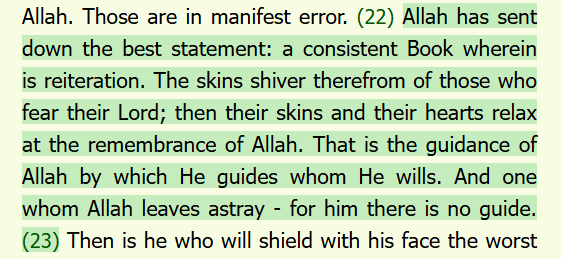
The experience of reciting a verse about Jannah without knowing it describes Jannah, or completing Surah Al-Fatiha in every Salah without knowing that you are asking Allah for guidance — this is the gap understanding closes.
| State of Recitation | Effect on Heart | Effect on Salah |
| Sound only | Limited emotional connection | Mechanical, habitual |
| Sound + partial understanding | Growing engagement | Increasingly present |
| Sound + full understanding | Deep Khushu’, emotional response | Transformative worship |
3. Understanding the Quran Directly Increases Khushu’ in Salah
Khushu’ — the presence and humility of the heart in prayer — is one of the most discussed challenges among practicing Muslims globally.
Most people know the feeling: the body is in Salah, but the mind has wandered. Understanding the Quran is one of the most powerful and practical solutions to this problem.
When a person understands what they are reciting in Salah, the prayer changes its nature entirely. Surah Al-Fatiha becomes a real conversation with Allah — reciting إِيَّاكَ نَعْبُدُ وَإِيَّاكَ نَسْتَعِينُ (Iyyāka na’budu wa-iyyāka nasta’īn — “You alone we worship and You alone we ask for help”) with understanding is fundamentally different from reciting sounds whose meaning you have never engaged with.
Buruj’s Azhari Quran tutors regularly hear students describe praying Fajr and genuinely weeping for the first time — not because of a new emotional technique, but simply because they had just learned what Surah Ash-Sharh means.
That is the direct result of reading Quran with understanding.
Excel in Your Quranic Studies
Join Buruj Academy and master the Quran with our structured, professional curriculum.
Book Your Free Trial4. Understanding Quranic Arabic Dramatically Improves Memorization Retention
This is one of the most practically significant benefits of reading Quran with understanding, and one that students frequently discover only after beginning Quranic Arabic study.
Memorization built purely on phonetic repetition is vulnerable. When a student knows what a verse means — its grammatical structure, its key vocabulary, its context — that verse becomes anchored in multiple layers of memory simultaneously: auditory, semantic, and contextual.
In our experience guiding students through Buruj Academy’s Online Hifz Program, students who have even a foundational understanding of Quranic Arabic retain their memorization significantly longer between revision sessions.
Verses they understand do not fade the same way unfamiliar phonetic sequences do.
Book Your Free Trial Lesson with Burruj’s Hifz Course for Adults

| Memorization Approach | Retention After 1 Week | Retention After 1 Month |
| Sound-only (no understanding) | Moderate | Often requires full re-memorization |
| Sound + basic word meaning | Strong | Good with regular revision |
| Sound + grammatical understanding | Very strong | Highly durable |
This is why we integrate basic Quranic vocabulary into our Hifz curriculum from the early stages — understanding is not separate from memorization.
It is one of its strongest pillars. You can explore more about effective retention strategies in our guide on how to memorize Quran faster.
Read also: Is It Haram to Force Your Child to Read the Quran?
5. Understanding the Quran Builds a Living Relationship with Allah’s Words
The Quran describes itself as شِفَاءٌ لِّمَا فِي الصُّدُورِ — a healing for what is in the chests. That healing function operates through meaning. A medicine that cannot be absorbed cannot heal.
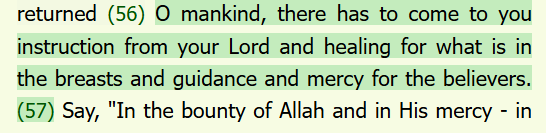
When a person understands the Quran, the Book begins to speak directly to their circumstances.
A verse about patience during hardship lands differently when its exact meaning is known.
A verse about Allah’s mercy carries specific weight when its Arabic words and their nuances are understood. This is the transition from the Quran as a recited text to the Quran as a living companion.
Allah says:
كِتَابٌ أَنزَلْنَاهُ إِلَيْكَ مُبَارَكٌ لِّيَدَّبَّرُوا آيَاتِهِ
Kitābun anzalnāhu ilayka mubārakun liyaddabbarū āyātih
“[This is] a blessed Book which We have revealed to you, [O Muhammad], that they might reflect upon its verses.” (Sad 38:29)
The explicitly stated purpose of the Quran’s revelation — in Allah’s own words — is reflection upon its meaning. This is not optional encouragement. It is the stated divine intention for why the Book was sent.
Discover the Buruj Academy Difference
Step into our virtual classrooms and see how our expert instructors make learning Quran and Arabic intuitive and clear. We focus on overcoming the specific hurdles non-native speakers face, building your confidence and connection with the Quran.
6. Understanding the Quran Strengthens Taqwa and Ethical Decision-Making
Taqwa — God-consciousness and moral awareness — is described throughout the Quran as the fruit of engaging deeply with its guidance.
When a person reads Quran with understanding, specific verses about honesty, justice, family, patience, and accountability are no longer abstract — they apply directly to daily choices.
This is what distinguishes Quran that is known from Quran that is lived.
A student who understands Surah Al-Hujurat’s verses on backbiting, mockery, and verification of news does not need a separate reminder about social media conduct — the Quran itself becomes the ongoing reminder.
How to Read Quran with Understanding as a Non-Arabic Speaker?
Reading Quran with understanding is an accessible goal for non-Arabic speakers — it requires a realistic strategy, not years of full-time study before anything becomes meaningful.
A. Start with High-Frequency Quranic Vocabulary First
Approximately 70% of the Quran is composed of words that appear 100 times or more. Mastering the 300 most frequently occurring Quranic words gives a reader meaningful access to the majority of the text.
This is where most students begin in Buruj Academy’s Quranic Arabic Classes — not with full grammar, but with words that appear in every Juz.
Begin Understanding Quranic Arabic with a FREE Lesson
B. Combine Tajweed Study with Meaning Study Simultaneously
Many students treat Tajweed and understanding as separate goals to pursue sequentially. In our instructors’ experience, learning them in parallel produces better results.
Correct recitation becomes more meaningful when the student understands what they are reciting, and understanding deepens when accompanied by careful, attentive recitation.
Our guide on Tajweed for beginners explains how foundational recitation skills can be built alongside growing comprehension.
C. Use a Tafsir Companion for Daily Recitation
Reading even one page of a reliable English-language Tafsir — such as Tafsir Ibn Kathir (translated) or Tafsir As-Sa’di — alongside daily Quran recitation builds understanding progressively over months.
This requires no formal Arabic study to begin. If you are just beginning your Quran reading practice, our resource on reading the Quran for the first time can help you structure your early experience.
Read also: How to Read the Quran Without Knowing Arabic?
Begin Your Quran Understanding Journey with Buruj Academy’s Expert Instructors
Reading Quran with understanding is within reach for every non-Arabic speaking Muslim — with the right guidance, the right method, and consistent effort.
At Buruj Academy, our Quranic Arabic Classes and Online Quran Recitation Course are taught by Al-Azhar University graduates and Ijazah-certified instructors with 12+ years of experience helping non-Arabic speakers access the Quran’s meaning.
We use the Buruj Method — Context-before-abstraction, Sound-before-rules, Consistency-before-speed — to make Quranic comprehension a real, attainable goal.
Whether you are starting from zero or looking to deepen existing knowledge, our personalized 1-on-1 sessions and flexible 24/7 scheduling make it possible around any lifestyle.
Book your free trial lesson today and experience what changes when meaning meets recitation.
Take the next step in your learning journey today by enrolling in one of our specialized programs:
- Online Quran Classes
- Online Quran Classes for Beginners
- Online Quran Classes for Adults
- Online Quran Classes for Ladies
- Online Quran Classes for Kids
- Quran Reading Course
- Quran Recitation Course
- Online Ijazah Course
- Online Qirat Course
Don’t wait to transform your relationship with the Holy Quran. Join our global community of students and book your free evaluation session now!
Excel in Your Quranic Studies
Join Buruj Academy and master the Quran with our structured, professional curriculum.
Book Your Free TrialConclusion
The Quran was revealed to be understood — not merely recited. When sound and meaning come together in a Muslim’s practice, worship becomes more alive, memorization becomes more durable, and the Quran begins to function as the guide and healer Allah intended it to be.
The distance between reciting and understanding is not as vast as many assume. It begins with a single word, then a verse, then a page.
Over time, with structured learning and sincere intention, the Book that felt foreign becomes the most intimate conversation a believer has each day. That transformation is accessible to every non-Arabic speaker willing to take the first step.
Frequently Asked Questions About Reading Quran with Understanding
Is there a specific hadith on understanding Quran that encourages non-scholars to study its meaning?
Yes. The Prophet ﷺ praised those who learn and teach the Quran, and classical scholars consistently explained that this includes comprehension, not only recitation. The Quran itself repeatedly commands Tadabbur — deep reflection — making understanding a religious duty accessible to every Muslim, not only scholars. See Sahih al-Bukhari 5027.
What is the difference between reading Quran without understanding and reading with understanding in terms of spiritual impact?
Reading Quran without understanding carries real reward and remains a valuable act of worship. However, understanding adds a direct impact on the heart — increasing Khushu’, strengthening Taqwa, and allowing the Quran to guide real decisions. Both dimensions matter; neither replaces the other.
Can a complete beginner start learning to read Quran with understanding, or is Arabic required first?
A complete beginner can begin building Quranic understanding without formal Arabic study by learning high-frequency vocabulary and using reliable English Tafsir alongside recitation. Structured Quranic Arabic study — even at a beginner level — accelerates this process significantly and is accessible from day one.
How long does it take a non-Arabic speaker to reach basic Quran understanding through structured study?
In our instructors’ experience at Buruj Academy, students who commit to 3–4 sessions per week of focused Quranic Arabic study typically achieve meaningful comprehension of commonly recited Surahs within 4–6 months. Full independent Quran comprehension is a longer goal — but meaningful, practical understanding begins much sooner than most students expect.