 Quran
Quran
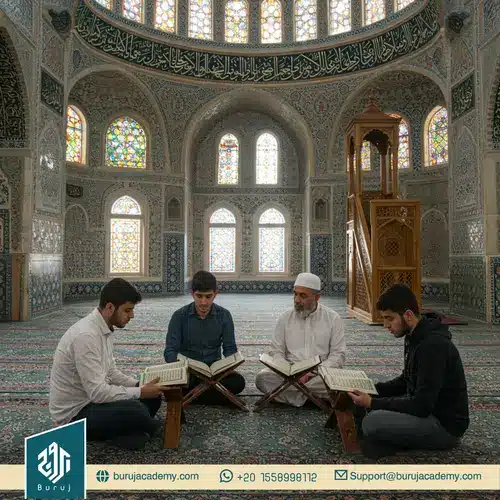
Receiving the Quran from a teacher who received it from their teacher, continuing unbroken back to the Prophet ﷺ himself — this is the living tradition that makes Ijazah unlike any other academic credential in the world.
Understanding what Ijazah in Quran means helps Muslims appreciate why this certification carries such profound spiritual and scholarly weight. We’ll cover the full meaning, the sanad chain, eligibility requirements, and how to pursue certification authentically.
Table of Contents:
Ijazah Meaning in Quran? Defining the Sacred Authorization
The core question, “What is Ijazah in Quran?”, finds its answer in the rich history of Islamic education.
Ijazah Linguistic and Religious Meaning
In Arabic, the word Ijazah (إِجَازَة) literally translates to “permission,” “authorization,” or “license.” Nevertheless, in the context of the Quran and Islamic knowledge, it signifies a formal license granted by a qualified scholar (Shaikh or Shaykhah) to a student. This is because the student has demonstrated mastery of the text. Thus, this Ijazah authorizes the student to transmit a specific text, usually the Holy Quran or a book of Hadith.
Religiously, an Ijazah is the most revered form of certification in Quranic recitation (Qira’at) and memorization (Hifz). Specifically, it is a testimony of authenticity and accuracy in performance, guaranteeing the student recites the Quran exactly as the granting Shaikh received it, linking them through an unbroken chain.
The Chain of Narration (Sanad)
The true value of knowing What is Ijazah in Quran lies in understanding the Sanad (سَنَد), or the chain of narration. Indeed, when a student earns an Ijazah, their name is added to a documented list that traces the authority of the recitation backward, generation by generation, all the way to the Companion of the Prophet who first heard the recitation directly from Muhammad (PBUH), and ultimately, from the Angel Jibreel (AS) and Allah (SWT). Furthermore, this unbroken Sanad ensures the purity and integrity of the Quran’s text and pronunciation throughout history.
Ijazah in Quran Refers to a Certified Permission to Transmit Quranic Recitation Through an Authenticated Chain
Ijazah (إجازة) means “permission” or “authorization” in Arabic. In the Quranic context, Quran Ijazah meaning extends beyond a diploma — it is a scholar’s formal certification that a student has mastered recitation to a standard worthy of teaching others.
The certification validates both accuracy and transmission lineage, not merely memorization ability.
Buruj Academy’s Online Ijazah Course provides rigorous, structured training under qualified Ijazah-holding scholars, preparing students for certification through authentic sanad with Al-Azhar-trained instructors who maintain the full chain of transmission.
Book your FREE trial lesson in your path to Ijazah
Why Seek an Ijazah in Quran? The Importance for Serious Learners
Students focusing on the Arabic language often ask, “Why should I pursue an Ijazah when I can just memorize the Quran?” Well, the answer connects linguistic precision with spiritual obligation.
1. Preserving Tajweed and Pronunciation
The study leading to an Ijazah is fundamentally the study of Tajweed (تَجْوِيد), the set of rules governing the correct pronunciation of the Quran’s letters. Therefore, an Ijazah confirms the student’s mastery of Tajweed to the highest degree. The Shaikh actively listens to the student recite the entire Quran, correcting every minute error in articulation (Makharij) and characteristic (Sifaat). Simply put, knowing What is Ijazah in Quran means recognizing it as the ultimate quality control mechanism for Quranic recitation.
Buruj Academy’s Tajweed courses establish this critical foundation, thereby preparing students for the rigorous standard an Ijazah demands.
2. The Authority to Teach and Transmit
Moreover, once a student obtains an Ijazah, they receive the permission and the responsibility to teach the Quran with the same certified authority. Crucially, this is not a personal honor; it is a vital function for the preservation of the Holy Book. The Ijazah holder becomes a link in the sacred chain, consequently continuing the tradition and ensuring the next generation learns the Quran accurately. Ultimately, this allows the tradition to flourish, keeping the light of the Quran accessible and authentic.
Types of Ijazah in Quran: Tailoring Your Quranic Goal
What is Ijazah in Quran often varies depending on the student’s area of focus. Generally speaking, an Ijazah falls into one of two main categories:
1. Ijazah in Hifz (Memorization)
This type of Ijazah certifies that the student has successfully memorized the entire Quran from the first Surah (Al-Fatihah) to the last (An-Nas) and can recite it flawlessly from memory. Typically, the Shaikh grants this Ijazah only after the student has reviewed the entire memorized text multiple times, demonstrating impeccable retention and mastery of the text order.
Our Hifz program (→ [Internal Link: Hifz Program]) meticulously guides students through the memorization process, hence aiming for the standard required for this profound achievement.
2. Ijazah in Recitation (Qira’at)
An Ijazah in Qira’at certifies mastery of the rules of recitation according to one of the ten recognized schools of Qira’at. The most common and widely taught is the narration of Hafs ’an ’Asim. Specifically, a student receives this Ijazah after reciting the entire Quran, word-for-word, in the presence of the Shaikh, adhering strictly to the rules of that specific narration. Scholars can also earn Ijazah in multiple Qira’at, which means they demonstrate comprehensive mastery over the different, yet all authentic, methods of recitation.
Discover the Buruj Academy Difference
Step into our virtual classrooms and see how our expert instructors make learning Quran and Arabic intuitive and clear. We focus on overcoming the specific hurdles non-native speakers face, building your confidence and connection with the Quran.
The Path to Achieving Ijazah: A Journey of Discipline and Devotion
Earning an Ijazah requires a deep commitment, intense study, and a strong partnership with a certified tutor.
1. Finding the Right Teacher
The journey begins by seeking an authentic and certified Shaikh or Shaykhah who themselves possess a valid Ijazah with a confirmed Sanad. In other words, the teacher must be a master of the Quran, a scholar of Tajweed, and a mentor with piety and patience. Buruj Academy’s dedicated and certified tutors offer this essential guidance, thus providing personalized instruction to meet the rigorous standards.
2. The Process of Sard (What is Ijazah in Quran)
The primary task in the Ijazah process is Sard (review), where the student recites a substantial portion of the Quran—often a Juz (part) or more—to the teacher daily. The teacher corrects any mistakes immediately, focusing on accuracy, fluency, and the application of Tajweed rules. As a result, this intensive process often takes months, or even years, ensuring the student internalizes the correct recitation perfectly. The student must demonstrate consistent and near-perfect performance before earning the Ijazah.
3. Combining Arabic Language Skills (What is Ijazah in Quran)
For students focusing on Arabic, achieving an Ijazah enhances their language skills immensely. For example, the detailed study of Makharij (points of articulation) refines the pronunciation of every Arabic letter. Similarly, the rhythmic and measured pace of recitation improves fluency and aural comprehension. Understanding What is Ijazah in Quran ultimately means understanding the profound linguistic heritage embedded within the recitation itself.
Understanding the actual steps clarifies what students should prepare for throughout their certification path.
| Stage | What Happens | Duration |
| Preparation Phase | Student masters Tajweed + completes memorization | 2–10 years |
| Finding a Qualified Sheikh | Student connects with an Ijazah-holding scholar | Variable |
| Formal Recitation Testing | Student recites before the scholar with corrections | Weeks to months |
| Final Certification | Scholar grants written Ijazah document with sanad | Upon passing |
| Continued Teaching | Certified student may now teach and grant Ijazah | Ongoing |
The Ijazah document itself contains the student’s name, teacher’s name, the full sanad chain, and the scholar’s seal. This document is a historical record joining centuries of authenticated transmission.
Buruj Academy’s Hifz Ijazah Course prepares students for complete Quran memorization certification under Ijazah-holding scholars, with rigorous preparation standards and an authentic chain of transmission before formal testing begins.
Book your FREE trial lesson in your path to Ijazah
Common Misconceptions About Ijazah in Quran Prevent Many Students from Pursuing This Goal
Several misunderstandings discourage qualified students or create unrealistic expectations about what Ijazah involves.
1. Many Students Believe Ijazah Is Only for Arab Scholars Living in Muslim-Majority Countries
This is incorrect. Non-Arabic speakers worldwide have received Ijazah through qualified teachers who assess recitation quality — not linguistic background. Thousands of English-speaking Muslims hold authenticated Ijazah certification today.
Read Also: How to Read Quran Without Mistakes?
2. Some Students Confuse Ijazah with a General Quran Completion Certificate
A completion certificate from any Quran school is not Ijazah. Ijazah requires a certified Ijazah holder to personally verify recitation, with their own authenticated sanad documented and transferred to the student.
Read Also: Improve Quran Recitation by Audio
3. Students Sometimes Assume Online Study Cannot Lead to Authentic Ijazah
Online study through qualified, Ijazah-certified instructors is fully legitimate for preparation. The final recitation testing with a certified sheikh — whether conducted in person or via verified live sessions — determines authentic certification.
Read Also: How To Find A Good Quran Teacher
Start Learning the Quran Today
Join our qualified teachers and begin your journey in Quran recitation, Tajweed, and understanding — from the comfort of your home.
Book Your Free TrialRead Also: Reading The Quran For The First Time
Start Your Ijazah Preparation with Buruj Academy’s Expert Instructors
Pursuing Ijazah is one of the most rewarding scholarly goals a Muslim can set. Buruj Academy provides the structured preparation that serious students need.
- Ijazah-certified instructors and Al-Azhar University graduates with authenticated sanads
- 12+ years of experience guiding non-Arabic speakers toward Tajweed mastery and memorization
- Personalized Learning Plans calibrated to your current level and certification goals
- Real-time recitation correction using the Buruj Method — precision before progression
- Flexible 1-on-1 online sessions with 24/7 scheduling for global students
- Structured progression from foundational Tajweed through advanced certification preparation
Book your free trial lesson today and begin the path toward authenticated Quran certification with Buruj Academy’s Online Ijazah Course.
See which of Burooj’s courses aligns with your learning path:
- Tajweed Classes
- Tafseer Al-Quran Course
- Quran Recitation Course
- Hifz Course (Quran Memorization)
- Quranic Arabic Classes
- Noorani Qaida course
- Islamic Studies
Conclusion
Ijazah in Quran represents the highest form of Quranic certification — a living credential connecting every certified reciter through an unbroken chain back to the Prophet ﷺ. Its value lies precisely in this authenticated transmission, not merely academic achievement.
The sanad chain is Islam’s most remarkable scholarly institution, preserving the Quran’s exact sound and recitation for over fourteen centuries. Joining this chain through certification is both a personal achievement and a contribution to communal preservation.
Insha’Allah, every Muslim who pursues Ijazah — whether in memorization or recitation — takes their place in this living tradition. With proper preparation, qualified guidance, and sincere commitment, this goal is genuinely attainable for dedicated students worldwide.




Leave a Reply