 Islamic
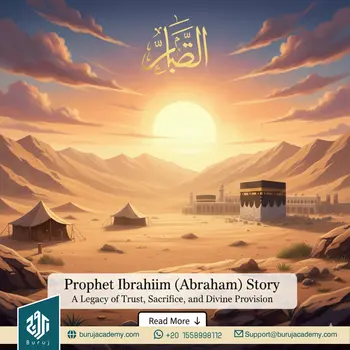
The Prophet Ibrahim (Abraham) Story stands as a monumental pillar in Islamic tradition and the Holy Quran. His life provides a profound example of unwavering submission, fierce conviction, and enduring patience. These qualities earned him the title Khalilullah, the Friend of Allah.
This epic narrative details a man who challenged an entire civilization steeped in idolatry. He then embarked on incredible migrations and faced the most difficult divine tests imaginable. This figure forever shaped the trajectory of monotheism for billions globally.
Prophet Ibrahim (Abraham) Story: The Call to Monotheism
Ibrahim grew up in a land often identified as ancient Babylon. His own father, Azar, worshipped the idols. In fact, his father also crafted the very idols people revered. From his earliest days, Ibrahim observed the cyclical nature of the sun, moon, and stars. Yet, his pure intellect compelled him to seek the real Creator. He recognized that these celestial bodies were magnificent.
However, they rose and set, disappearing and returning. This proved they were governed, not governing. Consequently, he intuitively rejected the false gods of his people, declaring his devotion solely to the One who created the heavens and the earth.
Allah describes this reasoning:
فَلَمَّا جَنَّ عَلَيْهِ الَّيْلُ رَأَىٰ كَوْكَبًا ۖ قَالَ هَٰذَا رَبِّي ۖ فَلَمَّا أَفَلَ قَالَ لَا أُحِبُّ الْآفِلِينَ
Falamma janna ‘alayhi al-laylu ra’a kawkaban qala hadha rabbi falamma afala qala la uhibbu al-afilin
“When the night covered him, he saw a star. He said, ‘This is my lord.’ But when it set, he said, ‘I do not like those that disappear.'” (Al-An’am 6:76)
Ibrahim’s intellectual journey toward Tawhid, demonstrating that monotheism is reached through reasoning, not just inheritance
Buruj Academy’s Online Islamic Studies Classes help students understand these Quranic narratives through classical Tafsir sources, not surface-level retellings, so the theological and spiritual significance becomes clear.
Begin Your Islamic Knowledge Journey With a FREE Trial Lesson

Abraham’s Destruction of Idols
The young prophet, driven by truth, constantly debated his father and his community. He logically demonstrated the futility of worshipping inert, hand-carved objects. These objects possessed neither the power to benefit nor harm. His people, however, stubbornly clung to ancestral tradition. When a festival drew the entire town away, Ibrahim seized his opportunity. He bravely entered the main temple and shattered every idol, deliberately leaving the largest one intact. He hung the axe around the neck of the largest statue, anticipating their inquiry.
The people returned and discovered the destruction. They immediately suspected Ibrahim. When confronted, he boldly pointed to the chief idol. He suggested they ask it who committed the act, since it must have witnessed everything. Furthermore, he challenged them: “Do you worship, apart from Allah, what neither benefits you nor harms you at all?” This pointed question, recorded in the Quran, forced them to admit the idols’ helplessness. Therefore, the entire community realized the intellectual weakness of their belief. However, their arrogance prevented them from accepting the truth.
Divine Protection: Prophet Ibrahim’s Miraculous Fire Trial
The idolatrous king, Nimrod, and the priests decided this rebellious monotheist deserved the severest punishment. They gathered wood for days and built a colossal pyre. Then, they threw Ibrahim into the raging inferno. The people watched, expecting him to be instantly consumed.
Nevertheless, Allah commanded the fire directly: “O fire! Be coolness and safety upon Ibrahim!” By divine decree, the scorching flames instantly transformed into a gentle, cool environment. Ibrahim emerged from the trial unharmed, a living testament to the power of the One True God. This incredible miracle not only preserved the prophet but also served as a profound sign for all generations.
Migration and Trust: The Prophet Ibrahim (Abraham) Story of Journey
Realizing that his immediate community would never accept the truth, Ibrahim made the monumental decision to migrate for the sake of his faith. He left behind his family, his homeland, and all worldly ties, placing his complete trust in Allah. He traveled with his nephew Lut (Lot) and his wife Sarah. They set out on a journey that would take him across vast lands, including Egypt and the Levant. This migration demonstrated a prophetic principle. Specifically, active devotion often requires abandoning comfort and familiarity.
Discover the Buruj Academy Difference
Step into our virtual classrooms and see how our expert instructors make learning Quran and Arabic intuitive and clear. We focus on overcoming the specific hurdles non-native speakers face, building your confidence and connection with the Quran.
Read Also: Prophet Lut Story
Mecca’s Origin: Hajar, Ismail, and the Zamzam Miracle
Ibrahim settled in the land of Canaan. Years later, he married Hajar, and she bore him his first son, Ismail. Following a divine instruction, Allah commanded Ibrahim to take Hajar and the infant Ismail to a barren valley in Arabia.
This valley was the future site of Mecca. He then placed them with only a small provision of dates and water, trusting fully in Allah’s plan. When the provisions ran out, little Ismail cried. Hajar desperately searched for water between the two hills, Safa and Marwah, running back and forth seven times.
Suddenly, an angel struck the ground near the infant, and water gushed forth—the miraculous well of Zamzam. The flow of water attracted tribes, and the desolate valley began to flourish into a city. Ibrahim would periodically return to check on Hajar and Ismail. This episode of the Prophet Ibrahim (Abraham) Story powerfully highlights Hajar’s reliance on God. It also shows Ismail’s blessed position, ensuring the continuity of monotheism in the Arabian Peninsula.
The Ultimate Quranic Test: Prophet Abraham’s Sacrifice of Ismail – Prophet Ibrahim (Abraham) Story
The next chapter of the Prophet Ibrahim (Abraham) Story details the most excruciating test of obedience ever recorded. In a dream, Ibrahim received a command from Allah: sacrifice his son, Ismail. Ismail was the beloved son he had waited for throughout his life. Ismail, by this time a capable and loving young man, immediately accepted his father’s obligation. When Ibrahim explained the divine command, Ismail replied with submission:
“O my father! Do as you are commanded. You will find me, if Allah wills, of the patient.”
The Divine Covenant: Ibrahim’s Ultimate Reward – Prophet Ibrahim (Abraham) Story
The moment Ibrahim laid his son down and prepared to execute the command arrived. Through this act, he proved his absolute devotion. The demonstration showed that his love for Allah surpassed all earthly affection. This included the deep love for his own child. The knife, however, refused to cut. A voice called out, declaring that Ibrahim had already fulfilled the vision. Instead, Allah provided a magnificent ram for the sacrifice, an event Muslims commemorate annually through the festival of Eid al-Adha. The sacrifice of the ram symbolized not the desire for blood, but the complete submission of the will.
Therefore, Allah rewarded Ibrahim not only by preserving his son but by granting him a covenant. Allah made Ibrahim a leader for humanity. He promised to bless his descendants with prophethood and divine scripture. This divine promise materialized through the two prophetic lines: the descendants of Ismail, culminating in Prophet Muhammad (Peace be upon him), and the descendants of Isaac, who led to the Prophets of Israel.
Read Also: Stories Of The Prophets For Kids
Prophet Ibrahim’s Legacy: Foundation of the Kaaba at Mecca
Years later, Ibrahim returned to Mecca. With the help of his now-adult son Ismail, he received a final, monumental divine command: to build the first house dedicated purely to the worship of the One God. Together, father and son labored tirelessly, raising the foundations of the structure known today as the Kaaba, the focal point of the Islamic world.
As they worked, they invoked Allah with a profound prayer. They asked for acceptance of their labor and guidance for their descendants. Furthermore, they prayed for the establishment of a community that would submit entirely to Him.
Every Muslim in the world prays facing this structure. Every Hajj circles it. Five prayers daily, across billions of Muslims globally, are oriented toward what Ibrahim and Ismail built together with their hands and their du’a.
After years apart, Ibrahim returned to Makkah. Together with Ismail, he constructed the Kaaba—the sacred house—by Allah’s command. As they raised the foundations, they made one of the most beautiful supplications recorded in the Quran:
رَبَّنَا تَقَبَّلْ مِنَّا ۖ إِنَّكَ أَنتَ السَّمِيعُ الْعَلِيمُ
Rabbana taqabbal minna innaka anta as-sami’u al-‘alim
“Our Lord, accept this from us. Indeed, You are the Hearing, the Knowing.” (Al-Baqarah 2:127)
This du’a is a model for all acts of worship—even prophets completing monumental acts sought acceptance, not assuming their deeds were automatically accepted
Through Buruj Academy’s Tafseer Al-Quran Course, students study these Quranic passages with proper scholarly context, understanding the theological, linguistic, and historical layers that make these verses profoundly meaningful.
Begin Understanding Quran With a FREE Trial in Buruj’s Tafseer Al-Quran Course

Prophet Ibrahim’s Legacy Connects Directly to the Prophethood of Muhammad ﷺ
Ibrahim made du’a for a prophet to be sent from his descendants. That supplication—recorded in Al-Baqarah 2:129—was answered generations later in the Prophet Muhammad ﷺ, who came from the lineage of Ismail.
This means the story of Prophet Ibrahim is inseparable from the story of Islam itself. Ibrahim is mentioned in the Quran in over 60 places. He is included in every Muslim’s Salah through the Salawat Ibrahimiyyah—the blessings upon Ibrahim and his family recited in Tashahhud.
Prophet Ibrahim’s Contributions to Islamic Practice
| Practice | Connection to Ibrahim |
| Hajj and Umrah rituals | Established through his life events |
| Eid al-Adha and Qurbani | Commemorates the sacrifice of Ismail |
| Salawat Ibrahimiyyah in Salah | Blessings on Ibrahim in every prayer |
| Direction of Qibla | The Kaaba he built |
| Adhan and call to Hajj | Ibrahim commanded to call people to Hajj |
Ibrahim’s story is not ancient history for Muslims—it is lived practice, embedded in worship five times daily and annually through Hajj and Eid.
Deepen Your Islamic Knowledge
Study Aqeedah, Fiqh, Seerah, and essential Islamic teachings with experienced instructors in a structured online program.
Try Islamic StudiesRead Also: Lessons From Prophets Stories
Deepen Your Understanding of Prophetic Stories with Buruj Academy’s Islamic Studies Program
The story of Prophet Ibrahim holds layers that surface-level readings cannot fully reveal. Understanding it properly requires authentic Tafsir knowledge and guided instruction.
Buruj Academy offers structured learning with instructors who hold 9+ years of Islamic studies from Al-Azhar University, delivering this knowledge clearly to English-speaking Muslims worldwide.
What you receive with Buruj Academy:
- Al-Azhar-trained Islamic Studies instructors with comprehensive Quran and Sunnah grounding
- Online Islamic Studies for Adults and Islamic Studies Classes for Kids—age-appropriate pathways
- Personalized 1-on-1 sessions with flexible global scheduling
- Authentic classical sources taught in accessible, clear English
- Structured progression from foundational to advanced Islamic knowledge
- Free trial lesson—no commitment required
Book your free trial lesson today and begin learning the stories of the prophets the way they deserve to be taught.
See which of Burooj’s courses aligns with your learning path:
- Tajweed Classes
- Tafseer Al-Quran Course
- Quran Recitation Course
- Hifz Course (Quran Memorization)
- Quranic Arabic Classes
- Noorani Qaida course
- Islamic Studies

Conclusion
Ibrahim ﷺ demonstrated through every phase of his life that true faith is tested, proven, and deepened through trials—not despite them. His intellectual rejection of polytheism, his physical courage in Nimrod’s fire, and his emotional submission during the command to sacrifice Ismail collectively define what it means to be Khalilullah.
His legacy is embedded permanently in Islamic worship—through Hajj rituals, Qurbani, the Kaaba’s direction, and the Salawat recited in every Salah. Every Muslim, whether performing Tawaf or reciting Tashahhud, is connected to Ibrahim’s obedience across centuries.
Studying this story with scholarly depth—through authentic Tafsir and proper Islamic instruction—transforms it from a historical account into a living guide for faith, trust, and submission. Alhamdulillah, this knowledge remains accessible for every Muslim willing to seek it.


Leave a Reply