 Islamic
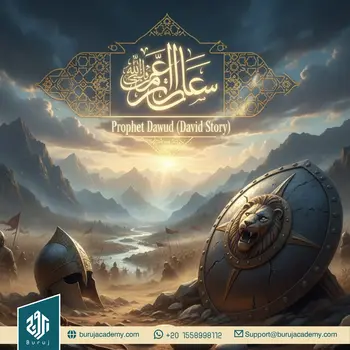
Delve into the inspiring Prophet Dawud (David) Story perspective, exploring the life of a revered prophet and king. Discover his unwavering faith, miraculous feats, and profound wisdom as detailed in Islamic tradition and the Holy Quran. This comprehensive account offers timeless lessons for every believer.
The Prophet Dawud (David) Story tradition holds a profound place in the hearts of Muslims worldwide. It is a narrative rich with lessons of divine guidance, unwavering faith, and the extraordinary blessings bestowed upon a man chosen by Allah to be both a prophet and a king.
Dawud (David), peace be upon him, stands as a monumental figure, whose life, as detailed in the Holy Quran and various Islamic narrations, offers a blueprint for spiritual fortitude, just leadership, and a deep connection with the Creator. His journey, from a humble shepherd to a triumphant warrior and a wise monarch, is a testament to the power of sincere devotion and trust in Allah’s plan.
The Humble Shepherd and the Giant Goliath (Prophet Dawud (David) Story)
The beginning of the Prophet Dawud (David) Story often starts with the dramatic encounter that propelled him into national prominence: his battle with the Philistine giant, Goliath (Jalut). At a time when the Children of Israel, under the leadership of King Saul (Talut), were facing a formidable and terrifying enemy, despair had begun to settle among their ranks. Goliath, a colossal warrior, challenged anyone from the Israelite army to single combat, instilling fear and reluctance in all who heard him.
It was in this moment of crisis that young Dawud (David), then a shepherd boy, stepped forward. Despite his youth and lack of military experience, his heart was filled with an unshakeable faith in Allah. He saw beyond Goliath’s physical might and understood that true power resided solely with the Almighty. He famously declined armor and a sword, choosing instead his shepherd’s sling and five smooth stones from a stream, declaring that he would face Goliath in the name of Allah.
Prophet Dawud Was Chosen by Allah Before He Became a King
Dawud’s rise began not in a palace but on a battlefield. As a young man from the tribe of Bani Isra’il, he stepped forward when the giant warrior Jalut (Goliath) terrified entire armies. No military rank prepared him — only trust in Allah.
He struck Jalut with a sling and a stone, a moment the Quran preserves with striking brevity:
فَهَزَمُوهُم بِإِذْنِ اللَّهِ وَقَتَلَ دَاوُۥدُ جَالُوتَ
Fahazamoohum bi-idhnillahi wa qatala Dawoodu Jaloota
“So they defeated them by permission of Allah, and Dawud killed Jalut.” (Al-Baqarah 2:251)
Victory is attributed to Allah’s permission first, before Dawud’s action — a foundational Islamic principle.
This moment established a pattern in Dawud’s life: extraordinary ability placed entirely in the service of Allah. Buruj Academy’s Online Islamic Studies Classes explore these Quranic narratives in full, guided by Al-Azhar graduates who connect prophetic stories to lived Muslim experience.
Begin Your Islamic Knowledge Journey With a FREE Trial Lesson
The Quran vividly captures this pivotal moment:
“And when they went forth to [face] Goliath and his soldiers, they said, ‘Our Lord, pour upon us patience and plant firmly our feet and give us victory over the disbelieving people.’ So they defeated them by permission of Allah, and Dawud (David) killed Goliath, and Allah gave him kingship and wisdom and taught him of that which He willed.” (Quran 2:250-251).
وَلَمَّا بَرَزُوا۟ لِجَالُوتَ وَجُنُودِه ۦ,قَالُوا۟ رَبَّنَآ أَفْرِغْ عَلَيْنَا صَبْرًۭ وَثَبِّتْ أَقْدَامَنَا وَٱنصُرْنَا عَلَى ٱلْقَوْمِ ٱلْكَـٰفِرِينَ ٢٥٠فَهَزَمُوهُم بِإِذْنِ ٱللَّهِ وَقَتَلَ دَاوُۥدُ جَالُوتَ وَءَاتَىٰهُ ٱللَّهُ ٱلْمُلْكَ وَٱلْحِكْمَةَ وَعَلَّمَهُۥ مِمَّا يَشَآءُ ۗ وَلَوْلَا دَفْعُ ٱللَّهِ ٱلنَّاسَ بَعْضَهُم بِبَعْضٍۢ لَّفَسَدَتِ ٱلْأَرْضُ وَلَـٰكِنَّ ٱللَّهَ ذُو فَضْلٍ عَلَى ٱلْعَـٰلَمِينَ ٢٥١
And when they went forth to [face] Goliath and his soldiers, they said, “Our Lord, pour upon us patience and plant firmly our feet and give us victory over the disbelieving people.” (250) So they defeated them by permission of Allah, and David killed Goliath, and Allah gave him the kingship and prophethood and taught him from that which He willed. And if it were not for Allah checking [some] people by means of others, the earth would have been corrupted, but Allah is full of bounty to the worlds. (Al-Baqarah 2:250-251)
With a single, divinely guided stone, Dawud (David) struck Goliath, bringing down the mighty giant and securing a miraculous victory for the Children of Israel. This act of profound courage and faith solidified his status as a hero and marked a significant turning point in the Prophet Dawud (David) Story .
Discover the Buruj Academy Difference
Step into our virtual classrooms and see how our expert instructors make learning Quran and Arabic intuitive and clear. We focus on overcoming the specific hurdles non-native speakers face, building your confidence and connection with the Quran.
Kingship and Divine Wisdom
Following his heroic defeat of Goliath, Dawud (David) was elevated to a position of leadership and eventually became the king of the Israelites. The Prophet Dawud (David) Story highlights that his kingship was not merely a political appointment but a divine endowment.
Accompanied by wisdom and prophetic insight. Allah bestowed upon him the Zabur (Psalms), a holy scripture. And granted him profound understanding and the ability to judge justly among his people.
The Quran states:
وَلَقَدۡ ءَاتَيۡنَا دَاوُۥدَ مِنَّا فَضۡلٗاۖ يَٰجِبَالُ أَوِّبِي مَعَهُۥ وَٱلطَّيۡرَۖ وَأَلَنَّا لَهُ ٱلۡحَدِيدَ
“And We certainly gave Dawud (David) from Us bounty. [We said], ‘O mountains, repeat [Our praises] with him, and the birds [as well].’ And We softened for him iron,” (Quran 34:10).
This verse beautifully illustrates the extraordinary gifts Allah granted him. His voice was so melodious when reciting the Zabur that even mountains and birds would join him in glorifying Allah. This spiritual connection with nature underscores his unique closeness to the Divine. Furthermore, the ability to soften iron allowed him to forge protective armor. Contributing to the strength and security of his kingdom. Dawud (David)’s reign was characterized by justice, piety, and a deep reverence for Allah. Making him a model for all righteous rulers.
Read Also: Story of Prophet Yusuf
Trials, Repentance, and Prophetic Guidance
Like all prophets, Dawud (David) faced trials and tests throughout his life. Which served to refine his character and deepen his reliance on Allah. The Prophet Dawud (David) Story accounts mention an incident where two litigants sought his judgment. While the specifics of this narrative vary in interpretation. Its essence lies in Dawud (David)’s initial oversight. His immediate realization of his mistake, and his swift, sincere repentance to Allah.
The Quran mentions:
“And he [Dawud] thought that We had only tried him, so he sought forgiveness of his Lord and fell down bowing [in prostration] and turned in repentance [to Allah]. So We forgave him that, and indeed, for him with Us is nearness and a good return.” (Quran 38:24-25).
This episode serves as a powerful reminder that even prophets, in their human capacity, can err, but their greatness lies in their immediate humility. Their turning back to Allah with sincere remorse, and their unwavering commitment to justice. This aspect of the Prophet Dawud (David) Story emphasizes the importance of repentance and Allah’s boundless mercy towards those who sincerely seek His forgiveness.
The Legacy: Father of Prophet Sulaiman (Solomon)
The Prophet Dawud (David) Story is incomplete without mentioning his illustrious son, Prophet Sulaiman (Solomon), peace be upon him. Dawud (David) nurtured his son with wisdom, guidance, and spiritual upbringing. Preparing him for the immense responsibilities that would later befall him as a prophet and a king with unparalleled dominion.
The lineage of prophecy through Dawud (David) continued with Sulaiman (Solomon). Who inherited his father’s wisdom and was granted even greater powers and blessings by Allah. This familial connection highlights the continuity of divine guidance through generations.
Enduring Lessons from the Prophet Dawud (David) Story Islamic
The story of Prophet Dawud in Islam is not a fairy tale of a flawless hero. It is a nuanced, rich account of an extraordinary man who was given extraordinary gifts, faced extraordinary tests, and responded with extraordinary repentance. These are the lessons we draw from his life:
| Lesson | Application for Muslims |
| Courage precedes reward | Act on trust in Allah before results are guaranteed |
| Gifts multiply through gratitude | Dawud praised Allah constantly — his blessings grew |
| Authority demands accountability | Power in Islam is measured by justice, not status |
| Repentance restores closeness | No sin, if sincerely repented, permanently distances us from Allah |
| Work is worship | Earning halal through one’s own effort has prophetic precedent |
| Worship permeates all of life | His voice, his hands, his judgments — all directed toward Allah |
These lessons are best absorbed not through passive reading but through structured study. Buruj Academy’s Tafseer Al-Quran Course guides students through the Quranic verses about Dawud and the other prophets, examining the Arabic language, context, and scholarly commentary that bring each story fully alive.
Begin Understanding Quran With a FREE Trial in Buruj’s Tafseer Al-Quran Course
Allah Granted Prophet Dawud Unique Miracles No Other Prophet Received
The gifts bestowed on Dawud (peace be upon him) were unlike any other prophet’s. The Quran explicitly states that mountains and birds joined him in glorifying Allah — not metaphorically, but as a literal divine miracle responding to his recitation.
وَلَقَدْ ءَاتَيْنَا دَاوُۥدَ مِنَّا فَضْلًا ۖ يَٰجِبَالُ أَوِّبِى مَعَهُۥ وَٱلطَّيْرَ
Wa laqad aatayna Dawooda minna fadlan, ya jibalu awwibee ma’ahu wat-tayr
“And We certainly gave Dawud from Us bounty. [We said], ‘O mountains, repeat [Our] praises with him, and the birds [as well].'” (Saba’ 34:10)
His voice carried divine qualities. Classical scholars describe his recitation of the Zabur (Psalms) as so moving that birds would pause mid-flight. This wasn’t performance — it was worship elevated to its highest form.
| Miracle | Description | Quranic Reference |
| Voice and glorification | Mountains and birds praised Allah with him | Saba’ 34:10 |
| Iron softened | Allah made iron malleable in his hands | Saba’ 34:10 |
| Prophethood + Kingdom | Both granted simultaneously | Al-Baqarah 2:251 |
| The Zabur | A divine scripture revealed to him | An-Nisa’ 4:163 |
| Extraordinary wisdom | Allah taught him decisive judgment | Al-Anbiya’ 21:79 |
These were not coincidences. Each miracle reflected a dimension of his servitude: his voice for worship, his hands for provision, his mind for justice.
Prophet Dawud Ruled With Justice and Was Given Wisdom in Judgment
Allah did not just make Dawud a prophet — He made him a khalifah (vicegerent) on earth, charging him explicitly with ruling by truth and not following personal desire.
يَٰدَاوُۥدُ إِنَّا جَعَلْنَٰكَ خَلِيفَةً فِى ٱلْأَرْضِ فَٱحْكُم بَيْنَ ٱلنَّاسِ بِٱلْحَقِّ
Ya Dawoodu inna ja’alnaka khaleefatan fil-ardi fahkum baynan-naasi bil-haqq
“O Dawud, indeed We have made you a vicegerent upon the earth, so judge between the people in truth.” (Sad 38:26)
This verse is among the clearest statements in the Quran about the purpose of authority in Islam. Power is a trust, not a privilege. Dawud’s kingdom was vast — scholars of Islamic history note his rule extended across much of the Levant — yet the Quran remembers him primarily for his devotion, not his dominion.
His son Sulayman (peace be upon him) once offered a judgment that Dawud himself recognized as wiser, a moment the Quran records to illustrate that wisdom is not about rank — it is about nearness to truth.
Prophet Dawud Repented With Sincerity After His Trial and Allah Forgave Him
The story of Prophet Dawud in Islam includes a profound moment of human vulnerability. He was tested through a matter involving a woman already betrothed, and he made a grave error in judgment. The Quran does not conceal this — it presents his repentance as a model for every believer who has failed.
فَٱسْتَغْفَرَ رَبَّهُۥ وَخَرَّ رَاكِعًا وَأَنَابَ
Fastaghafaraa rabbahu wa kharra raaki’an wa anaab
“So he asked forgiveness of his Lord and fell down bowing and turned in repentance [to Allah].” (Sad 38:24)
Three sequential actions: seeking forgiveness, physical prostration, and returning to Allah. Islamic scholars note the progression is intentional — sincere repentance is not just internal; it moves the entire person.
| Stage of Repentance | Arabic Term | Dawud’s Action |
| Recognition of error | Istighfar | Asked Allah’s forgiveness |
| Physical humility | Kharra raaki’an | Fell into prostration |
| Complete return | Inabah | Turned wholly back to Allah |
| Divine response | Ghufran | Allah forgave and drew him near |
This is why the Sujud of recitation (Sajdat al-Tilawah) is recommended when reciting Sad 38:24 — the reciter joins Dawud’s act of prostration across centuries.
Expand Your Islamic Knowledge
Join our structured online courses led by qualified instructors to deepen your understanding of the Deen.
Join a Free Trial ClassRead Also: Prophet Lut Story
Prophet Dawud Worked With His Own Hands and Never Depended on His Kingdom
One detail that consistently moves students is this: despite being a prophet-king, Dawud (peace be upon him) earned his livelihood through his own labor. Allah softened iron for him, and he crafted armor — a trade he practiced personally.
The Prophet Muhammad ﷺ said:
“No one has ever eaten better food than that which he earned through his own hands. The Prophet of Allah, Dawud, used to eat from the earnings of his own hands.” (Sahih al-Bukhari)
This is not a minor biographical footnote. It reflects Dawud’s character — a man whose prophethood and kingship never became an excuse for dependency or entitlement. He worked because work itself is worship when done with the right intention.
Through Buruj Academy’s Islamic Studies, we examine these dimensions of prophetic character in structured sessions, helping Muslim adults connect timeless prophetic examples to contemporary daily life. Our Al-Azhar graduates bring both scholarly depth and teaching clarity to every class.
Begin Your Islamic Knowledge Journey With a FREE Trial Lesson
Read Also: Lessons From Prophets Stories
Learn About the Prophets of Islam With Buruj Academy’s Expert Instructors
The story of Prophet Dawud reveals what integrated Islamic living looks like — worship, work, leadership, repentance, and gratitude woven together into one life.
At Buruj Academy, our Online Islamic Studies Classes give you access to:
- Al-Azhar University graduates with 9+ years of formal Islamic education
- 12+ years teaching non-Arabic speakers globally across Fiqh, Tafsir, and Seerah
- Personalized 1-on-1 sessions tailored to your level and schedule
- Flexible 24/7 scheduling for working professionals and busy parents
- Structured Tafseer Al-Quran Course covering prophetic stories with authentic classical sources
- Islamic Studies for Adults and Islamic Studies for New Muslims with dedicated pathways
Book your free trial lesson today and start learning the stories of the prophets the way they deserve to be studied — with depth, clarity, and genuine scholarly guidance.
See which of Burooj’s courses aligns with your learning path:
- Tajweed Classes
- Tafseer Al-Quran Course
- Quran Recitation Course
- Hifz Course (Quran Memorization)
- Quranic Arabic Classes
- Noorani Qaida course
- Islamic Studies
Conclusion
Prophet Dawud’s story teaches that divine favor and personal trial are not opposites — they are companions on the path of sincere servitude. His gifts were immense, and so were his tests, yet his consistent return to Allah defined his legacy above everything else.
His repentance especially speaks to every Muslim who has stumbled. The Quran preserved his prostration not as a scandal but as a sacred model — showing that falling and rising with sincerity is itself a form of closeness to Allah.
Alhamdulillah, these stories were not preserved for historical curiosity alone. They were preserved as living guidance. Studying them carefully, with qualified teachers who understand their linguistic and scholarly depth, transforms knowledge into genuine transformation of the heart.


Leave a Reply