 Quran
Quran
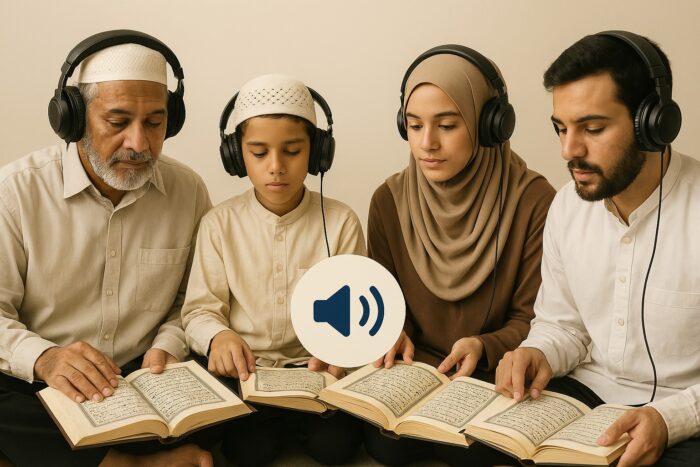
Reciting the holy text beautifully and correctly is a skill that deepens one’s spiritual connection and understanding of the sacred text. Improving Quran recitation requires dedication, proper technique, and consistent practice.
Utilizing audio resources is one of the most effective ways to enhance your recitation. In this article, we will explore practical techniques on how to improve Quran recitation by audio, focusing on correcting mistakes and mastering Quranic letter articulation points.
The importance of Audio in Quran Recitation Improvement
Reciting the Holy Quran correctly is more than a linguistic task—it’s a spiritual and religious responsibility. Listening to proficient Quran reciters regularly helps internalize the correct pronunciation. The prophet Muhammad (peace be upon him) emphasized the importance of beautifying and improving one’s recitation. Mispronouncing even a single letter can change the whole meaning of the verse, which highlights the importance of learning Tajweed rules.
Audio exposure also enables learners to distinguish between letters that sound similar to non-native speakers, developing a fine ear for these differences, which is accurate for accurate recitation.
Using audio helps not only in correcting Quran recitation but also in learning Quranic letter articulation points. Whether you are at the beginning of your journey or looking to refine your Tajweed, we can guide you in every step through our specialized courses.
Through Buruj Academy’s Quran Recitation Course, students begin with structured listening modules before attempting any recitation output. Our Ijazah-certified instructors model correct sounds while students listen, building accurate auditory templates that guide eventual production.
Book your first FREE recitation lesson

How to Improve Quran Recitation by Audio?
You may just wonder, how can just listening help me recite better?
Audio recitation acts as a mirror. It reflects proper pronunciation, tone, rhythm, and flow. Repeated listening trains your ear and tongue to naturally mimic what you hear. Over time, you internalize the correct pronunciation and melody—even if you are unfamiliar with Arabic.
Benefits of Using Audio
- Strengthens auditory memory.
- Trains correct letter articulation.
- Helps identify and correct recitation mistakes.
- Builds fluency and confidence.
- Reinforces rhythm, pauses, and emotional tones.
Audio also helps learners to get familiar with the natural pacing of recitation. This helps prevent rushing or overextending syllables, which is a common mistake in self-taught recitation.
Choosing the right Quran reciter for learning
- Choose the reciter whose voice and style suit your natural vocal range. For example, if you have a deep voice, avoid reciters with very high-pitched voices to prevent vocal strain.
- Some learners benefit from switching between two reciters, for example, one for clarity and one for melody. This can help balance clarity with emotional expression.
- As a beginner, you should choose a reciter who reads slowly, clearly, and with proper Tajweed.
- Don’t underestimate the emotional connection you feel toward a reciter’s voice. if a certain tone or style moves your heart or helps you concentrate, then focus on it and stay committed to it in your daily recitation. The voice should not only be clear but also spiritually inspiring, especially during prayers.
Discover the Buruj Academy Difference
Step into our virtual classrooms and see how our expert instructors make learning Quran and Arabic intuitive and clear. We focus on overcoming the specific hurdles non-native speakers face, building your confidence and connection with the Quran.
Correcting Quran Recitation Through audio Shadowing
One of the best audio-based techniques is shadowing. This means repeating verses immediately after the reciter, mimicking their tone and pronunciation.
How to practice shadowing:
- Choose a short surah or a few verses.
- Listen to the recitation 2-3 times.
- Repeat each verse right after the reciter.
- Focus on articulation, rhythm, and melody
- Record yourself and compare with the original.
Shadowing also helps with developing natural pauses (waqf) and stops that occur in recitation, which are essential for breathing and conveying meaning correctly.
Learning Quranic Letter Articulation Points (Makharij) with audio:
The Arabic language has letters that do not exist in other languages. To recite the Quran properly, you need to know how to pronounce each letter from its correct articulation points.
By listening to professional reciters, you will absorb how each letter should sound and from where it is being articulated.
Interactive Tajweed charts and audio-based articulation videos can help beginners visualize the mouth/throat positions while hearing correct examples.
Record yourself for self-correction
Self-recording is a powerful tool. It allows you to compare your voice to a professional reciter and catch mispronunciations you might notice while reciting.
How to do that:
- Select 3-5 verses.
- Listen to the audio recitation first.
- Record yourself reciting the same verses
- Play both recordings back and compare.
- Focus on fixing the articulation points and Tajweed rules.
Repeat these steps on a weekly basis to monitor your progress and make targeted improvements. Over time, you will build a personal archive of your progress, which can be motivating to track how far you have come.
Comparing Specific Tajweed Elements Through Audio Playback
Record three consecutive ayahs, then play your recording alongside the same ayahs from a reference reciter. Listen specifically for these comparison points:
| Element | What to Listen For |
| Qalqalah | Does your echoing bounce match the reciter’s? |
| Ghunnah | Is your nasalization lasting the correct two counts? |
| Madd lengths | Are your elongations consistent with the original? |
| Heavy and light letters | Do your Tafkhim and Tarqiq match? |
This comparison method identifies your specific error patterns rather than offering generic guidance. Students working with Buruj Academy’s Amli Tajweed Course learn this comparison technique systematically, with instructors identifying errors that students cannot detect themselves.
Book Your FREE Trial Lesson in Buruj’s Amli Tajweed Course
Join Online Tajweed and Correcting Quran Recitation classes for guided learning
While audio tools are very helpful, combining them with teacher guidance provides the best results. With our online Tajweed and online Quran courses.
Qualified instructors provide tailored feedback, helping you correct persistent errors and understand advanced Tajweed rules like Ikhfaa, Idgham, and Qalqalah.
Structuring Your Daily Audio Practice Produces Consistent Measurable Improvement
Random listening produces random improvement. Structured daily audio engagement—with defined goals for each session—produces measurable, cumulative progress in recitation quality.
A Weekly Audio Practice Schedule for Recitation Development
| Day | Session Focus | Duration |
| Saturday | Pure listening—no repetition, full surah | 15 minutes |
| Sunday | Shadowing at 0.75x speed, single page | 20 minutes |
| Monday | Self-recording and comparison | 20 minutes |
| Tuesday | Isolated letter listening for problem sounds | 15 minutes |
| Wednesday | Full-speed shadowing of reviewed section | 20 minutes |
| Thursday | Recitation without audio, then verify | 25 minutes |
| Friday | Free listening with focus on melody and flow | 15 minutes |
This rotating focus prevents the common mistake of practicing only what feels comfortable. Each session type targets a different aspect of recitation development, ensuring comprehensive progress.
Through Buruj Academy’s Online Quran Classes, students receive personalized audio practice schedules aligned to their specific error patterns, rather than following generic timelines.
Start Learning Quran With a FREE Trial Lesson
Establish a Daily Recitation Routine
Establishing a daily recitation routine helps you to improve Quran recitation by audio. Consistency is the key. Set a realistic and sustainable Quran recitation schedule that fits your lifestyle. You don’t need hours; just 15 to 30 minutes of focused recitation can make a huge difference.
You can also create a weekly theme, such as focusing on one Surah every week then another one, and after that pairing them together with meanings.
Read Also: How to Read Quran Without Mistakes?
Understanding the meaning enhances recitation
Understanding the meaning of verses deepens your connection and improves focus while reading. As you recite, read the translation of Tafsir, which will help you develop emotional tone and proper pause during recitation, enhancing both fluency and reverence.
This connection between meaning and melody strengthens your recitation, especially in Prayers.
Another helpful tip is to surround yourself with Quran audio during the day, for example, while communicating, resting, or even cooking. Even if you are not consciously repeating it , your mind absorbs the sound. This constant exposure will gradually improve your pronunciation even if it is outside the study time.
Read Also: How To Find A Good Quran Teacher
Understanding What Your Ear Should Notice During Quran Recitation Listening Sessions
Passive listening without focused attention yields minimal results. Training your ear to notice specific elements during each listening session converts audio time into genuine recitation improvement.
Before each listening session, select one Tajweed rule as your focus. During that session, track every occurrence of that rule. For example:
When focusing on Idgham:
- Listen for نْ or ً before the six Idgham letters (ي ر م ل و ن)
- Notice the complete merging of the noon sound
- Observe whether the reciter uses Ghunnah or no Ghunnah based on the specific letter
This active listening approach turns every audio session into a Tajweed identification exercise, building recognition speed that transfers directly to your recitation.
Read Also: Ijazah Meaning in Quran?
Start Learning the Quran Today
Join our qualified teachers and begin your journey in Quran recitation, Tajweed, and understanding — from the comfort of your home.
Book Your Free TrialRead Also: Reading The Quran For The First Time
Improve Your Quran Recitation with Buruj Academy’s Expert-Guided Program
Audio listening builds strong foundations, but expert feedback accelerates progress significantly. Without a qualified instructor identifying errors your ear hasn’t yet learned to catch, subtle mistakes persist indefinitely.
Buruj Academy’s Quran Recitation Course offers:
- Ijazah-certified instructors and Al-Azhar University graduates
- The Buruj Method: sound-before-rules for genuine pronunciation mastery
- Personalized error identification unavailable through self-study alone
- Flexible 1-on-1 sessions with real-time recitation correction
- Proven progression from hesitant reading to confident, melodious recitation
- 12+ years teaching non-Arabic speakers globally
Book your free trial lesson today and experience the difference guided instruction makes.
See which of Burooj’s courses aligns with your learning path:
- Tajweed Classes
- Tafseer Al-Quran Course
- Quran Recitation Course
- Hifz Course (Quran Memorization)
- Quranic Arabic Classes
- Noorani Qaida course
- Islamic Studies

Final Thoughts
Using audio is one of the most effective, accessible, and engaging ways to improve Quran recitation. By focusing on correcting Quran recitation and learning Quranic letter articulation points, you are not just improving your pronunciation but also honoring the sacred words of Allah with your best effort.
Make audio your daily guide. Listen and repeat. Record and reflect. Your fluency, confidence, and spiritual connection will grow with each verse you recite.
Remember that every small effort you make will make a difference and be rewarded. Even 10 minutes a day can lead to remarkable progress over time. The key is to be sincere, patient, and consistent.
This comprehensive approach, coupled with consistent practice and, ideally, the guidance of online qualified courses, will empower every learner to recite the Quran with the beauty and precision it deserves.



Leave a Reply