 Tajweed

| Key Takeaways |
| The small jeem (ج) is a Waqf symbol meaning Waqf Jā’iz — permissible pause where stopping and continuing are equally valid. |
| Unlike the mandatory stop (مـ) or forbidden stop (لا), the jeem gives the reciter complete freedom to pause or continue without affecting meaning. |
| The jeem appears above specific words in the Mushaf, guiding reciters at natural grammatical or semantic boundaries in the text. |
| Misreading Waqf symbols can alter the meaning of an ayah — learning these signs is a core part of proper Tajweed practice. |
| Waqf rules, including the jeem symbol, are studied within Tajweed science and apply specifically to the Hafs ‘an ‘Asim recitation. |
Opening the Mushaf for the first time, many students notice small symbols scattered above certain words — and the small jeem (ج) is one of the most common. It sits quietly above a word, yet it carries a specific instruction that directly affects how a recitation flows.
The small jeem (ج) stands for Waqf Jā’iz — a permissible pause. It signals that the reciter may stop at this word or continue to the next without either choice being preferred over the other. Both options are grammatically sound, and neither distorts the meaning of the verse.
What Does the Small Jeem (ج) Mean in Tajweed?
The small jeem (ج) in the Quran represents Waqf Jā’iz (الوقف الجائز) — the permissible pause. This means stopping at the marked word is allowed, and so is continuing. Neither choice carries more reward or correctness than the other; the two options are considered equal in weight, which scholars describe as mustāwy al-tarafayn (مستوى الطرفين) — balance at both ends.
This symbol appears in the standard Uthmani Mushaf used in most print editions today and is one of several Waqf (pause) markers that Tajweed science uses to guide reciters through the Quran.
Understanding these symbols is not optional for serious students. In our Tajweed sessions at Buruj Academy, we consistently find that students who skip Waqf training recite accurately on the letter level but stumble on the structural level — pausing in places that fragment the meaning of an ayah entirely.
If you are building your recitation from the ground up, our Tajweed for Beginners course covers Waqf symbols systematically alongside makharij and sifat, ensuring you learn pause rules in their proper context.
Buruj Academy’s Tajweed for Beginners course structures this progression carefully, ensuring students build Waqf awareness alongside their recitation skills from the very first sessions with Ijazah-certified instructors.
Book Your FREE Trial Lesson to Begin Your Tajweed Journey
Excel in Your Quranic Studies
Join Buruj Academy and master the Quran with our structured, professional curriculum.
Book Your Free TrialRead also: What Does the Small Meem Mean in the Quran?
Examples of The Small Jeem Symbol in the Quran
Seeing the jeem in actual Quranic text is the fastest way to understand how it functions. One of the clearest examples occurs in Surah Al-Kahf:
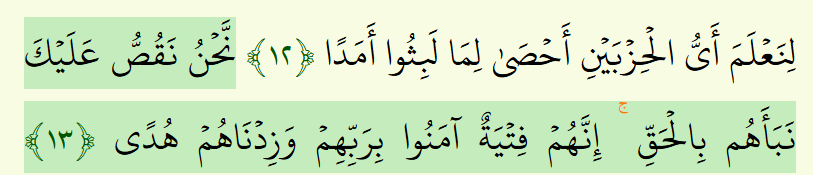
Naḥnu naquṣṣu ‘alayka naba’ahum bil-ḥaqq. Innahum fityatun āmanū bi-rabbihim.
“We relate to you their story in truth. Indeed, they were youths who believed in their Lord.” (Al-Kahf 18:13)
The jeem marker here appears after bil-ḥaqq (بِالْحَقِّ). The reciter can pause after “in truth” and take a breath, or continue directly into “Indeed, they were youths.” Both produce complete, accurate meaning.
The pause does not damage the sentence; it simply represents one of two equally correct recitation choices.
In Surah Al-Hujurat (49:7):
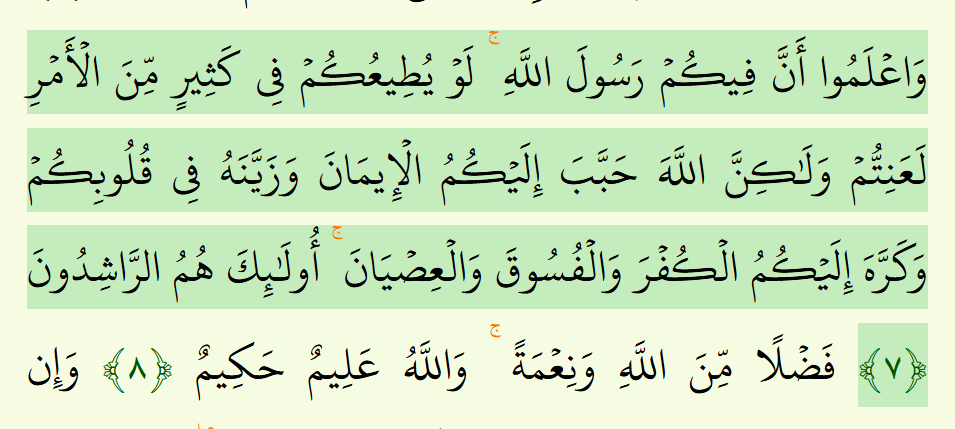
“And know that among you is the Messenger of Allah. If he were to obey you in much of the matter, you would be in difficulty, but Allah has endeared to you the faith and has made it pleasing in your hearts and has made hateful to you disbelief, defiance and disobedience. Those are the [rightly] guided.” (Surah Al-Hujurat (49:7))
Stopping after “رَسُولَ اللَّهِ” is permissible. Continuing is equally permissible. The symbol grants the reciter freedom while signaling a natural syntactic boundary.
This is the defining characteristic of Waqf Jā’iz: grammatical and semantic integrity is preserved on both sides of the pause point.
Discover the Buruj Academy Difference
Step into our virtual classrooms and see how our expert instructors make learning Quran and Arabic intuitive and clear. We focus on overcoming the specific hurdles non-native speakers face, building your confidence and connection with the Quran.
How Should You Apply the Small Jeem During Recitation?
Applying the jeem correctly is simple once you understand what it is asking of you — which is, essentially, nothing mandatory.
When you reach a word marked with (ج):
When you see the jeem above a word and your breath is comfortable, continue reciting without pausing. The flow of the verse remains natural, and many reciters prefer this in solo reading. When your breath is running short, pause at the jeem without hesitation. You have full permission to stop, rest, and resume from that word. There is no need to restart from the beginning of the ayah.
What to avoid:
| Mistake | Correct Practice |
| Stopping mid-word | Always complete the word before pausing |
| Pausing on a syllable | Waqf always occurs after a complete word |
| Ignoring breath capacity | The jeem exists partly to help with breath management |
| Treating jeem like a mandatory stop | It is permissible — never obligatory |
One practical habit we teach at Buruj Academy: when a student encounters the jeem mid-recitation, we ask them to read the sentence both ways — pausing and not pausing — so they hear the meaning from both sides. This trains the ear alongside the rule, which is central to the Buruj Method’s sound-before-rules approach.
Our Online Tajweed Classes help students internalize Waqf application through live recitation practice with immediate feedback from Al-Azhar-trained instructors, available with flexible scheduling for students anywhere in the world.
Book Your FREE Trial Lesson to Begin Your Tajweed Journey

What Are the Main Waqf Symbols in the Quran and How Does the Jeem Compare?
To fully understand the jeem, it helps to see it alongside the full system of Waqf symbols. Each symbol in the Mushaf carries a distinct ruling.
| Symbol | Name | Ruling | Meaning |
| مـ | Waqf Lāzim | Mandatory stop | Stopping is required; continuing changes meaning |
| لا | Waqf Mamnū’ | Forbidden stop | Must continue; stopping distorts meaning |
| ج | Waqf Jā’iz | Permissible | Stopping and continuing are equally valid |
| صلى | Wasl Awlā | Continuing preferred | Stopping allowed but continuing is better |
| قلى | Waqf Awlā | Stopping preferred | Continuing allowed but stopping is better |
| ∴ ∴ | Mu’ānaqah | Linked stops | Stop at one of the two marked points, not both |
The jeem occupies the middle ground in this system. It neither demands action nor prohibits it — it simply informs you that a natural boundary exists, leaving the decision entirely to the reciter.
This table represents the standard symbols found in the Hafs ‘an ‘Asim recitation — the most widely used recitation globally — which is the version our Ijazah-certified instructors at Buruj Academy teach.
Book a FREE trial session with one of Buruj’s Azhari Quran tutors

Excel in Your Quranic Studies
Join Buruj Academy and master the Quran with our structured, professional curriculum.
Book Your Free TrialRead also: What Does لا Mean in Quran? Understanding the Waqf Mamnu’ Symbol
Master Tajweed Waqf Rules with Buruj Academy’s Expert Instructors
The small jeem is one symbol — Tajweed science contains an entire system of rules that shape every recitation. Mastering them requires structured guidance, live correction, and an instructor who can hear your recitation in real time.
Buruj Academy offers Online Tajweed Classes taught by Al-Azhar University graduates and Ijazah-certified instructors with 12+ years of experience teaching non-Arabic speakers worldwide. Our approach — sound before rules, consistency before speed — ensures you build genuine recitation skill, not surface-level rule memorization.
- Personalized 1-on-1 sessions with flexible 24/7 scheduling
- Real-time pronunciation and Waqf correction
- Structured progression from beginner to advanced Tajweed
- Courses available for adults, children, sisters, and complete beginners
Join a supportive learning environment tailored to your pace and lifestyle. Start your journey toward excellence by enrolling in one of our specialized tracks:
- Online Tajweed Classes
- Tajweed Classes for Beginners
- Tajweed Classes for Adults
- Tajweed Classes for Sisters
- Tajweed Classes for Kids
- Advanced Tajweed Course
- Amli Tajweed Course (Practical Application)
Book your free trial lesson today and recite with confidence, accuracy, and the beauty the Quran deserves.
Frequently Asked Questions About the Small Jeem in the Quran
What does the small ج mean in the Quran?
The small ج (jeem) in the Quran stands for Waqf Jā’iz — the permissible pause. It indicates that a reciter may stop at the marked word or continue to the next without either choice being wrong. Both options are considered equally valid, and neither alters the meaning of the verse.
Does the jeem symbol mean I must stop during recitation?
No — the jeem symbol never requires stopping. It only signals that stopping is permitted at that point. Continuing is equally valid. The reciter has complete freedom to choose based on breath capacity, recitation style, or personal preference during that moment of recitation.
How is the small jeem different from the mandatory stop (مـ)?
The mandatory stop (مـ), called Waqf Lāzim, requires the reciter to stop. Continuing past it would change or damage the meaning of the verse. The jeem (ج) carries no such requirement — it marks a point of equal choice where the meaning remains intact whether you pause or continue.
Are Waqf symbols the same in all Quran editions?
Waqf symbols can vary slightly between Mushaf editions and between different Quranic recitations (Qira’at). The symbols described in this article apply to the Hafs ‘an ‘Asim recitation, which is the most widely printed and recited version globally. Always check which recitation your Mushaf edition follows.
Do I need a teacher to learn Waqf rules properly?
Yes — learning Waqf from a qualified instructor is strongly recommended. Waqf rules require live recitation practice so an instructor can hear where you naturally pause and correct misapplications in real time. Self-study alone often leaves gaps that only become visible during actual recitation. Our Tajweed for beginners resource explains where to start if you are new to structured Tajweed learning.