 Quran
Quran
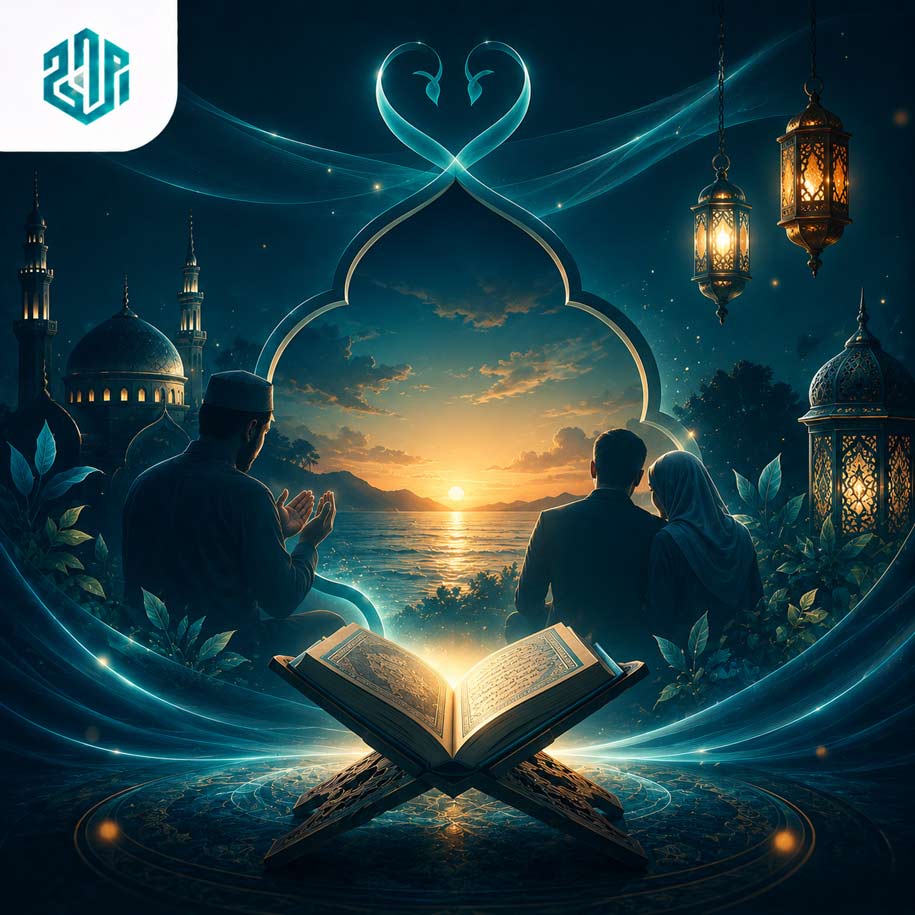
Marriage holds a place in the Quran unlike almost any other worldly institution. Allah did not merely permit it — He legislated it, dignified it, and wove its meaning into some of the most spiritually profound verses ever revealed.
These verses of Quran on marriage are not a checklist of rules. They form a complete vision of what a spousal relationship can become when it is built on divine guidance: a bond of tranquility, mercy, love, and mutual accountability before Allah.
Table of Contents:
1. Allah Describes Spouses as Garments for Each Other, Revealing the Depth of Marital Closeness
One of the most frequently cited verses of Quran on marriage appears in the context of Ramadan rulings, yet its meaning extends far beyond fasting. The image Allah uses here is one of the most intimate in the entire Quran.
هُنَّ لِبَاسٌ لَّكُمْ وَأَنتُمْ لِبَاسٌ لَّهُنَّ
Hunna libasun lakum wa antum libasun lahunna
“They are clothing for you and you are clothing for them.” (Al-Baqarah 2:187)
Classical scholars of Tafsir, including Ibn Kathir, explain that this metaphor of clothing carries three meanings simultaneously: protection from what is harmful, concealment of what is private, and closeness without barrier. A
garment touches the body directly — there is no distance between them. This verse teaches that spouses are not merely companions but coverings for one another’s vulnerabilities.
In our Islamic Studies classes at Buruj Academy, we find this verse particularly powerful for students newly learning about Islamic ethics of marriage, because it reframes the relationship entirely — from transactional to deeply human.
Begin Your Islamic Knowledge Journey With a FREE Trial Lesson
2. Surah Ar-Rum Identifies Love and Mercy as the Divine Signs Within a Marriage
No discussion of verses of Quran on marriage is complete without this ayah from Surah Ar-Rum. Allah places marriage alongside the creation of the heavens and the earth as evidence of His power — a remarkable elevation of its status.
وَمِنْ ءَايَـٰتِهِۦٓ أَنْ خَلَقَ لَكُم مِّنْ أَنفُسِكُمْ أَزْوَٰجًا لِّتَسْكُنُوٓا۟ إِلَيْهَا وَجَعَلَ بَيْنَكُم مَّوَدَّةً وَرَحْمَةً ۚ إِنَّ فِى ذَٰلِكَ لَءَايَـٰتٍ لِّقَوْمٍ يَتَفَكَّرُونَ
Wa min ayatihi an khalaqa lakum min anfusikum azwajan litaskunoo ilayha wa ja’ala baynakum mawaddatan wa rahmah. Inna fi dhalika la-ayatin liqawmin yatafakkaroon.
“And of His signs is that He created for you from yourselves mates that you may find tranquility in them; and He placed between you affection and mercy. Indeed in that are signs for a people who give thought.” (Ar-Rum 30:21)
The Arabic terms mawaddah and rahmah deserve careful attention. Mawaddah refers to an active, vibrant love — a love tied to the presence and actions of the beloved. Rahmah is deeper: it is the compassion and care that remains even when mawaddah quiets with the passage of time and the pressures of life.
Together, they form a complete marital emotional framework — passion and patience, feeling and commitment.
Allah further identifies sakinah (tranquility) as the purpose of marriage, not excitement or status. This is a profound reorientation for cultures that define marriage by its beginning rather than its sustained depth.
Read also: Quranic Guidance on Child Discipline
3. The Quran Commands Kind Treatment of Wives as a Non-Negotiable Marital Obligation
Among all the verses of Quran on marriage, this verse from Surah An-Nisa is among the most practically directive. It does not speak in general principles — it gives a direct command to husbands that brooks no exception.
وَعَاشِرُوهُنَّ بِٱلْمَعْرُوفِ ۚ فَإِن كَرِهْتُمُوهُنَّ فَعَسَىٰٓ أَن تَكْرَهُوا۟ شَيْـًٔا وَيَجْعَلَ ٱللَّهُ فِيهِ خَيْرًا كَثِيرًا
Wa ‘ashiroohunna bil-ma’roof. Fa-in karihtumoohunna fa-‘asa an takrahoo shay’an wa yaj’alallahu feehi khayran katheeran.
“And live with them in kindness. For if you dislike them — perhaps you dislike a thing and Allah makes therein much good.” (An-Nisa 4:19)
The phrase mu’asharah bil-ma’ruf — living together according to what is recognized as good and decent — is drawn from the word ma’ruf, which carries the meaning of what is socially, morally, and spiritually recognized as honorable. This is not a vague kindness but a standard rooted in the norms of dignified treatment.
The second part of the verse is equally remarkable: Allah directly addresses the human tendency to stay emotionally absent from a marriage during difficult seasons, and reminds the believer that goodness may be hidden in what they currently dislike.
For students exploring our Online Quran Reading Course at Buruj Academy, understanding this grammatical command — a second-person plural imperative (ashiroo) — adds weight to its meaning. This is an obligation, not a suggestion.
Book your Free trial lesson and start reading the Quran
4. Allah Designates Marriage as a Solemn Covenant, Elevating It Above All Ordinary Agreements
In Surah An-Nisa, Allah uses a term for the marital bond that He applies only once elsewhere in the Quran — to describe the covenant He took from the Prophets. That term is mithaqan ghaleetan: a weighty, solemn covenant.
وَكَيْفَ تَأْخُذُونَهُۥ وَقَدْ أَفْضَىٰ بَعْضُكُمْ إِلَىٰ بَعْضٍ وَأَخَذْنَ مِنكُم مِّيثَـٰقًا غَلِيظًا
Wa kayfa ta’khudhoonehu wa qad afda ba’dukum ila ba’din wa akhadhna minkum mithaqan ghaleeda.
“And how could you take it back when you have gone in unto each other and they have taken from you a solemn covenant?” (An-Nisa 4:21)
This verse appears in the context of divorce and the return of dowry — yet what it reveals about the nature of nikah is foundational. The word mithaq (covenant) distinguishes Islamic marriage from a contract in the transactional sense.
A contract is mutual exchange; a covenant is a binding commitment witnessed by Allah Himself. The word ghaleetan (solemn, weighty, firm) is the same descriptor used in An-Nisa 4:154 when describing Allah’s covenant with the Children of Israel.
This linguistic parallel is not accidental — it signals that the marriage bond carries a moral gravity that demands a different level of commitment, honesty, and fidelity than everyday agreements.
Read also:Quran Verses About Love: 5 Powerful Ayahs Every Muslim Should Know
Discover the Buruj Academy Difference
Step into our virtual classrooms and see how our expert instructors make learning Quran and Arabic intuitive and clear. We focus on overcoming the specific hurdles non-native speakers face, building your confidence and connection with the Quran.
Excel in Your Quranic Studies
Join Buruj Academy and master the Quran with our structured, professional curriculum.
Book Your Free Trial5. The Quran Establishes That Spouses Have Equal Rights and Responsibilities Toward Each Other
A verse in Surah Al-Baqarah articulates a principle of reciprocal obligation between spouses that was revolutionary in its historical context and remains a cornerstone of Islamic marital ethics today.
وَلَهُنَّ مِثْلُ ٱلَّذِى عَلَيْهِنَّ بِٱلْمَعْرُوفِ ۚ وَلِلرِّجَالِ عَلَيْهِنَّ دَرَجَةٌ ۗ وَٱللَّهُ عَزِيزٌ حَكِيمٌ
Wa lahunna mithlul-ladhee ‘alayhinna bil-ma’roof. Wa lir-rijali ‘alayhinna darajah. Wallahu ‘Azeezun Hakeem.
“And due to the wives is similar to what is expected of them, according to what is reasonable. But the men have a degree over them [in responsibility]. And Allah is Exalted in Might and Wise.” (Al-Baqarah 2:228)
The phrase wa lahunna mithlul-ladhee ‘alayhinna — “they have rights equivalent to their obligations” — establishes a principle of balanced reciprocity within the marital structure. Women have rights upon their husbands that mirror the obligations placed upon them.
The “degree” (darajah) mentioned for men refers to the responsibility of financial provision and household leadership — a responsibility that carries accountability before Allah, not a license for domination.
Buruj Academy’s Quranic Arabic Classes course equips you to engage directly with Quranic vocabulary, grammar, and meaning, guided by Al-Azhar University graduates and Ijazah-certified instructors with 12+ years of experience teaching non-Arabic speakers worldwide.
Begin Understanding Quranic Arabic with a FREE Lesson
6. Allah Commands That Marriage Be Sought Through Proper Means and That the Dowry Be Given Willingly
Surah An-Nisa contains one of the clearest legislative verses about the conditions for valid Islamic marriage, including the obligation of mahr (dowry) and the prohibition of illicit relationships.
وَأُحِلَّ لَكُم مَّا وَرَآءَ ذَٰلِكُمْ أَن تَبْتَغُوا۟ بِأَمْوَٰلِكُم مُّحْصِنِينَ غَيْرَ مُسَـٰفِحِينَ ۚ فَمَا ٱسْتَمْتَعْتُم بِهِۦ مِنْهُنَّ فَـَٔاتُوهُنَّ أُجُورَهُنَّ فَرِيضَةً
Wa uhilla lakum ma wara’a dhalikum an tabtaghoo bi-amwalikum muhsineena ghayra musafiheena. Famas-tamta’tum bihi minhunna fa-atoohunna ujoorahunna fareeda.
“And lawful to you are [all others] beyond these, [provided] that you seek them [in marriage] with [gifts from] your property, desiring chastity, not unlawful sexual intercourse. So for whatever you enjoy [of marriage] from them, give them their due compensation as an obligation.” (An-Nisa 4:24)
This verse makes the mahr — the bridal gift — a fareedhah, meaning a divine obligation, not a cultural custom. The word fareeda shares its root with fareedah, used for obligatory acts of worship.
By using this term, Allah places the giving of mahr in the same categorical weight as prayer and fasting in terms of its binding nature. The verse also frames the entire pursuit of marriage through the lens of ihsan — chastity and protection of one’s moral boundaries.
The contrast drawn is between muhsinin (those who seek protection through legitimate marriage) and musafiheen (those who seek mere gratification). Marriage in the Quran is consistently positioned as the institution that elevates the human relationship from desire to dignity.
Read also:Ayat in the Quran About Death: 7 Powerful Verses Every Muslim Should Reflect On
7. The Quran Appoints Arbitrators When a Marriage Faces Serious Risk of Breakdown
When conflict in a marriage reaches an impasse, the Quran does not leave spouses without a structured path. Surah An-Nisa establishes the institution of tahkeem — the appointment of family arbitrators — as a communal responsibility.
وَإِنْ خِفْتُمْ شِقَاقَ بَيْنِهِمَا فَٱبْعَثُوا۟ حَكَمًا مِّنْ أَهْلِهِۦ وَحَكَمًا مِّنْ أَهْلِهَآ إِن يُرِيدَآ إِصْلَـٰحًا يُوَفِّقِ ٱللَّهُ بَيْنَهُمَآ ۗ إِنَّ ٱللَّهَ كَانَ عَلِيمًا خَبِيرًا
Wa in khiftum shiqaqa baynihima fab’athu hakaman min ahlihi wa hakaman min ahliha. In yureedaa islahan yuwaffiqillahu baynahuma. Innallaha kana ‘Aleeman Khabeera.
“And if you fear dissension between the two, send an arbitrator from his people and an arbitrator from her people. If they both desire reconciliation, Allah will cause it between them. Indeed, Allah is ever Knowing and Acquainted [with all things].” (An-Nisa 4:35)
The Quran here recognizes that marital conflict sometimes exceeds the capacity of the couple alone to resolve, and it mobilizes the extended family and community as a protective resource.
The word shiqaq (dissension, splitting) describes a state where the two parties have become adversaries rather than partners.
Two arbitrators — one from each family — are appointed to seek islah (reconciliation). The verse then states that if both arbitrators genuinely intend reconciliation, Allah Himself will bring agreement between the spouses.
This is a remarkable verse: it ties divine intervention directly to sincere human effort toward marital repair.
Read also:Quranic Verses on Prayer: 8 Powerful Ayahs Every Muslim Should Reflect On
Build Your Connection to the Quran with Buruj Academy’s Expert Instructors
Understanding these verses requires reading the Quran with comprehension — not merely recitation.
Whether you are beginning with our Quran Reading Course or developing deeper comprehension through structured Quranic Arabic study, our personalized 1-on-1 sessions and flexible scheduling make consistent progress achievable.
We use the Buruj Method — context before abstraction, consistency before speed — to ensure you build real understanding, not surface familiarity.
Book your free trial lesson today and begin reading the Quran with the depth these verses deserve.
Take the first step toward this lifelong blessing by enrolling in a program tailored to your pace:
- Online Hifz Program (Comprehensive Quran Memorization)
- Juz 30 Memorization Course (Perfect for focused starts)
- Hifz Classes for Kids (Engaging and interactive)
- Hifz Classes for Adults (Flexible scheduling for busy lives)
- Hifz Classes for Sisters (Private, supportive learning)
- Short Surah Memorization Course (Ideal for daily prayers)
- Hifz Ijazah Course (For advanced students seeking certification)
Don’t let another day pass without moving closer to your goal. Join Buruj Academy today and schedule your free trial session to begin your Hifz journey!
Excel in Your Quranic Studies
Join Buruj Academy and master the Quran with our structured, professional curriculum.
Book Your Free TrialDiscover the Buruj Academy Difference
Step into our virtual classrooms and see how our expert instructors make learning Quran and Arabic intuitive and clear. We focus on overcoming the specific hurdles non-native speakers face, building your confidence and connection with the Quran.
Conclusion
The verses of Quran on marriage form a complete, integrated vision of what Allah intends for human spousal life. From the mithaq (covenant) at its foundation to the mawaddah and rahmah that sustain it, and even the mercy embedded in its dissolution, the Quran addresses marriage with a seriousness that reflects its centrality to human flourishing.
Reading these verses carefully — ideally in Arabic with proper comprehension — transforms how a believer approaches their own marriage or prepares for it. If you are ready to engage with these words directly in their original language, we are here to guide that process at Buruj Academy.
Frequently Asked Questions About Verses of Quran on Marriage
What Does the Quran Say About the Purpose of Marriage?
The Quran identifies three core purposes of marriage: sakinah (tranquility), mawaddah (love), and rahmah (mercy), as stated in Surah Ar-Rum 30:21. Marriage in the Quran is also described as a sign (ayah) of Allah’s creative power and a mithaqan ghaleetan — a solemn covenant carrying significant spiritual weight and mutual obligation.
Which Surah Talks About Marriage the Most?
Surah An-Nisa (Chapter 4) contains the most extensive Quranic legislation on marriage, covering conditions of valid marriage, the mahr obligation, marital conduct, conflict resolution, and divorce rights. Surah Al-Baqarah is the second richest source, particularly regarding divorce procedures, ‘iddah, and the reciprocal rights of spouses.
What Is the Quranic Verse About Husband and Wife Being Garments for Each Other?
The verse is Al-Baqarah 2:187: “They are clothing for you and you are clothing for them.” This metaphor conveys that spouses are protections, concealments, and sources of closeness for one another — the closest covering the human body can have. Classical Tafsir scholars explain that the image encompasses protection, concealment of faults, and mutual intimacy.
Does the Quran Mention Love Between Husband and Wife?
Yes, explicitly. Surah Ar-Rum 30:21 states that Allah placed mawaddah (active affection) and rahmah (enduring compassion) between spouses as a sign of His power. These are not incidental emotions but divinely placed qualities embedded in the marital relationship by Allah, intended to sustain the bond through all seasons of life.