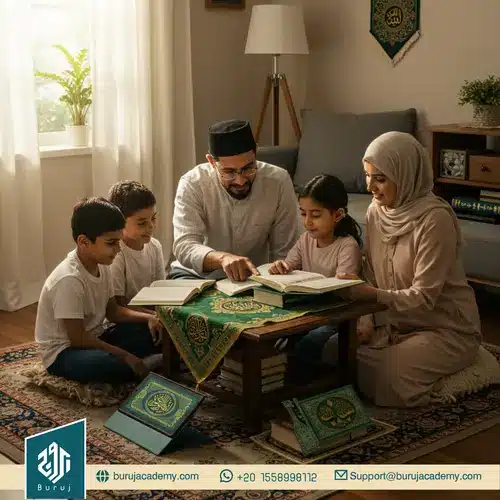
 Islamic
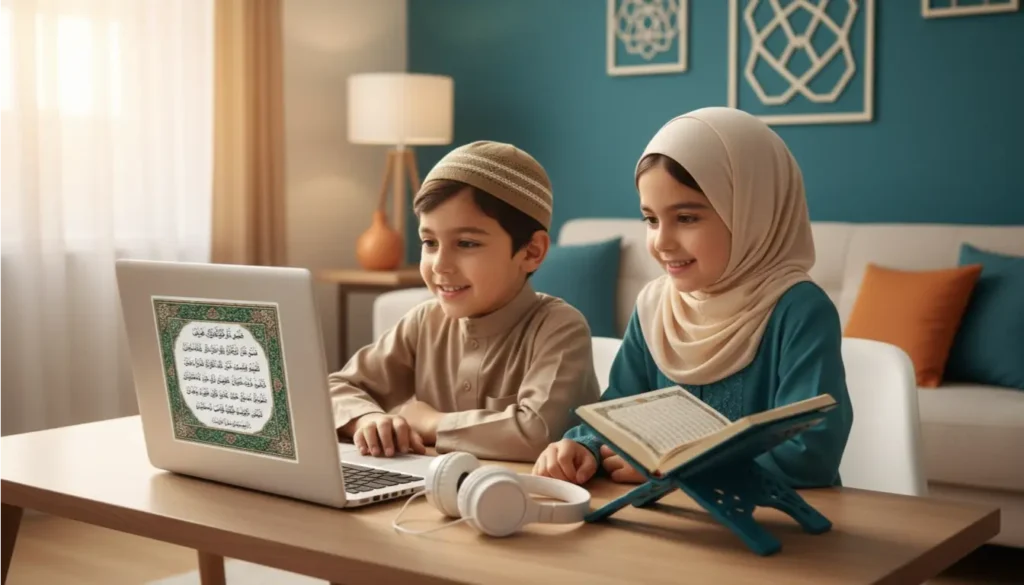
Children who learn Islamic manners early carry those values naturally into adulthood. Yet many parents wonder where to begin, especially when daily life feels rushed and formal lessons feel out of reach for young ones.
Teaching manners in Islam for kids doesn’t require long lectures or complex explanations. This guide covers 12 essential Islamic manners, with age-appropriate ways to introduce each one, practical daily moments to use, and simple language parents can use with their children starting today.
1. Children start every action by saying Bismillah first
Starting with Bismillah (بِسْمِ اللَّهِ) is the most natural Islamic manner to teach first. Children as young as three can repeat it before eating, drinking, or starting any task, connecting small daily actions to Allah from the very beginning.
Make it a household habit by saying it aloud yourself before every meal. Children naturally mirror what they hear repeatedly, so your consistency matters more than any formal lesson you could give.
2. Share a warm Salaam when greeting family and friends
The greeting As-Salamu Alaykum (ٱلسَّلَامُ عَلَيْكُمْ) teaches children respect, warmth, and Islamic identity all at once. Encourage kids to greet family members every morning and when entering any room at home.
For children aged 4–7, make it a fun “door game” — whoever says Salaam first when entering gets a small sticker.
For ages 8–12, explain the meaning: “You’re wishing them peace from Allah.” That deeper understanding makes the habit meaningful, not mechanical.
3. Respecting parents and elders is a core islamic manner for kids
The Quran repeatedly places respecting parents directly after worshipping Allah alone, which shows how serious this manner is in Islam. Teaching kids this connection gives the value real weight beyond simply “be polite.”
For younger children, frame it simply: “Allah loves it when you speak kindly to Mama and Baba.”
For tweens aged 10–13, you can introduce the concept that even a sigh of frustration toward parents is discouraged in Islam — a powerful lesson delivered gently.
Buruj Academy’s Islamic Studies Classes for Kids cover honesty and character through engaging prophet stories that make these lessons memorable.
The first session is free in our Islamic Studies for Kids
4. Use the right hand and say Bismillah during meals
Mealtime is one of the richest opportunities to teach Islamic manners for kids because it happens multiple times daily. Three key manners apply: saying Bismillah before eating, using the right hand, and saying Alhamdulillah (ٱلْحَمْدُ لِلَّهِ) afterward.
Here is a simple reference table parents can use:
| Mealtime Moment | Islamic Manner | What to Say |
| Before eating | Say Bismillah | بِسْمِ اللَّهِ |
| While eating | Use right hand | Gentle reminder only |
| After eating | Say Alhamdulillah | ٱلْحَمْدُ لِلَّهِ |
Consistent gentle reminders at every meal build these three manners into automatic habits within a few weeks for most children.
5. Build a foundation of honesty in every daily conversation
Honesty is so central to Islamic character that the Prophet ﷺ described it as the path to Jannah. When children understand this spiritual connection, honesty becomes something they want to practice, not just a rule imposed on them.
For ages 4–8, use simple story-based teaching: “Did you know that honest children are loved by Allah?” For older children aged 9–15, discuss real scenarios and why small lies become habits.
6. Maintain personal integrity by always keeping your word
When adults keep promises to children, they model exactly what Islam asks of everyone. Explain to your child that breaking a promise without a good reason is something Islam discourages strongly, making reliability a spiritual practice.
A practical approach: create a simple “promise board” at home where family members write small commitments and check them off. Ages 8–15 particularly respond well to this visual accountability, and it naturally sparks conversations about integrity in Islam.
7. Treat all living creatures with genuine mercy and kindness
Islamic teaching includes being merciful to animals as part of good character. Children are naturally drawn to animals, making this one of the easiest Islamic manners for kids to embrace with genuine enthusiasm and understanding.
Share the story of the woman who entered Jannah because she gave water to a thirsty dog — a story that lands powerfully even with young children aged 5 and up.
It teaches that kindness extends beyond humans, and that Allah sees every act of mercy, no matter how small.
The first session is free in our Islamic Studies for Kids

8. Older children embrace modesty as a form of self respect
For children aged 10 and above, modesty becomes increasingly relevant as they grow. Introduce this gradually and positively — framing modesty as dignity and self-respect rather than restriction makes it far more embraceable for preteens and teenagers.
Avoid shame-based approaches entirely. Instead, have age-appropriate conversations about why Islam values modesty for both boys and girls equally. Frame it as a form of confidence: “You’re more than how you look, and Islam protects that dignity for you.”
9. Avoid negative talk by choosing kind words instead
Gheebah (backbiting) is described in the Quran using the vivid image of eating your brother’s flesh — a description that stays with children precisely because it’s so striking and unforgettable as a teaching tool.
For school-age children, connect this to real-life situations: talking negatively about classmates, spreading gossip, or laughing at someone’s expense.
Role-play “what would you say instead?” scenarios with your child.
Ages 8–13 respond especially well to these practical social skill conversations tied to Islamic values.
10. Express gratitude to others as a meaningful act of worship
The Prophet ﷺ taught that whoever doesn’t thank people hasn’t truly thanked Allah — a principle that makes “thank you” a spiritually meaningful act, not just social nicety. Teaching this reframes gratitude as worship for children.
Encourage children to say Jazak Allah Khayran to siblings, parents, and teachers. For younger children aged 4–7, make it a daily game: “How many times can you say thank you today?” Count together at bedtime. Even five minutes of this daily builds genuine gratitude habits quickly.
Read Also: Islamic Homeschool Curriculum
11. Respect personal privacy by asking permission before entering rooms
Islam gave children a specific rule about seeking permission before entering private spaces, showing that Islamic manners are detailed and thoughtful. Teaching this early builds both respect for privacy and awareness of others’ boundaries.
Start at home: teach children to knock and wait before entering your bedroom or a closed door.
For ages 6 and up, explain the Islamic basis briefly. This single habit, practiced consistently at home, naturally extends to schools, relatives’ homes, and eventually adult life.
Read Also: Cleanliness in Islam for Kids
12. Share a cheerful smile as a simple act of charity
Many children are surprised to learn that the Prophet ﷺ described smiling at your brother as an act of charity (Sadaqah). This framing makes cheerfulness something spiritually purposeful, not just a personality trait some children naturally have.
Encourage your child to smile genuinely at family members, especially in the morning. For ages 7–12, introduce the hadith directly: “Did you know smiling is Sadaqah?”
The connection between simple joy and worship is genuinely exciting for children who are old enough to understand worship as a concept.
Read Also: Respecting Parents in Islam for Kids
Deepen Your Islamic Knowledge
Study Aqeedah, Fiqh, Seerah, and essential Islamic teachings with experienced instructors in a structured online program.
Try Islamic StudiesRead Also: Best Good Deeds for Muslim Kids
Help Your Child Build Islamic Manners with Buruj Academy’s Expert Instructors
Good values taught at home grow deeper with structured guidance from specialists who understand how children actually learn.
At Buruj Academy, our Islamic Studies Classes for Kids are designed specifically for children aged 4–15:
- Al-Azhar graduates with 12+ years teaching non-Arabic speaking children
- Age-appropriate curriculum covering manners, beliefs, and Fiqh basics
- Learning through stories, role-play, and interactive activities — never dry lectures
- Short 20–30 minute sessions matching children’s attention spans perfectly
- Patient, encouraging instructors who build confidence, not pressure
Book your child’s free trial lesson today and give them the foundation of beautiful Islamic character.
Find your child’s perfect match among Buruj’s top courses for kids:
- Arabic Classes for Kids
- Alphabet course
- Noorani Qaida Course for Kids
- Quranic Arabic Course
- Islamic Studies for Kids
- Hifz Classes for Kids
- Quran Classes for Kids
- Tajweed for Kids
Get a free trial for your child today.
Conclusion
Islamic manners for kids are daily habits built through consistent, gentle practice. Small moments like saying Bismillah or smiling first add up to a child with strong, natural Islamic character over time.
The most effective teaching happens when parents connect each manner to its spiritual meaning, not just the rule itself. Children who understand why Islam values honesty, kindness, and gratitude internalize those values far more deeply than rules alone.
Starting with just two or three of these manners and practicing them consistently yields better results than introducing all twelve at once. Choose what fits your family’s daily rhythm, and build from there gradually, with patience and Alhamdulillah for every small step forward.

Leave a Reply