 Islamic
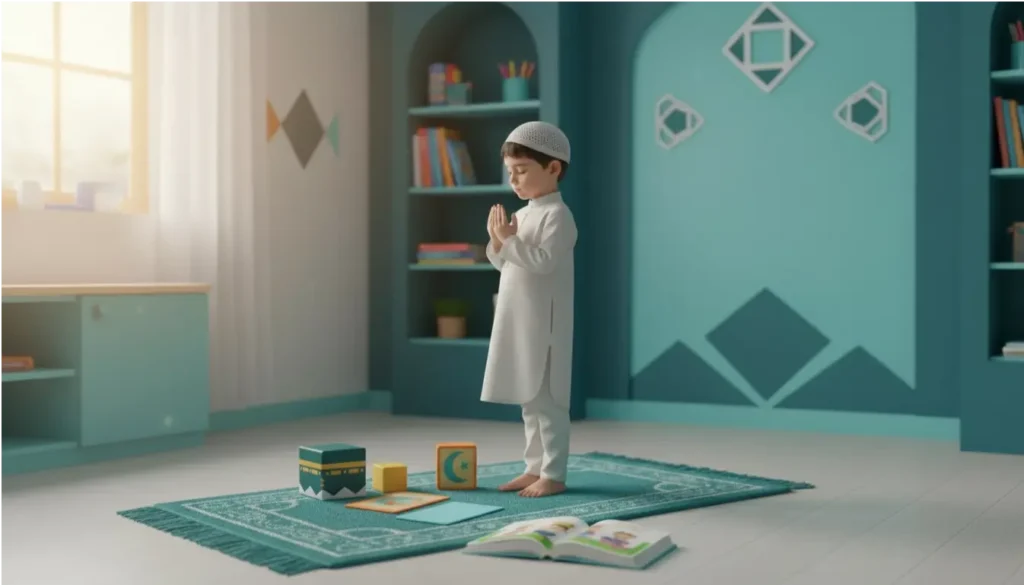
Children pick up language through repetition and emotion—and dua combines both beautifully. When young Muslims hear their parents making heartfelt supplications, curiosity naturally follows, making early dua learning both organic and deeply meaningful for families.
Teaching dua for kids doesn’t require a formal classroom or complicated curriculum. These ten supplications are short, meaningful, and perfectly suited to children’s daily routines, attention spans, and growing spiritual awareness.
1. The Dua After Eating Teaches Gratitude in Seconds
Children ages 5-9 can memorize this within a week using mealtime repetition. Write it on a small card near the dining table.
الْحَمْدُ لِلَّهِ الَّذِي أَطْعَمَنَا وَسَقَانَا وَجَعَلَنَا مُسْلِمِيْن
Alhamdulillahi alladhi at’amana wa saqana wa ja’alana muslimin
“All praise is for Allah who fed us, gave us drink, and made us Muslims.”
Pair with the pre-eating Bismillah to create a complete mealtime routine. Saying it together as a family reinforces the habit naturally and gives kids a sense of proud participation in family worship.
2. Teaching Kids the Dua for Entering the Home Protects Their Hearts
Practice this Dua at your front door every single day.
اللَّهُمَّ إِنِّي أَسْأَلُكَ خَيْرَ الْمَوْلِجِ وَخَيْرَ الْمَخْرَج
Allahumma inni as’aluka khayral mawliji wa khayral makhraj
“O Allah, I ask You for goodness when entering and goodness when leaving.”
Make entering the home a mini-ritual. Pause at the door, say Bismillah together, then recite this dua.
Children aged 6 and above absorb door-based habits quickly because they’re physically anchored to a specific action and location they repeat daily.
3. Asking Allah for Goodness in Both Worlds
This is one of the most comprehensive duas in the Quran—and children can understand its simple meaning immediately.
رَبَّنَا آتِنَا فِي الدُّنْيَا حَسَنَةً وَفِي الْآخِرَةِ حَسَنَةً وَقِنَا عَذَابَ النَّارِ
Rabbana atina fid-dunya hasanatan wa fil-akhirati hasanatan wa qina ‘adhaban-nar
“Our Lord, give us good in this world and good in the Hereafter, and protect us from the punishment of the Fire.” (Quran 2:201)
For ages 8-12, explain what “goodness in this world” means to them: health, happiness, good friends. Then explain the Hereafter. This dua opens beautiful conversations about what children value and what Allah provides.
Buruj Academy’s Islamic Studies Classes for Kids use exactly this approach—making Quranic concepts relatable to young minds through meaningful discussion.
The first session is free in our Islamic Studies for Kids
4. End The Day With A Simple Dua Of Trust
Short, powerful, and perfectly suited to bedtime routines for children aged 5 and above.
بِاسْمِكَ اللَّهُمَّ أَمُوتُ وَأَحْيَا
Bismika Allahumma amutu wa ahya
“In Your name, O Allah, I die and I live.”
Place this dua on a small sign near your child’s bed. Before turning off the light, recite it together three times. Children aged 5-10 respond beautifully to bedtime rituals, and this brief supplication teaches profound trust in Allah even in the youngest hearts.
Discover the Buruj Academy Difference
Step into our virtual classrooms and see how our expert instructors make learning Quran and Arabic intuitive and clear. We focus on overcoming the specific hurdles non-native speakers face, building your confidence and connection with the Quran.
5. Begin The Morning With A Grateful Heart
Pair this with the sleeping dua to bookend each day with gratitude.
الْحَمْدُ لِلَّهِ الَّذِي أَحْيَانَا بَعْدَ مَا أَمَاتَنَا وَإِلَيْهِ النُّشُور
Alhamdulillahil-ladhi ahyana ba’da ma amatana wa ilayhin-nushur
“Praise be to Allah who gave us life after causing us to die, and to Him is the resurrection.”
Morning duas work brilliantly as a breakfast-table habit. Before eating, recite the waking dua together.
Ages 8 and above can begin learning the full Arabic; younger children can start with “Alhamdulillah” until ready for the complete version. Small wins build lasting confidence.
6. Rely On Divine Protection When Leaving The House
Practice at the front door each morning before school.
بِسْمِ اللَّهِ، تَوَكَّلْتُ عَلَى اللَّهِ، وَلَا حَوْلَ وَلَا قُوَّةَ إِلَّا بِاللَّه
Bismillahi, tawakkaltu ‘alallahi, wa la hawla wa la quwwata illa billah
“In the name of Allah, I place my trust in Allah, and there is no might or power except with Allah.”
For school-age children, this dua carries deep comfort—especially before exams or difficult days.
Explain “tawakkul” simply: “We try our best, then trust Allah completely.” Children aged 9-13 connect with this concept when parents frame it around real situations they face.
7. This Short Quranic Dua for Kids Asks Allah for Beneficial Knowledge
Three words. Enormous meaning. Perfect before school, homework, or Quran study sessions.
رَّبِّ زِدْنِي عِلْمًا
Rabbi zidni ‘ilma
“My Lord, increase me in knowledge.” (Quran 20:114)
Make this the opening dua before any learning activity. Before homework: “Rabbi zidni ‘ilma.” Before Quran class: “Rabbi zidni ‘ilma.” Children aged 6 and above can memorize it in one sitting.
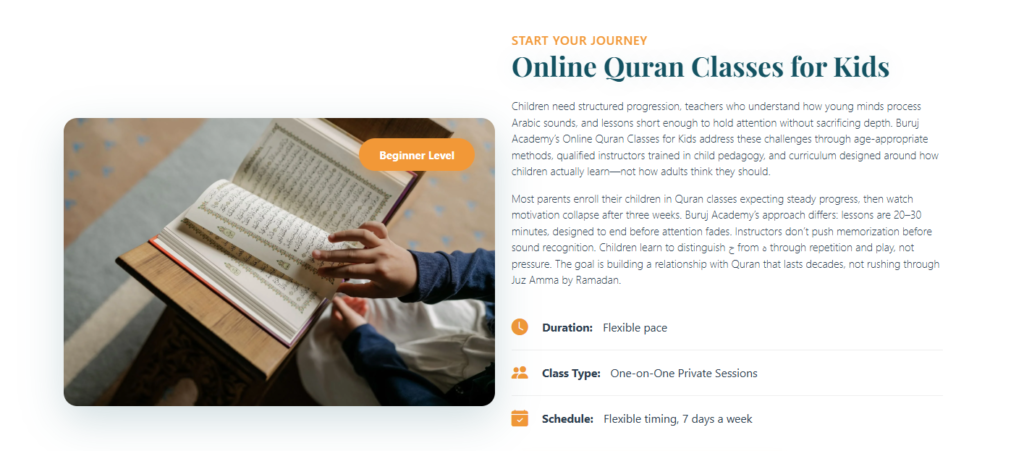
Through Buruj Academy’s Online Quran Classes for Kids, instructors open every lesson with this dua, helping children associate learning with seeking Allah’s help—a habit that stays for life.
Help your child start reading the Quran with a Free trial
8. A Beautiful Dua for Kids Asking Allah to Bless Their Parents Daily
Teach children this dua FOR you. It deepens their understanding of family love and Allah’s mercy simultaneously.
رَّبِّ ارْحَمْهُمَا كَمَا رَبَّيَانِي صَغِيرًا
Rabbir hamhuma kama rabbayani saghira
“My Lord, have mercy on them as they raised me when I was young.” (Quran 17:24)
When children understand they’re asking Allah to bless their own parents, the meaning becomes deeply personal. Ages 7-12 connect with this emotionally.
Make it a family moment—recite it together after Maghrib or before bed. It builds empathy, love, and connection to Quranic guidance simultaneously.
9. Seek Protection During Even The Most Private Daily Moments
Children find it fascinating that Islam guides even bathroom moments—use this curiosity to spark bigger conversations.
اللَّهُمَّ إِنِّي أَعُوذُ بِكَ مِنَ الْخُبُثِ وَالْخَبَائِث
Allahumma inni a’udhu bika minal khubthi wal khaba’ith
“O Allah, I seek refuge in You from male and female devils.”
Use the child’s natural curiosity here. “Did you know Islam has a dua for everything?” works powerfully for ages 6-10.
This dua teaches that Allah’s guidance covers all of life—nothing is too small for remembrance. It’s an excellent gateway to broader Islamic etiquette discussions with growing children.
Read Also: Ramadan for Kids
10. Enter The Masjid With A Prayer For Divine Mercy
Teaching masjid duas builds reverence for the masjid itself—children who say this dua treat the masjid as a special, sacred space.
اللَّهُمَّ افْتَحْ لِي أَبْوَابَ رَحْمَتِكَ
Allahumma-ftah li abwaba rahmatik
“O Allah, open for me the gates of Your mercy.”
Practice this at home first by designating your prayer area as the “practice masjid.” For ages 8–15, explain what rahma (mercy) means so the words carry weight.
Children who understand what they’re saying remember duas far longer than those who only repeat sounds.
Read Also: How to Pray for Kids in Islam?
Deepen Your Islamic Knowledge
Study Aqeedah, Fiqh, Seerah, and essential Islamic teachings with experienced instructors in a structured online program.
Try Islamic StudiesRead Also: Wudu Steps for Kids
Support Consistent Learning for Your Child with Buruj Academy’s Islamic Studies Classes
Daily duas become second nature when children learn them in structured, engaging environments alongside home reinforcement.
- Instructors are Al-Azhar graduates with 12+ years teaching children from non-Arabic speaking families
- Islamic Studies Classes for Kids integrate duas into stories, games, and daily routines
- Age-appropriate curriculum designed for children aged 4-15
- Short 20-30 minute sessions matching children’s natural attention spans
- Patient, encouraging instructors who build confidence, never pressure
Book your child’s free trial lesson with Buruj Academy today and watch duas become part of their daily life.
Find your child’s perfect match among Buruj’s top courses for kids:
- Arabic Classes for Kids
- Alphabet course
- Noorani Qaida Course for Kids
- Quranic Arabic Course
- Islamic Studies for Kids
- Hifz Classes for Kids
- Quran Classes for Kids
- Tajweed for Kids
Get a free trial for your child today.

Conclusion
Starting with just two or three duas for kids—tied to meals, sleep, or leaving the house—creates natural checkpoints for daily remembrance that children carry into adulthood without feeling burdened by learning.
Authentic duas from the Quran and Sunnah carry the most weight. When children know a supplication comes directly from Allah’s Book or the Prophet ﷺ, it adds meaning that motivates genuine engagement beyond mechanical repetition.
Age matters when introducing duas. Younger children need one-word beginnings like Bismillah; older children can grasp the full Arabic and deeper meanings. Pacing learning to your child’s readiness, Insha’Allah, builds lasting love for dua.


Leave a Reply