 Tajweed
| Key Takeaways |
| The Quran contains 29 surahs that open with haroof e muqataat, also called disjointed letters or muqatta’at letters. |
| Fourteen unique letters appear across all haroof muqatta’at combinations, representing exactly half of the Arabic alphabet. |
| The dominant scholarly view holds that haroof-e-muqatta’at serve as a divine challenge to Arabs to produce similar speech. |
| Reciting haroof e muqatta’at correctly requires knowing their individual letter names, not sounding them as joined words. |
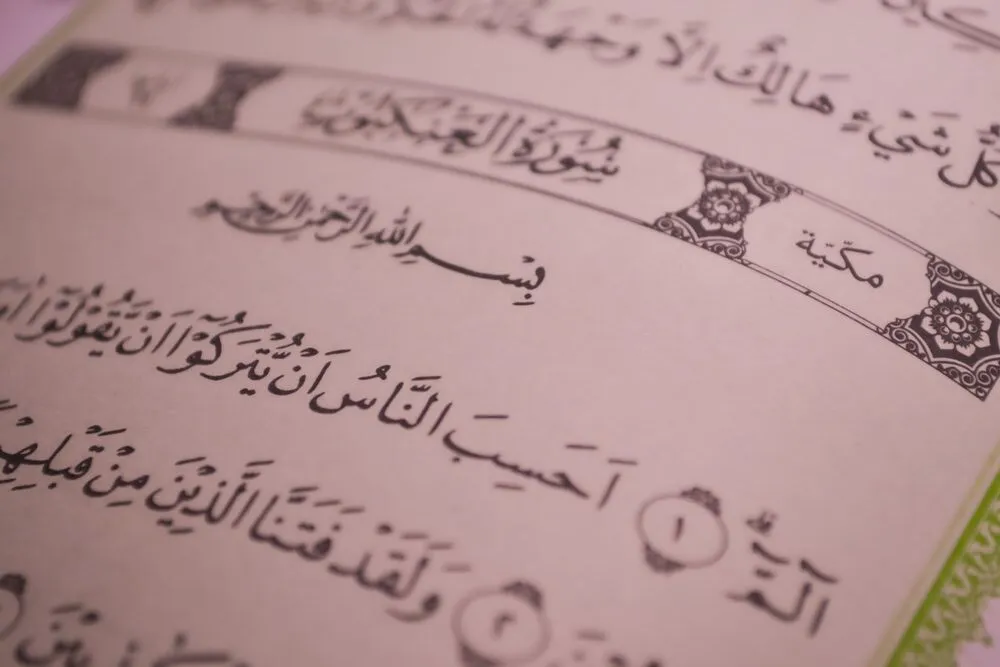
When you open Surah Al-Baqarah and encounter الم, you are meeting one of the Quran’s most discussed linguistic phenomena. These opening letters appear in 29 surahs, standing alone before the verses begin, carrying a weight that scholars have debated for over fourteen centuries.
Table of Contents:
What is the Definition of Haroof e Muqataat in the Quran?
The haroof e muqataat — the disjointed letters of the Quran — are single Arabic letters or short clusters that open specific surahs. They are recited by their individual letter names, not as combined sounds, and they represent one of the most distinctive features of Quranic recitation and Tajweed study.
How Many Haroof e Muqataat Are There in the Quran?
The Quran contains 29 surahs that begin with haroof e muqataat. After removing repetitions, only 14 unique letters appear across all combinations.
Classical scholars noted that these 14 letters — memorized through the phrase نَصٌّ حَكِيمٌ قَاطِعٌ لَهُ سِرٌّ (nassun hakeemun qate’un lahu sirr, meaning “a wise, decisive text with a secret”) — represent exactly half of the Arabic alphabet’s 28 letters.
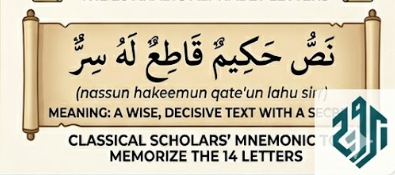
In Buruj’s Tafseer Al-Quran Course we highlight that the great scholar Al-Zamakhshari observed, these 14 letters encompass half of every major phonetic category: half of the voiced letters (majhura), half of the unvoiced (mahmusa), half of the emphatic (shadida), and half of the soft (rikhwa) — a linguistic symmetry that supports the view of divine intentionality in their selection.
Begin Understanding Quran With a FREE Trial in
Buruj’s Tafseer Al-Quran Course

The Complete List of Haroof e Muqataat in Arabic
The table below presents every surah containing muqatta’at letters, organized by their opening combination:
| Haroof e Muqataat | Surahs |
| الم (Alif Lam Meem) | Al-Baqarah (2), Aal Imran (3), Al-Ankabut (29), Ar-Rum (30), Luqman (31), As-Sajdah (32) |
| الر (Alif Lam Ra) | Yunus (10), Hud (11), Yusuf (12), Ibrahim (14), Al-Hijr (15) |
| حم (Ha Meem) | Ghafir (40), Fussilat (41), Az-Zukhruf (43), Ad-Dukhan (44), Al-Jathiyah (45), Al-Ahqaf (46) |
| المص (Alif Lam Meem Sad) | Al-A’raf (7) |
| المر (Alif Lam Meem Ra) | Ar-Ra’d (13) |
| كهيعص (Kaf Ha Ya ‘Ain Sad) | Maryam (19) |
| طه (Ta Ha) | Ta-Ha (20) |
| طسم (Ta Seen Meem) | Ash-Shu’ara (26), Al-Qasas (28) |
| طس (Ta Seen) | An-Naml (27) |
| يس (Ya Seen) | Ya-Sin (36) |
| ص (Sad) | Sad (38) |
| حم عسق (Ha Meem ‘Ain Seen Qaf) | Ash-Shura (42) |
| ق (Qaf) | Qaf (50) |
| ن (Noon) | Al-Qalam (68) |
These combinations range from a single letter — as in ق (Qaf) and ن (Noon) — to five letters, as in كهيعص and حم عسق.
read also: Tongue Letters in Tajweed
What Do the Disjointed Letters Mean?
The meaning of haroof e muqataat is among the most examined questions in classical Tafsir. Two main scholarly positions have defined the debate for centuries.
The first position holds that their meaning belongs exclusively to Allah. Scholars who adopt this view — including some reports attributed to the four rightly-guided caliphs and Abdullah ibn Masood (may Allah be pleased with them) — treat these letters as part of the Quran’s mutashabih (ambiguous) content, whose full reality only Allah knows.
The second position maintains that these letters carry discernible meaning. Within this position, over forty opinions have been recorded, but the most widely supported and academically strongest view is the one we will now explain.
Al-Huroof Al-Muqatta’at Are a Divine Challenge to the Arabs
The majority of classical Tajweed and Tafsir scholars, including Al-Zamakhshari in Al-Kashshaf, concluded that the haroof e muqatta’at are the individual Arabic letters from which the Quran itself is constructed.
The divine logic, as scholars explain it, runs as follows: Allah draws attention to the raw building blocks of Arabic — the very letters the Arabs used daily for poetry, oratory, and literature — and then presents the Quran as a text built from those same letters.
The implicit challenge is stated explicitly in the verse immediately following الم in Surah Al-Baqarah:
ذَٰلِكَ الْكِتَابُ لَا رَيْبَ فِيهِ هُدًى لِّلْمُتَّقِينَ
Dhalikal-kitabu la rayba feeh, hudal-lil-muttaqeen
“This is the Book about which there is no doubt, a guidance for those conscious of Allah.” (Al-Baqarah 2:2)
The implicit argument: this Quran is assembled from your own letters. If you believe it is humanly produced, produce something like it. The Arabs — masters of language — could not, and that inability is itself evidence of the Quran’s divine origin.
Several observations strengthen this view. Twenty-six of the 29 surahs containing haroof e muqataat were revealed in Makkah, precisely when opposition to the Quran was most intense and the challenge most relevant.
Furthermore, 26 of those same 29 surahs move immediately — directly after the opening letters — into explicit praise of the Quran’s elevated status. This is not coincidence; it is structural argument.
Excel in Your Quranic Studies
Join Buruj Academy and master the Quran with our structured, professional curriculum.
Book Your Free TrialHow to Pronounce Huroof Muqataa Correctly?
Correct pronunciation of muqatta’at letters is a practical Tajweed requirement, not merely academic knowledge. In our Online Tajweed Classes at Buruj Academy, this is among the first recitation points we address with students who have been reading the Quran for years without knowing it.
Each letter is recited by its full letter name, not as a consonant sound. So الم is not read as a syllable but as: Alif — Lam — Meem, three distinct letter names recited in sequence.
Book Your FREE Trial Lesson to Begin Your Tajweed Journey

What Are the Benefits of Reciting Haroof e Muqataat?
Reciting the haroof e muqataat carries the same reward as reciting any letter of the Quran. The Prophet ﷺ said, as recorded in Jami’ at-Tirmidhi (2910):
“Whoever recites a letter of the Book of Allah will have a reward, and that reward will be multiplied by ten.”
Scholars specifically noted — as the hadith itself clarifies — that الم is not counted as one letter but as three: Alif is a letter, Lam is a letter, and Meem is a letter. This means that reciting الم alone generates thirty units of reward.
For a student of the Quran working through Surah Al-Baqarah daily, this is a significant and often overlooked source of reward in recitation.
Beyond reward, the haroof e muqataat serve as powerful anchors for Quranic engagement. When a student encounters يس at the opening of Surah Ya-Sin or كهيعص at the beginning of Maryam, pausing to recite each letter name correctly — with its proper Madd — creates intentional connection to the words that follow.
In our experience at Buruj Academy, students who understand why these letters appear tend to approach their recitation with noticeably greater reverence.
Discover the Buruj Academy Difference
Step into our virtual classrooms and see how our expert instructors make learning Quran and Arabic intuitive and clear. We focus on overcoming the specific hurdles non-native speakers face, building your confidence and connection with the Quran.
Which Surahs Begin with Single Haroof-e-Muqatta’at?
Three surahs open with a single muqatta’at letter, making them the simplest in form and among the most discussed individually:
ص opens Surah Sad (38), ق opens Surah Qaf (50), and ن opens Surah Al-Qalam (68).
Each of these three letters is also the name of its surah, which classical scholars viewed as an additional marker of their significance.
Surah Al-Qalam’s opening ن has generated particular scholarly discussion, with some classical commentators connecting it to the noon (pen) mentioned in the very next verse: “By the pen and what they inscribe.” (Al-Qalam 68:1)
Whether or not one accepts that interpretive connection, the recitation rule is clear: ن is recited as Noon, with its Madd Lazim of 6 counts, followed by a full stop before the next verse begins.
read also: What is the Importance of Tajweed?
Start Reciting Haroof e Muqataat with Proper Tajweed at Buruj Academy
Understanding the haroof e muqataat is one thing. Reciting them with the correct Tajweed — proper letter names, accurate Madd, and precise articulation — requires structured guidance.
At Buruj Academy, our Tajweed for Beginners course is taught by Ijazah-certified instructors and Al-Azhar University graduates with 12+ years of experience teaching non-Arabic speakers.
Through the Buruj Method — sound before rules — students internalize correct recitation before tackling complex rule terminology. Sessions are personalized, 1-on-1, and flexibly scheduled.
Book your free trial lesson today and begin reciting every letter of the Quran — including the haroof e muqataat — with the accuracy they deserve.
Join a supportive learning environment tailored to your pace and lifestyle. Start your journey toward excellence by enrolling in one of our specialized tracks:
- Online Tajweed Classes
- Tajweed Classes for Beginners
- Tajweed Classes for Adults
- Tajweed Classes for Sisters
- Tajweed Classes for Kids
- Advanced Tajweed Course
- Amli Tajweed Course (Practical Application)
Ready to transform your recitation? book your free assessment and start your path to Tajweed mastery today!
Excel in Your Quranic Studies
Join Buruj Academy and master the Quran with our structured, professional curriculum.
Book Your Free TrialConclusion
The haroof e muqataat are not textual curiosities — they are a deliberate, structurally precise feature of the Quran that has engaged scholars, linguists, and reciters for over fourteen centuries. Twenty-nine surahs carry these openings. Fourteen unique letters compose them all.
Their recitation carries full reward, letter by letter. And their presence — particularly in Makkan surahs — reflects a divine challenge that Arabic’s greatest masters could never answer. For the Quran student, learning to recite them correctly is both an act of worship and a foundation for deeper Tajweed mastery.
Frequently Asked Questions About Haroof e Muqataat
How Many Haroof-e-Muqatta’at Are There in Total?
There are 29 surahs in the Quran that begin with haroof e muqataat. After removing repetitions across all combinations, only 14 unique Arabic letters appear. These 14 letters represent exactly half of the 28-letter Arabic alphabet and encompass half of every major phonetic category of Arabic letters.
What Is the Correct Way to Recite Haroof e Muqataat in Tajweed?
Each letter is recited by its full name, not as a joined sound. الم is recited as Alif — Lam — Meem individually. Where a letter name contains a Madd letter followed by sukoon — such as in Qaf, Saad, or Noon — Madd Lazim of 6 counts applies. Full stops are observed between each letter name.
Are the Meanings of Haroof e Muqataat Known?
Two scholarly positions exist. The first leaves their meaning to Allah alone, treating them as mutashabih (ambiguous) content. The majority view holds that they are the individual Arabic letters from which the Quran is constructed — functioning as a divine challenge to Arabs to produce equivalent speech using their own alphabet.
Do the Haroof e Muqataat Count as Separate Letters for Reward?
Yes. The Prophet ﷺ clarified in an authentic hadith that الم counts as three letters — Alif, Lam, and Meem — not one. Each letter generates ten units of reward, meaning that الم alone produces thirty. This applies to all haroof e muqataat letter combinations by the same principle.
Which Surah Has the Longest Haroof e Muqataat Combination?
Two surahs share the longest combination of five letters: Maryam (19), which opens with كهيعص (Kaf Ha Ya ‘Ain Sad), and Ash-Shura (42), which opens with حم عسق (Ha Meem ‘Ain Seen Qaf). No muqatta’at combination in the Quran exceeds five letters, consistent with the structural limits of classical Arabic word formation.