 Quran
Quran
| Key Takeaways |
| Prophet Hud is mentioned by name in the Quran across multiple surahs, with Surah Hud (Chapter 11) containing the most detailed account of his story. |
| Hud (peace be upon him) was sent to the people of Aad, a powerful ancient civilization known for their enormous physical strength and towering structures. |
| The people of Aad refused to stop worshipping idols despite Hud’s patient warnings, making them one of the Quran’s clearest examples of arrogant rejection of truth. |
| Allah destroyed the people of Aad with a fierce, relentless wind that lasted seven nights and eight days, as described in Surah Al-Haqqah (69:6–7). |
| Prophet Hud and the believers who followed him were saved completely, a reminder that Allah always protects those who hold firm to faith. |
Long before our children open a history book, the Quran offers them something far richer — real stories of real prophets, told with vivid detail and timeless lessons. These stories are not just narratives; they are moral anchors meant to shape young hearts.
The story of Prophet Hud in the Quran is one of the most powerful among them. It tells of a noble prophet who stood alone against an arrogant, mighty nation — and how Allah’s promise to the believers never failed.
Who Was Prophet Hud and Where Did He Come From?
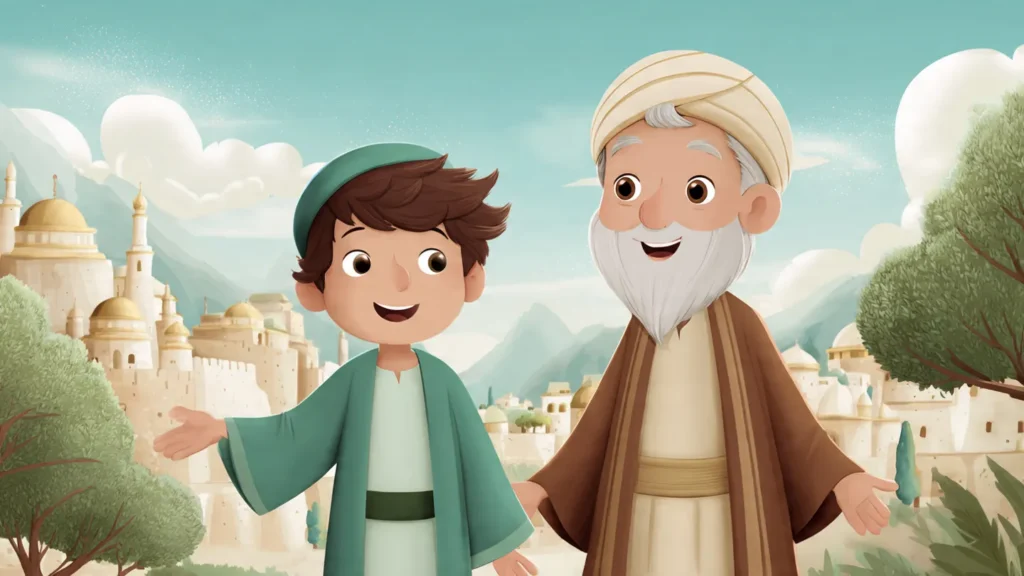
Prophet Hud (peace be upon him) was a prophet sent specifically to his own people, a great nation called Aad. Prophet Hud was from among them — their own kinsman — which made his message both personal and powerful. Allah chose him to call his people back to worshipping One God alone.
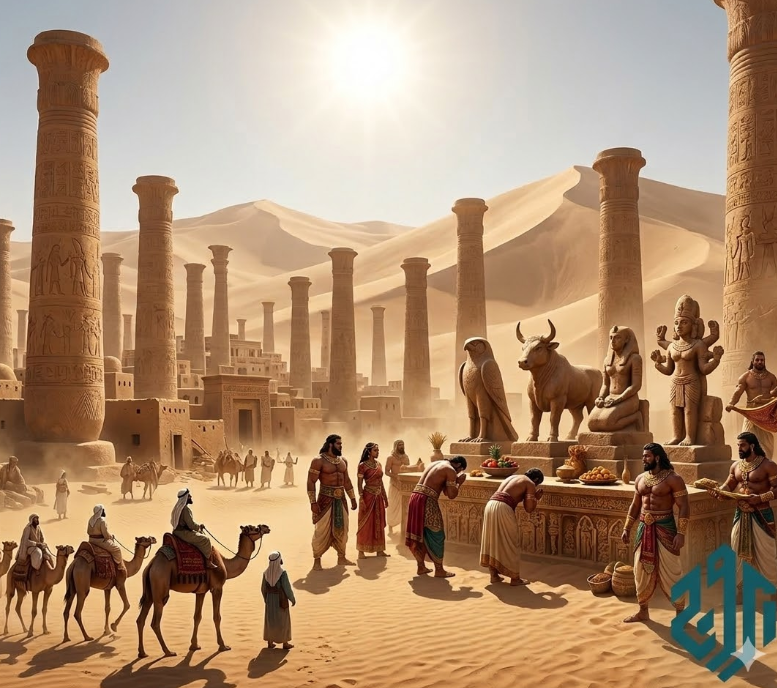
The people of Aad lived in a land called Al-Ahqaf, a region of curved sand dunes believed to be in the southern Arabian Peninsula.
They were extraordinary by any measure — tall, physically powerful, and skilled builders who constructed enormous pillars and structures that made other nations marvel.
Buruj Academy’s Islamic Studies Classes for Kids introduce children to prophet stories like Hud’s directly from Quranic sources, helping them understand context, lessons, and values in an age-appropriate, engaging way.
The first session is free in Buruj’s Islamic Studies Classes for Kids

What Does the Name Hud Mean?
The name Hud (هُود) comes from the Arabic root associated with returning to the right path. Some scholars of the Arabic language link it to the verb hada (هَدَى), meaning “to guide.” It is a fitting name for a man whose entire mission was to guide his people back to truth.
Read also: Habeel and Qabeel’s Story in Quran for Kids
1. The Story of Prophet Hud Begins With a Mighty Nation That Forgot Allah
Picture a land of towering sand dunes, where the wind blew hot and the sun blazed over a people unlike any other. The Aad were giants among men — strong, proud, and wealthy beyond imagination.
They built enormous stone pillars that rose high into the sky, so tall that travellers from distant lands would stop and stare in disbelief. Their strength made them feel untouchable. Their wealth made them feel self-sufficient. And slowly, over generations, they stopped remembering the One who gave them all of it.
They had turned to idols — stone and carved figures they named and worshipped, asking them for rain, for victory, for protection. They had forgotten that only Allah controls the rain. Only Allah gives victory. Only Allah protects.
Allah describes them in the Quran with these words:
أَتَبْنُونَ بِكُلِّ رِيعٍ آيَةً تَعْبَثُونَ
Atabnoona bikulli ree’in aayatan ta’bathoona
“Do you construct on every elevation a sign, amusing yourselves?” (Ash-Shu’ara 26:128)
This was their character — building for pride, not purpose. Showing off their power, not using it gratefully.
Read also: Story of Ayyub in the Quran for Kids
2. Allah Sends Prophet Hud to Warn His People
Into this proud nation, Allah sent a man they already knew. Hud (peace be upon him) was not a stranger arriving from a distant land. He was one of them — born among them, raised among them, respected by them.
Imagine a trusted elder in the community suddenly standing up and saying: “My people, what we are doing is wrong. These idols cannot help us. There is only One God, and we must return to Him.”
That is exactly what Hud did. His message was simple, direct, and urgent. Allah quotes his opening words in Surah Al-A’raf:
قَالَ يَٰقَوْمِ ٱعْبُدُوا۟ ٱللَّهَ مَا لَكُم مِّنْ إِلَٰهٍ غَيْرُهُۥٓ ۚ أَفَلَا تَتَّقُونَ
Qaala yaa qawmi u’budul-laaha maa lakum min ilahin ghayruhu, afalaa tattaqoon
“He said, ‘O my people, worship Allah; you have no deity other than Him. Then will you not fear Him?'” (Al-A’raf 7:65)
He did not come with anger. He came with concern — like a loving older brother shaking his younger siblings awake before the house catches fire.
What Did Prophet Hud Promise His People?
Hud (peace be upon him) did not just warn — he also promised. He told his people that if they turned back to Allah, their blessings would multiply.
The rains would return. Their strength would increase. Allah would replace hardship with ease. He was not asking them to suffer. He was inviting them to thrive.
Excel in Your Quranic Studies
Join Buruj Academy and master the Quran with our structured, professional curriculum.
Book Your Free Trial3. The People of Aad Refuse and Mock Their Prophet
The leaders of Aad did not respond with curiosity or even polite disagreement. They responded with mockery — the weapon of those who have no real argument.
They said to Hud, in effect: “You are foolish. You are bewitched. Our gods are real, and they have already turned against you — why else would you say such things?”
Children sometimes ask us at Buruj Academy: “Why didn’t they just listen?” The answer is both simple and sad — they were too proud. Their wealth and strength had convinced them they needed no one, not even Allah.
Book Your Kid a Free Trial Lesson With One of Buruj’s Quran Tutors for Children

The Quran captures their arrogance clearly:
قَالُوٓا۟ أَجِئْتَنَا لِنَعْبُدَ ٱللَّهَ وَحْدَهُۥ وَنَذَرَ مَا كَانَ يَعْبُدُ ءَابَآؤُنَا
Qaaloo aji’tanaa lina’budal-laaha wahdahu wa nadhara maa kaana ya’budu aabaaunaa
“They said, ‘Have you come to us so that we should worship Allah alone and leave what our fathers worshipped?'” (Al-A’raf 7:70)
They used their ancestors as a shield — “Our fathers did it this way.” But following the wrong path is not made right simply because it is old.
How Did Prophet Hud Respond to Their Mockery?
Hud (peace be upon him) did not lose patience. He did not shout back or give up. He kept speaking clearly and calmly, reminding them of Allah’s favors — their strength, their provisions, their blessed land. He offered them a path to safety again and again.
This is one of the most beautiful lessons in his story for children: a prophet who stayed calm and kind even when people were cruel.
Discover the Buruj Academy Difference
Step into our virtual classrooms and see how our expert instructors make learning Quran and Arabic intuitive and clear. We focus on overcoming the specific hurdles non-native speakers face, building your confidence and connection with the Quran.
4. The Drought Begins and Still The people of Aad Refuse to Turn to Allah
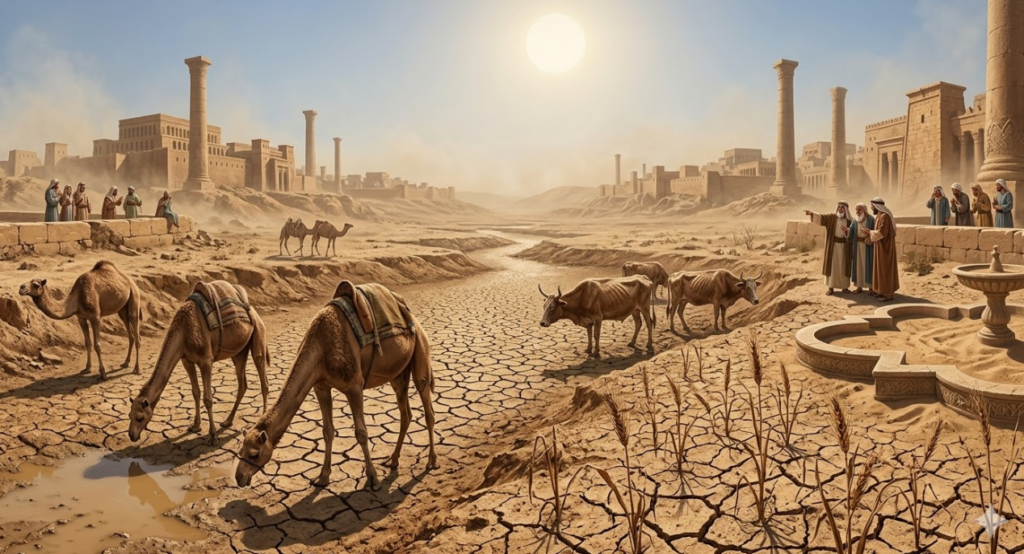
Allah sent the first warning not with destruction, but with discomfort. The rains stopped coming. The land grew dry. The crops thinned. Animals struggled. The people of Aad, who had always had abundance, began to feel the pinch of scarcity.
This was mercy disguised as hardship — a gentle shake before the final consequence. Allah was giving them time.
But the people of Aad did not turn to Allah. Instead, they doubled down on their idols, begging their carved stones for rain. When nothing came, they blamed Hud — telling him that their bad luck was his fault for angering their gods.
Hud stood firm. He told them plainly: “The control of rain belongs to Allah alone. These idols have no power. Return to Him, and the rain will return.”
They refused. And so the waiting continued.
5. The Believers Follow Hud While Others Harden Their Hearts
Not everyone in Aad rejected the truth. A small group of believers — people with humble hearts and clear eyes — recognized that Hud (peace be upon him) was telling the truth. They left their pride aside and followed him.
This is a detail worth pausing on when narrating this story to children. In every prophet’s story, there are always the few who choose rightly, even when the crowd goes the other way. Those believers in Aad are honored in the Quran alongside their prophet.
They stayed near Hud. They prayed with him. They waited with him. And they trusted that Allah’s promise — that He never abandons the sincere believers — would come true.
For children who sometimes feel like they are the only one trying to do the right thing among friends who aren’t, this detail is deeply consoling.
We at Buruj Academy regularly use this story in our Quran Classes for Kids because its moral architecture is perfectly suited to young minds.
Help your child start reading the Quran with a Free trial

6. The Terrible Wind That Destroyed the People of Aad
Then came the day the Aad had not prepared for.
A cloud appeared on the horizon. The people of Aad looked up and felt a moment of relief — “Rain! Finally, rain!” They had waited so long that the sight of any cloud felt like good news.
But this was not a rain cloud.
The wind that came was unlike anything the world had seen. It howled and screamed across the dunes. It uprooted trees. It tore through their towering buildings. And it did not stop for a day, or two — it raged for seven nights and eight days without pause.
Allah describes it in Surah Al-Haqqah:
وَأَمَّا عَادٌ فَأُهْلِكُوا۟ بِرِيحٍ صَرْصَرٍ عَاتِيَةٍ سَخَّرَهَا عَلَيْهِمْ سَبْعَ لَيَالٍ وَثَمَٰنِيَةَ أَيَّامٍ حُسُومًا
Wa ammaa ‘aadun fa-uhlikoo bireehin sarsarin ‘aatiyah. Sakhkharahaa ‘alayhim sab’a layaalin wa thamaaniyata ayyaamin husooma
“And as for Aad, they were destroyed by a screaming, violent wind. He imposed it upon them for seven nights and eight days in succession.” (Al-Haqqah 69:6–7)
The mighty people of Aad — the ones who had laughed at the idea that anything could harm them — were brought down by wind. Not armies. Not earthquakes. Wind. Because when Allah decides, no amount of human strength changes the outcome.
7. Prophet Hud and the Believers Are Saved
While the wind destroyed everything in its path, it did not touch Hud (peace be upon him) or the believers who had followed him. Allah protected them completely.
The Quran tells us:
وَنَجَّيْنَا هُودًا وَٱلَّذِينَ ءَامَنُوا۟ مَعَهُۥ بِرَحْمَةٍ مِّنَّا
Wa najjaynaa Hoodan walladheena aamanoo ma’ahu birahmatim minnaa
“And We saved Hud and those who believed with him, by mercy from Us.” (Hud 11:58)
That single phrase — by mercy from Us — carries the whole lesson of the story. Salvation is not earned through strength or status. It comes through faith and Allah’s mercy.
After the destruction, Hud (peace be upon him) and the believers continued their lives, grateful and at peace, while the great civilization of Aad became a warning echoing through time.
What Does the Story of Aad in the Quran Teach Our Children?
The story of Prophet Hud and the people of Aad carries lessons that are just as alive today as they were thousands of years ago.
| Lesson | What It Teaches Children |
| Pride is dangerous | The Aad’s greatest strength became their greatest weakness when it turned to arrogance |
| Prophets are patient | Hud never gave up or became angry, even when mocked repeatedly |
| A small group can be right | The believers were few, but they were saved — numbers don’t determine truth |
| Allah’s power surpasses all | The most physically powerful nation was humbled by wind alone |
| Gratitude protects us | Hud reminded his people to be grateful — ingratitude was their downfall |
Children absorb these lessons best through story, not lecture. When a parent reads this narrative aloud — with a shaking voice for the wind, a calm voice for Hud, a proud voice for the Aad’s leaders — the lessons travel from the ear straight to the heart.
For more Quran stories for kids told in this vivid, narrative style, our blog carries full retellings of prophet stories from authentic Islamic sources.
Where Can You Read More About Prophet Hud in the Quran?
The story of Prophet Hud appears across several surahs, each adding a different dimension. Parents who want to deepen their own understanding before narrating to their children will benefit from knowing which passages to turn to.
| Surah | Verses | What It Covers |
| Surah Al-A’raf (7) | 65–72 | Hud’s call and the Aad’s rejection |
| Surah Hud (11) | 50–60 | Most detailed account of the story |
| Surah Ash-Shu’ara (26) | 123–140 | Hud’s conversation with his people |
| Surah Al-Haqqah (69) | 6–8 | Description of the wind and destruction |
| Surah Al-Ahqaf (46) | 21–26 | The final warning and the coming wind |
Reading these passages alongside our easy Tafseer in English resource helps parents present the story with proper context and meaning.
Begin Understanding Quran With a FREE Trial in Buruj’s Tafseer Al-Quran Course

Excel in Your Quranic Studies
Join Buruj Academy and master the Quran with our structured, professional curriculum.
Book Your Free TrialGive Your Child a Bright Future with Inspiring Quranic Learning
Spark a lifelong love for the Quran and the Arabic language in your child’s heart. At Buruj Academy, we specialize in making sacred knowledge accessible, engaging, and fun for young learners.
Our expert tutors use child-friendly teaching methods—including interactive tools and personalized pacing—to ensure your little ones build a strong spiritual foundation while developing a deep connection to their faith and heritage.
Whether they are taking their very first steps in the alphabet or beginning the noble journey of memorization, we provide a safe and supportive environment where every child can thrive.
Enroll your child in one of our specialized, kid-friendly tracks today:
- Online Quran Classes for Kids
- Tajweed Classes for Kids
- Hifz Classes for Kids
- Online Arabic Classes for Kids
- Quranic Arabic Course for Kids
- Noorani Qaida Course for Kids
- Islamic Studies Classes for Kids
Ready to watch your child grow in knowledge and character? Join the Buruj Academy family and book a free trial session for your child today!
Frequently Asked Questions About the Story of Prophet Hud in the Quran
Who Were the People of Aad in the Quran?
The people of Aad were a powerful ancient civilization sent Prophet Hud as their messenger. Known for exceptional physical strength and monumental architecture, they lived in Al-Ahqaf in the Arabian Peninsula. They rejected Allah’s message repeatedly and were destroyed by a violent wind lasting seven nights and eight days, as described in Surah Al-Haqqah.
How Many Times Is Prophet Hud Mentioned in the Quran?
Prophet Hud is mentioned by name seven times in the Quran — in Surah Al-A’raf and Surah Hud. An entire surah, Surah Hud (Chapter 11), is named after him and contains the most complete account of his mission to the people of Aad and their ultimate destruction.
What Is Prophet Hud’s Family Tree?
According to Islamic scholarly tradition, Hud (peace be upon him) was a descendant of Prophet Nuh (Noah). His lineage traces through Nuh’s son Sam, making him part of the blessed prophetic lineage. He was from the Aad tribe itself, which is why his calling them to truth carried such personal weight.
What Happened to the People of Aad After They Rejected Hud?
Allah sent a drought first, then a devastating wind described in the Quran as screaming and violent. It blew for seven nights and eight days continuously, destroying the Aad completely. The Quran describes them as having been left like hollow palm tree trunks — their mighty civilization erased. Only Hud and the believers with him survived.
Why Is the Story of Prophet Hud Important for Kids to Learn?
The story teaches children that arrogance — no matter how much power backs it — leads to destruction, while patience and faith lead to safety. It also shows that following the right path, even alone among a crowd, is always the wiser choice. These are character lessons children carry into every challenge they face.