 Quran
Quran
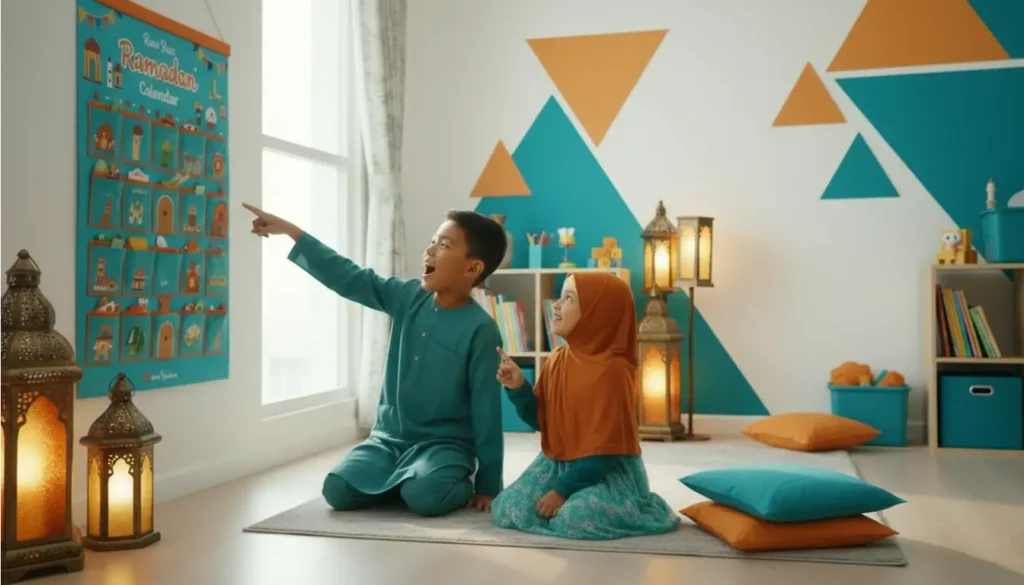
Ramadan arrives every year, and children watch the adults around them fast, pray, and change their routines—often without fully understanding why. That curiosity is a golden opportunity every Muslim parent should use wisely.
These Ramadan facts for kids go beyond the basics of “no eating or drinking.” Each fact is explained in child-friendly terms parents can share directly, helping children aged 4-15 feel genuinely connected to the most special month of the Islamic year.
1. Ramadan Is the Month When the Quran Was First Revealed to Prophet Muhammad ﷺ
This is perhaps the most important Ramadan fact kids should know early. Allah sent the first verses of the Quran to Prophet Muhammad ﷺ during Ramadan, making this month directly connected to Islam’s holiest book.
Tell your child: “Ramadan is the Quran’s birthday month.” Children aged 5-8 respond beautifully to this framing. It immediately explains why Muslims recite the Quran so much during these 30 days.
Buruj Academy’s Islamic Studies Classes for Kids teach children the story of the first revelation in engaging, age-appropriate ways that make this fact truly memorable rather than just another piece of information.
The first session is free in Buruj’s Islamic Studies Classes for Kids
2. Fasting in Ramadan Is One of the Five Pillars of Islam
Children learning about Islam need to understand that Ramadan fasting isn’t optional for adult Muslims—it’s a foundational obligation. Explaining the Five Pillars gives kids the bigger picture of Islamic practice.
Use a simple visual: draw five pillars on paper and label each one together. Seeing Ramadan’s place among Shahadah, Salah, Zakat, and Hajj helps children aged 7-12 understand its true importance and feel proud to be Muslim.
3. The Word Ramadan Comes From an Arabic Root Meaning Intense Heat
Kids love learning word origins—it makes language feel like a puzzle. “Ramadan” comes from the Arabic root ramida (رَمِضَ), referring to scorching heat. Scholars explain this connects to how fasting burns away sins.
Share this with children aged 8-15 as a vocabulary moment. Ask them: “What other Arabic words do you know?” This small fact naturally sparks interest in Arabic language learning and makes Ramadan feel richer and more layered.
Discover the Buruj Academy Difference
Step into our virtual classrooms and see how our expert instructors make learning Quran and Arabic intuitive and clear. We focus on overcoming the specific hurdles non-native speakers face, building your confidence and connection with the Quran.
4. Muslims Worldwide Fast from Dawn Until Sunset Every Single Day
Many children assume fasting just means skipping lunch. Clarifying the actual timeframe—from Fajr (dawn) until Maghrib (sunset)—helps kids genuinely appreciate what fasting adults around them are doing each day throughout the month.
| Age Group | How to Explain Fasting Hours |
| Ages 4-7 | “From when the sky turns light until the sun goes down” |
| Ages 8-12 | “From Fajr prayer time until Maghrib prayer time” |
| Ages 13-15 | Full explanation with Suhoor, Iftar, and intention (niyyah) |
This table shows how the same fact can be taught differently depending on your child’s age and understanding level.
6. The Pre-Dawn Meal Called Suhoor
Prophet Muhammad ﷺ said: “Take Suhoor, for in Suhoor there is blessing.”
Waking children for Suhoor—even if they just have a small snack—connects them to prophetic practice and makes them feel genuinely part of the fasting experience.
Children aged 8 and above especially enjoy this early-morning ritual. Make it special: use a dedicated Ramadan plate, let children choose one Suhoor food item each night, and recite the fasting intention together as a family before eating.
7. Breaking the Fast at Iftar with Dates Follows the Prophet’s ﷺ Own Sunnah
The Prophet ﷺ broke his fast with dates and water before praying Maghrib. This simple Sunnah carries enormous blessing and teaches children that even eating can be an act of worship when done following prophetic guidance.
Let children place dates on the Iftar table each evening. Assign this as their special Ramadan job. Children aged 4-10 love having responsibility during Iftar preparation—it builds ownership over the spiritual experience and creates lasting memories.
8. The Tarawih Prayer Is a Special Ramadan Worship Only Prayed This Month
Tarawih prayers are performed only in Ramadan, making them genuinely special. Children notice that mosques fill up at night during this month, and explaining why satisfies their natural curiosity about the change in family and community routines.
Take children to the mosque for Tarawih at least a few nights. Even if they sit quietly or sleep, the atmosphere of hundreds of Muslims praying together makes a profound impression that lasts far beyond childhood.
9. Laylat Al-Qadr Is Better Than a Thousand Months of Worship
Ask children aged 8+: “If you could get 1,000 months of reward in one night, would you stay up?” This makes the value of Laylat Al-Qadr immediately relatable and motivating.
لَيْلَةُ الْقَدْرِ خَيْرٌ مِّنْ أَلْفِ شَهْرٍ
Laylatul Qadri khayrun min alfi shahr
“The Night of Decree is better than a thousand months.” (Surah Al-Qadr: 3)
This Quranic fact about Ramadan for kids consistently generates wonder. Seeking Laylat Al-Qadr in the last ten nights, especially odd nights, is something even young children can participate in through extra du’a and Quran listening.
Deepen Your Islamic Knowledge
Study Aqeedah, Fiqh, Seerah, and essential Islamic teachings with experienced instructors in a structured online program.
Try Islamic Studies10. Fasting Teaches Muslims to Feel What Hungry People Experience Every Day
This is one of the most humanizing Ramadan facts for kids. Hunger during fasting creates genuine empathy for those who face food insecurity daily. Islam intentionally uses physical experience to build compassion—a lesson children deeply need.
Ask your child at Iftar: “Now that your stomach was empty, how do you think some children feel every day?” This simple question plants seeds of gratitude and generosity that shape character far beyond Ramadan itself. Alhamdulillah for every meal.
11. Zakat Al-Fitr Must Be Given Before Eid Prayer to Help Those in Need
Before Eid prayer concludes Ramadan, every Muslim family must give Zakat Al-Fitr—a charity ensuring everyone can celebrate Eid with food. Involving children in giving this charity makes generosity feel concrete rather than abstract.
Let children aged 6 and above hold the money or food donated. Ask them: “We’re making sure another child has food for Eid—how does that feel?” This single act teaches more about Islamic charity than any lecture ever could.
12. The Quran Is Divided into 30 Parts And Can Be Completed During Ramadan
The Quran has 30 Juz (sections), aligning perfectly with Ramadan’s 30 days. Many Muslims complete the entire Quran during Ramadan—one Juz daily. Sharing this fact helps children see the deliberate beauty in Islamic practice.
| Goal | Daily Quran Reading |
| Complete 1 Juz per day | Approximately 20 pages |
| Half Juz daily | Approximately 10 pages |
| Child-friendly goal | 1-3 pages with parent |
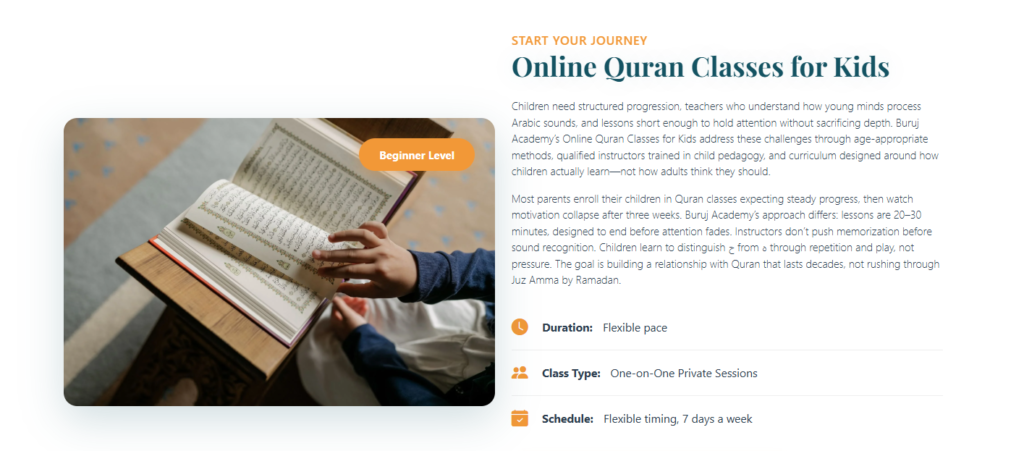
Even young children can have their own Ramadan Quran goal—three pages daily with a parent counts as genuine participation. Buruj Academy’s Online Quran Classes for Kids help children build consistent Quran habits that make Ramadan reading achievable, not overwhelming.
Help your child start reading the Quran with a Free trial
13. Satan and Evil Jinn Are Chained During Ramadan
Prophet Muhammad ﷺ said that in Ramadan, the devils are chained. Children find this fact fascinating—and it opens a meaningful conversation about why we still sometimes make mistakes even during Ramadan (our own nafs, or desires, remain).
For children aged 8-12, this fact naturally leads to discussing self-control. Ask: “If Shaytan is chained, who do we have to watch out for?” Guiding them to answer “our own choices” builds personal accountability in an age-appropriate, engaging way.
14. The Gates of Heaven Are Opened and the Gates of Hell Are Closed in Ramadan
Another hadith-based Ramadan fact kids find genuinely exciting. The Prophet ﷺ described Ramadan as a month when Allah’s mercy flows abundantly. This fact helps children understand why Muslims feel spiritually elevated during this month.
Frame it positively for younger children: “Ramadan is when Allah is extra generous with His rewards.” This encourages good deeds rather than fear, building a healthy relationship with Allah rooted in love and hope rather than anxiety.
15. Muslims Make Extra Du’a During Ramadan Because It Is Especially Accepted
The Prophet ﷺ mentioned that the fasting person’s du’a is not rejected. Teaching children to make du’a during Ramadan—especially just before Iftar—gives them a powerful spiritual tool they can use independently throughout their lives.
Create a family du’a list during Ramadan. Each child writes or draws two things they want to ask Allah for. Revisit the list after Ramadan and discuss together. This builds children’s personal relationship with du’a in a beautiful, practical way.
16. I’tikaf Means Staying in the Mosque
Some Muslim men and women perform I’tikaf—a complete retreat in the mosque during the last ten nights. While children cannot usually participate fully, explaining this practice helps them understand deep Islamic devotion and commitment.
For older children aged 12-15, discuss why someone would give up home comforts to focus entirely on worship. Ask: “What would you give up for ten days to get closer to Allah?” This question generates powerful, age-appropriate spiritual reflection.
17. Ramadan Follows the Islamic Lunar Calendar So Its Dates Change Each Year
Unlike fixed-date holidays, Ramadan moves approximately 10-11 days earlier each year because Islam uses the lunar calendar (Hijri calendar). Children often wonder why Ramadan isn’t always in the same season—this fact answers their question perfectly.
Showing children a Hijri calendar alongside the Gregorian one is a wonderful educational activity. Children aged 8 and above can calculate roughly when Ramadan will fall in future years, turning an Islamic fact into a fun math activity.
Read Also: Ramadan Books for Kids
18. The New Moon Must Be Sighted to Officially Begin Ramadan
Ramadan starts when the new crescent moon is sighted—either physically or through astronomical calculation, depending on the scholarly opinion followed. This moon-sighting tradition connects Muslims to centuries of Islamic practice and natural observation.
Take children outside on the 29th night of Sha’ban to look for the crescent moon together. Even if clouds prevent sighting, the activity builds anticipation and teaches children that Islam is connected to Allah’s creation in beautiful ways.
19. Eating or Drinking Accidentally While Fasting Does Not Break the Fast
The Prophet ﷺ said: whoever forgets and eats or drinks should continue fasting, for Allah has fed them.
This gentle ruling reflects Islam’s mercy and is an important Ramadan fact kids need to know early.
Children who try fasting sometimes panic when they accidentally drink water. Knowing this ruling immediately removes anxiety and shame. Teach it proactively, before they fast, so they feel confident and calm rather than distressed during their first fasting attempts.
Read Also: Can Kids Fast In Ramadan?
20. Eid Al-Fitr Celebration Marks the Joyful End of the Ramadan Month
Eid Al-Fitr—”the festival of breaking the fast”—is Islam’s gift at Ramadan’s end. Children across the Muslim world wake early, wear new clothes, pray Eid prayer, and celebrate with family and food after 30 days of fasting and worship.
Build Eid anticipation throughout Ramadan. Create a countdown with children, prepare Eid gifts together, and involve them in Eid prayer preparation. When children experience the joy of Eid fully, fasting the following year becomes something they genuinely look forward to.
Read Also: How to Pray for Kids in Islam?
Deepen Your Islamic Knowledge
Study Aqeedah, Fiqh, Seerah, and essential Islamic teachings with experienced instructors in a structured online program.
Try Islamic StudiesRead Also: Ramadan for Kids
Give Your Child a Deeper Ramadan Connection with Buruj Academy’s Islamic Studies Classes for Kids
Home conversations about Ramadan spark curiosity—structured learning builds lasting understanding. Buruj Academy’s Islamic Studies Classes for Kids take that further with expert guidance.
- Al-Azhar graduates with 12+ years teaching children aged 4-15
- Age-appropriate curriculum covering Ramadan, Quran, Islamic values
- Gamification and stories, never dry lectures
- Short 20-30 minute sessions matching children’s attention spans
- Flexible scheduling fitting your family’s Ramadan routine
- Patient, encouraging instructors who build confidence, not pressure
Book your child’s free trial lesson today and give them structured Islamic education they’ll carry beyond Ramadan.
Find your child’s perfect match among Buruj’s top courses for kids:
- Arabic Classes for Kids
- Alphabet course
- Noorani Qaida Course for Kids
- Quranic Arabic Course
- Islamic Studies for Kids
- Hifz Classes for Kids
- Quran Classes for Kids
- Tajweed for Kids
Get a free trial for your child today.
Conclusion
Ramadan holds layers of meaning that children can genuinely appreciate when facts are shared at the right level. From the Quran’s revelation to moon sighting traditions, each fact builds a stronger Islamic identity in young Muslim minds.
Spiritual habits formed during Ramadan—du’a, Quran recitation, charity, empathy—carry real power when children understand their purpose. Knowledge converts ritual into meaningful worship, making every Ramadan practice feel personal rather than routine.
Children who grow up understanding Ramadan’s depth approach the month with excitement, not obligation. Start sharing these facts early, revisit them annually, and watch your child’s love for Ramadan grow stronger with every passing year. Masha’Allah.


Leave a Reply