 Quran
Quran
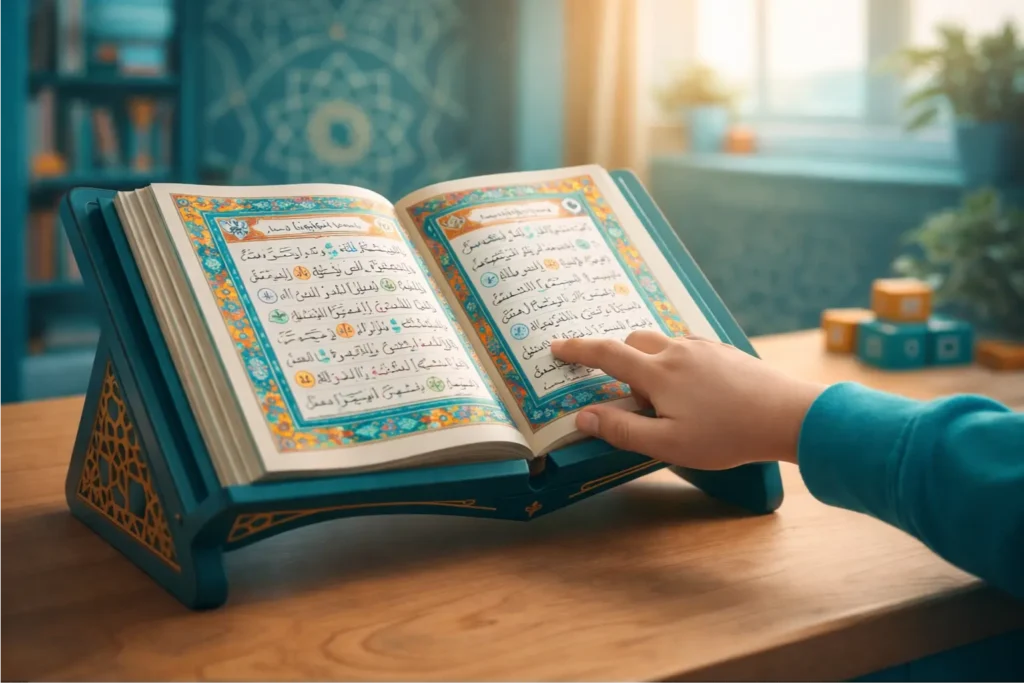
Most children surprise us with how quickly they absorb things that genuinely interest them. The real challenge for parents isn’t their child’s ability — it’s knowing exactly where to start and what order to follow when teaching Quran.
These Quran steps for kids give you a clear, practical path from the very first Arabic letter to confident Quran recitation. Each step builds on the previous one, with age-specific methods and realistic timelines that work for busy families raising children outside Arabic-speaking environments.
Step 1 Is Teaching Kids the Arabic Alphabet Before Any Quran Reading Begins
Before a child can read even a single Quran word, they need to recognize all 28 Arabic letters in their isolated form. Skipping this step creates confusion later, so it genuinely deserves proper time and attention.
Ages 4–7: Learning Arabic Letters Through Stories
At this age, children learn best through repetition wrapped in fun. Introduce 7 to 10 letters per week using a simple method.
For example, connect ب to bait (بيت, house) by drawing a little house together. Keep each session to 10–15 minutes maximum.
Ages 8–12: Using Flashcards and Arabic Letter Matching Games
Older children benefit from slightly faster pacing — four to five letters weekly. Use flashcards with pictures on one side and the Arabic letter on the other.
A simple matching game where kids pair letters to pictures keeps engagement high without feeling like homework.
Ages 13–15: Independent Alphabet Review With Writing Practice
Teenagers can work through the alphabet more independently. Writing each Arabic letter five times while saying it aloud builds both memory and motor recall simultaneously. Encourage them to set a small daily goal and track their own progress, which builds ownership.
Here is a practical timeline parents can follow at each stage:
| Age Group | Letters Per Week | Session Length | Key Method |
| 4–7 | 7–15 letters | 10–15 minutes | Songs and picture association |
| 8–12 | 10–20 letters | 15–20 minutes | Flashcard matching games |
| 13–15 | 15–28 letters | 20–25 minutes | Writing and independent review |
Most children complete the isolated alphabet recognition in four to eight weeks when sessions stay short and consistent. Masha’Allah, the progress at this stage is always encouraging to see.
Discover the Buruj Academy Difference
Step into our virtual classrooms and see how our expert instructors make learning Quran and Arabic intuitive and clear. We focus on overcoming the specific hurdles non-native speakers face, building your confidence and connection with the Quran.
Step 2 Is Helping Kids Learn Letter Forms and Joining Rules in Quran Words
Arabic letters change shape depending on their position — beginning, middle, or end of a word. This is one of the most commonly overlooked Quran steps for kids, and it causes reading hesitation later if rushed past.
A Simple Three-Position Activity for Young Children
Draw one letter — for example ع — in all three positions on a piece of paper. Use three different colors: red for the beginning form, blue for the middle, and green for the end. Ask your child to find matching colors in a short Quran word you write beside it.
Using the Noorani Qaida to Build Letter-Joining Skills
The joining rules take most children two to four weeks of consistent practice before they feel natural. Patience here pays off significantly in every Quran step that follows.
Buruj Academy‘s Noorani Qaida for Kids is specifically designed for this step. It introduces letter forms progressively using colorful visuals and very short 20–25 minute sessions that match children’s actual attention spans, guided by instructors who understand exactly how kids learn.
Sign up your son for a free Noorani Qaida lesson.

Step 3 Is Teaching Kids Basic Tajweed Rules Before They Start Reading Full Verses
Many parents assume Tajweed comes later — but introducing three or four basic rules early prevents children from developing incorrect pronunciation habits that become very difficult to undo.
The three beginner rules worth introducing at this step are:
| Tajweed Rule | What It Means | Simple Explanation for Kids |
| Madd (مَدّ) | Elongation of vowel sounds | “Stretch that sound like a rubber band” |
| Ghunna (غُنَّة) | Nasal sound on ن and م | “Hum through your nose for two counts” |
| Qalqala (قَلْقَلَة) | Bouncing sound on 5 letters | “Give it a little bounce at the end” |
Children aged 8 and above grasp these rules naturally when teachers use physical demonstrations. Saying “stretch it” or “bounce it” gives kids a body-based cue that sticks far better than technical explanations.
Through Buruj Academy‘s Tajweed for Kids course, children learn proper Quranic pronunciation through games, songs, and interactive activities that make these rules memorable rather than abstract, taught by patient instructors trained specifically in working with young learners.
Book your child’s free Tajweed trial today
Read Also: Quran Books for Kids
Step 4 Is Starting Kids on Short Surahs That Build Quran Reading Confidence Quickly
Once letter recognition and basic Tajweed are in place, children are ready for their first real Quran reading experience. Starting with short, rhythmic surahs from Juz 30 gives children quick wins that build genuine confidence.
The Best First Surah for Young Quran Learners
Surah Al-Ikhlas is widely considered the ideal starting point. It is short, rhythmic, and teaches Tawheed beautifully:
قُلْ هُوَ ٱللَّهُ أَحَدٌ
Qul Huwa Allahu Ahad
“Say: He is Allah, the One.”
This verse’s rhythm and brevity make it ideal for young children. They memorize it quickly, which immediately shows them that Quran reading is achievable.
A Suggested First Quran Reading Sequence for Kids Learning Quran
Start with Al-Ikhlas, then move to Al-Falaq, then An-Nas. These three surahs together take most children two to four weeks of reading practice before they feel fluent. Celebrate each one with your child — even something as simple as a sticker chart works wonderfully at this stage.
Read Also: Quran Activities for Kids
Step 5 Is Helping Kids Memorize Quran Surahs Using Repetition and Review Together
Memorization — or Hifz — is a separate skill from reading, and it follows its own Quran steps for kids. The key principle is: short daily repetition beats long occasional sessions every single time.
The Three-Day Memorization Method for Children
Day one: Read the new verse aloud together ten times.
Day two: Reread it, then recite it from memory with your child, correcting gently.
Day three: Review yesterday’s verse plus all previously memorized verses. This simple cycle builds retention without overwhelming young learners.
Read Also: Quran Learning Apps for Kids
How Can Parents Support Hifz at Home Without Pressure?
Play the surah as an audio recording during car rides or mealtimes. Children absorb Quran through listening even when they are not formally studying.
Many families find their children begin reciting along naturally within just a few days of regular audio exposure.
Buruj Academy‘s Hifz for Kids uses age-appropriate techniques — short daily sessions, gamified review, positive reinforcement — to build lasting memorization habits without overwhelming young learners, guided by Hifz specialists experienced in child psychology and Islamic education.
Start your child’s Hifz classes for free
Read Also: Free Online Quran Classes for Kids
Step 6 Is Introducing Kids to Simple Quran Word Meanings That Deepen Their Connection
Children who understand even basic Quran vocabulary develop a personal connection to what they recite. This step does not require full translation study — just introducing key words from familiar surahs makes a meaningful difference.
| Arabic Word | Transliteration | Meaning |
| اللَّهُ | Allah | God |
| رَبِّ | Rabbi | My Lord |
| رَحِيم | Raheem | Most Merciful |
| أَحَدٌ | Ahad | The One |
| قُلْ | Qul | Say |
Introduce two or three words per day from surahs your child already knows. Ask simple questions like “What does Rabbi mean again?” during dinner conversations.
This informal review keeps vocabulary active without adding extra study time to your child’s day.
Read Also: Quran Facts for Kids
Step 7 Is Building a Consistent Quran Routine for Kids That Fits Your Family Life
All the previous Quran steps for kids only produce lasting results when supported by a simple, realistic daily routine. Consistency at five minutes daily outperforms one long weekend session every single time with children.
Read Also: Tajweed Books for Kids
Creating a Quran Routine That Children Actually Follow
Connect Quran time to an existing daily habit — right after Fajr, before dinner, or immediately after school. Children’s brains respond well to routine anchors, and attaching Quran practice to something they already do removes the friction of starting from scratch each day.
Read Also: When Should Children Begin Learning the Quran?
Realistic Daily Time Guidelines by Age
For children aged 4–7, five to ten minutes of Quran activity is genuinely sufficient and effective. Ages 8–12 can manage fifteen to twenty minutes comfortably. Teenagers aged 13–15 benefit from twenty to thirty minute structured sessions, especially when they have some input into the timing themselves.
Give Your Child the Gift of Quran Education
Safe, engaging, and professional online classes designed to help children excel in Quran, Arabic, and Islamic studies.
Start Free TrialRead Also: Information About Quran for Kids
Start Your Kid’s Quran Learning Path with Buruj Academy’s Azhari Tutors
Every step in this guide becomes more effective with structured guidance from teachers who understand children, not just Quran.
- Instructors are Al-Azhar graduates with 12+ years teaching children aged 4–15
- Age-appropriate curriculum designed specifically for each developmental stage
- Gamification, stories, and interactive activities — never dry lectures
- Short 20–30 minute sessions that match children’s real attention spans
- Patient, encouraging approach that builds confidence at every Quran step
- Flexible scheduling designed to fit your family’s daily routine
Book a free trial lesson for your child today and let our team guide them through every Quran step with the expertise and care young learners deserve.
Find your child’s perfect match among Buruj’s top courses for kids:
- Arabic Classes for Kids
- Alphabet course
- Noorani Qaida Course for Kids
- Quranic Arabic Course
- Islamic Studies for Kids
- Hifz Classes for Kids
- Quran Classes for Kids
- Tajweed for Kids
Get a free trial for your child today.

Conclusion
Learning Quran follows a natural sequence — alphabet first, then letter forms, then basic Tajweed, then reading and memorization. Respecting this order prevents the confusion and discouragement that many children experience when steps are skipped.
Short, consistent daily sessions genuinely outperform long irregular ones at every age. Five focused minutes after Fajr builds stronger Quran habits in children than a single forty-minute weekend session, Insha’Allah.
The meaning step — introducing simple Quran vocabulary — is what moves children from mechanical recitation to heartfelt connection. Even learning five words from familiar surahs gives children a personal relationship with what they recite that lasts a lifetime.


Leave a Reply