 Islamic
Few stories in the Quran speak to children’s hearts quite like Prophet Ibrahim’s. His courage as a young man questioning his people’s beliefs, his unshakeable trust in Allah, and his willingness to sacrifice everything make this story unforgettable for young Muslim minds.
Teaching kids the prophet Ibrahim story goes far beyond reading a summary aloud. This guide walks parents through each major phase of his life using Quranic verses, age-appropriate language, and storytelling techniques that help children connect deeply with one of Islam’s greatest prophets.
1. The Prophet Ibrahim’s Journey Began with Courage to Question
Before Ibrahim (peace be upon him) became a prophet, he was a child growing up among people who worshipped statues. His father, Azar, carved these idols himself.
Young Ibrahim looked at them and asked something remarkable: why worship something that cannot hear, see, or help?
Allah describes this in Surah Al-An’am:
إِذْ قَالَ لِأَبِيهِ وَقَوْمِهِ مَا هَٰذِهِ ٱلتَّمَاثِيلُ ٱلَّتِىٓ أَنتُمْ لَهَا عَٰكِفُونَ
Idh qaala li-abeehi wa qawmihi maa haathihit-tamaatheel allatee antum lahaa aakifoon
“When he said to his father and his people: ‘What are these statues to which you are devoted?'” (Quran 21:52)
This opening phase of the story teaches children something powerful: asking questions is not disrespectful. Ibrahim questioned what others accepted blindly, and that curiosity led him to truth.
For younger kids aged 4-7, parents can simplify this as: “Ibrahim saw everyone bowing to stone statues. He thought, ‘These statues can’t talk or move. Why would anyone bow to them?'” This framing makes Ibrahim relatable—he noticed something that seemed strange, just as curious children often do.
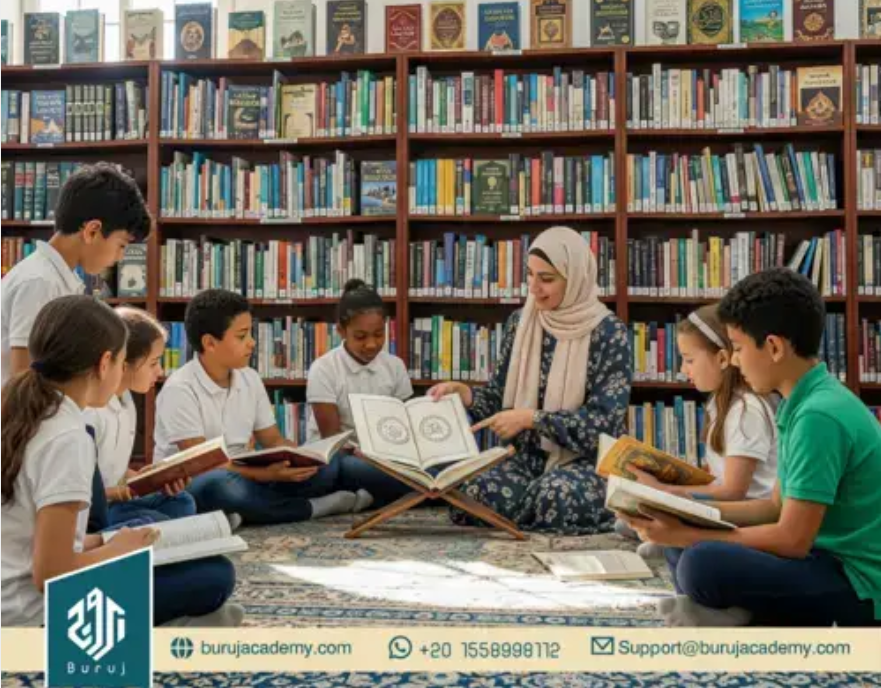
Buruj Academy’s Islamic Studies Classes for Kids introduce prophet stories like Ibrahim’s through storytelling and visual narration, making each phase memorable for children aged 4-15 with Al-Azhar graduate instructors guiding the discussion.
The first session is free in Buruj’s Islamic Studies Classes for Kids
2. Prophet Ibrahim Used the Stars, Moon, and Sun to Seek Tawheed
One of the most teachable moments in the prophet Ibrahim story for kids is the night Ibrahim watched the sky. He observed the stars, then the moon, then the rising sun—and declared each one his Lord, only to “abandon” each when it set or disappeared.
This was his way of demonstrating to his people that nothing temporary can be God.
Allah records this beautifully in Surah Al-An’am:
فَلَمَّا جَنَّ عَلَيْهِ اللَّيْلُ رَأَىٰ كَوْكَبًا ۖ قَالَ هَٰذَا رَبِّي ۖ فَلَمَّا أَفَلَ قَالَ لَا أُحِبُّ الْآفِلِينَ
Falammaa janna ‘alayhil-laylu ra’aa kawkaban qaala haathaa Rabbee falammaa afala qaala laa uhibbul-aafileen
“So when the night covered him [with darkness], he saw a star. He said, “This is my lord.” But when it set, he said, “I like not those that disappear.”” (Quran 6:76)
This passage offers parents a perfect conversation starter. Ask your child: “If something disappears, can it really be in charge of everything?” Children aged 8-12 grasp this reasoning quickly. They understand that a true Lord must be always present, never disappearing.
You can turn this into a simple stargazing activity at night. Point to the moon with your child and say, “Ibrahim looked at this same moon.
He realized it sets and leaves—so it cannot be Allah.” Connecting the story to something visible makes it tangible and memorable for young learners.
Discover the Buruj Academy Difference
Step into our virtual classrooms and see how our expert instructors make learning Quran and Arabic intuitive and clear. We focus on overcoming the specific hurdles non-native speakers face, building your confidence and connection with the Quran.
3. Prophet Ibrahim’s Clever Challenge Silenced an Entire Nation
Ibrahim’s challenge to the idols reached its most dramatic point when his people left for a festival. He entered their temple alone and broke every idol except the largest one, placing his axe near that statue. When the people returned and accused him, Ibrahim calmly said: “Ask the biggest one—he has the axe.”
Allah narrates this scene in Surah Al-Anbiya:
فَجَعَلَهُمْ جُذَاذًا إِلَّا كَبِيرًا لَّهُمْ لَعَلَّهُمْ إِلَيْهِ يَرْجِعُونَ
Faja’alahum juthаathan illaa kabeeran lahum la’allahum ilayhi yarji’oon
“So he broke them into pieces, except a large one among them, that they might return to it.” (Quran 21:58)
When the people said the idol couldn’t speak, Ibrahim replied: then why do you worship something that cannot speak, hear, or help? The crowd was silenced. Allah says:
فَرَجَعُوٓاْ إِلَىٰٓ أَنفُسِهِمْ فَقَالُوٓاْ إِنَّكُمْ أَنتُمُ ٱلظَّٰلِمُونَ
Fara-ja’oo ilaa anfusihim faqaaloo innakum antumuth-thaalimoon
“So they turned to themselves and said: ‘Indeed, you yourselves are the wrongdoers.'” (Quran 21:64)
For children aged 8-12, this moment is thrilling—it reads like a mystery story with a clever twist. Ibrahim wasn’t just brave; he was strategic and wise.
Parents can ask: “What was Ibrahim trying to make them understand?” This builds critical thinking alongside faith.
Here is a simple comparison table parents can use when retelling this phase:
| What the People Believed | What Ibrahim Showed |
| Idols are powerful gods | They broke easily with one blow |
| Idols protect us | They couldn’t even protect themselves |
| The big idol is wisest | It couldn’t speak or answer questions |
| Ibrahim was wrong | Even they admitted their own wrongdoing |
This table helps children see the logical contrast Ibrahim was making and makes the story’s lesson crystal clear even for younger readers.
4. Allah Turned Prophet Ibrahim’s Greatest Danger into Safety
The people’s anger turned dangerous. They lit an enormous fire and threw Ibrahim into it. This is perhaps the most dramatic phase of the prophet Ibrahim story for kids—and also the most spiritually powerful. Allah commanded the fire to be cool and safe for Ibrahim.
The Quran records this miraculous command in Surah Al-Anbiya:
قُلْنَا يَٰنَارُ كُونِى بَرْدًا وَسَلَٰمًا عَلَىٰٓ إِبْرَٰهِيمَ
Qulnaa yaa naaru koonee bardan wa salaaman ‘alaaa Ibraaheem
“We said: ‘O fire, be coolness and safety upon Ibrahim.'” (Quran 21:69)
Allah also says in Surah Al-Anbiya that they wanted to harm him, but Allah made them the losers:
وَأَرَادُوا۟ بِهِۦ كَيْدًا فَجَعَلْنَٰهُمُ ٱلْأَخْسَرِينَ
Wa araadoo bihi kaydan faja’alnaahumul-akhsareen
“And they intended for him a plan, but We made them the greatest losers.” (Quran 21:70)
For children of all ages, this moment delivers one of Islam’s most important lessons: when you trust Allah completely, He protects you in ways you cannot imagine. The fire—designed to destroy—became a garden of safety for Ibrahim.
Parents can tell younger children aged 4-7: “Ibrahim wasn’t afraid because he knew Allah was with him. And Allah told the fire: ‘Be gentle on Ibrahim.’ The fire listened to Allah!” The image of fire “listening” to Allah’s command captures young imaginations perfectly.
For older children aged 10-15, this phase opens deeper conversations: What does complete trust in Allah feel like? Have you ever been scared but felt that Allah would help you? These discussions connect the ancient story to the child’s real emotional life.
5. The Prophet Ibrahim Left Everything Behind Trusting Allah’s Guidance
After surviving the fire, Ibrahim left his homeland. He migrated with his wife Sarah and his nephew Lut (peace be upon him), carrying nothing but his faith.
This phase of the prophet Ibrahim story for kids teaches children that being a Muslim sometimes means starting over in a new place for the sake of Allah.
Allah mentions Ibrahim’s migration in Surah Al-Anbiya:
وَنَجَّيْنَٰهُ وَلُوطًا إِلَى ٱلْأَرْضِ ٱلَّتِى بَٰرَكْنَا فِيهَا لِلْعَٰلَمِينَ
Wa najjaynaahu wa Lootan ilal-ardil-latee baaraknaa feehaa lil-‘aalameen
“And We delivered him and Lot to the land which We had blessed for the worlds.” (Quran 21:71)
Ibrahim also made a heartfelt du’aa as he left, recorded in Surah As-Saffat:
وَقَالَ إِنِّى ذَاهِبٌ إِلَىٰ رَبِّى سَيَهْدِينِ
Wa qaala innee thaahib ilaa Rabbee sa-yahdeen
“And he said: ‘Indeed, I am going to my Lord; He will guide me.'” (Quran 37:99)
This short, beautiful statement is something children can memorize and apply to their own lives. When facing a new school, a new home, or any uncertain situation, these words remind them that Allah guides those who move toward Him with trust.
Through Buruj Academy’s Quran Classes for Kids, children learn not only the events of prophet stories but also the du’aas within them—practical supplications they can carry into their own daily lives, taught through 12+ years of experience in child-friendly Islamic education.
Help your child start reading the Quran with a Free trial
6. The Prophet Ibrahim Story for Kids Reaches Its Greatest Test with His Son Ismail
Years passed. Ibrahim was given a son, Ismail, by his second wife Hajar. Then came the most heart-wrenching command in the entire story: Allah showed Ibrahim in a dream that he was sacrificing his son.
Ibrahim told Ismail honestly, and Ismail’s response remains one of the most moving moments in the Quran.
Allah records their conversation in Surah As-Saffat:
فَلَمَّا بَلَغَ مَعَهُ ٱلسَّعْىَ قَالَ يَٰبُنَىَّ إِنِّىٓ أَرَىٰ فِى ٱلْمَنَامِ أَنِّىٓ أَذْبَحُكَ فَٱنظُرْ مَاذَا تَرَىٰ ۚ قَالَ يَٰٓأَبَتِ ٱفْعَلْ مَا تُؤْمَرُ ۖ سَتَجِدُنِىٓ إِن شَآءَ ٱللَّهُ مِنَ ٱلصَّٰبِرِينَ
Falammaa balagha ma’ahus-sa’ya qaala yaa bunayya innee araa fil-manaami annee athbahuka fanthur maathaa taraa qaala yaa abatif’al maa tu’mar satajidunee in shaa Allaaha minas-saabireen
“When he reached the age of striving with him, he said: ‘O my son, I see in a dream that I am sacrificing you, so look what you think.’ He said: ‘O my father, do what you are commanded. You will find me, if Allah wills, of the steadfast.'” (Quran 37:102)
For children aged 8-15, Ismail’s response is extraordinary. He didn’t run away or beg for his life. He said, with full submission: do what Allah commands. This moment teaches children that trusting Allah means accepting His plan even when it’s difficult to understand.
Then, as Ibrahim was about to act, Allah called out:
وَنَادَيْنَٰهُ أَن يَٰٓإِبْرَٰهِيمُ قَدْ صَدَّقْتَ ٱلرُّؤيَا
Wa naadaynaahu an yaa Ibraaheem, qad saddaqtar-ru’yaa
“And We called to him: ‘O Ibrahim, you have fulfilled the vision.'” (Quran 37:104-105)
Allah replaced Ismail with a great sacrifice—a ram from Paradise. This event is commemorated every year during Eid Al-Adha, connecting children alive today directly to Ibrahim’s story.
Parents can use this table to help children understand the lessons from each character in this phase:
| Character | Action | Lesson for Kids |
| Ibrahim | Obeyed Allah’s command completely | Full trust in Allah, even in hardship |
| Ismail | Accepted the command without fear | Patience and submission to Allah’s will |
| Allah | Replaced Ismail with a ram | Allah does not want hardship; He rewards trust |
This comparison helps children see that every person in the story responded with faith—and Allah responded with mercy.
7. The Prophet Ibrahim Building the Kaaba with Ismail
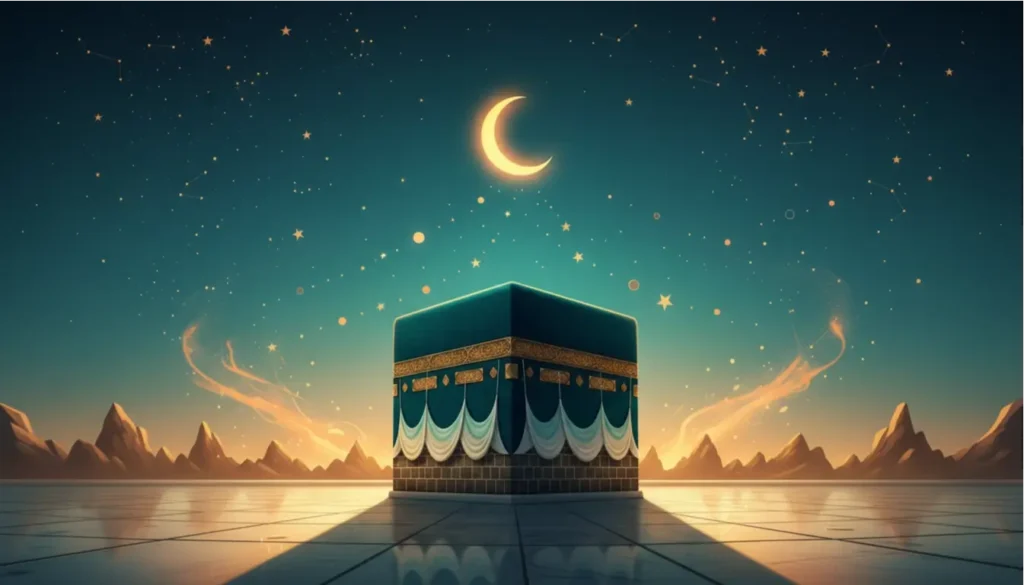
The final great phase of the prophet Ibrahim story for kids is the building of the Kaaba. Allah commanded Ibrahim and Ismail to build the first house of worship in Makkah. Together, father and son laid the foundation of the most sacred place on earth, making du’aa with every stone they placed.
Allah records their supplication in Surah Al-Baqarah:
رَبَّنَا تَقَبَّلْ مِنَّآ ۖ إِنَّكَ أَنتَ ٱلسَّمِيعُ ٱلْعَلِيمُ
Rabbana taqabbal minnaa innaka antas-Samee’ul-‘Aleem
“Our Lord, accept this from us. Indeed, You are the Hearing, the Knowing.” (Quran 2:127)
This du’aa is one children can memorize easily. It’s short, meaningful, and teaches something profound: even prophets asked Allah to accept their worship. Even their best deeds came with humility and hope for acceptance—not arrogance.
Allah also records Ibrahim’s prayer for the people of Makkah and for a prophet to come from his descendants:
رَبَّنَا وَٱبْعَثْ فِيهِمْ رَسُولًا مِّنْهُمْ يَتْلُوا۟ عَلَيْهِمْ ءَايَٰتِكَ
Rabbana wab’ath feehim rasoolan minhum yatloo ‘alayhim aayaatika
“Our Lord, and send among them a messenger from themselves who will recite to them Your verses.” (Quran 2:129)
This du’aa was answered centuries later with the birth of Prophet Muhammad (peace be upon him). When children hear this, the connection between Ibrahim and Muhammad becomes clear—and the entire Quran feels like one continuous, connected story.
For children aged 10-15, this is a powerful moment for discussion: Ibrahim made du’aa for people who wouldn’t even be born for hundreds of years. His love for the ummah extended across centuries. That’s the legacy of a prophet who trusted Allah completely.
Deepen Your Islamic Knowledge
Study Aqeedah, Fiqh, Seerah, and essential Islamic teachings with experienced instructors in a structured online program.
Try Islamic StudiesHelp Your Child Connect with Prophet Ibrahim’s Story Through Buruj Academy’s Expert Instructors
Prophet stories come alive when taught by instructors who know how to speak to children, not just at them. Buruj Academy’s Islamic Studies Classes for Kids bring Ibrahim’s phases to life through storytelling, discussion, and age-appropriate activities.
- Instructors are Al-Azhar graduates with 12+ years teaching children aged 4-15
- Lessons use storytelling, visual aids, and discussion—never dry lectures
- Sessions run 20-30 minutes, perfectly matched to children’s attention spans
- Personalized pacing ensures every child processes the story at their own level
- Flexible scheduling fits your family’s routine
Book your child’s free trial lesson today and let them experience prophet stories the way they were meant to be told.
Find your child’s perfect match among Buruj’s top courses for kids:
- Arabic Classes for Kids
- Alphabet course
- Noorani Qaida Course for Kids
- Quranic Arabic Course
- Islamic Studies for Kids
- Hifz Classes for Kids
- Quran Classes for Kids
- Tajweed for Kids
Get a free trial for your child today.

Conclusion
Ibrahim’s story moves through distinct phases—each one building a child’s understanding of Tawheed, trust, patience, and sacrifice. These aren’t abstract lessons; they are vivid, emotional events that children remember when taught well.
The Quranic verses embedded in this story are gifts for young Muslims. Short, powerful supplications like Rabbana taqabbal minnaa give children real words to carry into their own prayers and daily moments of uncertainty.
Every phase of Ibrahim’s life, from questioning the idols to building the Kaaba, shows children that faith is active, courageous, and rewarded. Sharing this story regularly—not just once—helps these lessons take root deeply in growing hearts, Insha’Allah.


Leave a Reply