 Islamic
A child who grows up hearing stories of the prophets, understanding Allah’s attributes, and seeing Muslim characters facing real-life challenges develops a natural connection to Islam — not a forced one. The right islamic story books for kids plant seeds of faith that grow quietly alongside your child, year after year.
Choosing books that are age-appropriate, authentically written, and genuinely enjoyable for children takes real care. These seven verified titles — spanning board books for toddlers through chapter books for ages 10 and up — give parents a practical, stage-by-stage reading library for children aged 2 to 15.
1. My First Book About Prophet Muhammad
My First Book About Prophet Muhammad Is One of the Gentlest Islamic Story Books for Very Young Kids.
My First Book About Prophet Muhammad by Sara Khan is a beautifully illustrated board book introducing toddlers and young children to the Prophet’s character and unshakeable belief in Allah. The carefully written text is short, simple, and suitable for reading aloud to children from age two onward.
The book also addresses common questions young children ask — such as what the Prophet believed before he received revelation — making it a natural tool for parent-child conversations. Kube Publishing consistently delivers age-appropriate Islamic content, and this board book is among their most beloved titles.
After reading, ask your child one simple question: “What is one thing you love about Prophet Muhammad?” Even a toddler’s answer can become a beautiful conversation about character and kindness.
Buruj Academy’s Islamic Studies Classes for Kids introduce Prophet Muhammad’s life through similarly engaging, story-based methods — building love for the Prophet in children aged 4–15 through age-appropriate narratives rather than dry lessons.
The first session is free in our Islamic Studies for Kids
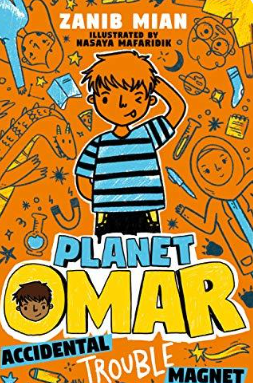
2. Planet Omar by Zanib Mian To Read for Fun
Planet Omar by Zanib Mian Is the Islamic Story Book Children Ages 7 to 10 Actually Choose to Read for Fun.
Planet Omar: Accidental Trouble Magnet is the first book in a multiple-award-winning chapter book series for children aged 7–10. Omar is a funny, highly imaginative Muslim boy navigating a new school, a class bully, and everyday family life — all while his Islamic identity stays central to who he is.
The series won the Little Rebels Award, was named an NPR Best Book of the Year, and earned starred reviews from Booklist and Kirkus Reviews. Reviewers specifically praised how Islamic values are woven naturally into Omar’s voice rather than delivered as separate lessons.
The illustrated, diary-style format — similar to Diary of a Wimpy Kid — makes this series accessible even for reluctant readers. Children aged 8–10 who find religious books “boring” frequently choose Planet Omar for independent reading, which is the highest endorsement a book can earn.
Here is a quick overview of the Planet Omar series to help parents plan their child’s reading journey:
| Book | Title | Key Theme |
| Book 1 | Accidental Trouble Magnet | New school, identity, bullying |
| Book 2 | Unexpected Super Spy | Community, mosque, friendship |
| Book 3 | Incredible Rescue Mission | Loyalty, problem-solving |
| Book 4 | Epic Hero Flop | Honesty, integrity |
| Book 5 | Ultimate Rocket Blast | Perseverance, teamwork |
Starting with Book 1 gives your child the best introduction to Omar’s world, and most children naturally move through the series without needing any encouragement.
Read the first chapter of Book 1 aloud with your child. The humor lands immediately, and most children aged 8–10 will ask to keep reading independently after just one chapter.
3. The Stories of the Prophets for Kids is One Accessible Islamic Storybook
The Stories of the Prophets for Kids by Ibrahim Al-Abadi covers all 25 prophets mentioned in the Quran — from Adam (عليه السلام) through to Muhammad (صلى الله عليه وسلم) — in child-friendly language designed for reading aloud or independent reading. Each story is followed by a carefully selected du’a and an authentic hadith connecting the lesson to daily life.
The book includes over 220 pages across 40 stories, with simple black-and-white illustrations and QR codes children can scan to hear each du’a recited aloud. This interactive element is especially engaging for children aged 7–10 who enjoy multi-sensory learning.
Assign one prophet story per week as your family’s “story of the week.” At dinner, ask each child one thing they learned from that prophet’s life. This 15-minute weekly ritual builds deep, lasting Islamic knowledge without formal study pressure.
Buruj Academy’s Islamic Studies Classes for Kids use a similar prophet-by-prophet approach — teaching children the stories of Adam, Ibrahim, Musa, and Muhammad through engaging narratives and age-appropriate discussion, guided by patient instructors trained in child-friendly Islamic education.
The first session is free in our Islamic Studies for Kids

Discover the Buruj Academy Difference
Step into our virtual classrooms and see how our expert instructors make learning Quran and Arabic intuitive and clear. We focus on overcoming the specific hurdles non-native speakers face, building your confidence and connection with the Quran.
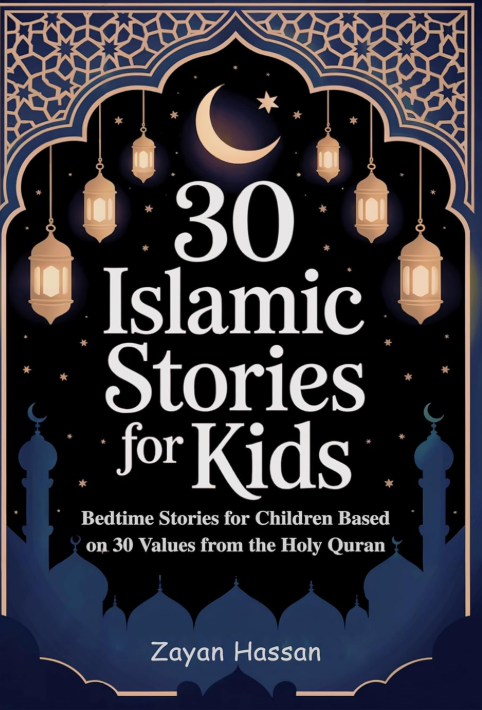
4. The 30 Islamic Bedtime Stories for Kids For Daily Nighttime Habit for Children
30 Islamic Bedtime Stories for Kids Makes Quran-Based Islamic Story Books a Daily Nighttime Habit for Children.
30 Islamic Bedtime Stories for Kids: Faith-Filled Lessons from the Quran belongs to the widely read Little Muslim’s Stories series and contains 30 short stories drawing lessons from the Quran on kindness, honesty, gratitude, and love for Allah. Each story is designed to take five to seven minutes to read aloud — a perfect bedtime length for children aged 4–10.
The stories are based directly on Quranic themes rather than invented plots, which means children build genuine familiarity with Quranic content through stories they enjoy hearing repeatedly. Repeated reading builds comfort with Islamic themes children later encounter in formal Quran and Islamic studies.
The format is particularly family-friendly. One story covers one evening, the series naturally spans a full month, and Ramadan families often use it as a Ramadan reading program — one story per night across the holy month.
Keep this book on your child’s nightstand rather than a bookshelf. Accessibility drives habit — if the book is within reach at bedtime, reading becomes the natural next step without any reminders needed.
Read Also: Islam Facts for Kids
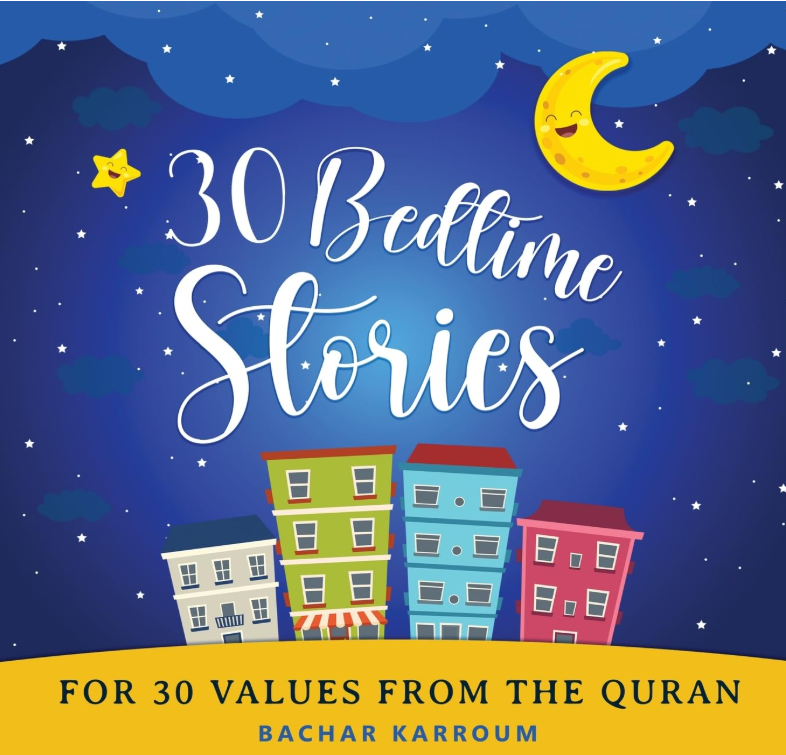
5. 30 Bedtime Stories for 30 Values from the Quran
30 Bedtime Stories for 30 Values from the Quran connects each of 30 short stories to a specific Islamic character value — patience, generosity, forgiveness, honesty, and more — drawn directly from Quranic teachings. Children aged 5–10 encounter one value per story, in a format that takes five to eight minutes per reading session.
What makes this book especially effective is the one-value-per-story structure. Parents can refer back to specific stories when a child faces a real-life situation — “Remember the story about patience? That’s what we need right now” — making Islamic values feel immediately applicable rather than abstract.
| Story Theme | Quranic Value | Best Age to Emphasize |
| Kindness to neighbors | Generosity | Ages 4–7 |
| Staying calm when angry | Patience (Sabr) | Ages 6–10 |
| Telling the truth | Honesty (Sidq) | Ages 5–8 |
| Helping those in need | Charity (Sadaqah) | Ages 6–10 |
The table above shows how parents can prioritize specific stories based on their child’s current developmental stage, making this book useful as a targeted parenting tool, not just a bedtime read.
After each story, try a 30-second recap together: “What was tonight’s value? Can we name one way to use it tomorrow?” This brief conversation embeds the lesson far more deeply than reading alone.
Read Also: Stories Of The Prophets For Kids
6. My First Book About Allah
My First Book About Allah Helps Kids Ages 2 to 6 Understand Who Allah Is Through a Warm Islamic Story Book.
My First Book About Allah — also by Sara Khan and part of the same My First Series from Kube Publishing — introduces toddlers to Allah’s divine attributes: His Oneness, His infinite power, His love, and His mercy. The book ends with Allah’s promise to those who believe and strive to please Him.
The language is carefully pitched for ages 2–6, using concepts young children can genuinely connect with — love, care, and protection — rather than abstract theological ideas. This approach helps children form an emotional attachment to Allah early in life, which is far more effective than memorizing names and attributes alone.
Parents often read this book alongside My First Book About Prophet Muhammad from the same series, creating a simple weekly rhythm: one book on Sunday, the other on Wednesday — five minutes each, with conversation in between.
Ask your child after reading, “How does Allah show us He loves us?” Young children answer instinctively — with answers like “He made the sun!” — which shows they are genuinely absorbing the book’s message.
Read Also: Islamic Story for Kids
7. Golden Domes and Silver Lanterns Is a Book That Teaches Kids Colors and Culture Together
Golden Domes and Silver Lanterns by Hena Khan is a multiple-award-winning picture book that teaches young children about Islamic culture through the colors of everyday Muslim life. From a red prayer rug to a green Quran cover, every color is connected to a meaningful element of faith and family.
Selected for the 2013 ALSC Notable Children’s Book list, this title earns its place on the shelf because it makes Islam feel familiar, warm, and full of meaning. Mehrdokht Amini’s illustrations are rich and vibrant — children aged 4–7 will spend time exploring each page independently.
The book includes a glossary explaining Islamic terms, which helps parents who are still growing in their own Islamic knowledge. Words like zakat, hijab, and kufi are defined accessibly, making reading-together genuinely educational for the whole family.
Use this book as a “color hunt” at home — after reading, ask your child to find a green object and tell you what green means in Islam. This ten-minute activity reinforces the book’s lesson through real observation.
Read Also: Prophets in Islam for Kids
Deepen Your Islamic Knowledge
Study Aqeedah, Fiqh, Seerah, and essential Islamic teachings with experienced instructors in a structured online program.
Try Islamic StudiesRead Also: Prophet Yusuf Story for Kids
Help Your Child Build Deep Faith with Buruj Academy’s Islamic Studies Classes for Kids
Stories plant seeds — structured Islamic education helps those seeds grow into lasting knowledge and genuine love for the deen.
- Instructors are Al-Azhar graduates with 12+ years of experience teaching non-Arabic-speaking children
- Age-appropriate curriculum covering prophets’ stories, Islamic values, and Quran — designed for ages 4–15
- Gamification and storytelling methods that make Islamic content genuinely engaging
- Short 20–30 minute lessons that match children’s natural attention spans
- Patient, encouraging teaching that builds confidence rather than pressure
- Flexible scheduling to fit your family’s weekly routine
Book a free trial lesson for your child today through Buruj Academy’s Islamic Studies Classes for Kids.
Find your child’s perfect match among Buruj’s top courses for kids:
- Arabic Classes for Kids
- Alphabet course
- Noorani Qaida Course for Kids
- Quranic Arabic Course
- Islamic Studies for Kids
- Hifz Classes for Kids
- Quran Classes for Kids
- Tajweed for Kids
Get a free trial for your child today.
Conclusion
Islamic story books for kids work best when they match your child’s age, language level, and natural interests — board books for toddlers, picture books for ages 4–7, and chapter-book series for ages 7 and up.
Reading five to ten minutes daily builds more lasting Islamic connection than occasional longer sessions. Even one story per week, discussed briefly over dinner or at bedtime, creates a consistent thread of Islamic learning your child genuinely enjoys.
Alhamdulillah, the range of high-quality Islamic children’s books available today is remarkable. Pairing these books with structured learning helps children move from enjoying stories to genuinely understanding and living the values those stories carry.
Related Articles
Islamic


Leave a Reply