 Islamic
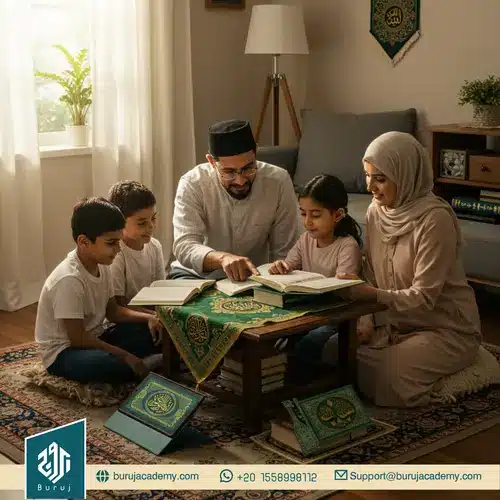
The decision to homeschool your child shows a commitment to personalized, values-based education. Many Muslim families recognize this flexibility as a golden opportunity. It’s a chance to make faith the core of their child’s learning.
However, successfully integrating comprehensive Islamic education into an existing schedule demands a carefully designed Islamic homeschooling curriculum that is both rigorous and relevant. At Buruj Academy, we champion a curriculum that does more than teach facts; we teach students to connect with their primary sources of faith.
A truly transformative Islamic homeschooling curriculum must focus on the language of the Quran, Arabic. Crucially, this foundational element shifts the focus from simple translation to profound comprehension.
We understand this vital need. Consequently, we structure our programs to merge language acquisition with religious studies seamlessly. If you are searching for an unparalleled educational journey for your child, look no further than an expert-led Online Islamic school like Buruj Academy.
Why Arabic is the Cornerstone of Your Islamic Homeschool Curriculum?
For a Muslim, the most important book is the Quran. Therefore, the key to unlocking its treasures is the Arabic language. Your Islamic homeschooling curriculum must place Arabic at the very beginning. Learning the grammar and vocabulary of the classical Arabic language is not merely an academic exercise. Instead, it is an act of worship that directly impacts a child’s understanding of Islam.
When students study the Quran or Hadith, they encounter concepts, rulings, and spiritual truths initially articulated in Arabic. Unfortunately, relying solely on translation often means missing the profound subtleties, rhetorical nuances, and layers of meaning that Arabic inherently carries.
For example, an Arabic-focused Online Islamic school teaches a student that the word for “prayer,” Salah, is linguistically rooted in connection and supplication. This gives the act a deeper emotional and spiritual weight than a simple English equivalent might convey.
Furthermore, a robust Islamic homeschooling curriculum helps students grasp the shades of meaning in divine names and attributes (Asma’ wa Sifat Allah). They move beyond a simple list of words to a true theological understanding (Aqeedah).
Book your child’s free Arabic trial now!

A Strong Islamic Homeschooling Curriculum Starts With Defining Your Educational Philosophy
Before selecting any materials, homeschooling families must establish what success looks like for their children. Academic achievement and Islamic character development are not competing goals—they are complementary when properly sequenced.
Your educational philosophy determines curriculum priorities. A family focused on Hifz completion will structure daily time differently than one prioritizing Arabic fluency or comprehensive Islamic studies coverage.
Buruj Academy’s Online Islamic Studies Classes for Kids provides structured religious education taught by Al-Azhar graduates, giving homeschooling parents expert instruction without requiring them to teach Islamic theology themselves. This frees parents to focus on secular subjects while specialists handle Islamic content.
The first session is free in Buruj’s Islamic Studies Classes for Kids
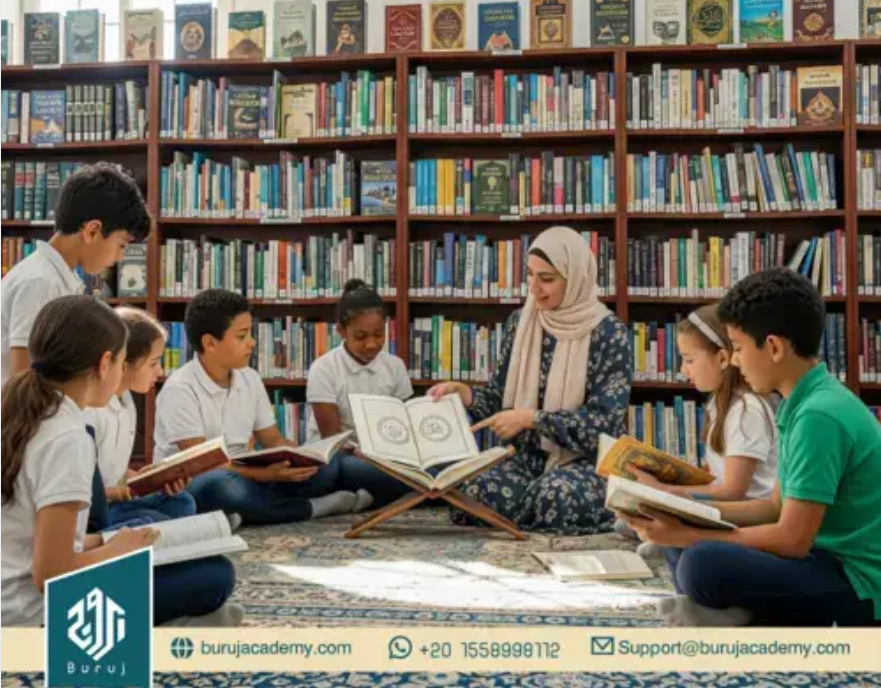
Integrating Language and Religious Terms in Islamic Homeschooling Curriculum
At Buruj Academy, our approach to the Islamic homeschooling curriculum deliberately combines language instruction with Islamic content. We teach Arabic grammar (Nahw) and morphology (Sarf). Specifically, we use verses from the Quran and authentic Hadith as primary examples.
In practice, a student learning the grammatical case endings will use the word for ‘Lord’ (Rabb) in different contexts. They instantly see how changes in the ending affect the meaning in a Quranic sentence. Consequently, the language becomes the vehicle for religious knowledge. This eliminates the artificial barrier between the two subjects. This integrated learning model is a key hallmark of an effective Online Islamic school.
The Essential Pillars of a Comprehensive Islamic Homeschooling Curriculum
Any successful Islamic homeschooling curriculum must cover a holistic range of Islamic sciences. To achieve this, our program at Buruj Academy organizes this content into core subjects. This ensures a well-rounded and deeply rooted education.
1. Quranic Studies: Tajweed, Hifz, and Tafseer
The Quran forms the literal word of Allah. Naturally, this requires dedicated study.
- Tajweed (Recitation Rules): Students first master the correct pronunciation and rules of recitation. We teach them to recite the Quran as it was revealed, ensuring they fulfill the obligation of correct recitation.
- Hifz (Memorization): We guide students through structured memorization plans, tailoring the pace to their individual capacity.
- Tafseer (Exegesis/Interpretation): This area truly highlights the Arabic focus. Once a student has a foundational grasp of Arabic, they explore the interpretation (Tafseer) of the Quran. They understand the context (Asbab an-Nuzul) and the deeper meanings of the verses they read. This moves them past simple translation to genuine, intellectual engagement. Our goal is to cultivate students who truly understand what Allah says, not just those who read the words. Ultimately, this high standard distinguishes a premier Online Islamic school.
2. Aqeedah (Islamic Theology/Creed)
Aqeedah represents the core belief system of Islam. Therefore, a strong Islamic homeschooling curriculum must solidify a child’s faith from an early age.
We teach:
- Tawheed (The Oneness of Allah): Students learn the three categories of Tawheed (Rububiyyah, Uluhiyyah, and Asma’ wa Sifat) in a clear, systematic way.
- Pillars of Faith: We comprehensively explain the six pillars: belief in Allah, His Angels, His Books, His Messengers, the Last Day, and Divine Decree.
A firm understanding of these beliefs shields the young Muslim from doubt and confusion. This builds an unshakable foundation for their faith. Indeed, this systematic approach forms a key component of our Online Islamic school program.
Discover the Buruj Academy Difference
Step into our virtual classrooms and see how our expert instructors make learning Quran and Arabic intuitive and clear. We focus on overcoming the specific hurdles non-native speakers face, building your confidence and connection with the Quran.
3. Fiqh (Islamic Jurisprudence)
Fiqh gives students practical knowledge of how to practice Islam in their daily lives.
We cover:
- Acts of Worship (Ibadat): We teach the rulings related to purity (Taharah), prayer (Salah), fasting (Sawm), Zakat, and Hajj. Crucially, students learn the evidence (adillaha) from the Quran and Sunnah for each ruling. This encourages a mindset of intellectual curiosity and adherence to authentic sources.
- Transactions (Mu’amalat): Students learn basic Islamic ethics and rulings related to everyday dealings.
Consequently, students develop a comprehensive, practical guide to living a Muslim life. Furthermore, a high-quality Online Islamic school like ours ensures a qualified scholar oversees the teaching of these critical subjects.
4. Seerah and Islamic History
The life of the Prophet Muhammad (peace be upon him) and the history of the early Muslim community offer indispensable lessons in character, leadership, and struggle.
We focus on:
- The Prophet’s Life (Seerah): Students learn the Seerah as a model for moral and ethical conduct. They study key events like the Hijra and major battles.
- Stories of the Prophets and Companions: We use these narratives to teach lessons in patience, gratitude, and steadfastness in faith.
This historical grounding provides context for their religious education. It helps students connect deeply with the rich Islamic heritage. Therefore, this subject is a non-negotiable part of any robust Islamic homeschooling curriculum.
Deepen Your Islamic Knowledge
Study Aqeedah, Fiqh, Seerah, and essential Islamic teachings with experienced instructors in a structured online program.
Try Islamic StudiesStructuring the Daily Schedule in Your Muslim Homeschooling Routine
Consistency is the single greatest predictor of homeschool success. A daily structure that places high-priority subjects at fixed times builds the cognitive habits children need for long-term retention.
Morning Blocks Optimize Quranic Learning and Arabic Instruction
The first two hours after Fajr represent peak neurological receptivity for most children. Scheduling Quran recitation and new Arabic vocabulary during this window capitalizes on natural memory consolidation patterns.
For children memorizing Quran, new portions should always precede revision sessions. Attempting new memorization after revision depletes working memory before the most cognitively demanding task.
Afternoon Sessions Work Well for Secular Academic Subjects
Math, literacy, writing, and science require analytical engagement rather than memorization. Most children sustain analytical focus better in mid-morning to early afternoon, making this the natural window for academic subjects.
Through Buruj Academy’s Hifz for Kids, homeschooling families can schedule structured online memorization sessions during morning hours, with certified instructors handling pacing and error correction so parents aren’t managing Hifz technique alone.
Start your child’s Hifz classes for free session
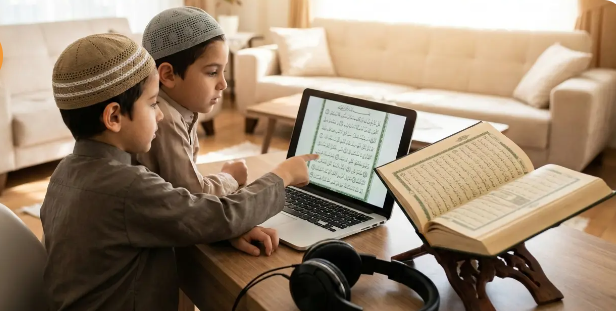
Customization: The Power of the Online Islamic School Model
One of the most significant advantages of choosing an Islamic homeschooling curriculum through an Online Islamic school like Buruj Academy is the power of customization. Simply put, we reject the “one-size-fits-all” model.
1. Personalized Learning Plans in Islamic homeschooling curriculum
First, we conduct an initial assessment of every student’s current knowledge level. This happens regardless of whether they are a complete beginner or an advanced learner. Subsequently, we craft a fully tailored learning plan based on their specific needs and goals.
For example, a student who has memorized a good portion of the Quran but lacks basic Arabic grammar will receive an aggressive Arabic language schedule. This schedule is complemented by intermediate Tafseer. Conversely, a younger student will start with the fundamental Noorani Qaida for reading and the basic tenets of Aqeedah at a simpler level.
This tailored approach ensures maximum learning efficiency. In addition, it keeps the student motivated. They constantly learn at the edge of their capacity. Consequently, they are neither bored by repetition nor overwhelmed by complexity. Furthermore, Buruj Academy’s structure of beginner, intermediate, and advanced levels ensures clear academic progression.
2. Flexibility and Access to Expert Tutors
The reality is that homeschooling parents juggle multiple responsibilities. Therefore, the flexibility of an Online Islamic school provides an invaluable solution. Our platform offers:
- Flexible Scheduling: We accommodate various time zones and busy family schedules, offering classes 24/7.
- One-on-One Classes: This personalized attention allows the student to progress at their own pace. They receive instant feedback and correct mistakes immediately.
- Expert Tutors: Our team of qualified instructors holds impressive certifications. Moreover, they often have degrees from prestigious institutions like Al-Azhar and crucial Ijazahs in Quranic recitation. They are experts in teaching non-native speakers. Indeed, these professional qualifications distinguish a superior Online Islamic school. You can explore the credentials of our esteemed educators and choose the perfect guide for your child’s learning journey right here: Meet Our Tutors.
Beyond the Classroom: Cultivating a Love for Learning
A perfect Islamic homeschooling curriculum does not merely transmit information; it inspires a lifelong passion for seeking knowledge. Consequently, Buruj Academy integrates interactive and engaging methods into every lesson.
Interactive Learning Tools
We make learning dynamic by incorporating modern tools. Our lessons utilize video lectures, multimedia resources, and interactive exercises to keep students actively involved. Furthermore, the one-on-one virtual environment fosters a comfortable and supportive space. Students feel safe to ask questions and participate in real-time discussions, which is often difficult in a large traditional classroom.
Teaching Quran Effectively Within Your Islamic Homeschooling Curriculum
Quran education is the spiritual heart of any Islamic homeschooling curriculum, and it deserves the most careful planning. Three distinct Quran-related disciplines require separate instructional attention: recitation accuracy, Tajweed rules, and memorization.
Recitation and Tajweed Require Expert Instruction From Certified Teachers
A common homeschooling mistake is asking a parent with basic Quran reading ability to teach Tajweed. Tajweed errors taught at home become deeply embedded and create significant correction challenges later.
Buruj Academy’s Tajweed for Kids provides certified instruction in proper makharij and sifat, with Ijazah-certified instructors who identify and correct errors in real time. This protects homeschooled children from habitual mispronunciation.
Book your child’s free Tajweed trial today
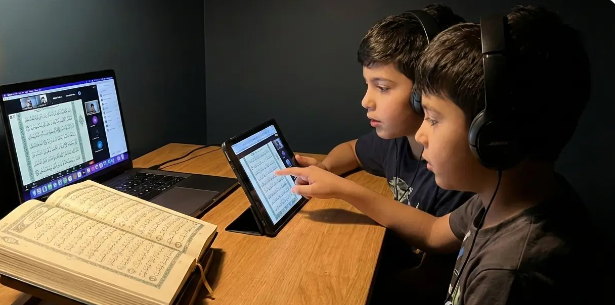
Memorization Pacing Must Match the Child’s Retention Capacity
Children memorizing Quran need individualized pacing assessments before establishing daily portion sizes. A child memorizing one new ayah daily with perfect retention outperforms a child memorizing five ayat with weak consolidation.
Weekly revision of all previously memorized content must be built into the schedule before expanding new memorization goals.
The Role of Religious Terminology in Vocabulary Building
A key goal is to enrich the student’s Islamic vocabulary in Arabic. For instance, while teaching the story of Prophet Musa (AS), the lesson deliberately focuses on the Arabic terms for ‘miracle’ (Mu’jiza), ‘revelation’ (Wahy), and ‘guidance’ (Hidayah). Therefore, as the student learns the religious concept, they simultaneously internalize the precise Arabic term.
Ultimately, this deliberate focus on technical vocabulary truly empowers a student. It helps them move from passively reading a translation to actively engaging with the sources. In short, it represents the pinnacle of what an integrated Islamic homeschooling curriculum offers.
Deepen Your Islamic Knowledge
Study Aqeedah, Fiqh, Seerah, and essential Islamic teachings with experienced instructors in a structured online program.
Try Islamic StudiesStart Your Child’s Islamic Education With Buruj Academy’s Expert Homeschool Support
Building a complete Islamic homeschooling curriculum demands expert instruction in Quran, Tajweed, Arabic, and Islamic studies. Buruj Academy provides certified online instruction that integrates seamlessly into any homeschool schedule.
- Al-Azhar University graduates and Ijazah-certified instructors across all disciplines
- 12+ years teaching non-Arabic speaking students globally
- Personalized learning plans adapted to each child’s age, level, and retention pace
- Flexible 1-on-1 online sessions with 24/7 scheduling for homeschool families
- Real-time feedback and individualized correction during every lesson
- Proven progression systems from foundational reading to advanced mastery
Book your child’s free trial lesson today and discover how Buruj Academy elevates every dimension of your Islamic homeschool program. Insha’Allah, the first lesson begins a structured, expert-guided path toward Quran mastery and Islamic knowledge.
See which of Burooj’s courses aligns with your child’s learning path:
- Arabic Classes for Kids
- Alphabet course
- Noorani Qaida Course for Kids
- Quranic Arabic Course
- Islamic Studies for Kids
- Hifz Classes for Kids
- Quran Classes for Kids
- Tajweed for Kids
Get a free trial for your child today.
Conclusion
In conclusion, the integration of a rigorous Arabic language program with essential Islamic sciences is the definitive feature of a superior Islamic homeschooling curriculum. We offer that exact solution at Buruj Academy. Ultimately, we provide your child with the foundation for spiritual and academic success. Join us and give your child the gift of profound religious literacy.
A complete Islamic homeschooling curriculum balances Quranic education, Arabic language development, Islamic studies, and secular academics within a consistent daily structure. Prioritizing morning hours for religious subjects and using qualified instructors for Quran and Tajweed protects children from preventable learning gaps.
Resource selection determines curriculum quality more than good intentions alone. Live online instruction from certified specialists, combined with structured independent practice, produces the depth and accuracy that homeschooling families aspire to provide.

Leave a Reply