 Islamic
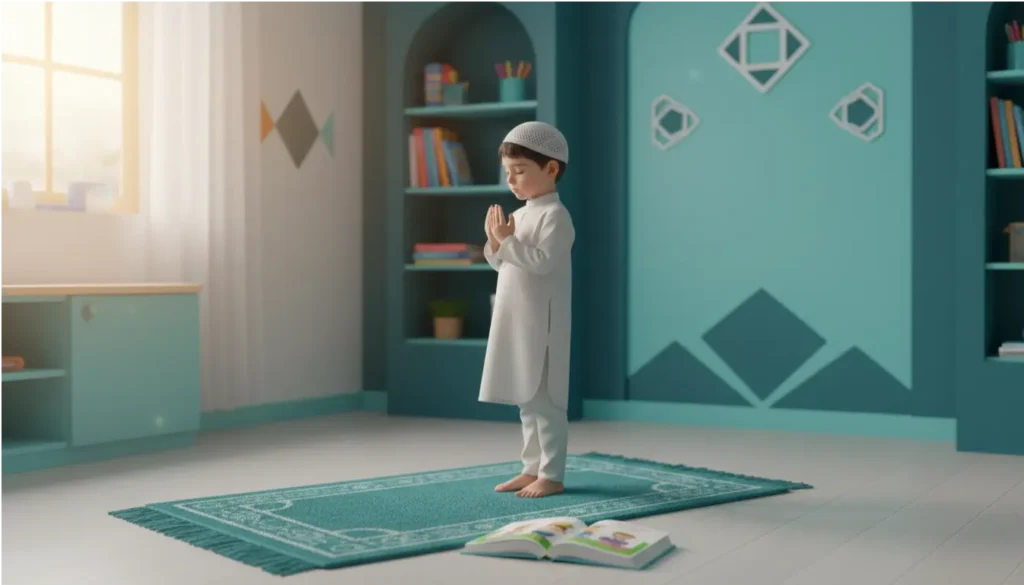
Young children ask the most honest question about Salah: “Why do we have to pray?” That question is actually a beautiful starting point, not a problem. It means your child is curious, and curiosity is exactly what makes teaching prayer possible.
Teaching how to pray for kids in Islam involves breaking Salah into small, manageable steps matched to your child’s age. This guide walks parents through each step of prayer in language children understand, with practical methods that make learning Salah feel natural and meaningful rather than forced.
1. Children Need a Meaningful Reason Before Learning Salah
Before children learn the movements or words of Salah, they need a reason that makes sense to them. Abstract explanations about duty rarely motivate young children to pray willingly.
Tell a 5-year-old: “We talk to Allah five times a day because He loves hearing from us, just like you love talking to us.” That simple framing makes prayer feel like a relationship, not a rule.
For older children aged 8-12, explain that Salah is the one time each day that belongs completely to them and Allah, with no distractions, no school, no worries—just a direct connection.
While parents can introduce this “why” beautifully at home, Buruj Academy’s Islamic Studies Classes for Kids reinforce these concepts through storytelling and age-appropriate examples that help children genuinely internalize the meaning behind prayers for kids.
The first session is free in our Islamic Studies for Kids

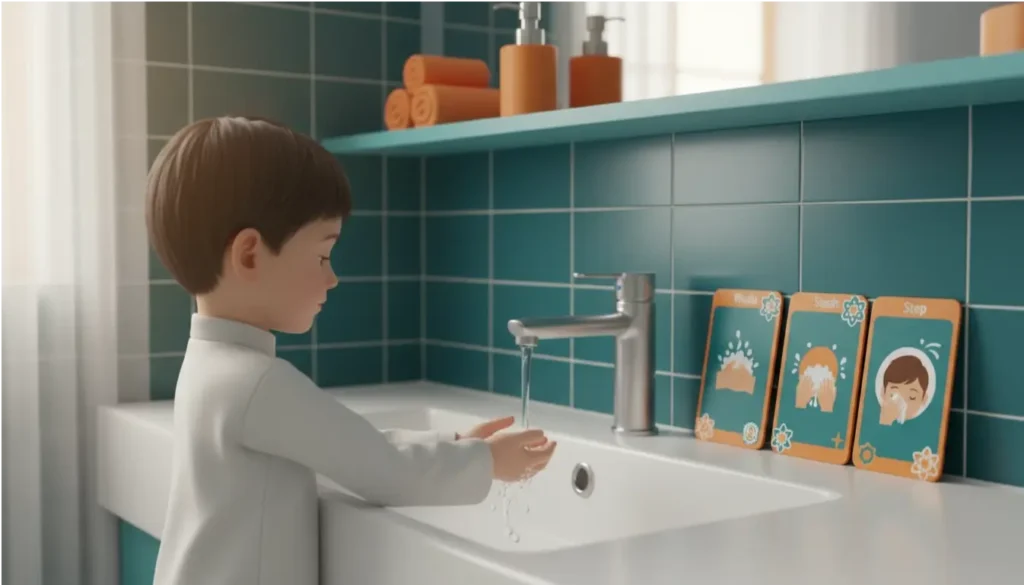
2. Turning Wudu Into an Enjoyable Daily Ritual for Children
Wudu is the first physical skill children need before Salah. The good news is that most young children actually enjoy water, which makes this step easier than parents expect.
Teach Wudu as a sequence using the rhyme method: “Hands, mouth, nose, face, arms, head, ears, feet—now you’re clean and ready to meet!” Children aged 4-7 remember sequences through rhythm far better than instruction.
Create a laminated Wudu chart with pictures for each step. Place it at sink height in the bathroom. Children feel proud following their own chart independently, and that pride motivates consistent practice.
| Wudu Step | What to Say to Your Child |
| Wash hands | “Clean hands to start our prayer” |
| Rinse mouth | “Fresh mouth to say Allah’s words” |
| Rinse nose | “Clean breath for Allah’s home” |
| Wash face | “A clean face to meet Allah” |
| Wash arms | “Up to the elbows, three times each” |
| Wipe head | “One gentle wipe across the top” |
| Wash feet | “Last step, then Wudu is done!” |
The chart above gives you ready-to-use language for each step. Children who understand why each part matters engage more seriously with Wudu as they grow older.
3. Introducing Prayer Positions Gradually for Kids Builds Lasting Confidence
Many parents make the understandable mistake of trying to teach all prayer positions in a single session. Children get overwhelmed, lose focus, and associate Salah with confusion rather than comfort.
Introduce one position per day across one week for the very young kids. Day one: standing (Qiyam). Day two: bowing (Ruku). Day three: prostration (Sujud).
Use mirror practice. Stand beside your child facing a mirror and say, “Watch what my body does, then copy me.” Children this age are natural mimics, and seeing themselves perform the positions correctly builds immediate confidence.
Discover the Buruj Academy Difference
Step into our virtual classrooms and see how our expert instructors make learning Quran and Arabic intuitive and clear. We focus on overcoming the specific hurdles non-native speakers face, building your confidence and connection with the Quran.
4. Introducing essential Arabic Prayer Phrases at a Comfortable Pace
The Arabic words of prayer are the part parents most often worry about. Non-Arabic speaking families especially feel pressure to get pronunciation right before they feel qualified to teach their children.
Start with just three phrases in the first week:
Allahu Akbar (Allah is the Greatest), Subhana Rabbiyal Adheem (Glory to my Lord, the Magnificent), Subhana Rabbiyal A’la, and Assalamu Alaikum (Peace be upon you).
سُبْحَانَ رَبِّيَ الْعَظِيمِ
Subhana Rabbiyal Adheem
“Glory to my Lord, the Magnificent”
Teach children to whisper it three times while bowing, like a secret just between them and Allah.
| Prayer Phrase | Meaning for Kids | When Said |
| Allahu Akbar | “Allah is the greatest of all” | Between every position |
| Subhana Rabbiyal Adheem | “My Lord is magnificent” | During bowing |
| Subhana Rabbiyal A’la | “My Lord is the highest” | During prostration |
| Al-Fatihah | The opening chapter of Quran | Standing in every unit |
| Tashahhud | The sitting declaration | Final sitting |
This phased approach prevents children from feeling overwhelmed. Introduce each phrase only after the previous one feels comfortable and natural during practice.
At Buruj Academy, our Short Surah Memorization Course teaches children the specific phrases and surahs needed for Salah using audio repetition, visual matching games, and child-friendly explanations that make Arabic pronunciation achievable rather than intimidating.
Start your child’s Hifz classes for free
5. Setting A Positive Example Through Shared Family Prayer Time
Children learn Salah most effectively by watching and joining adults they love. A child who sees their parent pray regularly understands, without any lecture, that prayer matters.
Start by inviting your child to join you for just one prayer per day. Dhuhr or Maghrib work well because they fall at home time. Say, “Come pray with me,” rather than “Go pray.” That small word change shifts the experience entirely.
Let children stand beside you in the prayer line. Correct gently afterward, never during prayer itself. If your child giggles or loses focus mid-prayer, simply continue. Consistency teaches more than correction at this age.
Read Also: Ramadan Books for Kids
6. Prioritizing The Recitation Of Al Fatihah In Early Learning
Al-Fatihah is recited in every unit of every prayer. It is the single most important portion of Salah for kids to memorize correctly. Parents should prioritize this surah above everything else in the early stages.
Teach Al-Fatihah in three segments across a week. This prevents the recitation from feeling like one long, overwhelming block.
Use the call-and-response method at home. You recite one line slowly, your child repeats it. Do this for five minutes after any meal. Children aged 5-10 typically memorize Al-Fatihah within four to six weeks using this simple daily method.
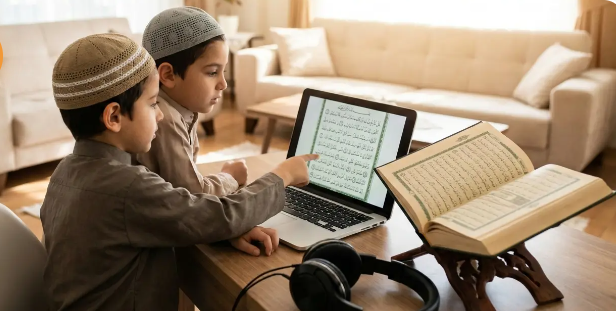
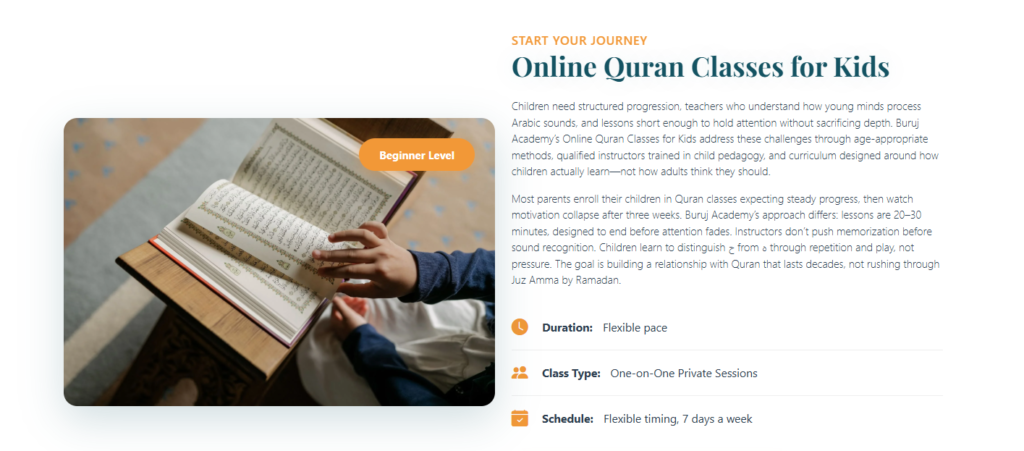
Buruj Academy’s Online Quran Classes for Kids complement family prayer practice by ensuring children can recite Al-Fatihah and short surahs correctly with proper Tajweed, so their contribution to family prayer grows stronger each week, Alhamdulillah.
Help your child start reading the Quran with a Free trial
Read Also: Ramadan Facts for Kids
7. A Simple Daily Structure Keeps Children Praying Consistently
The biggest challenge most families face with prayers for kids is not teaching the how—it is maintaining the habit. A child who learns Salah but has no consistent structure often drifts away from it within weeks.
Use a simple prayer chart with five boxes per day, one for each Salah. Children aged 6-12 respond very well to visual tracking. Seeing a full row of checkmarks creates genuine satisfaction and motivates tomorrow’s effort.
| Day | Fajr | Dhuhr | Asr | Maghrib | Isha |
| Saturday | ✓ | ✓ | ✓ | ✓ | ✓ |
| Sunday | ✓ | ✓ | — | ✓ | ✓ |
| Monday | ✓ | — | ✓ | ✓ | ✓ |
A tracking chart like this shows children their own progress without pressure. Missing a box is not a failure—it is information that helps both parent and child identify which prayer time needs better support.
Read Also: Can Kids Fast In Ramadan?
8. Addressing Common Challenges And Resistance With Gentle Patience
Resistance is normal and does not mean your child lacks faith. It usually means the routine feels like a burden rather than a connection. Understanding why children resist helps parents respond without conflict.
Common reasons include: the timing interrupts play, the Arabic feels too hard, or prayer feels meaningless because the child does not understand what they are saying. Each of these has a practical solution rather than a disciplinary one.
If your child says, “I don’t want to pray,” respond with, “Let’s do just the short version together—two minutes, then you can go back to your game.” Starting small is always better than forcing full compliance and creating negative associations with Salah.
Read Also: Ramadan for Kids
Deepen Your Islamic Knowledge
Study Aqeedah, Fiqh, Seerah, and essential Islamic teachings with experienced instructors in a structured online program.
Try Islamic StudiesRead Also: Top 10 Duas for Kids
Help Your Child Learn How to Pray with Buruj Academy’s Expert Instructors
Home practice builds the foundation, but structured guidance helps children master Salah with confidence and correct technique that lasts a lifetime.
- Instructors are Al-Azhar graduates with 12+ years teaching non-Arabic speaking children
- Age-appropriate curriculum designed for children aged 4-15
- Gamification, stories, and interactive methods—no dry memorization drills
- Short 20-30 minute sessions that match children’s natural attention spans
- Patient, encouraging approach that builds confidence without pressure
- Flexible scheduling designed around busy family routines
Book your child’s free trial lesson with Buruj Academy today and watch Salah become something they genuinely love.
Find your child’s perfect match among Buruj’s top courses for kids:
- Arabic Classes for Kids
- Alphabet course
- Noorani Qaida Course for Kids
- Quranic Arabic Course
- Islamic Studies for Kids
- Hifz Classes for Kids
- Quran Classes for Kids
- Tajweed for Kids
Get a free trial for your child today.
Conclusion
Teaching Salah for kids step by step—starting with the “why,” then Wudu, then positions, then phrases—prevents children from feeling overwhelmed. Breaking prayer into small, manageable stages builds genuine understanding rather than mechanical repetition.
Family prayer practice remains the single most powerful teaching tool available to parents. Children who see Salah modeled daily at home develop a relationship with prayer that no classroom alone can fully replicate, Alhamdulillah.
Consistency matters more than perfection at every age. A child who prays imperfectly but willingly today will grow into a teenager who prays with understanding tomorrow. Masha’Allah, every small step your child takes toward Salah is a step worth celebrating.
Related Articles
Islamic



Leave a Reply