 Arabic

| Key Takeaways |
| Reaching conversational fluency in Arabic within one year is achievable with 60–90 minutes of focused daily study. |
| Most learners need 600–750 total study hours to reach intermediate (B1–B2) proficiency in Modern Standard Arabic. |
| A structured 12-month plan divides learning into alphabet mastery, grammar foundations, vocabulary building, and active speaking practice. |
| Learning Arabic in two years allows for advanced fluency, including comfortable reading of unvocalized texts and native-paced conversation. |
| Consistency matters more than total hours — daily 45-minute sessions outperform occasional multi-hour cramming for long-term retention. |
Many adult learners assume Arabic takes a decade to grasp, picturing years of frustration before a single sentence makes sense. That fear stops people before they even open a textbook.
Yes, you can learn Arabic in a year — reaching solid conversational fluency (B1–B2 level) with 60–90 minutes of daily, structured study. Full mastery takes longer, but functional, confident Arabic within twelve months is realistic and well within reach.
Table of Contents:
Can You Learn Arabic in a Year?
Yes, you can learn Arabic in a year—complete beginners can reach conversational Arabic fluency (B1–B2 level) within a year through consistent 60–90 minute daily study sessions. This requires following a structured progression from alphabet mastery through grammar, vocabulary, and speaking practice rather than random, unstructured self-study.
How Long Does It Take to Learn Arabic in a Year?
Reaching intermediate Arabic fluency in one year requires roughly 600–750 total study hours, broken into daily 60–90 minute sessions across twelve months. This estimate assumes consistent practice, not sporadic bursts.
Foreign Service Institute-style category rankings place Arabic among the more time-intensive languages for English speakers, but that figure describes government-level fluency, not everyday conversational ability.
In our sessions at Buruj Academy, the students who hit this benchmark fastest are rarely the ones who study longest in one sitting. They’re the ones who show up daily, even for twenty minutes, rather than saving everything for a weekend marathon. Spaced repetition simply works better for language acquisition than cramming.
A year gives you enough runway to master the alphabet, build a working vocabulary of 1,500–2,000 words, understand core grammar patterns, and hold real conversations about daily life, work, and opinions.
It is not enough time to read classical literature unaided or debate nuanced philosophy — that level typically requires two to three additional years of immersion.
What “Fluent in a Year” Actually Means
Fluency exists on a spectrum, and the CEFR (Common European Framework of Reference) scale gives us useful checkpoints. After twelve months of consistent study, most learners following our beginner-friendly grammar guide land somewhere between B1 and B2.
| CEFR Level | What You Can Do | Typical Hours Needed |
| A1–A2 (Beginner) | Introduce yourself, order food, ask directions | 150–250 hours |
| B1 (Intermediate) | Discuss familiar topics, handle travel situations | 350–500 hours |
| B2 (Upper-Intermediate) | Debate opinions, understand most conversations | 600–750 hours |
| C1 (Advanced) | Discuss abstract topics, near-native comprehension | 1,000+ hours |
This table shows why a year is enough for genuine, usable fluency — but why calling it “complete mastery” oversells the milestone.
Read More: Can I Learn Arabic in 6 Months?
How to Learn Arabic in a Year?
The following twelve-month roadmap divides learning into four progressive phases: alphabet and phonetics, grammar foundations, vocabulary expansion, and active speaking practice.
Each phase builds directly on the last, so skipping ahead usually backfires. Below, each step corresponds to roughly three months, though the pace can flex based on your starting point and available time.
Month 1 to Month 3 Master the Arabic Alphabet and Pronunciation
The first three months should focus entirely on reading Arabic script fluently and pronouncing every letter and vowel sound correctly before grammar enters the picture. Skipping this stage creates pronunciation habits that are painful to unlearn later.
Most adult beginners need four to six weeks of daily 20-minute sessions before letter recognition becomes automatic.
We’ve noticed a consistent pattern in our beginner classes: students who rush past the alphabet to “get to real Arabic” faster end up mispronouncing letters like ع (ayn) and ح (haa) for months afterward. Slowing down here actually speeds up everything that follows.
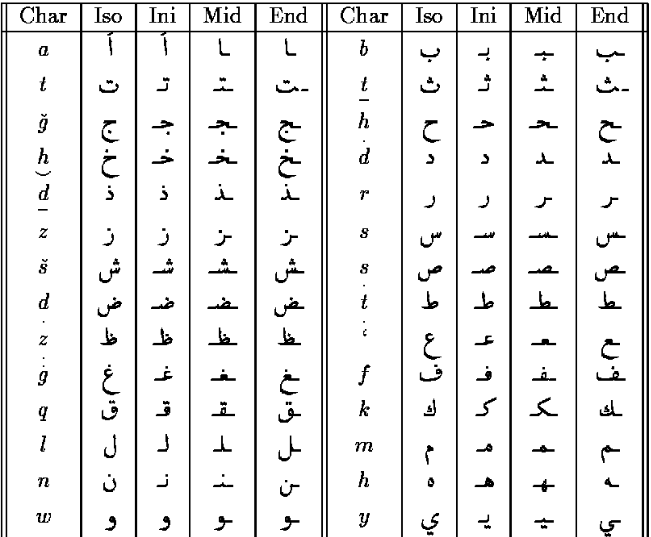
Our alphabet mastery guide breaks this into a letter-by-letter sequence, and our pronunciation resource covers the sounds that don’t exist in English at all.
Practice Exercise: Write out the 28 Arabic letters in their four forms (isolated, initial, medial, final) from memory once daily for two weeks. This single habit does more for retention than passive flashcard review.
Enroll in our Arabic for Beginners course for structured, guided letter-by-letter instruction rather than piecing together scattered YouTube videos.
Begin learning Arabic at Buruj with a FREE trial lesson

Month 4 to Month 6 Build Core Grammar Foundations
Months four through six should introduce sentence structure, noun-verb agreement, and the present tense, since Arabic grammar rewards early structural understanding over memorized phrases. Arabic sentence order (often verb-subject-object) differs from English, and internalizing this early prevents confused, backward-sounding sentences later.
This is also when learners typically encounter masculine and feminine noun agreement for the first time — a concept that trips up nearly every English-speaking student initially, since English nouns carry no gender at all.
Our sentence structure guide and masculine and feminine nouns article walk through both concepts with side-by-side examples.
Example Sentence Breakdown
| Arabic | Transliteration | English | Grammar Note |
| الولدُ يلعبُ | al-waladu yal’abu | The boy is playing | Verb-subject order, masculine agreement |
| البنتُ تلعبُ | al-bintu tal’abu | The girl is playing | Same verb root, feminine prefix تـ |
| الأولادُ يلعبونَ | al-awladu yal’aboona | The boys are playing | Plural verb ending ونَ |
This table shows how a single verb root شفت شفت shifts form based on gender and number — a pattern that repeats throughout Arabic grammar.
Practice Exercise: Take five verbs you already know and conjugate each for “he,” “she,” and “they” in the present tense. Say each aloud before writing it.
Our present tense guide covers this conjugation system step by step, and this is also the natural point to enroll in our Arabic Grammar Course for guided correction, since self-taught grammar errors compound quickly without a teacher catching them early.
Read More: Arabic Vocabulary Quiz
Understand the Arabic Grammar with Buruj’s free trial lesson
Discover the Buruj Academy Difference
Step into our virtual classrooms and see how our expert instructors make learning Quran and Arabic intuitive and clear. We focus on overcoming the specific hurdles non-native speakers face, building your confidence and connection with the Quran.
Master the Arabic Language
Join our expert-led courses and build a strong foundation in Classical and Modern Arabic.
Get Your Free TrialMonth 7 to Month 9 Expand Vocabulary and Learn Past and Future Tenses
Months seven through nine should focus on doubling active vocabulary to 800–1,000 words while introducing the past and future tenses, since verb tense mastery unlocks the ability to discuss anything beyond the present moment. Without past and future tenses, conversation stays frozen in “I am doing” statements indefinitely.
Students at this stage often describe a specific frustration: they can understand simple sentences but freeze completely when trying to describe what happened yesterday. That’s simply the past tense gap, and it closes fast with targeted practice.
Our past tense article and future tense guide each provide conjugation tables and drilling exercises for exactly this transition.
Vocabulary Building Table
| Category | Words to Learn | Example |
| Daily routines | 50–75 words | يستيقظ (wakes up), يذهب (goes) |
| Food and dining | 60–80 words | طعام (food), لذيذ (delicious) |
| Work and study | 70–100 words | وظيفة (job), امتحان (exam) |
| Emotions and opinions | 50–70 words | سعيد (happy), أعتقد (I think) |
This breakdown shows how targeted vocabulary categories build practical speaking ability faster than memorizing random word lists.
Practice Exercise: Each week, write five sentences using only past-tense verbs describing your actual day. This anchors grammar to real memory rather than abstract drilling.
Our Arabic Speaking Course pairs well here, since vocabulary sticks far better when it’s used in live conversation rather than isolated memorization.
Book your free trial to start speaking Arabic fluently

Month 10 to Month 12 Achieve Conversational Fluency Through Active Speaking Practice
The final three months should shift almost entirely toward speaking practice, listening comprehension, and natural conversation, since passive knowledge only becomes fluency through active use. This is where grammar and vocabulary either solidify into real ability or quietly fade from disuse.
In our experience, students who dedicate these final months to speaking with a real instructor — rather than continuing to add new vocabulary — show dramatically stronger retention at the twelve-month mark. Output-based practice cements what input-based study only introduces.
Our speaking skills guide outlines specific drills for this phase, including shadowing exercises and structured conversation topics.
Practice Exercise: Record yourself describing your weekend in Arabic for two full minutes without stopping, once weekly. Listen back and note where you paused to search for words — that’s your revision list for the following week.
This is the ideal stage to commit to our Online Arabic Classes for consistent 1-on-1 conversation practice, since speaking confidence rarely develops through self-study alone.
Book your FREE Arabic trial online Arabic class at Buruj

What Daily and Weekly Schedule Works for Learning Arabic in a Year?
A realistic weekly Arabic study schedule combines 45–60 minutes of daily practice on weekdays with a longer 90-minute review session on weekends, totaling roughly 6–7 hours per week. This structure balances consistency with the flexibility working adults and parents actually need.
Read also: What Are the Basics of Arabic?
Sample Weekly Study Schedule
| Day | Focus | Duration |
| Monday | New vocabulary + flashcard review | 45 min |
| Tuesday | Grammar drills | 45 min |
| Wednesday | Listening practice (audio/video) | 45 min |
| Thursday | Writing practice | 45 min |
| Friday | Speaking practice with instructor | 60 min |
| Saturday | Review and consolidation | 90 min |
| Sunday | Rest or light reading | 20 min |
This schedule shows that reaching fluency doesn’t require abandoning your week — just protecting small, consistent blocks of time.
We consistently see one factor separate students who finish the year fluent from those who stall around month six: a fixed daily time slot. Learners who study “whenever there’s time” fall behind learners who study “at 7 AM, always,” even when total weekly hours are identical.
Our dictation practice guide offers a strong Thursday writing-practice framework, and our vocabulary retention tips work well for the Monday review slot.
Can You Learn Arabic in Two Years?
Yes, you can learn Arabic in 2 years. Learning Arabic over two years instead of one allows for deeper grammar mastery, expanded vocabulary beyond 3,000 words, and comfortable reading of unvocalized Arabic texts without diacritical marks. A two-year timeline also leaves room for dialect exposure alongside Modern Standard Arabic, which a compressed twelve-month plan usually cannot accommodate.
The extra time particularly benefits learners tackling irregular verbs and complex sentence structures, since these patterns need repeated exposure across varied contexts to become automatic rather than memorized.
| Timeline | Realistic Outcome | Best Suited For |
| 1 Year | Conversational fluency (B1–B2), daily topics | Motivated learners, 60–90 min/day |
| 2 Years | Advanced comprehension, unvocalized reading | Learners wanting depth over speed |
| 3+ Years | Near-native fluency, classical texts, dialects | Academic or professional Arabic use |
This comparison shows that “how many years does it take to learn Arabic” has no single answer — it depends entirely on your target proficiency level.
Learn Arabic Fluently with Buruj Academy’s Personalized Classes
A structured year of Arabic study delivers real conversational fluency — but self-study alone often stalls around month four or five without expert correction. Buruj Academy’s Online Arabic Classes solve this through Al-Azhar University-trained instructors using our context-before-abstraction method.
Our approach includes personalized learning plans matched to your pace and goals, flexible 24/7 scheduling for global students, and real-time pronunciation correction that self-study apps simply cannot replicate. Whether you’re starting from zero or refining existing skills, our instructors adapt every lesson to your specific progress.
Book a free trial lesson today and experience structured, guided Arabic learning with Buruj Academy’s expert teaching team.
Begin your transformation today by choosing the path that fits your goals:
- Online Arabic Classes (General & Comprehensive)
- Arabic Course for Beginners
- Arabic Alphabet Learning Course
- Online Arabic Classes for Kids
- Arabic Classes for Adults
- Arabic Grammar Course (Nahw & Sarf)
- Intermediate Arabic Course (B1/B2)
- Arabic Speaking Course (Conversational Fluency)
- Arabic Reading Course (Literary Excellence)
- Learn Arabic Writing Course (Calligraphy & Composition)
Ready to speak with confidence? Join the global community at Buruj Academy and book your free placement interview today!
Master the Arabic Language
Join our expert-led courses and build a strong foundation in Classical and Modern Arabic.
Get Your Free TrialConclusion
A year of focused Arabic study can genuinely take you from zero to confident, everyday conversation — the timeline in this guide proves that with the right structure, not just raw hours. What separates learners who reach fluency from those who plateau isn’t talent; it’s whether each month builds deliberately on the last.
Whether your goal fits neatly into twelve months or stretches into a two-year journey toward deeper mastery, the four-phase progression outlined here — alphabet, grammar, vocabulary, and active speaking — applies regardless of pace. Consistency, not speed, remains the real determining factor.
Frequently Asked Questions About Learning Arabic in a Year
How Many Years Does It Take to Learn Arabic Fluently?
Reaching conversational fluency typically takes one year with consistent daily study, while advanced fluency including unvocalized reading and dialect comprehension usually requires two to three years. The exact timeline depends heavily on weekly study hours, consistency, and whether structured instruction or self-study is used.
What Is a Realistic Daily Schedule for Learning Arabic in a Year?
A realistic schedule combines 45–60 minutes of weekday practice with a longer 90-minute weekend review session, totaling 6–7 hours weekly. This should rotate between vocabulary, grammar, listening, writing, and speaking practice rather than repeating the same activity daily.
Is It Better to Learn Arabic in One Year or Two Years?
One year suits learners prioritizing functional conversational ability quickly, while two years allows for deeper grammar mastery and comfortable reading of unvocalized texts. Neither timeline is universally “better” — the right choice depends on your specific goals and available weekly study time.
Do I Need a Teacher to Learn Arabic in a Year, or Can I Self-Study?
Self-study can cover early alphabet and vocabulary stages effectively, but grammar errors and pronunciation habits typically compound without expert correction. Most learners who reach genuine fluency within a year combine self-study with regular instructor-guided speaking practice to catch and correct mistakes early.