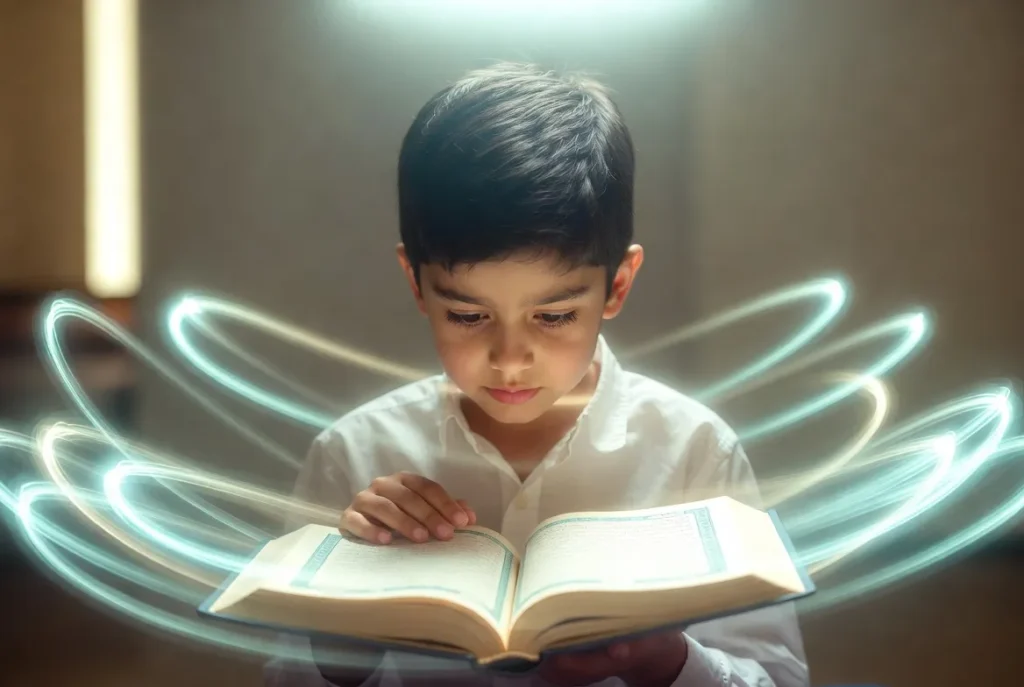
 Quran
Quran
| Key Takeaways |
| Allah protected a group of young believers who fled their city to escape a king who commanded idol worship. |
| The ashab al-kahf slept in their cave for 309 years — 300 lunar years, confirmed in Surah Al-Kahf (18:25). |
| Allah caused the sleepers to turn sides regularly so sunlight would not harm their bodies during the long sleep. |
| Their dog stayed at the cave entrance, and scholars mention it as a companion honored for loyalty to believers. |
| The story teaches children that trusting Allah completely, even when afraid, always leads to His protection and mercy. |
Every child who hears the ashab al-kahf story asks the same question with wide eyes: “They really slept for 300 years?” That wonder is exactly the point — Allah placed this miracle in the Quran so it would stop us in our tracks.
The ashab al-kahf, or People of the Cave, were a group of young men who chose faith over fear. Their story, told in Surah Al-Kahf, shows children one of the most powerful truths in the Quran: when you run toward Allah, He takes care of everything else.
1. A City Full of Idols and a Few Brave Young Men
The story begins in a prosperous city ruled by a powerful king named Daqyanus — a ruler who demanded that everyone worship idols made of stone and wood.
Most people obeyed. They bowed to statues, burned incense before them, and pretended the stones could hear their prayers.
But scattered through the city was a small group of young men who knew the truth — that only Allah deserved worship, and that no statue had ever helped anyone.
These young men were not scholars or warriors. They were ordinary youths — some say they worked in the king’s own palace. But their hearts held something the king’s entire army could not touch: certainty in Allah.
One by one, quietly, they began sharing their belief with each other. A trust grew between them — the kind of friendship built not on fun or games, but on shared faith.
Buruj Academy’s Quran stories for kids collection explores this theme of courageous young believers across multiple Quranic narratives — a wonderful reading resource for families.
2. The King Finds Out and the Young Men Must Choose
Word reached the king: a group of young men in his city refused to bow to the idols.
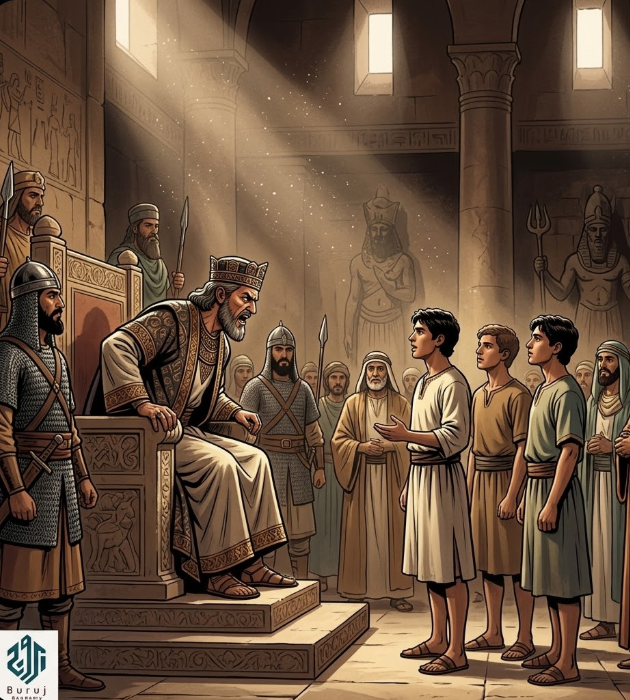
This was not just disobedience — in his mind, it was rebellion. He summoned them before his throne. Imagine standing in a grand hall, surrounded by soldiers and courtiers, facing a man who had the power to imprison or execute you. The king’s voice filled the room: “Bow to our gods, or face the consequences.”
The young men looked at each other — and then at the king — and spoke clearly.
وَرَبَطْنَا عَلَىٰ قُلُوبِهِمْ إِذْ قَامُوا فَقَالُوا رَبُّنَا رَبُّ ٱلسَّمَـٰوَٰتِ وَٱلْأَرْضِ لَن نَّدْعُوَا۟ مِن دُونِهِۦٓ إِلَـٰهًا
“Wa rabatnā ‘alā qulūbihim idh qāmū faqālū Rabbunā Rabbus-samāwāti wal-ardi lan nad’uwa min dūnihī ilāhā”
“And We made firm their hearts when they stood up and said, “Our Lord is the Lord of the heavens and the earth. Never will we invoke besides Him any deity. We would have certainly spoken, then, an excessive transgression.” (Al-Kahf 18:14)
Note the phrase “We bound their hearts” — Allah Himself strengthened them at that exact moment of fear.
Not a single one wavered. The king, furious, gave them time to reconsider. That window of time became their chance.
Excel in Your Quranic Studies
Join Buruj Academy and master the Quran with our structured, professional curriculum.
Book Your Free TrialRead also: Animal Stories from the Quran for Kids
2. The Young Men Make a Plan and Leave Everything Behind
That night — or perhaps over several urgent days — the young men made a decision that would change everything.
They would leave. Leave their homes, their families, their positions, their comfortable lives. They would walk away from the city that had turned its back on Allah, and they would seek a place where they could worship freely.
In our experience teaching children this story at Buruj Academy, this is the moment that resonates most powerfully with young listeners.
We ask them: “Could you leave your toys, your room, your friends — for Allah?” The room always goes quiet.
Then, slowly, a child raises a hand: “If Allah is with me, I think I could.” That is precisely the lesson the Ashab Al-kahf lived.
They gathered what little they needed and slipped out of the city. With them came a faithful companion — their dog, who followed them loyally into the unknown.
Their destination: a cave in the mountains, away from the king’s reach, away from the noise of idol worship, close to the silence of Allah.
Book Your Kid a Free Trial Lesson With One of
Buruj’s Quran Tutors for Children

Read also: Bird Story in Quran for Kids
3. Ashab Al-Kahf Enter the Cave and Make the Most Important Dua
The group reached the cave as the world outside grew dangerous. They stepped inside, found shelter in its cool darkness, and then did what believers always do in moments of uncertainty — they turned to Allah.
رَبَّنَآ ءَاتِنَا مِن لَّدُنكَ رَحْمَةً وَهَيِّئْ لَنَا مِنْ أَمْرِنَا رَشَدًا
“Rabbanā ātinā min ladunka raḥmatan wa hayyi’ lanā min amrinā rashadā”
“Our Lord, grant us mercy from Yourself and prepare for us from our affair right guidance.” (Al-Kahf 18:10)
This dua is one of the most beautiful in the Quran. It is short, humble, and completely trusting — not asking for palaces or armies, just mercy and guidance. Parents, teach this dua to your children.
When your child is anxious about school, a test, or something new and frightening, this is the dua of young believers who were truly afraid — and were answered beyond anything they imagined.
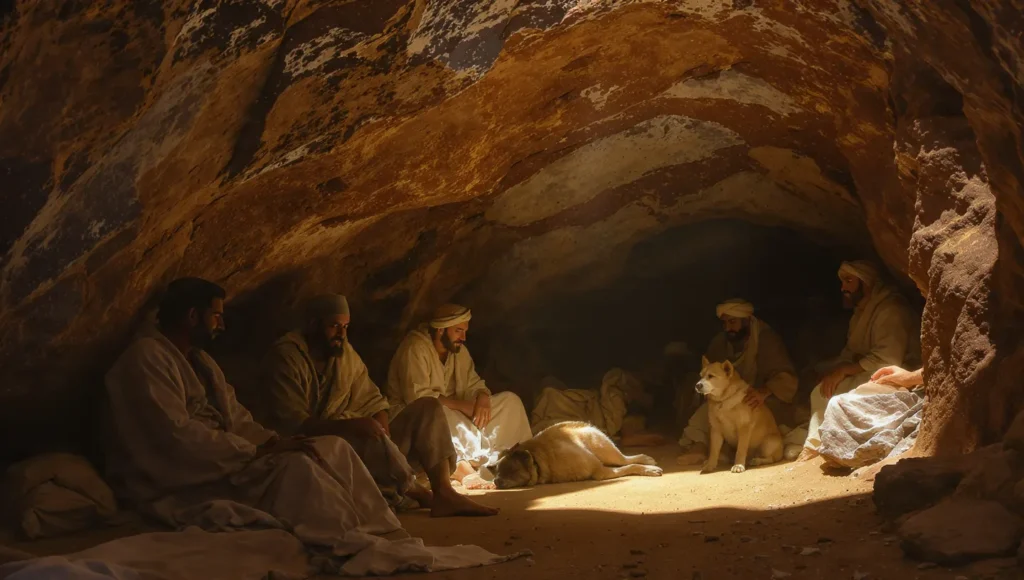
The young men settled in the cave. Their dog lay at the entrance, paws stretched forward, guarding faithfully. And then — they fell asleep.
We love using this story in our Islamic Studies for Kids at Buruj Academy because it sparks the best discussions.
The first session is free in Buruj’s Islamic Studies Classes for Kids

4. Allah Caused Ashab Al-Kahf to Fall Into a Sleep for 309 Years
What happened next is one of the greatest miracles in the Quran.
Allah caused the young men to fall into a deep, extraordinary sleep. Not an ordinary nap — a sleep that stretched across centuries. The Quran tells us they remained in the cave for 300 solar years, which equals 309 lunar years, as Allah confirmed:
وَلَبِثُوا۟ فِى كَهْفِهِمْ ثَلَـٰثَ مِا۟ئَةٍ سِنِينَ وَٱزْدَادُوا۟ تِسْعًا
“Wa labithū fī kahfihim thalātha mi’atin sinīna wazdādū tis’ā”
“And they remained in their cave for three hundred years and exceeded by nine.” (Al-Kahf 18:25)
The world outside changed completely. The king who threatened them eventually died. Generations were born and passed away. Cities rose and fell. But inside the cave, those young men slept peacefully — their bodies protected, their skin fresh, their hair still.
Allah arranged the cave’s opening so that sunlight entered from the right in the morning and passed to the left in the afternoon — never striking the sleepers directly, never burning their skin.
He also caused them to turn sides periodically, so their bodies would not be harmed by remaining in one position.
| What Changed Outside | What Stayed the Same Inside |
| The king died | The young men remained unharmed |
| Generations passed | Their bodies stayed preserved |
| The city transformed | Their faith was protected |
| Centuries went by | Allah’s care never stopped |
And their dog? He stayed at the entrance — so still, so present, that any passerby who glimpsed the scene would have turned and fled, thinking the sleepers were awake and watching.
We love using this story in our Online Quran Classes for Kids at Buruj Academy because it sparks the best discussions. Children immediately ask: “Why did Allah mention the dog?” — and that question alone teaches them to think deeply about the Quran’s details.
Help your child start reading the Quran with a Free trial
5. The Sleepers Wake Up — and Cannot Believe What Has Happened
After 309 years, Allah commanded them to wake.
They stirred, stretched, and blinked. To them, it felt as if they had dozed off for a few hours — perhaps a single night. One turned to the others and asked, “How long have we been here?” “A day,” said one. “Or part of a day,” said another. They were genuinely uncertain.
Then came the practical concern: they were hungry.
One of the young men was chosen to quietly slip into town, buy some food, and return — carefully, without drawing attention, because the king’s men might still be searching.
He was given their silver coins and sent off with clear instructions: be careful, do not reveal who you are, do not let anyone follow you back.
The young man made his way down from the mountain, coins in hand — and stepped into a world he did not recognize.
The streets were different. The buildings looked different. The people dressed differently. He approached a food seller and held out his coins — and the seller stared at them, puzzled. These coins were ancient. The markings on them were from hundreds of years ago. “Where did you get these?” people began to ask.
A crowd gathered. Word spread to the city’s leaders. And soon, the truth began to emerge: these were not ordinary young men who had hidden in a cave. These were the legendary sleepers — people their grandparents’ grandparents had spoken of.
Discover the Buruj Academy Difference
Step into our virtual classrooms and see how our expert instructors make learning Quran and Arabic intuitive and clear. We focus on overcoming the specific hurdles non-native speakers face, building your confidence and connection with the Quran.
6. The City Discovers the Miracle and the Young Men Return to Allah
The leaders of the city — who, by this time, believed in Allah — rushed to the cave.
There, they found the young men awake, calm, and bewildered by all the attention. The believers of the city recognized immediately that this was a miracle from Allah — a living sign that the soul survives, that resurrection is real, that Allah has power over time itself.
The people of the city had been debating something deeply important: what happens after death? Do souls continue? Is resurrection real? The awakening of the Ashab Al-Kahf settled that question with a living, breathing, walking miracle.
Shortly after — and scholars differ on the exact sequence — the young men returned to Allah’s mercy. Their purpose had been fulfilled. They had lived as a sign of faith, and now they rested as one.
The city’s believers built a place of remembrance near the cave, honoring the young men who had chosen Allah over everything the world offered.
| Lesson from Each Stage | Teaching Point for Children |
| Choosing faith over the king’s command | Courage comes from knowing Allah is greater |
| Making dua before sleeping in the cave | Always ask Allah for help before anything |
| Sleeping 309 years without harm | Allah’s protection has no limits |
| Waking up confused but trusting | When we trust Allah, we are never truly lost |
| Becoming a sign for the whole city | One act of faith can inspire thousands |
Exploring stories like this alongside the Prophet Musa story for kids and the Prophet Yunus story for kids gives children a rich picture of how Allah supports His believers across every era.
How Many Years Did the Ashab E Kahf Sleep?
The ashab e kahf slept for 309 lunar years, which equals approximately 300 solar years. This precise detail is confirmed directly in Surah Al-Kahf (18:25). The difference between the solar and lunar count reflects the Islamic calendar’s shorter lunar year — a detail that demonstrates the Quran’s mathematical precision.
Many children ask why Allah kept them asleep for so long. The answer the Quran gives is wisdom: their awakening became a sign for an entire generation of people who were debating resurrection. Allah’s timing is never accidental — He placed their miracle exactly where humanity needed it most.
What Lessons Does the Ashab al-Kahf Story Teach Children?
The ashab al-kahf story teaches children three core lessons that remain as relevant today as they were centuries ago.
First: Faith is not just for adults. The sleepers were young — some scholars say teenagers or young adults. Allah honored their youth, not despite it, but because of it.
Second: Running toward Allah is never running away. The young men left everything — but they left it for something. That distinction matters enormously for children who feel caught between peer pressure and their faith.
Third: Allah never wastes a sincere act. Those young men fell asleep thinking their story was over. It had barely begun.
For families looking to build on these lessons through structured Quranic learning, Buruj Academy’s easy Tafseer in English resource is an excellent starting point for understanding the deeper meanings behind Quranic stories.
Excel in Your Quranic Studies
Join Buruj Academy and master the Quran with our structured, professional curriculum.
Book Your Free TrialGive Your Child a Bright Future with Inspiring Quranic Learning
Spark a lifelong love for the Quran and the Arabic language in your child’s heart. At Buruj Academy, we specialize in making sacred knowledge accessible, engaging, and fun for young learners.
Our expert tutors use child-friendly teaching methods—including interactive tools and personalized pacing—to ensure your little ones build a strong spiritual foundation while developing a deep connection to their faith and heritage.
Whether they are taking their very first steps in the alphabet or beginning the noble journey of memorization, we provide a safe and supportive environment where every child can thrive.
Enroll your child in one of our specialized, kid-friendly tracks today:
- Online Quran Classes for Kids
- Tajweed Classes for Kids
- Hifz Classes for Kids
- Online Arabic Classes for Kids
- Quranic Arabic Course for Kids
- Noorani Qaida Course for Kids
- Islamic Studies Classes for Kids
Ready to watch your child grow in knowledge and character? Join the Buruj Academy family and book a free trial session for your child today!
Frequently Asked Questions About the Ashab al-Kahf Story
How Many Years Did the Ashab e Kahf Sleep According to the Quran?
The Quran states in Surah Al-Kahf (18:25) that the Ashab e Kahf slept for 300 years and nine additional years — totaling 309 lunar years, equivalent to approximately 300 solar years. This is not a legend or approximation; it is a precise Quranic statement confirmed with both calendar systems accounted for.
How Many Young Men Were the Ashab al-Kahf?
The Quran does not specify the exact number, mentioning various opinions — three, five, or seven — and adds that their dog was the eighth. Allah concludes in Al-Kahf (18:22) that only He knows their true number, teaching us that some Quranic details are left deliberately open to focus attention on the lesson rather than the count.
Is the Ashab al-Kahf Story the Same as the Seven Sleepers of Ephesus?
The story of the seven sleepers in the Quran shares broad similarities with a Christian tradition about sleepers in Ephesus, though the Quranic account differs in theological focus and detail. The Quran presents their story as a divine miracle demonstrating resurrection and Allah’s protection — not as a historical document to be compared with outside accounts.
What Was the Name of the Ashab al-Kahf’s Dog?
Classical Islamic scholars mention the name Qitmir in some narrations, though this name does not appear in the Quran itself. The dog is mentioned in Surah Al-Kahf as a companion who stayed at the cave’s entrance — honored in the Quran simply for its loyalty to people of faith.
Where Is Surah Al-Kahf and Why Do Muslims Read It on Fridays?
Surah Al-Kahf is the 18th chapter of the Quran. Muslims are encouraged to recite it every Friday based on an authentic hadith in Sahih Muslim indicating that doing so brings light between the two Fridays. The ashab al-kahf story sits at the heart of this blessed surah.