 Arabic
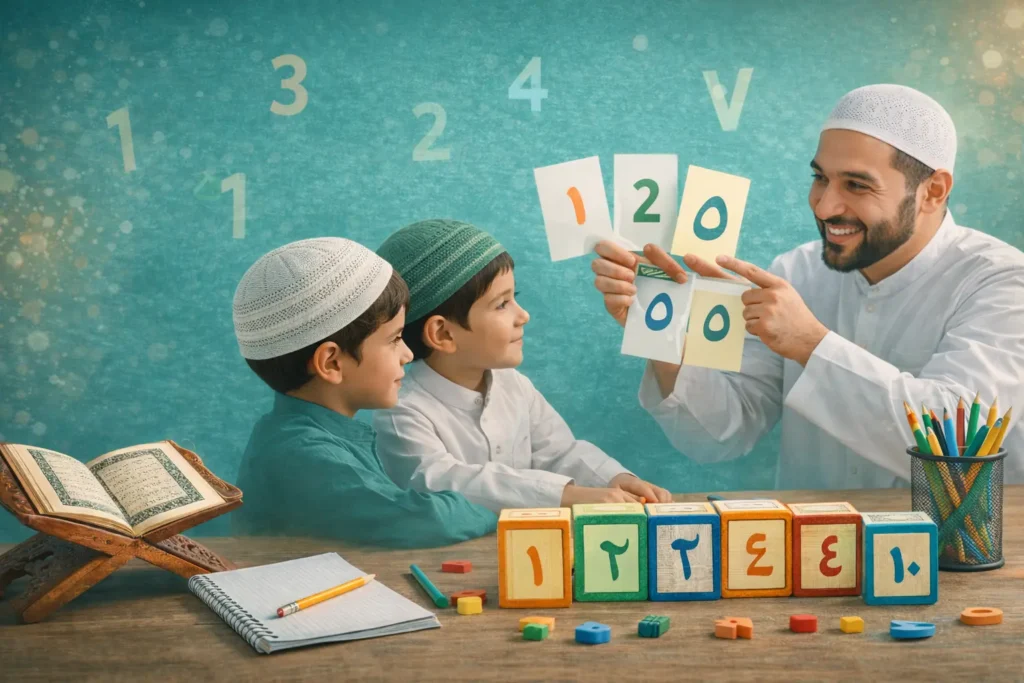
Children show excitement when they spot familiar patterns in new languages. Arabic numbers carry a fascinating mix of logic and rhythm that kids tend to enjoy once learning is broken into small, manageable groups rather than overwhelming lists.
Teaching Arabic numbers for kids becomes far more effective when grouped by tens. This guide walks parents through each number group with ready-to-use tables, age-appropriate tips, and practical activities that make number learning stick naturally.
Arabic Numbers 1 to 10 Are the Most Important Foundation Kids Need to Learn First
Every number system builds on its first ten digits. Arabic numbers 1–10 follow a clear, learnable pattern that children aged 4 and above can master through repetition and playful activities within just a few weeks.
Here is a starter table for Arabic numbers 1–10 that parents can print and place near the learning area:
| Number | Arabic Numeral | Arabic Word | Pronunciation |
| 1 | ١ | وَاحِد | Wāḥid |
| 2 | ٢ | اثْنَان | Ithnan |
| 3 | ٣ | ثَلَاثَة | Thalātha |
| 4 | ٤ | أَرْبَعَة | Arba’a |
| 5 | ٥ | خَمْسَة | Khamsa |
| 6 | ٦ | سِتَّة | Sitta |
| 7 | ٧ | سَبْعَة | Sab’a |
| 8 | ٨ | ثَمَانِيَة | Thamāniya |
| 9 | ٩ | تِسْعَة | Tis’a |
| 10 | ١٠ | عَشَرَة | ‘Ashara |
Notice that numbers 3–10 all end in “a” — a pattern children catch quickly and find reassuring. Point this out to your child; it builds confidence immediately.
How do Kids Ages 4 to 7 Learn Arabic Numbers 1 to 10 Best?
Use physical objects — dates, blocks, or toy cars — and count aloud together in Arabic. Keep sessions to 5–7 minutes. One number per session works better than rushing through all ten at once.
How do Kids Ages 8 to 12 Practice Arabic Numbers 1 to 10 More Independently?
Have children write each number in Arabic script alongside its numeral. A simple “number dictation” game where you say the Arabic word and they write the numeral builds solid recall within days.
At Buruj Academy, our Online Arabic Classes for Kids introduce these foundational numbers through counting games and colorful visuals, helping children aged 4–15 build fluency joyfully rather than through dry repetition.
Book your child’s free Arabic trial now!

Teaching Kids Arabic Numbers 11 to 20 Reveals a Simple Repeating Pattern They Will Love
Arabic numbers for kids in the 11–20 range follow a logical “tens + ones” structure. Understanding this pattern helps children predict new numbers rather than memorizing each one separately, which builds real confidence.
| Number | Arabic Numeral | Arabic Word | Pronunciation |
| 11 | ١١ | أَحَدَ عَشَرَ | Aḥada ‘ashar |
| 12 | ١٢ | اثْنَا عَشَرَ | Ithna ‘ashar |
| 13 | ١٣ | ثَلَاثَةَ عَشَرَ | Thalāthata ‘ashar |
| 14 | ١٤ | أَرْبَعَةَ عَشَرَ | Arba’ata ‘ashar |
| 15 | ١٥ | خَمْسَةَ عَشَرَ | Khamsata ‘ashar |
| 16 | ١٦ | سِتَّةَ عَشَرَ | Sittata ‘ashar |
| 17 | ١٧ | سَبْعَةَ عَشَرَ | Sab’ata ‘ashar |
| 18 | ١٨ | ثَمَانِيَةَ عَشَرَ | Thamāniyata ‘ashar |
| 19 | ١٩ | تِسْعَةَ عَشَرَ | Tis’ata ‘ashar |
| 20 | ٢٠ | عِشْرُون | ‘Ishrūn |
The key insight here: numbers 11–19 simply add “عَشَرَ” (‘ashar, meaning ten) after the unit number. Show children this pattern visually using color-coding — one color for the unit, another for ‘ashar.
Arabic Numbers 10 to 100 for Kids Become Easy Once Children Understand the Tens Structure
Tens in Arabic follow a consistent suffix pattern. Once children aged 8 and above learn these ten anchor words, they can construct any number up to 99 by combining tens with units — a powerful skill that feels like a code they have cracked.
| Number | Arabic Numeral | Arabic Word | Pronunciation |
| 10 | ١٠ | عَشَرَة | ‘Ashara |
| 20 | ٢٠ | عِشْرُون | ‘Ishrūn |
| 30 | ٣٠ | ثَلَاثُون | Thalāthūn |
| 40 | ٤٠ | أَرْبَعُون | Arba’ūn |
| 50 | ٥٠ | خَمْسُون | Khamsūn |
| 60 | ٦٠ | سِتُّون | Sittūn |
| 70 | ٧٠ | سَبْعُون | Sab’ūn |
| 80 | ٨٠ | ثَمَانُون | Thamānūn |
| 90 | ٩٠ | تِسْعُون | Tis’ūn |
| 100 | ١٠٠ | مِئَة | Mi’a |
Notice that 30–90 all share the “-ūn” ending. This suffix pattern is the anchor — children who spot it can read new tens numbers with confidence. Alhamdulillah, Arabic number structure genuinely rewards the learner.
Discover the Buruj Academy Difference
Step into our virtual classrooms and see how our expert instructors make learning Quran and Arabic intuitive and clear. We focus on overcoming the specific hurdles non-native speakers face, building your confidence and connection with the Quran.
A Simple Activity for Building Numbers 21 to 99 with Your Child
Write a tens card and a units card separately. Ask your child to combine them — 3 + 40 becomes ثَلَاثَة وأَرْبَعُون (Thalātha wa arba’ūn). The “وَ” (wa, meaning “and”) connects them. This ten-minute activity builds fluency across the entire range.
Through Buruj Academy’s Arabic Alphabet Learning Course, children learn to recognize Arabic script including numerals through interactive storytelling and visual association activities that match how young minds naturally process new information.
Get your kid a free trial now in the Best Alphabet course
Numbers 100 and Beyond Give Kids Learning Arabic Numbers a Strong Sense of Achievement
Hundreds and thousands follow a clean multiplier pattern that older children aged 10 and above handle well. These larger numbers appear frequently in Quranic contexts, making them especially meaningful to learn.
| Number | Arabic Numeral | Arabic Word | Pronunciation |
| 100 | ١٠٠ | مِئَة | Mi’a |
| 200 | ٢٠٠ | مِئَتَان | Mi’atān |
| 300 | ٣٠٠ | ثَلَاثُمِئَة | Thalāthu mi’a |
| 500 | ٥٠٠ | خَمْسُمِئَة | Khamsu mi’a |
| 1,000 | ١٠٠٠ | أَلْف | Alf |
| 2,000 | ٢٠٠٠ | أَلْفَان | Alfān |
| 1,000,000 | ١٠٠٠٠٠٠ | مِلْيُون | Milyūn |
A practical connection for families: mention that the word أَلْف (Alf — one thousand) appears in the Quran and in the phrase “Laylat al-Alf” (the Night of a Thousand Months). Children remember numbers far better when they carry meaning beyond the classroom.
Read Also: The Arabic Alphabet for Kids
Ordinal Arabic Numbers Help Children Describe Order and Sequence in Real Conversations
Beyond counting, children need ordinal numbers — first, second, third — to describe their world. These appear in daily family conversation, Quran reference, and school contexts, making them highly practical to learn early.
| Ordinal | Arabic Word | Pronunciation | Example Use |
| 1st | أَوَّل | Awwal | First day |
| 2nd | ثَانِي | Thāni | Second surah |
| 3rd | ثَالِث | Thālith | Third Juz |
| 4th | رَابِع | Rābi’ | Fourth prayer |
| 5th | خَامِس | Khāmis | Fifth lesson |
| 6th | سَادِس | Sādis | Sixth month |
| 7th | سَابِع | Sābi’ | Seventh day |
| 8th | ثَامِن | Thāmin | Eighth door |
| 9th | تَاسِع | Tāsi’ | Ninth verse |
| 10th | عَاشِر | ‘Āshir | Tenth night |
Connect ordinals directly to your child’s daily experience — “Today is our ثَالِث (third) lesson this week.” Real-world usage accelerates retention dramatically for kids of all ages. Insha’Allah, this small habit produces noticeable results within two weeks.
Read Also: How to Learn Arabic for Kids?
Comprehensive Reference Table of the Main Arabic Numbers for Kids from 1 to 1000
This master reference table brings together every number group covered in this guide. Parents can use it as a printable poster or digital reference during daily practice sessions with their children.
| Number | Arabic Numeral | Arabic Word | Pronunciation |
| 1 | ١ | وَاحِد | Wāḥid |
| 2 | ٢ | اثْنَان | Ithnan |
| 3 | ٣ | ثَلَاثَة | Thalātha |
| 4 | ٤ | أَرْبَعَة | Arba’a |
| 5 | ٥ | خَمْسَة | Khamsa |
| 6 | ٦ | سِتَّة | Sitta |
| 7 | ٧ | سَبْعَة | Sab’a |
| 8 | ٨ | ثَمَانِيَة | Thamāniya |
| 9 | ٩ | تِسْعَة | Tis’a |
| 10 | ١٠ | عَشَرَة | ‘Ashara |
| 11 | ١١ | أَحَدَ عَشَرَ | Aḥada ‘ashar |
| 12 | ١٢ | اثْنَا عَشَرَ | Ithna ‘ashar |
| 13 | ١٣ | ثَلَاثَةَ عَشَرَ | Thalāthata ‘ashar |
| 14 | ١٤ | أَرْبَعَةَ عَشَرَ | Arba’ata ‘ashar |
| 15 | ١٥ | خَمْسَةَ عَشَرَ | Khamsata ‘ashar |
| 16 | ١٦ | سِتَّةَ عَشَرَ | Sittata ‘ashar |
| 17 | ١٧ | سَبْعَةَ عَشَرَ | Sab’ata ‘ashar |
| 18 | ١٨ | ثَمَانِيَةَ عَشَرَ | Thamāniyata ‘ashar |
| 19 | ١٩ | تِسْعَةَ عَشَرَ | Tis’ata ‘ashar |
| 20 | ٢٠ | عِشْرُون | ‘Ishrūn |
| 30 | ٣٠ | ثَلَاثُون | Thalāthūn |
| 40 | ٤٠ | أَرْبَعُون | Arba’ūn |
| 50 | ٥٠ | خَمْسُون | Khamsūn |
| 60 | ٦٠ | سِتُّون | Sittūn |
| 70 | ٧٠ | سَبْعُون | Sab’ūn |
| 80 | ٨٠ | ثَمَانُون | Thamānūn |
| 90 | ٩٠ | تِسْعُون | Tis’ūn |
| 100 | ١٠٠ | مِئَة | Mi’a |
| 200 | ٢٠٠ | مِئَتَان | Mi’atān |
| 300 | ٣٠٠ | ثَلَاثُمِئَة | Thalāthu mi’a |
| 400 | ٤٠٠ | أَرْبَعُمِئَة | Arba’u mi’a |
| 500 | ٥٠٠ | خَمْسُمِئَة | Khamsu mi’a |
| 600 | ٦٠٠ | سِتُّمِئَة | Sittu mi’a |
| 700 | ٧٠٠ | سَبْعُمِئَة | Sab’u mi’a |
| 800 | ٨٠٠ | ثَمَانُمِئَة | Thamānu mi’a |
| 900 | ٩٠٠ | تِسْعُمِئَة | Tis’u mi’a |
| 1000 | ١٠٠٠ | أَلْف | Alf |
This complete reference covers every group in this guide. Print this table, stick it on the wall near your child’s study space, and use it during informal review moments throughout the day.
Master the Arabic Language
Develop reading, writing, speaking, and comprehension skills through interactive Arabic lessons for all levels.
Start Arabic ClassesRead Also: Arabic Stories for Kids
Help Your Child Master Arabic Numbers with Buruj Academy’s Expert Arabic Instructors
Counting in Arabic feels natural to children when expert guidance pairs structured curriculum with play-based methods designed for young learners.
- Instructors are Al-Azhar graduates with 12+ years teaching children from non-Arabic backgrounds
- Age-appropriate curriculum built for children aged 4–15
- Numbers taught through songs, games, and colorful visuals — not memorization drills
- Short 20–30 minute sessions matching children’s natural attention spans
- Personalized pacing so every child progresses confidently
- Flexible scheduling that fits your family’s routine
Book your child’s free trial lesson with Buruj Academy’s Online Arabic Classes for Kids today.
Find your child’s perfect match among Buruj’s top courses for kids:
- Arabic Classes for Kids
- Alphabet course
- Noorani Qaida Course for Kids
- Quranic Arabic Course
- Islamic Studies for Kids
- Hifz Classes for Kids
- Quran Classes for Kids
- Tajweed for Kids
Get a free trial for your child today.

Conclusion
Breaking Arabic numbers into logical groups — units, teens, tens, hundreds — gives children clear milestones. Each group conquered builds genuine confidence that carries forward to the next, making the full range feel manageable rather than overwhelming.
The patterns within Arabic numbers are a genuine gift for young learners. The “-ūn” suffix in tens and the “‘ashar” structure in teens mean children decode new numbers independently rather than depending on rote memorization alone.
Connecting numbers to real daily moments — prayer times, Quran references, family counting — is what moves Arabic numbers from abstract knowledge into a child’s active language. Masha’Allah, consistent small-step practice produces remarkable results over time.


Leave a Reply