 Quran
Quran

| Key Takeaways |
| Luqman was a wise man — not a prophet — whose advice to his son is preserved in Surah Luqman, verses 12–19. |
| The first and most important lesson Luqman gave his son was to never associate partners with Allah (shirk). |
| Luqman taught his son seven core values: gratitude, Tawheed, good character, prayer, patience, and humility. |
| The story appears in Surah Luqman (Chapter 31) and is ideal for teaching children Islamic values through conversation. |
| Parents can narrate this story as a father-son dialogue, making each lesson vivid, relatable, and memorable for children. |
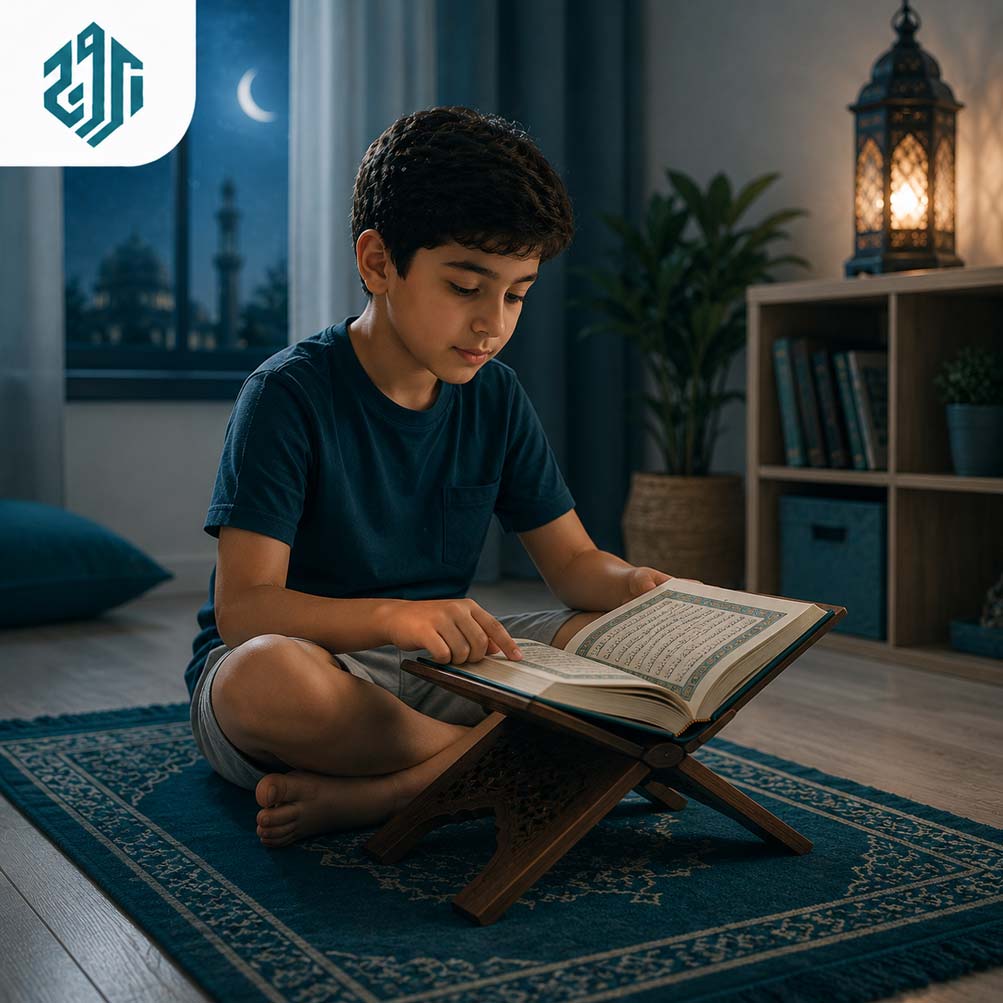
Children remember stories far longer than they remember rules. The Luqman story in the Quran is one of the most powerful examples of a father sitting down with his child and passing on the most important truths a person can ever know.
Surah Luqman (Chapter 31) preserves the actual words a wise father spoke to his son — covering faith, gratitude, prayer, character, and how to walk through the world with humility. These lessons are as alive today as the day they were revealed, and they are perfect for sharing with children of every age.
Table of Contents:
Who Was Luqman?
Luqman was a deeply wise man whom Allah blessed with profound wisdom — not prophethood, but the rare gift of seeing truth clearly and speaking it gently.
Why Does Allah Mention Luqman in the Quran?
Allah mentions Luqman by name in the Quran specifically because of how he passed this wisdom to his son. His story is not about miracles or battles — it is about a father and a son, sitting together, talking about what matters most.
Allah says in the Quran:
وَلَقَدْ آتَيْنَا لُقْمَانَ الْحِكْمَةَ
Wa laqad atayna Luqmanal-hikmah
“And We had certainly given Luqman wisdom.” (Luqman 31:12)
Scholars note that Luqman was likely an Ethiopian man, known among his people for his calm judgment and thoughtful speech.
He was not a king. He was not famous for wealth. He was known simply for how wisely he lived — and how faithfully he taught.
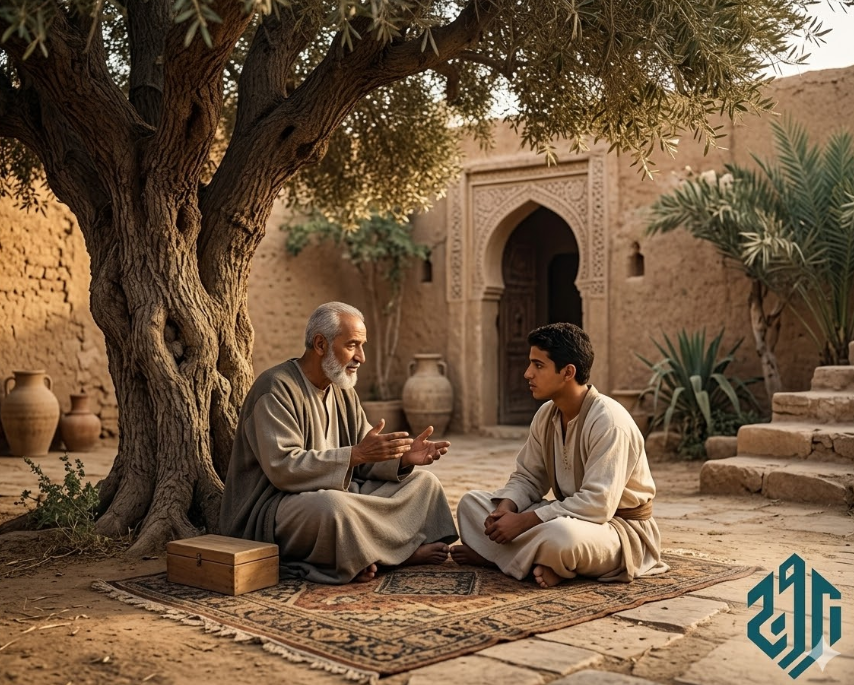
For parents narrating to children: “A long time ago, there was a man named Luqman. He wasn’t a king or a warrior. He was something even better — he was wise. And one day, he sat down with his son and began to share the most important things he had ever learned.”
Read also: Ashab al-Kahf Story in the Quran for Kids
1. Never Give Allah a Partner
Luqman opened his advice with the single most important truth his son needed to carry through life — that Allah alone deserves worship, and nothing should ever be placed beside Him.
This lesson on Tawheed (the oneness of Allah) was not a lecture. It was the words of a loving father who wanted to protect his child from the greatest mistake a person can make.
يَا بُنَيَّ لَا تُشْرِكْ بِاللَّهِ ۖ إِنَّ الشِّرْكَ لَظُلْمٌ عَظِيمٌ
Ya bunayya la tushrik billah, innashshirka lazulmun azeem
“O my son, do not associate anything with Allah. Indeed, association with Him is great injustice.” (Luqman 31:13)
Notice how Luqman called his son “Ya bunayy” — a tender, affectionate diminutive meaning “my dear little son.” This was not a command shouted across a room. It was love speaking truth.
For parents narrating to children: “Luqman looked at his son with gentle eyes and said: ‘My dear son — the most important thing I will ever tell you is this. Never, ever give Allah a partner. Never say that anything or anyone is equal to Allah. That would be the greatest wrong a person could do.'”
In our sessions at Buruj Academy, we have seen how much children respond to this moment when it is told as a conversation rather than a rule. The tenderness of “Ya bunayy” lands differently when a parent says it aloud. If your child studies with our Islamic Studies Classes for Kids, our instructors use exactly this narrative approach to make Quranic lessons come alive.
The first session is free in Buruj’s Islamic Studies Classes for Kids
Excel in Your Quranic Studies
Join Buruj Academy and master the Quran with our structured, professional curriculum.
Book Your Free TrialRead also: Animal Stories from the Quran for Kids
2. Be Grateful to Allah and to Your Parents
Immediately after the lesson on Tawheed, Allah inserts a remarkable reminder about parents — particularly mothers — and the obligation to be grateful to them.
This placement is deliberate and profound. Gratitude to Allah and gratitude to parents are taught together, side by side.
The Quran records:
أَنِ اشْكُرْ لِي وَلِوَالِدَيْكَ
Anishkur li wa liwalidayk
“Be grateful to Me and to your parents.” (Luqman 31:14)
Allah describes how a mother carries her child through exhaustion and difficulty, nursing through weakness and sacrifice. The Quran honors this with extraordinary care.
For parents narrating to children: “Then Luqman told his son: ‘My son, be thankful. Be thankful to Allah first — because He created you and gives you everything. And be thankful to your parents — especially your mother, who carried you when she was tired, who gave up her rest for yours.'”
This is a wonderful moment to pause and ask your child: “What are you grateful to Allah for today? What can you do to show Mama or Baba you appreciate them?”
3. Even a Mustard Seed Is Known to Allah
Luqman then taught his son one of the most awe-inspiring truths about Allah — that His knowledge misses nothing, no matter how small. This lesson builds taqwa (God-consciousness) in a way children can genuinely picture.
يَا بُنَيَّ إِنَّهَا إِن تَكُ مِثْقَالَ حَبَّةٍ مِّنْ خَرْدَلٍ فَتَكُن فِي صَخْرَةٍ أَوْ فِي السَّمَاوَاتِ أَوْ فِي الْأَرْضِ يَأْتِ بِهَا اللَّهُ ۚ إِنَّ اللَّهَ لَطِيفٌ خَبِيرٌ
[And Luqman said], “O my son, indeed if wrong should be the weight of a mustard seed and should be within a rock or [anywhere] in the heavens or in the earth, Allah will bring it forth. Indeed, Allah is Subtle and Acquainted.” (Luqman 31:16)
A mustard seed is tiny — smaller than a grain of sand almost. Luqman used this image intentionally, so his son would understand: there is no hidden deed, no secret thought, no small act of kindness or cruelty that Allah does not see.
For parents narrating to children: “Luqman picked up the tiniest seed he could find and held it up. ‘Do you see this, my son? Even something this small — Allah knows about it. If you did something good today that nobody saw — Allah saw it. If you did something wrong that nobody knew about — Allah knew. He sees everything, everywhere, always.'”
Discover the Buruj Academy Difference
Step into our virtual classrooms and see how our expert instructors make learning Quran and Arabic intuitive and clear. We focus on overcoming the specific hurdles non-native speakers face, building your confidence and connection with the Quran.
4. Establish Prayer
After building his son’s understanding of Allah’s greatness and knowledge, Luqman moved to practice. The first act of worship he commanded was Salah — the prayer that anchors a Muslim’s day.
يَا بُنَيَّ أَقِمِ الصَّلَاةَ
Ya bunayya aqimis-salah
“O my son, establish prayer.” (Luqman 31:17)
Luqman did not just say “pray” — he said “establish” prayer, meaning to build it as a structure in life, consistent and firm.
He then added two more instructions alongside it: command what is right, and forbid what is wrong. This shows Luqman understood that a child who prays will care about the world around them.
For parents narrating to children: “‘My son,’ Luqman said, ‘pray. Don’t just pray sometimes — pray always. Let prayer be the thing you build your whole day around. And when you see something good happening, encourage it. When you see something wrong happening, speak up. Be someone who cares about what is right.'”
Children as young as seven can begin learning Salah properly. Buruj Academy’s Online Quran Classes for Kids pair Quran reading with Islamic grounding that complements Salah learning beautifully.
Help your child start reading the Quran with a Free trial
5. Be Patient Through Difficulties
Luqman was deeply realistic. He did not promise his son an easy life. Instead, he prepared him for hardship by teaching him patience — and explained that commanding good and forbidding wrong would sometimes bring pain. Patience was the armor his son would need.
Luqman said to be patient over “whatever befalls you” — not some things, not easy things, but whatever comes. This is the lesson of a father who has lived through difficulty himself and wants his child to stand firm.
For parents narrating to children: “‘My son, life will not always be easy. There will be days when people are unkind. There will be times when doing the right thing is hard. But be patient. Don’t give up. Don’t break down. Patience is one of the greatest things a person can have — and it is a sign of courage.'”
Whenever we teach the Luqman passage at Buruj Academy, this is the moment students go quiet. Even children understand, somewhere deep inside, that life will ask something difficult of them. Hearing a father say “be patient — I know it will be hard” gives them permission to face that truth.
Book Your Kid a Free Trial Lesson With One of Buruj’s Quran Tutors for Children

6. Walk with Humility, Speak with Kindness
Luqman closed his advice with two powerful lessons about character — lessons that are outward, visible, and daily. He warned his son against arrogance, and he taught him how to carry himself through the world.
وَلَا تُصَعِّرْ خَدَّكَ لِلنَّاسِ وَلَا تَمْشِ فِي الْأَرْضِ مَرَحًا
Wa la tusa”ir khaddaka linnas wa la tamshi fil-ardi maraha
“And do not turn your cheek [in contempt] toward people and do not walk through the earth exultantly.” (Luqman 31:18)
The image is vivid: Luqman described arrogance as literally turning your face away from people — looking down at others, refusing to meet their eyes.
He then said: lower your voice. The harshest sound in all of creation, he told his son, is the braying of a donkey. A person who shouts and boasts sounds no better.
For parents narrating to children: “‘My son, when you meet people — look at them. Don’t turn your face away as if they are beneath you. Walk on this earth gently. And when you speak — speak kindly, speak quietly. The worst sound in the world is loud and empty noise. Be someone whose words are gentle and true.'”
The Seven Lessons of Luqman at a Glance
| Lesson | Core Value | Quranic Reference | |
| 1 | Never associate partners with Allah | Tawheed | Luqman 31:13 |
| 2 | Be grateful to Allah and parents | Shukr (Gratitude) | Luqman 31:14 |
| 3 | Allah sees even a mustard seed | Taqwa (God-consciousness) | Luqman 31:16 |
| 4 | Establish prayer | Ibadah (Worship) | Luqman 31:17 |
| 5 | Command good, forbid wrong | Responsibility | Luqman 31:17 |
| 6 | Be patient through difficulties | Sabr (Patience) | Luqman 31:17 |
| 7 | Walk with humility, speak kindly | Akhlaq (Character) | Luqman 31:18–19 |
These seven lessons move in a deliberate order — from belief, to gratitude, to awareness of Allah, to worship, to character. Luqman built his son from the inside out.
For deeper exploration of Quranic stories with children, our collection of Quran stories for kids and Islamic stories for kids offer similarly narrative-rich tellings parents can use at home.
Excel in Your Quranic Studies
Join Buruj Academy and master the Quran with our structured, professional curriculum.
Book Your Free TrialGive Your Child a Bright Future with Inspiring Quranic Learning
Spark a lifelong love for the Quran and the Arabic language in your child’s heart. At Buruj Academy, we specialize in making sacred knowledge accessible, engaging, and fun for young learners.
Our expert tutors use child-friendly teaching methods—including interactive tools and personalized pacing—to ensure your little ones build a strong spiritual foundation while developing a deep connection to their faith and heritage.
Whether they are taking their very first steps in the alphabet or beginning the noble journey of memorization, we provide a safe and supportive environment where every child can thrive.
Enroll your child in one of our specialized, kid-friendly tracks today:
- Online Quran Classes for Kids
- Tajweed Classes for Kids
- Hifz Classes for Kids
- Online Arabic Classes for Kids
- Quranic Arabic Course for Kids
- Noorani Qaida Course for Kids
- Islamic Studies Classes for Kids
Ready to watch your child grow in knowledge and character? Join the Buruj Academy family and book a free trial session for your child today!
Frequently Asked Questions About the Luqman Story in Quran for Kids
Is Luqman a Prophet in the Quran?
Luqman is not a prophet in the Quran. He is described as a wise man whom Allah blessed with wisdom. The majority of Islamic scholars, including classical commentators, hold that Luqman was a righteous, wise individual — not a prophet — whose wisdom Allah preserved in the Quran as a model for parents and children.
Which Surah Contains the Story of Luqman in the Quran?
The story of Luqman appears in Surah Luqman, which is the 31st chapter of the Quran. The core advice Luqman gave his son is found in verses 12 through 19. The surah is named after Luqman because of the powerful, timeless wisdom his words contain.
What Age Is the Luqman Story Suitable For?
The Luqman story is suitable for children from approximately age 4 and above. Younger children (ages 4–7) benefit most from the narrative form, while older children (ages 8–12) can engage with the individual lessons more deeply. The story’s father-son dialogue format makes it naturally accessible across age groups.
How Can Parents Use the Luqman Story at Home?
Parents can narrate the Luqman story as a bedtime story, pausing at each lesson to ask questions: “What do you think that means for us?” Reading it alongside the easy Tafseer in English resources on the Buruj Academy blog adds depth. Connecting each lesson to daily life makes the wisdom actionable for children.
What Is the Most Important Lesson in the Luqman Story?
The most important lesson in the Luqman story is the first one Luqman gave his son: never associate partners with Allah (shirk). Luqman called this “great injustice” (zulmun azeem). Every subsequent lesson — gratitude, prayer, character — builds upon this foundational belief in the oneness of Allah.