 Islamic
Children who grow up knowing their faith ask better questions, make more confident choices, and carry a sense of purpose that guides them through life’s daily moments. That connection begins with simple, clear knowledge.
These Islam facts for kids cover everything from the Five Pillars to prophet stories, Quran basics, and daily Islamic practices — organized so parents can share one fact at a time, making each conversation a meaningful learning moment for children aged 4–15.
Table of Contents:
1. Muslims Believe in One God (Tawheed)
The most foundational of all Islam facts for kids is Tawheed — the belief that Allah is One, with no partners, no equals, and no rivals. Everything in Islam builds on this single, powerful idea.
Teaching this to children works best through simple comparisons. Ask your child: “Who made the sun, the rain, and you?” Then explain that Allah made everything, and He alone deserves our worship. Young children grasp this naturally when connected to things they already see and love.
Buruj Academy‘s Islamic Studies Classes for Kids introduce Tawheed through stories, visuals, and age-appropriate conversations that make this concept feel personal and real for young learners, not abstract or distant.
The first session is free in Buruj’s Islamic Studies Classes for Kids
2. Five Core Practices That Shape a Muslim’s Life
The Five Pillars of Islam are the five core practices every Muslim follows. Here is a simple overview parents can share with children of any age:
| Pillar | Arabic Name | Child-Friendly Meaning |
| Declaration of Faith | Shahada | Saying Allah is One and Muhammad ﷺ is His messenger |
| Prayer | Salah | Talking to Allah five times every day |
| Fasting | Sawm | Not eating or drinking in Ramadan to grow closer to Allah |
| Charity | Zakat | Giving part of our money to help people in need |
| Pilgrimage | Hajj | Visiting Makkah once in a lifetime if we are able |
Even a five-year-old can memorize these five names when turned into a counting game on their fingers. Start with Shahada on the thumb and work across — children remember far more when their hands are involved in learning.
3. The Quran Is Allah’s Direct Word
Among all Islam facts for kids, this one carries the most weight: the Quran is not written by a human. It is the direct speech of Allah, revealed to Prophet Muhammad ﷺ over 23 years through the Angel Jibreel (AS).
The Quran has 114 surahs (chapters) and 6,236 ayahs (verses). The shortest surah is Surah Al-Kawthar with just 3 verses — a perfect starting point for young children beginning their memorization journey.
قُلْ هُوَ ٱللَّهُ أَحَدٌ
Qul Huwa Allahu Ahad
“Say: He is Allah, the One.”
A perfect verse for young children — short, rhythmic, and teaches Tawheed directly
Book Your Kid’s First Session in Buruj’s Juz 30 Memorization Course
4. Prophet Muhammad ﷺ The Greatest Human and The Last Prophet
Prophet Muhammad ﷺ was born in Makkah in 570 CE. He is the final prophet and messenger of Allah, sent as a mercy to all of humanity. Muslims love him deeply and send blessings upon him whenever his name is mentioned.
Sharing small personal details makes the Prophet ﷺ feel real to children. He loved cats, he smiled often, he helped with housework, and he was known as Al-Amin — the trustworthy — even before prophethood. These human details build genuine love in young hearts.
5. Salah Connects Children to Allah Five Times Daily
Muslims pray five times daily: Fajr (dawn), Dhuhr (midday), Asr (afternoon), Maghrib (sunset), and Isha (night). Each prayer takes roughly 5–10 minutes, and together they structure a Muslim’s entire day around Allah’s remembrance.
For children aged 7 and above, the Prophet ﷺ encouraged parents to begin teaching Salah. A helpful approach is praying beside your child rather than simply telling them to pray — children mirror what they observe far more than what they are instructed to do.
Discover the Buruj Academy Difference
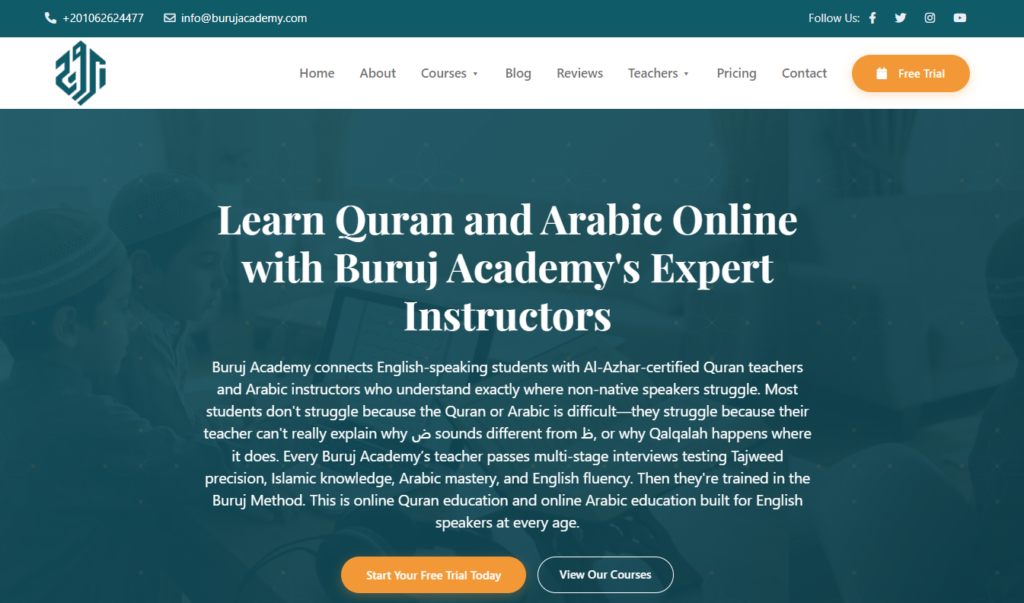
Step into our virtual classrooms and see how our expert instructors make learning Quran and Arabic intuitive and clear. We focus on overcoming the specific hurdles non-native speakers face, building your confidence and connection with the Quran.
6. Ramadan Shapes Muslim Life in Profound Ways
Ramadan is the ninth month of the Islamic lunar calendar and the holiest month of the year. Muslims fast from dawn to sunset, increase their Quran recitation, and give more charity during this special time.
The Night of Power (Laylatul Qadr) falls in the last ten nights of Ramadan and is described in the Quran as better than a thousand months.
Help children feel the specialness of this month by involving them in family traditions — decorating the home, helping prepare Iftar, and making simple duas together.
7. Belief in Angels Brings Islamic Faith to Life
Belief in angels (Mala’ikah) is one of the Six Articles of Faith in Islam. Angels are created from light, they do not eat or sleep, and they always obey Allah completely. Every person has two angels — Raqeeb and Ateed — recording their deeds.
Children find angel facts genuinely exciting. Telling a child “there are angels writing down every good thing you do right now” motivates kind behavior in a spiritually meaningful way. This fact connects belief to daily action beautifully for young learners.
8. Six Core Beliefs Every Muslim Child Grows Into
The Six Articles of Faith form the belief system every Muslim holds. Parents can introduce these progressively, starting with the simplest for younger children:
| Article of Faith | Arabic Term | Age to Introduce |
| Belief in Allah | Tawheed | Ages 4–6 |
| Belief in Angels | Mala’ikah | Ages 5–7 |
| Belief in Holy Books | Kutub | Ages 6–8 |
| Belief in Prophets | Anbiya | Ages 6–9 |
| Belief in the Last Day | Yawm Al-Qiyamah | Ages 8–12 |
| Belief in Divine Decree | Qadar | Ages 10–15 |
Introducing beliefs in this sequence prevents overwhelm and ensures each concept is genuinely understood before the next is added. The table above gives parents a realistic road map for structured faith development at home.
9. Arabic Is the Language of the Quran And The Muslim Culture
The Quran was revealed in classical Arabic, which is why learning Arabic holds special importance for Muslim children worldwide. Understanding even basic Arabic words deepens a child’s connection to their prayers and Quran recitation significantly.
Through Buruj Academy‘s Online Arabic Classes for Kids, children learn Arabic through stories, songs, and games — connecting letters to familiar words like بيت (bayt, house) and قمر (qamar, moon) — making the language feel approachable rather than intimidating for young learners starting from zero.
Book your child’s free Arabic trial now!

10. Hajj Teaches Children the True Meaning of Equality
Hajj is the annual pilgrimage to Makkah that every Muslim who is physically and financially able must perform once in their lifetime. Millions of Muslims from every country gather together — all wearing simple white clothing — as a powerful symbol of equality before Allah.
Show children images of Hajj and explain: “When everyone wears the same clothes, you cannot tell who is rich or poor — everyone is equal in front of Allah.” This visual lesson makes the concept of Islamic brotherhood instantly understandable for children of all ages.
11. Zakat Builds a Child’s Sense of Responsibility and Generosity
Zakat is obligatory charity — Muslims who meet a minimum wealth threshold give 2.5% of their savings annually to those in need. It is not optional generosity but a pillar of the faith designed to keep wealth circulating fairly within the Muslim community.
Parents can teach this concept practically by involving children in Zakat decisions: “We are giving some of our money to help families who need food.”
Children who participate in giving from a young age develop genuine empathy and understand that wealth carries responsibility.
12. The Mosque Is a Place of Peace and Community
The Masjid (mosque) is the Muslim place of worship, but it is much more than a prayer space. Historically, mosques served as community centers, schools, and places of shelter. The first mosque built in Islam was Masjid Quba in Madinah.
Familiarizing children with the Masjid early removes any sense of unfamiliarity or nervousness. Take children to the Masjid regularly, even outside of formal prayer times, and let them explore, ask questions, and feel comfortable in the house of Allah.
13. Du’a Gives Children Direct Access to Allah Anytime
Du’a (supplication) is direct, personal communication with Allah — no intermediary needed. Allah hears every du’a, regardless of the language spoken, the age of the person, or how small the request seems. This is one of the most comforting Islam facts for kids to internalize.
Encourage children to make du’a in their own words, in any language, at any moment. Bedtime is a natural opportunity — help your child thank Allah for three things from their day and ask for one thing they need. This builds a lifelong habit of turning to Allah first.
Read Also: Islamic Books for Kids
14. Halal and Haram Give Children a Clear Values Framework
Halal means permitted in Islam, and Haram means forbidden. These categories cover food, behavior, speech, and actions. Understanding halal and haram gives children a clear decision-making framework they can apply independently as they grow.
| Category | Halal Examples | Haram Examples |
| Food | Chicken, fish, vegetables, fruits | Pork, alcohol, non-halal meat |
| Behavior | Kindness, honesty, helping others | Lying, bullying, stealing |
| Speech | Truthful words, kind greetings | Backbiting, swearing, mocking |
Teaching children to ask “Is this halal?” before acting builds Islamic consciousness naturally. The goal is not fear-based restriction but confident, values-aligned decision-making rooted in love for Allah.
Read Also: Islamic Story Books for Kids
15. Jannah Gives Children a Hopeful Vision to Strive Toward
Jannah (Paradise) is Allah’s promise to the believers — a place of perfect beauty, joy, and peace beyond anything this world can offer. The Quran describes rivers of honey, gardens of unimaginable beauty, and eternal happiness for those who live righteously.
Children respond powerfully to descriptions of Jannah. Ask your child: “If you could design the most perfect, beautiful place, what would it have?”
Then explain that Allah has prepared something even better for those who love Him and do good. Hope and love motivate far more effectively than fear in children’s Islamic education.
Read Also: Basics of Islam for Kids
Deepen Your Islamic Knowledge
Study Aqeedah, Fiqh, Seerah, and essential Islamic teachings with experienced instructors in a structured online program.
Try Islamic StudiesRead Also: Islamic Story for Kids
Help Your Child Discover Islam Through Buruj Academy’s Islamic Studies Classes for Kids
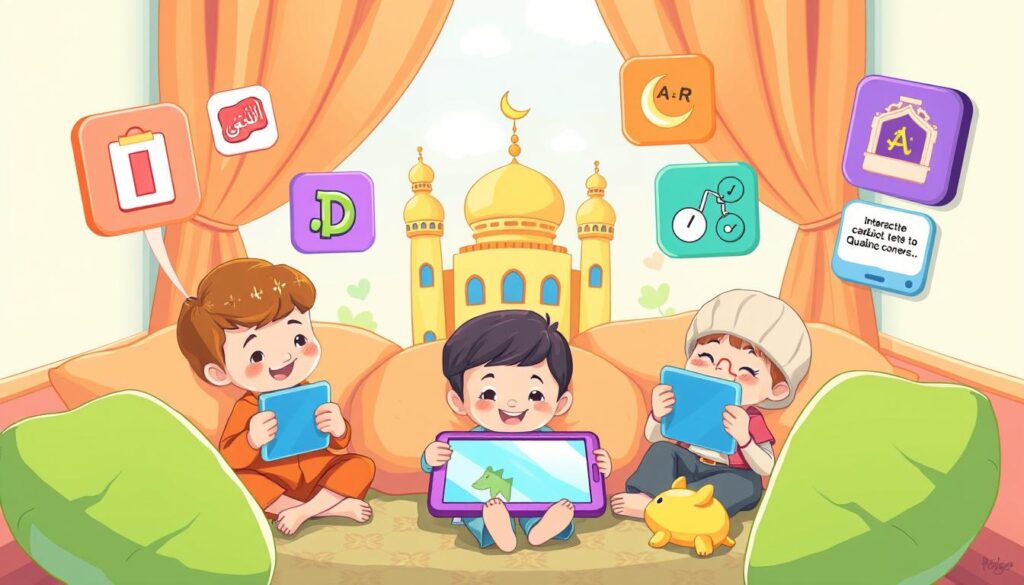
Building Islamic knowledge requires consistent, structured learning that goes beyond occasional conversations at home. Buruj Academy‘s Islamic Studies Classes for Kids provide exactly that structure.
- Al-Azhar graduates with 12+ years teaching children aged 4–15
- Age-appropriate curriculum covering Aqeedah, Akhlaq, and Islamic history
- Lessons taught through stories, games, and interactive activities — not dry lectures
- Short 20–30 minute sessions designed for children’s attention spans
- Patient, encouraging instructors who build confidence, not pressure
- Flexible scheduling to fit busy family routines
Book your child’s free trial lesson today and give them a strong Islamic foundation.
Find your child’s perfect match among Buruj’s top courses for kids:
- Arabic Classes for Kids
- Alphabet course
- Noorani Qaida Course for Kids
- Quranic Arabic Course
- Islamic Studies for Kids
- Hifz Classes for Kids
- Quran Classes for Kids
- Tajweed for Kids
Get a free trial for your child today.
Conclusion
Islam facts for kids become truly powerful when introduced gradually, connected to daily life, and delivered with warmth rather than pressure. One meaningful conversation today plants seeds that grow into lifelong faith.
Good Islamic knowledge builds identity, confidence, and purpose in children. When kids understand why they pray, fast, and give charity — not just how — they carry those practices forward willingly and with genuine love for Allah.
Every child learns differently and at their own pace, Insha’Allah. Whether your child is four or fourteen, starting now with even one fact per week creates consistent progress that compounds beautifully over time.




Leave a Reply