 Islamic

Most children love stories about heroes, and Islam gives us remarkable ones. When parents frame prophets as real people who faced real challenges, children connect with these stories on a genuinely personal level.
Teaching prophets in Islam for kids works best when each story is matched to your child’s age and attention span. This guide walks through every prophet children should know, with simple descriptions, key lessons, and practical ways to bring each story alive at home.
Table of Contents:
1. Prophet Adam Was the First Human and the First Prophet
Every child’s study of prophets in Islam begins with Prophet Adam (peace be upon him). He was the first human being Allah created, and his story teaches children about the nature of choices, forgiveness, and starting over.
Prophet Adam’s story is perfect for young children because it is direct and relatable. He made a mistake, felt sorry, and Allah forgave him. That message resonates deeply with children who are still learning right from wrong in their own daily lives.
How to Introduce Prophet Adam’s Story to Young Children Ages 4 to 7?
Keep it simple: “Allah made Prophet Adam from clay and breathed life into him. Prophet Adam was the very first person.” Use clay or playdough during storytime to make the concept tangible and memorable for little hands and minds.
Discussing Prophet Adam’s Story with Older Children Ages 8 to 12
Older children can handle the fuller story—the garden, the mistake, and the journey to earth. Focus on the lesson that Allah always accepts sincere repentance, which builds emotional resilience and accountability in growing kids.
2. Prophet Idris Connects Islamic Faith to the Value of Learning
Prophet Idris (peace be upon him) is mentioned in the Quran as a man of truth and a prophet whom Allah raised to a high station. His story emphasizes the value of knowledge and patience.
Prophet Idris is believed to have been gifted with writing and wisdom. For children, he represents the idea that learning and studying are deeply Islamic values, not just school requirements.
That connection motivates children academically and spiritually at the same time.
3. Prophet Nuh Taught Kids That Patience and Faith Always Win in the End
Prophet Nuh (peace be upon him) is one of the most beloved prophets in Islam for kids to learn about. He called his people to Allah for 950 years, built an ark, and trusted Allah completely throughout an enormous trial.
The ark story captivates children of all ages. Use visual aids—draw the ark, list the animals, act out the story with toy figures. Children aged 4-12 especially respond to the dramatic, vivid elements of Nuh’s narrative.
| Age Group | Best Way to Teach Nuh’s Story | Key Lesson to Emphasize |
| Ages 4-7 | Storybook or puppet show | Animals on the ark, Allah protects believers |
| Ages 8-12 | Discuss why people didn’t listen | Patience through difficulty |
| Ages 13-15 | Read Quranic verses about Nuh | Dawah and unwavering conviction |
The table above shows how one prophet’s story can be taught differently depending on your child’s age and comprehension level.
Discover the Buruj Academy Difference
Step into our virtual classrooms and see how our expert instructors make learning Quran and Arabic intuitive and clear. We focus on overcoming the specific hurdles non-native speakers face, building your confidence and connection with the Quran.
4. Prophet Hud Reminds Children That Blessings Require Gratitude
Prophet Hud (peace be upon him) was sent to the people of ‘Aad, a powerful civilization that grew arrogant despite many blessings. His story is a meaningful reminder about gratitude and humility.
For children, the lesson translates simply: “When we forget to thank Allah for what we have, we lose sight of what matters.”
That message fits naturally into daily conversations, especially when children compare what they have to what others possess.
5. Prophet Salih Teaches Children the Real Consequences of Broken Boundaries
Prophet Salih (peace be upon him) was sent to the people of Thamud. Allah gave them a miraculous she-camel as a sign, and they were commanded to respect it. When they disobeyed, consequences followed swiftly.
Children understand “there are rules for a reason.” The she-camel story translates this into concrete, memorable form. Ask your child: “What would happen if everyone ignored important rules?” Let them reason through it naturally and confidently.
6. Prophet Ibrahim Offers Children a Complete Model of Unshakeable Faith
Prophet Ibrahim (peace be upon him) holds a uniquely central place in Islamic history. He is the father of prophets, the builder of the Kaaba, and a man whose faith was tested repeatedly—and who passed every test.
Buruj Academy’s Islamic Studies Classes for Kids use Ibrahim’s story extensively because it offers age-appropriate lessons at every level—from smashing idols (courage) to sacrificing what you love most (trust in Allah). His life is a complete character education curriculum on its own.
The first session is free in Buruj’s Islamic Studies Classes for Kids
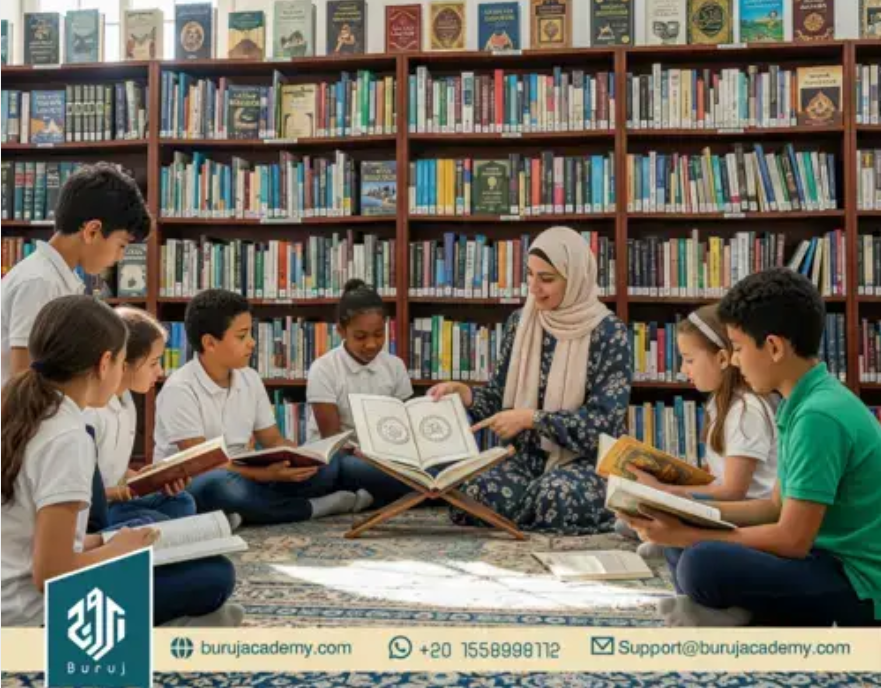
Introducing Prophet Ibrahim to Children Ages 4 to 7
Focus on young Ibrahim questioning the idols his community worshipped. Ask: “Can a statue hear you? Can it help you?” Children at this age are natural questioners themselves and immediately understand his logic.
Expanding Prophet Ibrahim’s Lessons for Children Ages 8 to 12
Introduce the fire story and the dream about his son Ismail. These episodes teach children that trusting Allah completely—even when something feels frightening—always leads to goodness and relief.
Engaging Teenagers Ages 13 to 15 With Prophet Ibrahim’s Arguments
Older children can study Ibrahim’s arguments with King Nimrod, found in Surah Al-Baqarah. This builds critical thinking about faith, logical reasoning, and how to stand firm when people challenge your beliefs.
7. Prophet Lut Taught Kids That Standing for What Is Right Takes Real Courage
Prophet Lut (peace be upon him) was Ibrahim’s nephew and was sent to a community that had abandoned moral boundaries entirely. His story is about moral courage—standing alone for what is right when an entire community disagrees.
For older children and teenagers, this story opens important conversations about peer pressure and identity. The core message is simple: doing the right thing can be lonely, but Allah is always with those who hold firm to truth.
8. Prophet Ismail Demonstrates the Deepest Form of Trust in Allah
Prophet Ismail (peace be upon him), son of Ibrahim, was involved in two of the most powerful moments in prophetic history: being left in the valley of Makkah as an infant, and being the son Ibrahim was prepared to sacrifice.
His story is emotionally rich for children. Even as a young boy, Ismail said yes to his father’s difficult request with complete trust in Allah. Ask your child: “What does it mean to really, truly trust someone?” Ismail’s answer is both simple and profound.
9. Prophets Ishaq and Yaqub Show Faith Passed Across Generations
Prophet Ishaq (peace be upon him), son of Ibrahim, and his son Yaqub (peace be upon him) continue the family lineage of prophecy. Their stories emphasize that faith is passed through families—from parent to child, generation to generation.
For parents, this is a powerful motivational framing. Teaching your child about these prophets is itself an act of prophetic sunnah. You are doing exactly what Ibrahim, Ishaq, and Yaqub did—keeping the light of faith alive within your family.
10. Prophet Yusuf Gives Children the Quran’s Most Complete Life Story
Allah called Yusuf’s story
“the best of stories” in the Quran (Surah Yusuf, 12:3).
It has everything children love: jealousy between siblings, a rescue, a palace, a mystery, and a beautiful reunion.
قَالَ لَا تَثْرِيبَ عَلَيْكُمُ ٱلْيَوْمَ
Qala la tathreeba ‘alaykum al-yawm
“He said, ‘No blame will there be upon you today.'”
This moment—Yusuf forgiving his brothers—teaches children that forgiveness is strength, not weakness. Perfect for resolving sibling conflicts at home.
Through Buruj Academy’s Online Islamic Studies Classes, Yusuf’s story is taught chapter by chapter using age-appropriate discussion questions and storytelling techniques that children aged 6-15 stay genuinely engaged with throughout.
The first session is free in Buruj’s Islamic Studies Classes for Kids

| Story Phase | Lesson for Kids | Activity Idea |
| Brothers throw Yusuf in the well | Jealousy hurts everyone | Draw how Yusuf felt |
| Yusuf in Egypt | Patience through hardship | Write about a hard time and what you learned |
| Yusuf forgives his brothers | Forgiveness is strength | Role-play forgiving a sibling |
The lessons in Yusuf’s story address real childhood challenges—sibling rivalry, unfairness, waiting—making it one of the most practically useful prophet stories for home discussions.
11. Prophet Shuaib Teaches Children That Honesty Matters in Every Situation
Prophet Shuaib (peace be upon him) was sent to the people of Madyan, who cheated in trade and commerce. His message was clear: be honest in all dealings, even when dishonesty might seem profitable.
For children, translate this into everyday language: “Give full portions when you share. Don’t trick your friends. Be honest even when no one is watching.” These are concepts children understand from their very first social interactions with peers.
12. Prophet Musa Offers Children One of Islam’s Most Epic Journeys
Prophet Musa (peace be upon him) is mentioned more than any other prophet in the Quran. His story spans decades, covers miracles, confrontations with Pharaoh, and leading an entire nation—it is genuinely epic in scope and detail.
The basket in the river, the burning bush, the parting of the sea—these are visual, dramatic events that children remember vividly. Use a world map to show Egypt, the Red Sea, and Sinai when telling Musa’s story to children aged 7 and above.
Introducing Prophet Musa to Children Ages 4 to 7
Focus on baby Musa in the basket and his mother’s trust in Allah. This is emotionally accessible and teaches children that Allah protects those who rely on Him, even in terrifying circumstances.
Building on Prophet Musa’s Story for Children Ages 8 to 12
Introduce Pharaoh’s arrogance and the ten plagues. Children at this age understand injustice and are naturally angered by it—use that emotional energy to teach about standing against oppression.
Connecting Teenagers Ages 13 to 15 to Prophet Musa’s Human Moments
Teenagers can engage with Musa’s doubts, his speech impediment, and his human moments. Musa asked Allah for help and support repeatedly. That honesty about human weakness is deeply reassuring for young people navigating their own insecurities.
13. Prophet Harun Honors the Noble Role of Being Someone’s Support
Prophet Harun (peace be upon him), brother of Musa, was a supportive presence and partner in prophecy. Musa specifically asked Allah to send Harun with him, recognizing he needed support.
The lesson for children is beautiful and often overlooked: being someone’s support system is an honored, important role. Not everyone is the main speaker—some people enable others to succeed, and that is equally valued by Allah.
14. Prophet Dhul-Kifl Demonstrates That Daily Consistency Builds Great Character
Prophet Dhul-Kifl (peace be upon him) is mentioned briefly in the Quran alongside Ismail and Idris as one who was patient and among the righteous.
His story emphasizes that consistency and justice in small daily matters build great character over time.
For children, the message is practical: “Be fair to your siblings. Keep your promises. Do what you said you would do.” These are the everyday applications of the qualities Allah honored in His prophets.
15. Prophet Ayyub Transforms Hardship Into an Act of Pure Worship
Prophet Ayyub (peace be upon him) was tested with severe illness and loss over many years. Despite everything, he never complained to others—only to Allah—and Allah restored everything he had lost and more.
Children who are experiencing difficulty—illness, social struggles, family challenges—find genuine comfort in Ayyub’s story. The message is clear: telling Allah how you feel is always the right response to hardship, and relief always comes eventually.
16. Prophet Yunus Proves It Is Never Too Late to Return to Allah
Prophet Yunus (peace be upon him) left his people before Allah’s permission, found himself inside a whale, and made one of the most famous duas in Islamic history:
لَّآ إِلَٰهَ إِلَّآ أَنتَ سُبْحَٰنَكَ إِنِّى كُنتُ مِنَ ٱلظَّٰلِمِينَ
La ilaha illa anta subhanaka inni kuntu mina adh-dhalimin
“There is no god but You. Glory be to You. Indeed, I was among the wrongdoers.”
Teach this dua to children as a response to making mistakes. It builds the habit of turning to Allah rather than feeling hopeless after errors.
17. Prophet Ilyas and Prophet Al-Yasa Model Perseverance When Few People Listen
Prophets Ilyas and Al-Yasa (peace be upon them) are mentioned in the Quran among the righteous. They continued calling their communities to Allah despite limited response—their perseverance is the central lesson their stories offer.
For children, the takeaway is simple: “Keep doing good even if not everyone listens.” This directly addresses the social pressure children face to fit in with peers who may not share their values or practices.
18. Prophet Dawud Teaches Children to Use Their Gifts in Allah’s Service
Prophet Dawud (peace be upon him) was given extraordinary gifts—a beautiful voice, wisdom, strength, and the scripture called the Zabur. He was also a just king and a devoted worshipper who divided his time carefully between worship and duties.
Children learn from Dawud that gifts are given by Allah and should be used in His service. If your child has a beautiful voice or artistic talent, Dawud’s story gives Islamic context to that gift—encouraging them to appreciate and develop it purposefully.
19. Prophet Sulaiman Reveals That Gratitude Sustains Every Blessing Allah Gives
Prophet Sulaiman (peace be upon him), son of Dawud, was given a kingdom unlike any other—authority over humans, jinn, animals, and wind. His story is filled with miraculous details children find genuinely fascinating.
The talking bird (the Hudhud), the Queen of Sheba, and commanding the jinn—these elements make Sulaiman’s story feel almost like an adventure. Use these details to capture children’s imagination, then bring the conversation back to the real lesson: gratitude keeps blessings growing.
20. Prophet Zakariyya Inspires Children to Keep Making Dua Against All Odds
Prophet Zakariyya (peace be upon him) made dua for a child when he and his wife were elderly and she had never conceived. Allah answered with the miraculous birth of Yahya. His story is a masterclass in hopeful, persistent supplication.
Teach children to make dua for things that seem impossible—a sick family member recovering, a difficult situation improving. Zakariyya’s story builds the habit of asking Allah first and trusting the answer, even when it comes in unexpected ways or timing.
Read Also: Islamic Story Books for Kids
21. Prophet Yahya Shows Children That Good Habits Built Early Last Forever
Prophet Yahya (peace be upon him), son of Zakariyya, was described by Allah as being given wisdom while still a child. He grew up with a pure heart, away from worldly distractions, devoted entirely to Allah’s worship.
For parents, this story carries an encouraging message: the habits your child builds now—prayer, Quran, gratitude—are exactly what Allah honored in Yahya. Starting Islamic education young is not pressure; it is a profound gift you are giving your child for life.
Read Also: Stories Of The Prophets For Kids
22. Prophet Isa Was Given Miracles From Birth
Prophet Isa (peace be upon him), born miraculously to Maryam, is deeply honored in Islam. He spoke from the cradle, healed the sick, and raised the dead by Allah’s permission. Muslims love and respect him as a noble prophet.
Clarifying Isa’s position in Islam for children early prevents confusion later. He is honored, deeply loved, and will return before the Day of Judgment—but he is a prophet, not divine. Children can understand this distinction clearly when explained simply and directly.
Read Also: Angels in Islam for Kids
23. Prophet Muhammad Gives Children a Complete Human Model to Follow
Prophet Muhammad ﷺ is the seal of all prophets—the final messenger sent to all of humanity until the Day of Judgment. His life is the most documented in human history, giving us a complete model to follow in every area of life.
His story covers 63 years of human experience: an orphan childhood, a merchant’s career, a husband and father, a community leader, and the recipient of the Quran. Every stage offers children something relevant to their own stage of growth.
| Life Stage | Age Range | Lesson for Kids |
| Orphan childhood | Ages 4-7 | Allah is always your protector |
| Youth and honesty | Ages 8-12 | Being trustworthy builds real respect |
| Receiving revelation | Ages 13-15 | Every big responsibility begins with small faithfulness |
Deepen Your Islamic Knowledge
Study Aqeedah, Fiqh, Seerah, and essential Islamic teachings with experienced instructors in a structured online program.
Try Islamic StudiesRead Also: History of Islam for Kids
Help Your Child Learn the Prophets of Islam With Buruj Academy
Every prophet’s story carries a life lesson your child needs. Structured, age-appropriate teaching makes these lessons stick far beyond storytime at home.
- Instructors are Al-Azhar graduates with 12+ years teaching non-Arabic speaking children
- Age-appropriate curriculum designed for kids aged 4-15
- Stories taught through games, discussions, and interactive activities
- Short 20-30 minute sessions matching children’s attention spans
- Patient, encouraging approach that builds love for Islamic knowledge
👉 Book your child’s free trial lesson with Buruj Academy’s Islamic Studies Classes for Kids today.
Find your child’s perfect match among Buruj’s top courses for kids:
- Arabic Classes for Kids
- Alphabet course
- Noorani Qaida Course for Kids
- Quranic Arabic Course
- Islamic Studies for Kids
- Hifz Classes for Kids
- Quran Classes for Kids
- Tajweed for Kids
Get a free trial for your child today.
Conclusion
Every prophet in Islam was sent with the same core message—worship Allah alone—but each story carries its own unique emotional and practical lessons that speak directly to children at different stages of their development.
Matching each prophet’s story to your child’s age group makes the difference between a story they forget and a lesson that genuinely shapes how they think, respond to difficulty, and relate to Allah throughout their lives.
Starting with familiar favorites like Yusuf, Musa, and Ibrahim, then gradually introducing all prophets, gives children a complete Islamic worldview built on real people, real faith, and real outcomes that children find both believable and inspiring.





Leave a Reply