 Islamic
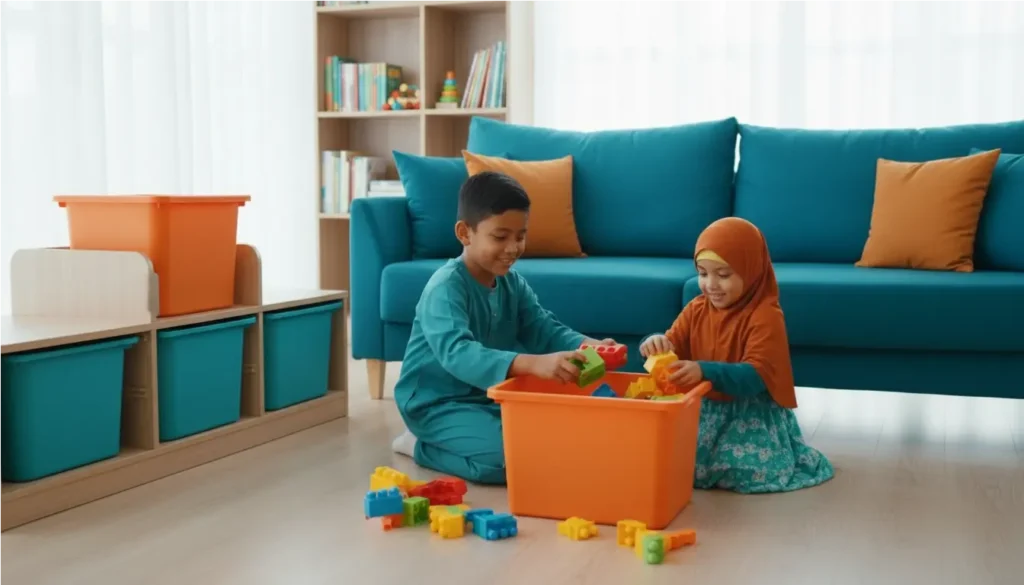
Young children naturally love splashing water and making bubbles — and Islamic teaching on cleanliness gives that playful energy real purpose. When parents connect these everyday habits to faith early, cleanliness becomes a lifelong value rather than a daily battle.
Cleanliness in Islam for kids covers far more than washing hands before meals. This guide walks parents through age-specific methods, practical activities, and conversation starters that make tahara (purity) feel natural, meaningful, and even fun for children aged 4 to 15.
Table of Contents:
Teaching Cleanliness Helps Kids Build Strong Faith Foundations
Islam places cleanliness at the heart of worship — the Prophet ﷺ said:
“Cleanliness is half of faith.”
When children understand this connection early, hygiene stops feeling like a chore and starts feeling like an act of worship they genuinely want to perform.
Starting this conversation young matters enormously. A four-year-old who learns that Allah loves cleanliness carries that understanding into adolescence, making Islamic hygiene habits deeply rooted rather than surface-level routines.
Many parents find that introducing Islamic Studies Classes for Kids alongside home teaching gives children a structured framework for understanding why cleanliness matters spiritually — not just practically. Buruj Academy’s child-trained instructors weave tahara concepts into engaging, age-appropriate lessons that reinforce what parents teach at home.
The first session is free in Buruj’s Islamic Studies Classes for Kids
How Can Kids Learn the Concept of Cleanliness in Islam Through Daily Habits?
Children learn best through repetition within familiar routines. Embedding Islamic cleanliness concepts into moments that already happen — waking up, eating, using the bathroom, preparing for Salah — creates natural teaching opportunities without adding pressure to the day.
Here are the core cleanliness habits Islam teaches, mapped to daily moments parents can use:
| Daily Moment | Islamic Practice | What to Say to Your Child |
| Waking up | Wash hands before touching face or food | “We wash first because our hands touched things while we slept” |
| Before eating | Say Bismillah, wash hands | “We clean our hands to honor the food Allah gave us” |
| Using the bathroom | Istinja (cleaning after using toilet) | “Islam teaches us to be clean after the bathroom — Allah loves this” |
| Before Salah | Wudu (ritual ablution) | “Wudu is how we prepare to stand in front of Allah” |
| Before bed | Brush teeth, use Miswak | “The Prophet ﷺ loved keeping his mouth clean — we do too” |
These five moments alone, handled consistently, build a comprehensive Islamic hygiene understanding in children without requiring dedicated “lesson time” from busy parents.
Discover the Buruj Academy Difference
Step into our virtual classrooms and see how our expert instructors make learning Quran and Arabic intuitive and clear. We focus on overcoming the specific hurdles non-native speakers face, building your confidence and connection with the Quran.
Tailoring Hygiene Lessons To A Child’s Specific Developmental Stage
Children at different developmental stages need completely different approaches. What clicks for a five-year-old will bore a twelve-year-old, and what challenges a teenager appropriately will overwhelm a younger child.
1. Sensory activities make hygiene feel like play for young children
At this age, children learn through imitation and sensory experience. Focus on Wudu steps using a rhyme, let them pour their own water, and celebrate every correct attempt enthusiastically. Keep explanations to one sentence maximum.
Try the “Wudu Race” game: parent and child do Wudu together, calling out each step. Children this age love competing gently and feel proud completing the sequence correctly. Repeat daily until it becomes instinctive.
2. Older children benefit from understanding the spiritual purpose of purity
Children in this range can handle the “why” behind Islamic practices. Explain that Wudu is required for Salah because standing before Allah deserves preparation — both physical and spiritual. Introduce the concept of Najasah (impurity) simply and clearly.
A useful activity: create a simple chart together showing which situations require Wudu, Ghusl, or simply washing hands. Children this age enjoy reference materials they can consult independently, building confidence and ownership over their own practice.
3. Teenagers appreciate deep discussions about the wisdom behind purity rules
Teenagers respond well to reasoning and respect. Discuss the scholarly wisdom behind Fiqh of Tahara — why Islam specifies these practices, how they protect health, and how they connect worship to daily life. Avoid lecturing; ask questions and listen genuinely.
Teaching Kids the Steps of Wudu as the Central Practice of Islamic Cleanliness
Wudu is the foundation of Islamic cleanliness for kids because children encounter it multiple times daily before each of the five prayers. Teaching it correctly and early creates a habit that serves them for life.
Here is a parent-friendly breakdown of the Wudu steps to teach children:
| Step | Action | Child-Friendly Explanation |
| 1 | Intention (Niyyah) | “We tell our heart we’re getting ready for Allah” |
| 2 | Wash hands three times | “Clean hands, clean start” |
| 3 | Rinse mouth three times | “Fresh mouth to say Allah’s name” |
| 4 | Rinse nose three times | “Clean breathing for prayer” |
| 5 | Wash face three times | “A clean face to face Allah” |
| 6 | Wash arms to elbows three times | “Right arm first, then left” |
| 7 | Wipe head once | “One gentle wipe across the head” |
| 8 | Wash feet to ankles three times | “Right foot first, then left” |
Through Buruj Academy’s Online Islamic Studies Classes, children learn Wudu steps with visual demonstrations, repetition games, and patient instructors who correct mistakes encouragingly rather than critically — making proper technique genuinely achievable for young learners.
The first session is free in Buruj’s Islamic Studies Classes for Kids

Avoiding Common Pitfalls Keeps Hygiene Lessons Positive And Encouraging
Many parents unintentionally make Islamic cleanliness feel like pressure rather than privilege. Understanding these common pitfalls helps parents approach teaching with confidence and warmth.
1. Correcting harshly in public
When children make mistakes with Wudu or forget Islamic etiquette around cleanliness, correcting them gently in private works far better than embarrassing them publicly.
Children associate negative emotions with whatever caused them — harsh correction links those feelings to Islamic practice itself.
Read Also: Islamic Homeschool Curriculum
2. Skipping the “why” entirely
Young children accept rules easily, but as they grow, unexplained rules feel arbitrary. Spending thirty seconds explaining “We do Istinja because Islam wants us clean and comfortable” prevents future resistance and builds genuine understanding.
Read Also: Best Good Deeds for Muslim Kids
3. Expecting perfection immediately
Wudu has eight steps. Children aged four to six may take months to remember the full sequence correctly.
Many parents find that acknowledging partial progress — “You remembered the hands and face — excellent!” — builds momentum far more effectively than focusing on what was missed.
Read Also: Top 12 Manners in Islam for Kids
Deepen Your Islamic Knowledge
Study Aqeedah, Fiqh, Seerah, and essential Islamic teachings with experienced instructors in a structured online program.
Try Islamic StudiesRead Also: Respecting Parents in Islam for Kids
Ensure Your Child Master Islamic Cleanliness with Buruj Academy’s Expert Instructors
Daily hygiene habits connect deeply to structured Islamic knowledge — expert instruction ensures children understand both the practice and the spiritual meaning behind it.
- Instructors trained in Islamic education AND child pedagogy
- Age-appropriate curriculum for children aged 4-15
- Gamification, stories, and activities — never dry lectures
- Short 20-30 minute sessions matching children’s attention spans
- Al-Azhar graduates with 12+ years teaching non-Arabic-speaking children
- Flexible scheduling designed around family routines
Book your child’s free trial lesson with Buruj Academy’s Islamic Studies Classes for Kids today and give them the structured Islamic foundation every Muslim child deserves.
Find your child’s perfect match among Buruj’s top courses for kids:
- Arabic Classes for Kids
- Alphabet course
- Noorani Qaida Course for Kids
- Quranic Arabic Course
- Islamic Studies for Kids
- Hifz Classes for Kids
- Quran Classes for Kids
- Tajweed for Kids
Get a free trial for your child today.

Conclusion
Islamic cleanliness is not simply hygiene — it is an act of worship that children can understand and own from their earliest years. Teaching tahara through daily moments builds habits that connect naturally to prayer, character, and faith.
Age-specific approaches matter enormously here. A four-year-old learning Wudu through playful songs and a thirteen-year-old exploring the Fiqh of Tahara independently are both succeeding — just at the level that genuinely fits them.
Consistency, warmth, and the right “why” are what make cleanliness in Islam stick for kids. Insha’Allah, the habits children build now will carry them confidently through a lifetime of worship.
Related Articles
Islamic






Leave a Reply