 Islamic
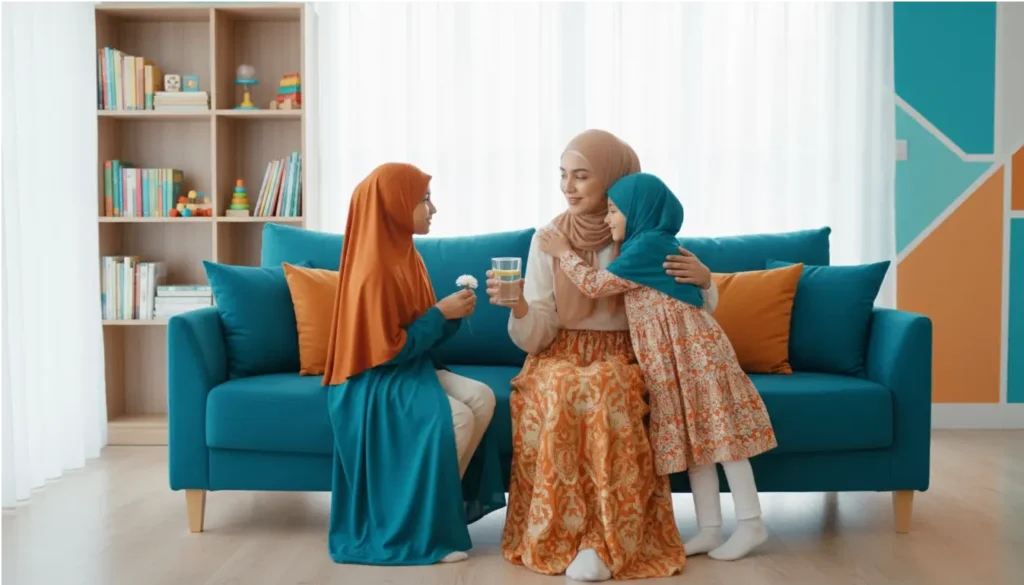
Most children naturally love their parents, yet teaching them to express that love through respectful behavior is a different challenge entirely. When Islamic values shape how children treat their parents, those habits become lifelong character traits.
Respecting parents in Islam for kids goes far beyond saying “yes” and “no” politely. This guide gives parents concrete, age-appropriate strategies, Quranic examples, and daily activities that make birr al-walidayn a lived value, not just a memorized rule.
Table of Contents:
Why Respecting Parents Matters So Much for Kids to Understand Early?
Islam places honoring parents directly after worshipping Allah. Children who understand this connection early develop genuine motivation, not just rule-following behavior driven by fear of consequences.
The Quran makes this beautifully clear:
وَقَضَىٰ رَبُّكَ أَلَّا تَعْبُدُوٓا۟ إِلَّآ إِيَّاهُ وَبِٱلْوَٰلِدَيْنِ إِحْسَٰنًا
Wa qadaa rabbuka allaa ta’budoo illaa iyyaahu wa bil-waalidayni ihsaanaa
“And your Lord has decreed that you not worship except Him, and to parents, good treatment.” (Surah Al-Isra, 17:23)
Show children how Allah mentions parents immediately after Himself — this ranking makes a powerful impression on young minds and helps them understand the seriousness of the value
When children grasp the Islamic reason behind respecting parents, obedience shifts from external compliance to internal values. That shift is what parents are really working toward.
Buruj Academy’s Islamic Studies Classes for Kids introduce concepts like birr al-walidayn through stories and age-appropriate discussions that help children genuinely connect with these values rather than simply memorize rules.
The first session is free in Buruj’s Islamic Studies Classes for Kids
How to Teach Kids the Islamic Meaning of Respecting Parents Through Stories?
Stories are the most powerful teaching tool for children, and Islamic tradition is full of them. Prophet Isa (AS) is described in the Quran as kind to his mother, giving young children a relatable example of a prophet who honored his parent.
For children aged 4-10, the story approach works best. Tell the story of Uwais Al-Qarni, a man so devoted to his mother that he couldn’t leave her to meet the Prophet ﷺ, yet the Prophet ﷺ praised him enormously. Children remember stories long after they forget rules.
Ask your child after the story: “What did Uwais do that made Allah happy?” This simple question builds reflection skills and connects the story to the value of respecting parents in Islam for kids in a way that sticks.
Discover the Buruj Academy Difference
Step into our virtual classrooms and see how our expert instructors make learning Quran and Arabic intuitive and clear. We focus on overcoming the specific hurdles non-native speakers face, building your confidence and connection with the Quran.
Age-Appropriate Ways Kids Can Practice Respecting Parents Daily
Teaching respect isn’t one conversation. It’s dozens of small daily moments. Here is a practical breakdown by age group to help parents know exactly what to expect and encourage:
| Age Group | Realistic Expectation | Daily Practice Ideas |
| Ages 4-6 | Simple polite responses | Say “please,” “thank you,” don’t interrupt |
| Ages 7-9 | Helping without being asked | Clear the table, bring parents water |
| Ages 10-12 | Responding calmly, not arguing | Lower voice, complete tasks without reminders |
| Ages 13-15 | Proactive kindness | Ask “Do you need anything, Mama/Baba?” |
The table above shows that expectations must grow with the child. Praising a seven-year-old for helping without being asked is just as important as correcting a teenager who speaks dismissively.
1. Teaching Respecting Parents to Young Children Ages 4 to 7
At this age, children respond to warmth and imitation. Role-play “being kind to Mama” using dolls or stuffed animals. Demonstrate how a kind child speaks, then let your child practice. Keep sessions to five minutes.
Reward charts work beautifully here. Create a simple chart with five boxes. Each time your child responds respectfully or helps without being asked, they earn a sticker. At five stickers, celebrate with a small treat or extra story time.
2. Helping Children Ages 8 to 12 Connect Respecting Parents to Their Faith
At this stage, children can understand “why.” Explain that the Prophet ﷺ said paradise lies at the feet of the mother. Ask your child: “What do you think that means?” Let them reflect and answer before offering guidance.
Give children this age real responsibilities: making tea, tidying the living room, or helping younger siblings. Frame each task as an act of worship. Say: “When you help without complaining, Allah is pleased with you.” That reframing matters enormously.
3. Guiding Teenagers to Practice Respecting Parents with Sincerity
Teenagers need dialogue, not just instruction. Discuss the verse from Surah Al-Isra together and ask: “Why do you think Allah placed parents so close to worship?” Teens who feel heard are far more receptive to Islamic guidance.
Encourage teenagers to perform one intentional act of kindness toward a parent daily. It could be making breakfast on weekends, asking about their parent’s day, or completing chores before being reminded. Specificity helps teens follow through.
Read Also: Cleanliness in Islam for Kids
Common Mistakes Parents Make When Teaching Kids to Respect Parents
Many parents focus on correcting disrespect rather than building respectful habits proactively. Both matter, but the proactive approach creates stronger long-term character. Here are the most common teaching mistakes and how to avoid them:
| Common Mistake | Why It Backfires | Better Approach |
| Correcting only in anger | Children associate respect with conflict | Address behavior calmly, not reactively |
| Expecting adult responses from young kids | Creates frustration for both parent and child | Match expectations to developmental stage |
| Forgetting to model respect | Kids imitate what they see at home | Show respect toward your own parents visibly |
| Lecturing without stories | Children tune out moral speeches quickly | Use stories, examples, and gentle questions |
| Praising rarely | Children repeat behaviors that earn recognition | Celebrate respectful moments genuinely |
Modeling is perhaps the most overlooked factor. When children see you speaking gently to your own parents, phoning them regularly, or speaking about them with love, they absorb that behavior far more deeply than any lesson you deliver.
Read Also: Top 12 Manners in Islam for Kids
Quranic Verse and Dua Kids Can Learn About Respecting Parents in Islam
Memorizing short duas related to parents gives children a spiritual practice that reinforces the value daily. Here is the beautiful dua from Surah Al-Isra:
وَاخْفِضْ لَهُمَا جَنَاحَ الذُّلِّ مِنَ الرَّحْمَةِ وَقُل رَّبِّ ارْحَمْهُمَا كَمَا رَبَّيَانِي صَغِيرًا
“And lower to them the wing of humility out of mercy and say, “My Lord, have mercy upon them as they brought me up [when I was] small.”” (Surah Al-Isra, 17:24)
This dua is short, deeply meaningful, and works for all ages. Children as young as five can memorize it. Teach them to say it after every prayer — it builds both dua habit and parent-appreciation simultaneously.
Write this dua on a card and place it on the fridge or beside the prayer mat. When children see it daily, memorization happens naturally without drilling. By age eight, most children can recite it confidently.
Through Buruj Academy’s Islamic Studies Classes for Kids, children learn duas like this one in context, understanding what the words mean and why they say them, making memorization meaningful rather than mechanical.
Read Also: Best Good Deeds for Muslim Kids
Deepen Your Islamic Knowledge
Study Aqeedah, Fiqh, Seerah, and essential Islamic teachings with experienced instructors in a structured online program.
Try Islamic StudiesThe first session is free in Buruj’s Islamic Studies Classes for Kids

Read Also: Islamic Homeschool Curriculum
Help Your Child Build Strong Islamic Character with Buruj Academy’s Expert Instructors
Practical home guidance plants the seed, but structured learning with trained educators helps Islamic values like respecting parents grow into lasting character.
Buruj Academy’s Islamic Studies Classes for Kids offer:
- Instructors trained in both Islamic education and child pedagogy
- Age-appropriate curriculum for children aged 4-15
- Engaging stories, discussions, and activities, not dry lectures
- Short 20-30 minute sessions matching children’s attention spans
- Al-Azhar graduates with 12+ years teaching non-Arabic speaking children
- Flexible scheduling to fit family routines
Book your child’s free trial lesson today and let our expert team bring Islamic values to life.
Find your child’s perfect match among Buruj’s top courses for kids:
- Arabic Classes for Kids
- Alphabet course
- Noorani Qaida Course for Kids
- Quranic Arabic Course
- Islamic Studies for Kids
- Hifz Classes for Kids
- Quran Classes for Kids
- Tajweed for Kids
Get a free trial for your child today.

Conclusion
Respecting parents in Islam is not simply a rule children follow. Respecting parents in Islam is a value rooted in Quranic command, prophetic example, and daily practice that shapes a child’s entire character when taught with consistency and warmth.
Age-appropriate expectations matter enormously. A four-year-old practicing politeness and a fourteen-year-old offering proactive help are both expressing the same Islamic value at the right developmental level for their stage.
Stories, duas, kindness activities, and genuine modeling at home work together powerfully. When parents build these habits daily, Insha’Allah, children grow into adults who honor their parents naturally, because it became who they are.
Related Articles
Islamic





Leave a Reply