 Islamic
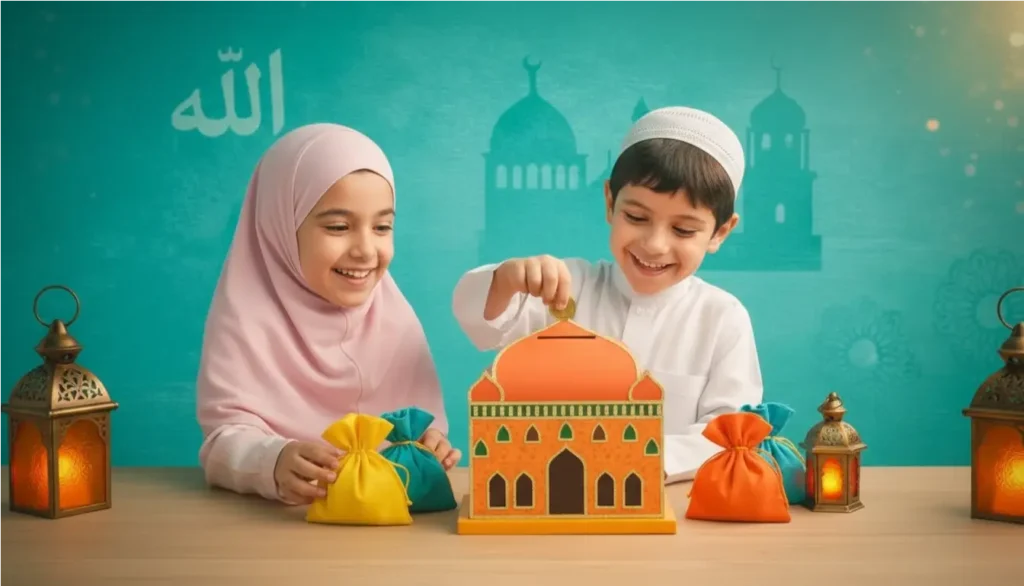
Children naturally want to please the people they love. When parents connect that desire to pleasing Allah, something wonderful happens—good deeds stop feeling like rules and start feeling like love in action.
Teaching good deeds for kids goes beyond listing behaviors. This guide gives parents 15 practical, age-appropriate Islamic acts children genuinely enjoy, with simple ways to introduce each one at home starting today.
Table of Contents:
1. Saying Bismillah before every activity is one of the easiest good deeds for kids
Children are creatures of habit, and Bismillah is the perfect entry point into conscious good deeds. When kids say
بِسْمِ اللَّهِ (Bismillah)
before eating, drawing, or reading, they learn that every action can be an act of worship.
Start by modeling it yourself every single time. Children aged 4-7 respond well to the “freeze and remind” technique—pause before meals and wait expectantly until your child remembers. Within two weeks, most young children say it automatically.
For ages 8-12, explain the meaning: “We’re asking Allah to bless what we’re doing.” That understanding deepens the habit from routine into intention, which is where real reward lives, Insha’Allah.
2. Spreading peace through a friendly greeting builds strong community bonds
The Prophet ﷺ said spreading salaam is among the best things a Muslim can do.
For children, this translates into a simple, powerful daily practice they can own completely—greeting family members, neighbors, and classmates with As-salamu alaykum.
Role-play at home works beautifully for ages 4-8. Practice “salaam knocking”—your child knocks on a door, you answer, and they greet you with full salaam. Make it silly and fun with exaggerated responses, and children will ask to play it repeatedly.
Older children (9-15) can understand that spreading salaam builds community and earns hasanat. Encourage them to be the first to greet, which carries extra reward according to Islamic tradition.
3. Helping around the house turns daily chores into meaningful worship
Many parents separate “chores” from “Islamic values,” but they belong together. When children understand that helping their parents is an act of worship—not just a household obligation—their attitude shifts noticeably.
Use this framing with your child: “When you help Mama, you’re also doing something Allah loves.” For ages 4-7, assign one tiny task daily—carrying their plate to the sink, folding one item of laundry, or tidying their shoes.
Ages 8-12 can take on more meaningful responsibilities. Pairing the task with a short dua before starting, like Bismillah, reinforces the Islamic connection. Buruj Academy’s Islamic Studies Classes for Kids teach children exactly how everyday actions become worship through proper intention.
The first session is free in Buruj’s Islamic Studies Classes for Kids
4. Praying for parents builds a lasting bond of mercy
Teach this dua as “the dua that makes Allah happy AND makes your parents cry happy tears”—children respond to that emotional connection immediately.
رَّبِّ ارْحَمْهُمَا كَمَا رَبَّيَانِى صَغِيرًا
Rabbi irhamhuma kama rabbayani saghira
“My Lord, have mercy on them as they raised me when I was young.” (Surah Al-Isra: 24)
For ages 4-7, simplify it: “Say a dua asking Allah to keep Mama and Baba safe.” As children grow, introduce the full Arabic gradually. By ages 10-12, many children can memorize it completely with consistent practice.
Discover the Buruj Academy Difference
Step into our virtual classrooms and see how our expert instructors make learning Quran and Arabic intuitive and clear. We focus on overcoming the specific hurdles non-native speakers face, building your confidence and connection with the Quran.
5. Practicing generosity with siblings teaches children the joy of giving
Generosity is one of the most character-shaping good deeds kids can practice, and siblings provide daily opportunities. The challenge is that sharing doesn’t come naturally—it’s a learned virtue that needs consistent, positive reinforcement.
Instead of forcing sharing, try the “gift intention” approach. Before your child offers a sibling something, say: “When you share, it’s like giving a gift to Allah first.” This reframes generosity from loss to reward, which is theologically accurate and psychologically effective.
6. Connecting with the Quran daily brings immense reward and peace
Every letter of Quran a child recites earns ten hasanat. When children understand this, Quran time shifts from obligation to opportunity. Even five minutes of daily recitation builds a meaningful habit with enormous spiritual weight.
The key is consistency over quantity. A child who reads three ayat daily for a year outperforms a child who reads one full page occasionally. For ages 4-7, listening to beautiful recitation while doing calm activities counts beautifully as engagement.
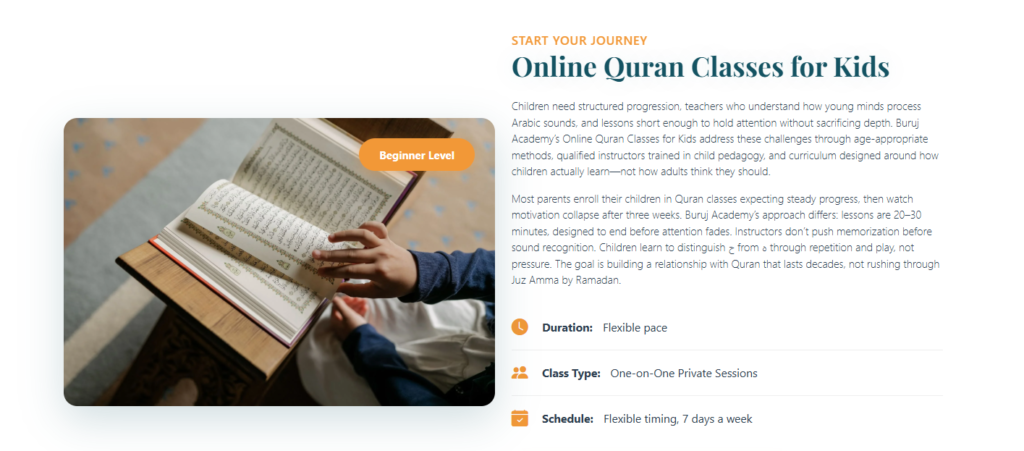
Through Buruj Academy’s Online Quran Classes for Kids, children build this daily habit with guidance from Al-Azhar graduates experienced in keeping young learners engaged, ensuring recitation is accurate and enthusiastic rather than reluctant and rushed.
Help your child start reading the Quran with a Free trial
7. Expressing gratitude for every blessing creates a thankful heart
Gratitude is both an Islamic obligation and a proven happiness practice. Teaching children to say Alhamdulillah after meals, nice moments, or answered duas connects them to Allah in moments of joy—not just difficulty.
Create a “gratitude moment” at bedtime. Ask your child: “What’s one thing you’re saying Alhamdulillah for today?”
Ages 4-8 enjoy this as a cozy ritual. Write their answers in a small notebook over time—children love reading old entries and seeing how much goodness fills their lives.
8. Connecting with grandparents preserves the beauty of family ties
Silat al-rahim (maintaining family ties) is emphasized throughout the Quran and Sunnah. For children, grandparents are the most accessible and meaningful way to practice this virtue—and grandparents, in return, love nothing more than a grandchild’s call.
For young children (ages 4-8), help them prepare one thing to share before calling: a drawing, a story from their week, or a question they want to ask. This gives them confidence and makes the interaction meaningful rather than awkward.
Older children (9-15) can call independently with gentle reminders. Frame it clearly: “Calling Jiddo is a sadaqah that comes back to you.” When good deeds have a clear return, teenagers respond with more genuine motivation than when it’s presented purely as obligation.
9. Caring for the environment reflects the Islamic value of cleanliness
The Prophet ﷺ said cleanliness is half of faith.
Taking this outdoors—to parks, masjid courtyards, or school playgrounds—gives children a tangible, visible way to contribute good to the world around them.
Turn it into a weekly family activity for ages 5-12. Bring small gloves and a bag to a local park, set a 10-minute timer, and see how much you can collect together. Children love the game element and the visible result of their effort.
Frame the spiritual connection simply: “We’re looking after what Allah created.” This teaches environmental responsibility as an Islamic value, not a secular one—an important distinction that helps children see Islam as a complete, practical way of life.
10. Showing kindness to animals teaches children compassion for all creation
Islamic tradition includes famous stories of people entering Jannah for giving water to a thirsty animal. Children find these stories captivating and remember them for years—they naturally translate into compassionate behavior toward animals.
For children with pets, frame daily feeding as an act of worship: “When you feed your rabbit, you’re doing something Allah rewards.” For families without pets, feeding birds in a garden or leaving water outside during summer achieves the same lesson.
Ages 8-12 particularly connect with the hadith about the woman who entered Jannah for giving water to a dog.
Ask them: “What do you think Allah feels when you’re kind to animals?” Their answers often surprise and delight parents with their depth of understanding.
Read Also: Islamic Homeschool Curriculum
11. Sharing a simple smile spreads happiness and counts as charity
The Prophet ﷺ described smiling at your brother as sadaqah.
For children, this is exciting news—they can give charity with their face. This framing makes smiling feel like a superpower, which children aged 5-12 respond to enthusiastically.
Practice “smile challenges” during family outings: count how many people smiled back when your child smiled first. This turns the good deed into a social experiment children beg to repeat. The lesson about spreading positivity lands naturally through the experience.
Read Also: Cleanliness in Islam for Kids
12. Donating small amounts of money develops a lifetime of generosity
Financial generosity is a lifelong Islamic habit that must start in childhood. Children who give regularly—even tiny amounts—develop a relationship with sadaqah that remains with them through adulthood, Insha’Allah.
Set up a simple three-jar system for ages 6-12: one jar for spending, one for saving, one for sadaqah. When the sadaqah jar fills, let your child choose where it goes—a local masjid, an orphan sponsorship, or a community food bank. Ownership of the decision matters enormously.
For teenagers (13-15), connect sadaqah to the concept of ongoing reward: “When you give, the reward keeps coming even after you’re gone.” This motivates older children who are beginning to think about legacy, meaning, and their relationship with Allah beyond childhood routines.
Read Also: Respecting Parents in Islam for Kids
Deepen Your Islamic Knowledge
Study Aqeedah, Fiqh, Seerah, and essential Islamic teachings with experienced instructors in a structured online program.
Try Islamic StudiesRead Also: Top 12 Manners in Islam for Kids
Help Your Child Build Real Islamic Character Through Buruj Academy’s Islamic Studies Classes for Kids
Good deeds grow deeper when children understand why they matter—not just what they are. Structured learning makes that difference.
- Instructors trained in child pedagogy AND authentic Islamic knowledge
- Age-appropriate curriculum for children aged 4-15
- Lessons through stories, games, and activities—never dry lectures
- Short 20-30 minute sessions matching children’s attention spans
- Al-Azhar graduates with 12+ years teaching non-Arabic speaking children
- Flexible scheduling built around family routines
- Patient, encouraging approach that builds confidence
Book your child’s free trial lesson with Buruj Academy today and give them Islamic education that truly sticks.
Find your child’s perfect match among Buruj’s top courses for kids:
- Arabic Classes for Kids
- Alphabet course
- Noorani Qaida Course for Kids
- Quranic Arabic Course
- Islamic Studies for Kids
- Hifz Classes for Kids
- Quran Classes for Kids
- Tajweed for Kids
Get a free trial for your child today.

Conclusion
Good deeds for kids work best when they feel natural, joyful, and connected to Allah’s love—not like a checklist of requirements. Starting with two or three of these acts and building gradually creates lasting habits.
Consistency matters far more than perfection. A child who smiles, says Bismillah, and makes dua for their parents daily is building a rich Islamic character, even if other deeds develop more slowly over time.
Every age brings new capacity for understanding and practice. Parents who meet children where they are—with patience, creative framing, and positive reinforcement—raise children who genuinely love doing good, Insha’Allah.
Related Articles
Islamic





Leave a Reply