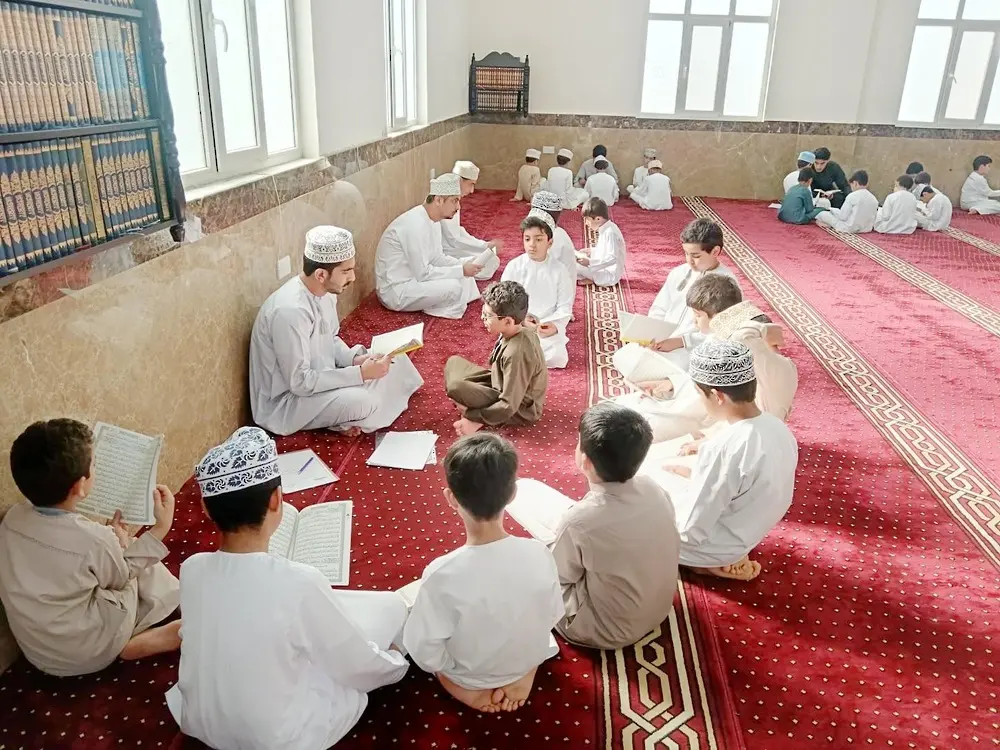
 Quran
Quran
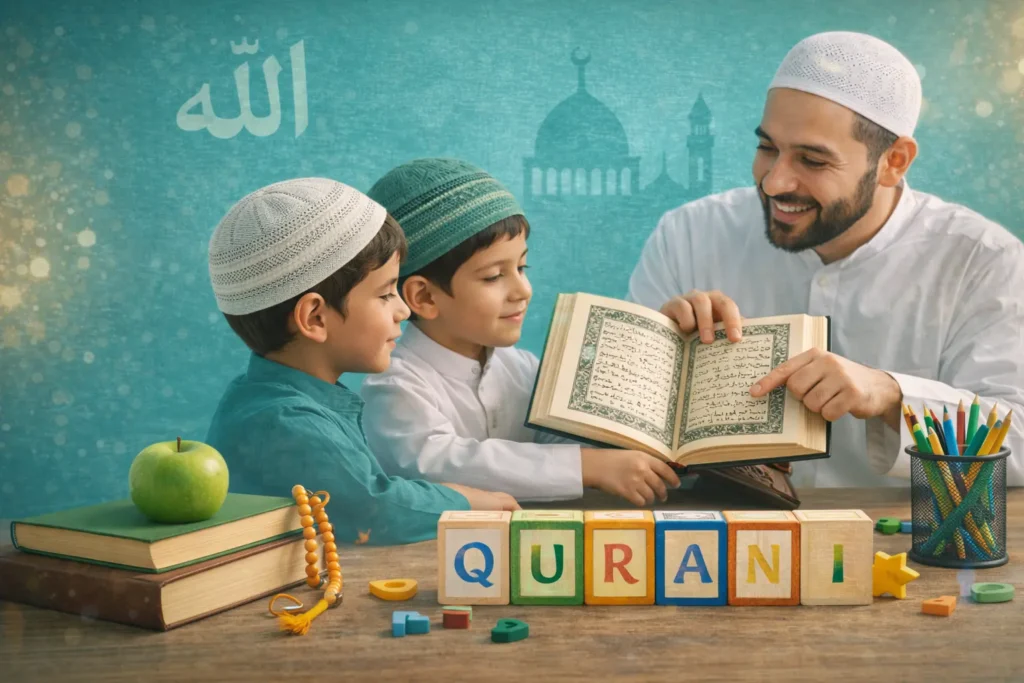
Most parents want their children to grow up connected to the Quran, yet many feel unsure where to start or what their child should realistically learn at each age. The good news is that children are naturally receptive to Quranic learning when it is presented in the right way.
Understanding key information about the Quran for kids helps parents set realistic goals, choose the right approach, and support learning at home. This guide covers what the Quran is, how it was revealed, its structure, and how children can begin their Quran journey with confidence.
Table of Contents:
1. The Quran Is the Word of Allah Sent To Guide All Humans Throughout History
The Quran is the holy book of Islam, revealed by Allah to Prophet Muhammad ﷺ through the Angel Jibreel over approximately 23 years. For children, this simple explanation is enough to build a sense of reverence and love.
When we explain to a child that the Quran is “Allah’s message to us,” that framing creates an emotional connection. Children who understand why the Quran matters are far more motivated to learn it than those who memorize without context.
Parents can introduce this concept as early as age 4 using simple stories. “Allah loves us so much that He sent us a book to guide us” is a sentence a toddler can understand and carry for life.
Buruj Academy’s Online Quran Classes for Kids begin every learning journey by helping children understand the significance of what they are learning — because motivated children learn faster and retain more.
Help your child start reading the Quran with a Free trial
2. The Quran Consists of 114 Surahs
The Quran contains 114 Surahs (chapters) of varying lengths, divided into 30 Juz (sections). Children typically begin with the shorter Surahs from Juz 30, which are also the most commonly recited in daily prayer.
Here is a simple overview of the Quran’s structure that parents can share with their children:
| Component | Arabic Term | What It Means for Kids |
| Chapter | Surah | A named section of the Quran |
| Verse | Ayah | A single sentence or line |
| Section | Juz | One of 30 equal parts |
| Opening Chapter | Al-Fatiha | The first and most important Surah |
The shortest Surahs — Al-Ikhlas, Al-Falaq, An-Nas, Al-Kawthar — are ideal starting points because children can memorize them quickly, building momentum and confidence early.
Understanding this structure helps parents track their child’s progress realistically and celebrate milestones, which is essential for keeping young learners engaged.
3. Prophet Muhammad Received The First Revelation In A Quiet Cave During The Month Of Ramadan
Sharing the story of the first revelation is a wonderful way to provide information about Quran for kids. We often tell the story of the Cave of Hira to spark their vivid young imaginations.
The Angel Jibreel visited the Prophet Muhammad during a quiet night in the blessed month of Ramadan. We explain that this is why we celebrate the Quran so much during our special fasting month every year.
Teaching this history helps children understand that the Quran did not appear all at once. It was revealed piece by piece over twenty-three years, showing Allah’s great patience and wisdom in teaching the early Muslims.
Parents can use this historical context to explain why we recite the Quran in its original Arabic language. It preserves the exact words that the Prophet Muhammad heard from the angel in that mountain cave.
Discover the Buruj Academy Difference
Step into our virtual classrooms and see how our expert instructors make learning Quran and Arabic intuitive and clear. We focus on overcoming the specific hurdles non-native speakers face, building your confidence and connection with the Quran.
4. The Quran Was Revealed in Arabic
The Quran was revealed in Arabic, and this original language has been perfectly preserved for over 1,400 years. Every Muslim child, regardless of their native language, learns to recite the Quran in Arabic.
For non-Arabic speaking families, this can feel challenging. However, children’s brains are remarkably well-suited to absorbing new sounds and patterns, especially before age 10.
Ages 4–7: Sound Recognition First
Young children at this stage should focus on hearing and repeating Arabic sounds correctly. Reading is not the priority yet — listening and imitating builds the phonetic foundation naturally.
Ages 8–12: Reading and Meaning Together
Children in this range can begin connecting Arabic letters, reading simple words, and understanding basic translations of short Surahs, making the Quran feel meaningful rather than mechanical.
Ages 13–15: Deeper Engagement
Older children can explore why specific words were chosen, basic Tafsir (interpretation), and how Quranic guidance applies to their daily lives, deepening their personal relationship with the text.
5. The Quran Is A Miracle Because Its Original Arabic Text Remains Unchanged Today
We teach children that one of the greatest miracles of the Quran is its perfect preservation since the beginning. No other book in history has been kept exactly the same for so many hundreds of years.
Sharing this information about Quran for kids builds their confidence in the authenticity of their faith and scripture. They can trust that the words they read today are the same words revealed to the Prophet.
You can explain that millions of people around the world have memorized the entire book from start to finish. This global network of “Huffaz” ensures that not a single letter can ever be changed or lost.
6. The Quran Was Revealed Over 23 Years
We think it is important for children to know that the Quran did not come down all at once. It was revealed bit by bit over twenty-three years to help the early Muslims learn slowly.
Teaching this information about Quran for kids encourages patience in their own learning process today. If the companions of the Prophet took years to learn, our children can take their time too.
You can explain that Allah sent verses whenever the people needed guidance, comfort, or a reminder of the truth. This makes the Quran feel responsive to the real-life problems that people face every single day.
7. One of the Most Important Pieces of Information About Quran for Kids Is Its Perfect Preservation
Unlike any other book in history, the Quran has remained completely unchanged since its revelation. This is a powerful fact that resonates even with young children when explained correctly.
A simple way to explain this to a child: “Millions of people around the world have memorized the entire Quran by heart. If even one word changed, all of them would notice immediately.” This idea genuinely fascinates children aged 8 and above.
This fact also motivates children to memorize. When a child understands they are joining a 1,400-year-old chain of Quran preservers, memorization becomes an act of pride and purpose rather than a homework task.
8. The Quran Covers Guidance for Every Part of Life
The Quran is not only a book of worship — it contains guidance on how to treat people, how to handle difficulties, and how to live with good character. Children who understand this see the Quran as relevant to their lives.
Parents can point to everyday moments: “Remember when you were patient today? Allah mentions patience many times in the Quran because He loves it.” Connecting Quranic values to real situations makes the book feel alive for children.
Buruj Academy’s Islamic Studies Classes for Kids teach children these connections explicitly, helping them see how Quranic values — honesty, kindness, gratitude — show up in their daily choices, making Islamic learning genuinely meaningful.
The first session is free in our Islamic Studies for Kids
9. Learning to Recite the Quran Correctly Requires Tajweed
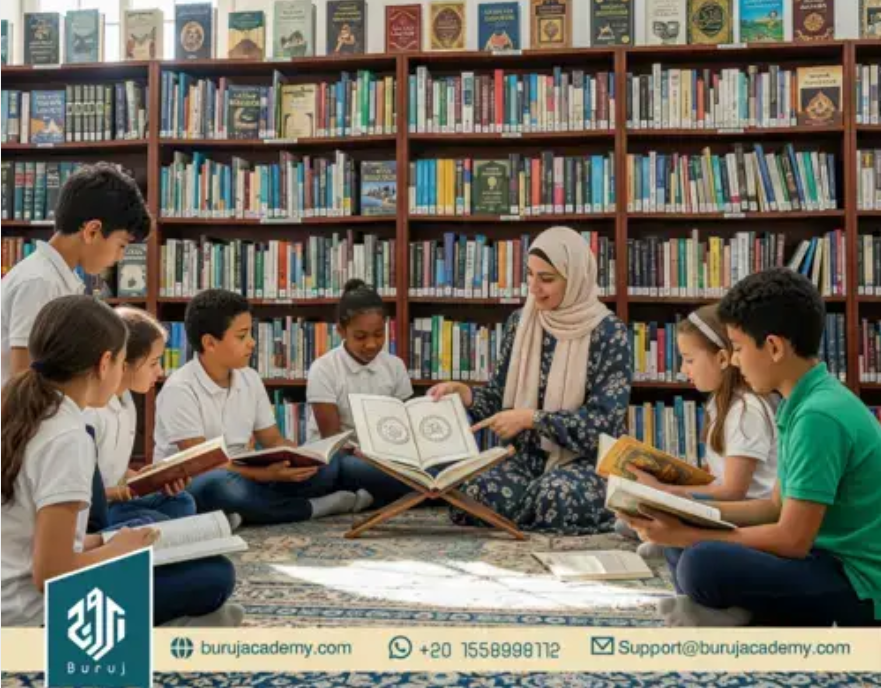
Tajweed refers to the rules of proper Quranic recitation — how to pronounce letters, where to pause, and how long to hold certain sounds. Every child who recites the Quran is encouraged to learn Tajweed.
The most important basic Tajweed rules children should learn first include:
| Tajweed Rule | Simple Explanation | Why It Matters |
| Makharij (articulation) | Each letter has a specific mouth position | Prevents changing letter meanings |
| Madd (elongation) | Some vowels are held longer | Part of proper Quran rhythm |
| Ghunnah (nasalization) | Nasal sound on ن and م | Commonly heard in every Surah |
| Waqf (pausing) | Where to pause while reciting | Preserves meaning of verses |
Children aged 6 and above can begin learning basic Tajweed rules through songs and repetition games. The key is making rules feel like fun patterns rather than technical grammar.
Through Buruj Academy’s Tajweed for Kids course, children learn proper Quranic pronunciation through games, songs, and interactive activities that make articulation rules memorable rather than boring, taught by patient instructors trained in working with young learners.
Book your child’s free Tajweed trial today
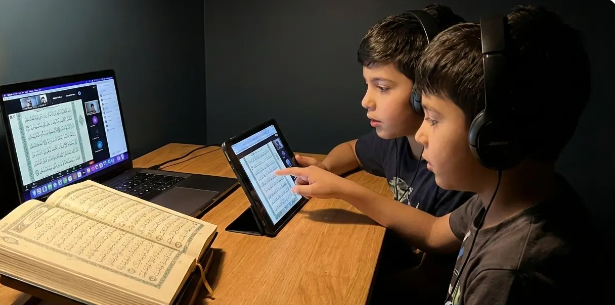
10. Every Child Reciting the Quran Earns Rewards
One of the most motivating pieces of information about the Quran for kids is that reciting it carries tremendous reward.
The Prophet ﷺ said that a person who recites a single letter earns ten good deeds.
Children respond immediately to this concept. “Every letter you recite earns you ten good deeds with Allah” is the kind of fact that makes a child want to recite more, not less. It also reframes struggle as opportunity.
Parents can use a simple reward chart at home: every time a child completes their daily recitation, they add a star. At the end of the week, connect the stars to the idea of invisible rewards being collected with Allah. It works beautifully for ages 5–10.
Read Also: When Should Children Begin Learning the Quran?
11. Al-Fatiha Contains Essential Information About the Quran’s Message
Surah Al-Fatiha is the opening chapter of the Quran, recited in every unit of every prayer. It is the first complete Surah children memorize, and it contains the entire message of the Quran in miniature.
ٱلْحَمْدُ لِلَّهِ رَبِّ ٱلْعَٰلَمِينَ
Alhamdu lillahi rabbil ‘aalameen
“All praise belongs to Allah, Lord of all worlds.”
This first verse teaches children gratitude — start every memorization session by asking your child what they are thankful for today.
Al-Fatiha takes most children aged 5–7 about two to three weeks to memorize with daily 10-minute practice sessions. Its rhythmic structure makes it naturally easy for young minds to absorb.
Read Also: Tajweed Rules for Kids
Give Your Child the Gift of Quran Education
Safe, engaging, and professional online classes designed to help children excel in Quran, Arabic, and Islamic studies.
Start Free TrialRead Also: Quran Steps for Kids
12. Children Who Memorize Quran Surahs Strengthen Their Salah and Feel More Confident in Prayer
When children memorize Surahs, their prayer experience changes completely. Instead of repeating sounds they do not recognize, they are reciting words they know and understand — which builds both confidence and focus in Salah.
Many parents report that once their child memorized a few short Surahs, they began asking to join the family prayer rather than needing to be reminded. That internal motivation is the natural result of knowledge and familiarity.
Buruj Academy’s Juz 30 Memorization course focuses on the Surahs most commonly used in Salah, giving children the Quranic foundation they need to pray with confidence and genuine connection from a young age.
Book Your Kid’s First Session in Juz 30 Memorization Course

Build Your Child’s Quran Foundation with Buruj Academy’s Azhari Tutors
Home support and structured expert teaching work best together. Buruj Academy’s Online Quran Classes for Kids give children the consistent, qualified guidance that turns daily practice into lasting skill.
- Instructors are Al-Azhar graduates with 12+ years teaching children from non-Arabic speaking families
- Age-appropriate curriculum designed specifically for kids aged 4–15
- Gamification, storytelling, and interactive activities — never dry recitation drills
- Short 20–30 minute sessions that match children’s natural attention spans
- Patient, encouraging approach that builds genuine confidence
- Flexible scheduling that fits your family’s routine
Book your child’s free trial lesson today and see the difference child-focused Quran instruction makes.
Find your child’s perfect match among Buruj’s top courses for kids:
- Arabic Classes for Kids
- Alphabet course
- Noorani Qaida Course for Kids
- Quranic Arabic Course
- Islamic Studies for Kids
- Hifz Classes for Kids
- Quran Classes for Kids
- Tajweed for Kids
Get a free trial for your child today.
Conclusion
The Quran’s structure, history, and reward system give children a meaningful context for learning — children who understand what they are reciting and why are far more consistent and enthusiastic than those who memorize without connection.
Applying age-appropriate methods matters deeply. Short daily sessions, reward systems, and connecting Quranic values to real-life moments turn Quran learning from an obligation into something children genuinely look forward to each day.
Every child’s pace is different, and that is completely normal. With patience, consistent daily practice, and the right guidance, every child — at every age — can build a beautiful, lasting relationship with the Quran, insha’Allah.


Leave a Reply