 Quran
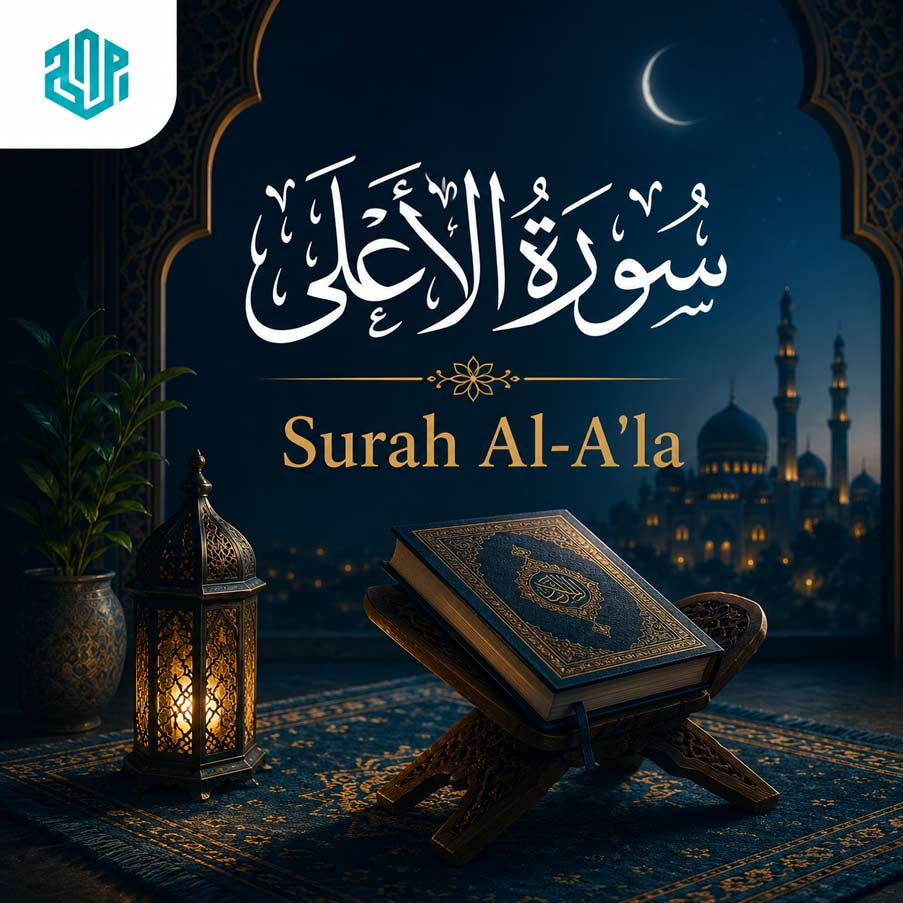
Many students at Buruj Academy ask us why Surah Al-A’la feels different to recite. Its rhythm is short, but its weight in the Prophet’s ﷺ own worship was anything but small.
Surah Al-A’la’s authentic benefits rest on the Prophet’s ﷺ verified practice of reciting it in Witr, Friday, and Eid prayers. Beyond this Sunnah pattern, its verses carry a spiritual message of purification and divine order that Islamic scholarship has studied for centuries.
Table of Contents:
1. The Prophet ﷺ Recited Surah Al-A’la in the Witr Prayer Every Night
Surah Al-A’la’s clearest authentic benefit is its place in the Prophet’s ﷺ nightly Witr prayer, recited in the first of three rak’ahs. This practice is recorded with a sahih chain in Sunan Abi Dawud, making it one of the most reliably documented virtues tied to this Surah.
The hadith states that “The Messenger of Allah (ﷺ) used to observe witr with (reciting) ‘Glorify the name of thy Lord, the most High’ (Surah 87), ‘Say O disbelievers’ (Surah 109), and ‘Say, He is Allah, the One, Allah, the eternally besought of all’ (112)” (Sunan Abi Dawud 1423).
In our sessions at Buruj Academy, we notice that students who adopt this exact three-Surah Witr pattern report it becomes the easiest part of their night prayer to memorize.
Sabbihisma Rabbika-l-A’la is recited alone in the first rak’ah, Al-Kafirun in the second, and Al-Ikhlas in the third — never mixed or shortened.
سَبِّحِ ٱسْمَ رَبِّكَ ٱلْأَعْلَى
Sabbihisma Rabbika-l-a’la
“Exalt the name of your Lord, the Most High.” (Al-A’la 87:1)
This opening verse is the command that gives the Surah its name and its recurring theme of glorification.
Building a consistent Witr habit takes structure. Our online Tajweed classes help students recite these three surahs with correct makharij from the very first night.
Book Your FREE Trial Lesson to Begin Your Tajweed Journey

2. The Prophet ﷺ Chose Surah Al-A’la for Friday and Both Eid Prayers
Surah Al-A’la appears in three of the most attended congregational prayers in Islam: Jumu’ah, Eid al-Fitr, and Eid al-Adha. This pairing with Surah Al-Ghashiyah is documented with an authentic chain in Sahih Muslim, confirming it as one of three approved Sunnah recitation combinations for Friday prayer.
We remind our students that this is not a minor or occasional habit; it is the Prophet’s ﷺ documented practice across the year’s largest congregational gatherings.
Scholars note that this pairing is one of three transmitted combinations for Friday prayer, alongside Surah Jumu’ah with Al-Munafiqun, and Surah Jumu’ah with Al-Ghashiyah.
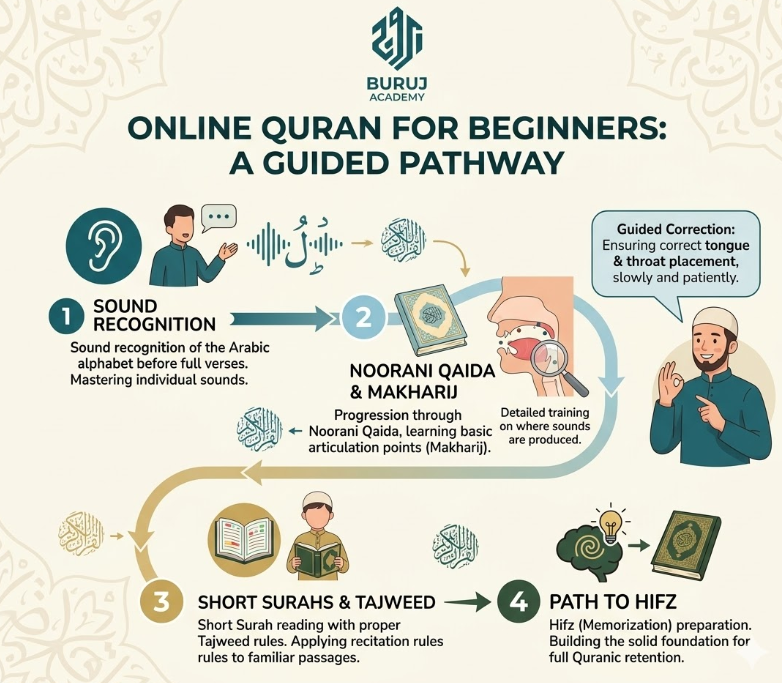
Students preparing for Eid or Jumu’ah recitation often start with our Online Quran Classes for Beginners to build fluency before leading or following along in congregation.
Begin Learning Quran With a FREE Trial Lesson
3. The Companions Testified to the Prophet’s ﷺ Personal Love for This Surah
Beyond its prayer usage, Surah Al-A’la carried a documented emotional weight for the Prophet ﷺ himself, reported directly by his companions. This adds a layer of authentic virtue distinct from its liturgical placement.
It is narrated that this Surah is among the Musabbihaat, and of all of them, it was the most beloved to the Prophet ﷺ, evident in the Sunnah itself through his consistent recitation of it in every Jumu’ah prayer and both Eid prayers.
Companions such as Ibn ‘Abbas also transmitted the Prophet’s ﷺ personal tasbeeh response upon reciting its first verse.
When the Prophet ﷺ recited the words “Sabbih isma Rabbika al-A’la,” he would say “Subhaana Rabbiy al-A’la,” meaning “Glory be to my Lord Most High”.
This small habit — glorifying Allah immediately after commanding others to do so — is a teaching moment we return to often with adult learners. It shows that Tajweed is never mechanical recitation alone; it is a living act of worship the Prophet ﷺ himself modeled verse by verse.
Read also:Surah Al Kahf Benefits: 8 Authentic Virtues Every Muslim Should Know
4. Surah Al-A’la Ties True Success Directly to Self-Purification
Surah Al-A’la’s fourteenth verse states a foundational principle of Islamic spirituality in a single line: success belongs to the one who purifies their soul. This is not a peripheral theme but the Surah’s central message, repeated in different forms throughout its nineteen verses.
The Arabic text and its accepted English rendering read as follows:
قَدْ أَفْلَحَ مَن تَزَكَّىٰ
Qad aflaha man tazakka
“He has certainly succeeded who purifies himself.” (Al-A’la 87:14)
Tazakka carries the meaning of both cleansing and growth — purification is framed as an active, ongoing process, not a single event.
The following verse immediately connects this inner purification to outward worship. In our teaching, we find students grasp this pairing quickly once it is broken down verse by verse:
وَذَكَرَ ٱسْمَ رَبِّهِۦ فَصَلَّىٰ
Wa dhakara-sma Rabbihi fasalla
“And mentions the name of his Lord and prays.” (Al-A’la 87:15)
This verse links dhikr, remembrance of Allah, directly to Salah — showing that formal prayer without heartfelt remembrance falls short of the Surah’s standard.
At Buruj Academy, our Islamic Studies instructors consistently highlight how these two verses form a compact spiritual roadmap. Purify the soul, remember Allah by name, and translate that remembrance into prayer.
Read also:Benefits of Surah Al-Hadid: 7 Authentic Virtues Every Muslim Should Know
Discover the Buruj Academy Difference
Step into our virtual classrooms and see how our expert instructors make learning Quran and Arabic intuitive and clear. We focus on overcoming the specific hurdles non-native speakers face, building your confidence and connection with the Quran.
Excel in Your Quranic Studies
Join Buruj Academy and master the Quran with our structured, professional curriculum.
Book Your Free TrialWhat is the Importance of Surah Al-A’la?
Surah Al-A’la’s authentic recitation contexts span three different timeframes of Muslim worship: nightly in Witr, weekly in Jumu’ah, and annually in the two Eid prayers. This layered structure gives the Surah a unique role in a believer’s ongoing spiritual routine.
Reviving this specific Sunnah takes intention, since many congregations today default to shorter or more familiar surahs in Friday prayer.
Both Surah Al-A’la and Al-Ghashiyah contain reminders about purification, Allah’s pleasure, warning of the Hereafter, and urging remembrance of Allah — core themes for Jumu’ah.
In our experience, students memorizing short surahs for prayer usage benefit from tackling Al-A’la early, given its frequent liturgical use. Its 19 verses are approachable for beginners while still carrying substantial meaning worth reflecting on.
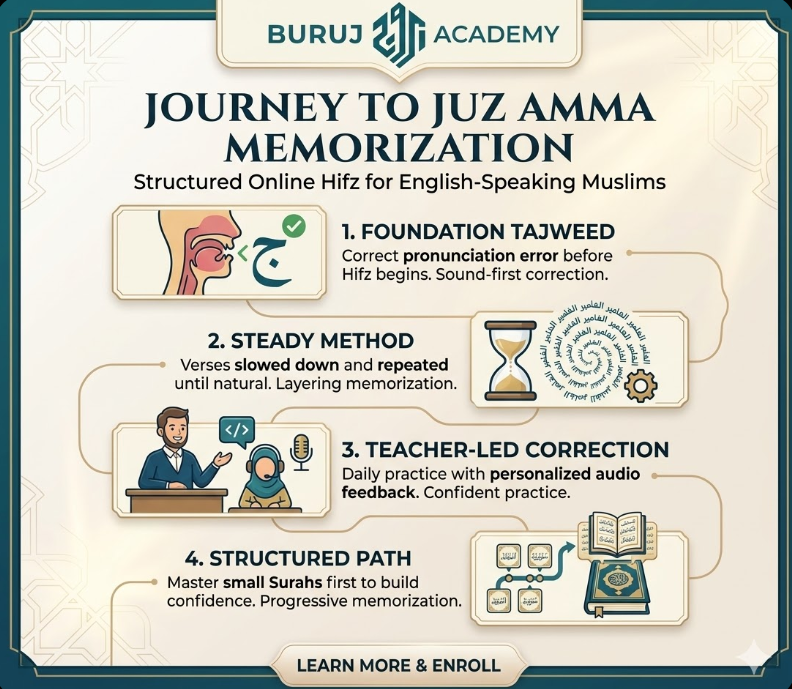
Our Juz 30 Memorization course places Al-A’la within a structured sequence alongside other short, high-usage surahs.
Book Your First Session in Buruj’s Juz 30 Memorization Course
How Reciting Al-A’la Connects to Broader Quran Memorization Goals
Students often ask us how a single short surah fits into a larger Hifz journey. We explain that surahs used in daily and weekly prayer, like Al-A’la, tend to solidify faster in memory precisely because of repeated exposure through Salah itself.
This is one reason we recommend students combine structured memorization schedules with their existing prayer habits, rather than treating Hifz and daily Salah as separate tracks.
For guidance on building this kind of integrated approach, see our article on how to memorize Quran faster with practical tips for every learner.
Master Surah Al-A’la’s Recitation with Buruj Academy’s Expert Instructors
Understanding Surah Al-A’la’s authentic virtues is only the beginning; reciting it correctly, with proper Tajweed, brings its full worship value to life.
Buruj Academy’s online Tajweed classes are taught by Ijazah-certified instructors and Al-Azhar University graduates with 12+ years of experience teaching non-Arabic speakers.
Using the Buruj Method’s sound-before-rules approach, students build correct pronunciation from their very first session, guided through personalized 1-on-1 online lessons with flexible 24/7 scheduling.
Real-time correction ensures every makhraj and sifah is applied accurately, not just memorized in theory.
Ready to recite Surah Al-A’la the way the Prophet ﷺ did? Book your free trial lesson with Buruj Academy today.
Take the first step toward this lifelong blessing by enrolling in a program tailored to your pace:
- Online Hifz Program (Comprehensive Quran Memorization)
- Juz 30 Memorization Course (Perfect for focused starts)
- Hifz Classes for Kids (Engaging and interactive)
- Hifz Classes for Adults (Flexible scheduling for busy lives)
- Hifz Classes for Sisters (Private, supportive learning)
- Short Surah Memorization Course (Ideal for daily prayers)
- Hifz Ijazah Course (For advanced students seeking certification)
Don’t let another day pass without moving closer to your goal. Join Buruj Academy today and schedule your free trial session to begin your Hifz journey!
Excel in Your Quranic Studies
Join Buruj Academy and master the Quran with our structured, professional curriculum.
Book Your Free TrialConclusion
Surah Al-A’la’s genuine weight in Islamic worship comes from something more solid than folk claims: a documented, repeated pattern in the Prophet’s ﷺ own nightly, weekly, and yearly prayer life. That consistency, verified across Sunan Abi Dawud and Sahih Muslim, is the strongest testimony to its value.
Its verses on purification and remembrance offer a compact spiritual framework worth returning to often. Learning to recite it correctly, and understanding what is authentically established versus what circulates without a source, keeps that worship both meaningful and accurate.
Frequently Asked Questions About Surah Al-A’la’s Benefits
Is It Authentic That the Prophet ﷺ Recited Surah Al-A’la Daily?
Yes, in the Witr prayer. Sunan Abi Dawud 1423, graded sahih, confirms the Prophet ﷺ regularly recited Al-A’la, Al-Kafirun, and Al-Ikhlas across the three rak’ahs of nightly Witr prayer.
Can Surah Al-A’la Be Used for Physical Healing or Ruqyah?
No specific hadith prescribes it for healing. Some scholars view its themes of divine comfort as generally soothing, but this is a spiritual reflection, not an authenticated medical claim.
Which Surah Is Commonly Paired with Al-A’la in Prayer?
Surah Al-Ghashiyah. The Prophet ﷺ paired these two surahs specifically in Friday and Eid prayers, as recorded in Sahih Muslim 878a with an authentic chain of transmission.
What Is the Main Theme of Surah Al-A’la’s Verses on Success?
Self-purification. Verse 87:14 states that true success belongs to whoever purifies themselves, immediately followed by verse 15 linking that purification to remembering Allah and performing prayer.