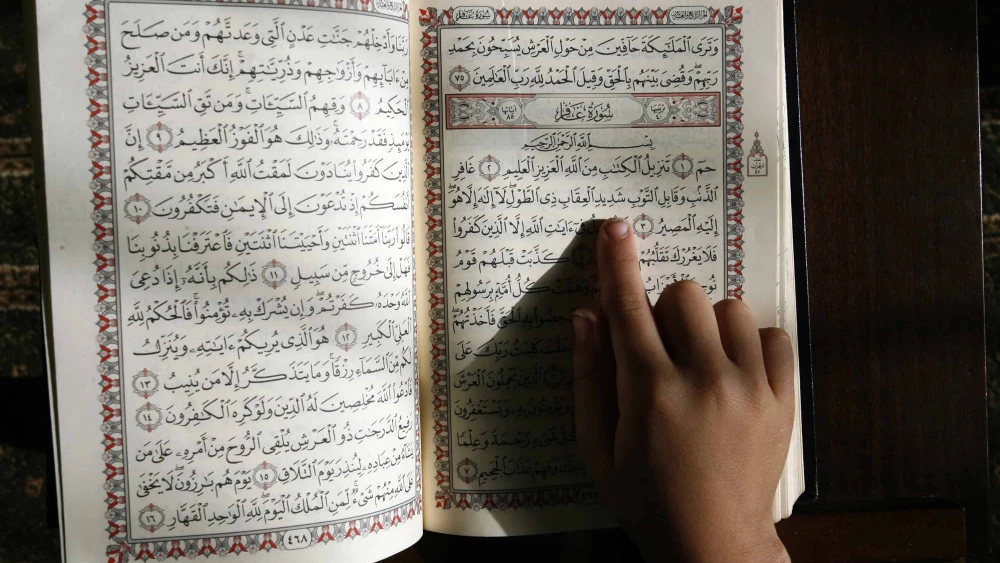
 Quran
Quran

| Key Takeaways |
| Consistent daily practice of even 10–15 minutes improves Quran reading fluency faster than long infrequent sessions. |
| Learning Tajweed rules systematically — starting with makharij — eliminates mispronunciation habits before they become permanent. |
| Listening to a qualified reciter daily trains your ear and significantly accelerates reading accuracy for non-Arabic speakers. |
| A qualified teacher providing real-time correction is the single most effective accelerator for Quran reading improvement. |
| Tracking progress through measurable milestones — verses, pages, rules mastered — maintains motivation and reveals weak areas. |
Many non-Arabic speaking Muslims reach a frustrating plateau — they can sound out letters but feel stuck, slow, or uncertain whether they are reading correctly. That gap between basic reading and confident, accurate recitation is exactly where focused, structured practice makes all the difference.
Getting better at reading the Quran requires five things working together: correct foundational sounds, Tajweed knowledge, daily consistency, qualified feedback, and a structured revision system. When these elements align, improvement becomes measurable and steady — not a matter of willpower alone.
Table of Contents:
1. Fix Your Foundational Sounds Before Anything Else
The single most important step for improving Quran reading is ensuring your Arabic letter sounds are correct at the source. Mispronounced letters — especially letters like ع (Ayn), غ (Ghayn), ح (Ha), and خ (Kha) — cannot be corrected by reading faster or more often. They require deliberate attention to makharij al-huruf (articulation points), the precise locations in the mouth and throat where each letter is produced.
Why Makharij Matter More Than Any Other Step
Every Arabic letter emerges from a specific makhraj — some from the lips, some from the tip of the tongue, some from the back of the throat. When a letter is produced from the wrong point, every word containing it is technically mispronounced, regardless of how smoothly you read.
In our sessions at Buruj Academy, we consistently find that adult beginners who struggled for years with reading fluency made dramatic improvements within weeks — not by reading more, but by first correcting three or four foundational sounds.
How to Isolate and Correct Problematic Letters
Work through the Arabic alphabet systematically and identify which letters feel uncertain or unnatural. For each one:
| Letter Group | Makhraj Location | Common Error for Non-Arabic Speakers |
| ع / غ | Deep throat (pharyngeal) | Replacing with a glottal stop or “ah” sound |
| ح / خ | Mid-throat / soft palate | Replacing with English “h” |
| ص / ض / ط / ظ | Emphatic letters (tongue raised) | Pronouncing as non-emphatic equivalents |
| ق | Deepest point of tongue | Replacing with a “k” sound |
Correcting these sounds first means every minute of practice afterward builds on a solid, accurate foundation.
If you are still at the foundational letter stage, Buruj Academy’s Noorani Qaida Online Course provides systematic letter-by-letter instruction with qualified teachers trained in phonetics and beginner pedagogy specifically for non-Arabic speakers.
Book your FREE trial lesson in the Noorani Qaida course
Read also: How to Complete Quran in 7 Days, 5 Days, or 3 Days?
2. Learn Tajweed Rules Systematically to Read with Precision
To genuinely improve Quran reading fluency, you must understand Tajweed — the set of rules governing how the Quran is correctly recited. Tajweed is not an advanced add-on. It is the foundational framework that distinguishes correct recitation from guesswork.
The word Tajweed (تجويد) means “to do well” or “to make excellent.” Practically, it covers rules for letters’ attributes (sifat al-huruf), prolongation (madd), nasalization (ghunnah), and rules triggered by Noon Sakinah, Meem Sakinah, and Tanwin. Each rule governs specific sound interactions that occur naturally in Quranic text.
Which Tajweed Rules to Learn First
Begin with the rules that appear most frequently in recitation:
| Priority | Rule | What It Controls |
| 1 | Noon Sakinah & Tanwin rules (Ikhfa, Idgham, Iqlab, Izhar) | Nasal sounds at letter junctions |
| 2 | Ghunnah | Nasalization length for Noon and Meem |
| 3 | Madd (prolongation) rules | Correct lengthening of vowel sounds |
| 4 | Qalqalah | Echo sound on five specific letters |
| 5 | Tafkhim & Tarqiq | Heavy vs. light pronunciation of letters |
Our Tajweed for Beginners guide walks through the essential rules in logical sequence — an excellent starting reference alongside structured lessons.
For students ready to study Tajweed formally, Buruj Academy’s Online Tajweed Classes apply the Buruj Method — training your ear to hear correct sounds before introducing rule names — guided by Ijazah-certified instructors with 12+ years teaching non-Arabic speakers.
Understanding rules like Ikhfa and Idgham transforms reading from letter-by-letter sounding-out to smooth, rule-governed recitation.
Book Your FREE Trial Lesson to Begin Your Tajweed Journey

3. Train Your Ear by Listening to a Qualified Reciter Daily
One of the most underused tools for improving Quran reading is sama’ (listening). Before you can produce correct sounds consistently, your ear must recognize them as the reference point.
This is especially true for non-Arabic speakers, whose ears have never been exposed to Arabic phonetics in childhood.
Daily listening to a qualified reciter — particularly Sheikh Mahmoud Khalil Al-Husary, Sheikh Mishary Al-Afasy, or Sheikh Abdul Basit Abd us-Samad in Murattal (measured, clear recitation) style — rewires your internal audio reference.
Over time, your own recitation self-corrects toward the model you hear most often.
How to Use Listening as an Active Practice Tool
Passive background listening provides some benefit, but active listening multiplies the effect:
- Verse-by-verse repetition: Listen to one verse, pause, repeat aloud, compare
- Shadow recitation: Read along in the Mushaf while listening, keeping pace
- Error isolation: When your recitation sounds different from the reciter, pause and identify why
In our experience at Buruj Academy, students who spend 10 minutes on active listening daily before their reading practice session show noticeably faster improvement in rhythm, pronunciation, and natural flow compared to students who only practice reading without a listening component.
Excel in Your Quranic Studies
Join Buruj Academy and master the Quran with our structured, professional curriculum.
Book Your Free Trial4. Build a Short, Consistent Daily Practice Routine
Improving your Quran reading fluency is not about occasional long sessions — it is about daily repetition over time. Consistency does more than effort.
A student who reads for 15 minutes every day will outperform a student who reads for two hours once a week, because neural pathways for language and sound are built through repeated, spaced activation.
How to Structure a Daily Quran Reading Session
A 20–30 minute daily session can be divided as follows:
| Segment | Duration | Focus |
| Warm-up listening | 5 minutes | Hear the day’s portion recited by a qualified reciter |
| New material reading | 10 minutes | Read new verses slowly, applying Tajweed rules |
| Revision of previous material | 5–10 minutes | Re-read verses from the past 3–5 days |
| Self-assessment | 2–3 minutes | Note specific sounds or rules that felt uncertain |
The revision segment is often skipped by students, yet it is where real reading fluency is built. Reading new material exposes you to text; re-reading familiar material is where speed, accuracy, and confidence are actually developed.
For students who want to build a structured reading habit alongside memorization, our guide on Quran memorization schedules offers proven frameworks that integrate reading practice and retention effectively.
Discover the Buruj Academy Difference
Step into our virtual classrooms and see how our expert instructors make learning Quran and Arabic intuitive and clear. We focus on overcoming the specific hurdles non-native speakers face, building your confidence and connection with the Quran.
5. Work With a Qualified Teacher for Real-Time Error Correction
Self-study can take you to a certain level, but it has a hard ceiling — you cannot hear your own mispronunciations with the same precision a trained teacher can. This is the foundational reason the tradition of Quran recitation has always been transmitted teacher to student, not through books alone.
A qualified teacher provides three things no app, video, or self-study guide can replicate:
First, real-time correction the moment an error occurs — before the wrong pronunciation becomes a habit. Second, personalized identification of your specific weak points, rather than generic instruction. Third, accountability and progression structure that keeps practice sessions purposeful.
What to Look for in a Quran Reading Teacher
| Quality | Why It Matters |
| Ijazah certification | Proves unbroken chain of transmission in correct recitation |
| Experience with non-Arabic speakers | Understands the specific errors English speakers make |
| Al-Azhar or equivalent training | Ensures scholarly grounding in Tajweed science |
| Structured lesson progression | Prevents random, unfocused instruction |
Buruj Academy’s Quran Reading Course places students with Al-Azhar-trained, Ijazah-certified instructors in personalized 1-on-1 online sessions, with flexible scheduling and individualized correction built into every lesson.
Book a FREE trial session with one of Buruj’s Azhari Quran tutors

6. Slow Down Your Reading to Build Accuracy Before Speed
One of the most common mistakes we observe is students reading too fast — rushing through text to cover more pages rather than reading each verse correctly. Speed in Quran recitation is a byproduct of accuracy, not a goal in itself.
The Prophet Muhammad ﷺ was instructed: “And recite the Quran with measured recitation.” (Al-Muzzammil 73:4) — “وَرَتِّلِ ٱلۡقُرۡءَانَ تَرۡتِيلٗا” — Wa rattilil-Qur’āna tartīlā — indicating that deliberate, careful recitation is the standard, not rapid completion.
Tarteel (measured recitation) is the prescribed mode of recitation for the Quran. It requires giving every letter its proper duration, applying all relevant Tajweed rules, and maintaining a pace at which correct pronunciation is possible.
How to Increase Reading Speed Without Sacrificing Accuracy
Speed develops naturally when you follow this sequence: correctness first → consistency → familiarity → speed.
- Read each new verse three times: once slowly identifying every rule, once at moderate pace, once trying to maintain rules at natural speed
- Track words per minute on a familiar passage monthly — speed will increase measurably over weeks of accurate practice
- Never advance to new material until current material is read correctly, even if slowly
Our step-by-step guide to reading Quran with Tajweed details this progression system in full.
Excel in Your Quranic Studies
Join Buruj Academy and master the Quran with our structured, professional curriculum.
Book Your Free TrialRead also: How to Finish Reading Quran in 10 Days (And in 15 Days)?
7. Track Your Progress with Measurable Reading Milestones
Improvement that is not measured is often improvement that is not noticed — leading students to feel stuck even when they are advancing. Building a simple tracking system transforms Quran reading practice from an act of faith into a visible, motivating progression.
Simple Progress Metrics for Quran Reading Improvement
| Metric | How to Track | Frequency |
| New verses read correctly | Mark in Mushaf or notebook | Daily |
| Tajweed rules applied without prompting | Self-check list | Weekly |
| Reading speed on familiar passage | Time 10 verses | Monthly |
| Teacher-identified errors | Record in log | Every lesson |
| Rules still requiring conscious effort | Running list | Weekly update |
Milestones do not need to be elaborate. Even marking which Surah you can now read confidently — compared to three months ago — provides the motivational evidence that practice is producing results.
For students whose reading improvement is connected to a memorization goal, the first-time Quran reading guide and our Hifz program overview provide complementary frameworks that integrate reading fluency with retention.
Excel in Your Quranic Studies
Join Buruj Academy and master the Quran with our structured, professional curriculum.
Book Your Free TrialStart Improving Your Quran Reading with Buruj Academy’s Expert Instructors
Getting better at reading the Quran is entirely achievable — with the right guidance, structured practice, and qualified correction at every stage.
At Buruj Academy, our Online Quran Recitation Course is designed for exactly this purpose, guided by Al-Azhar University graduates and Ijazah-certified instructors with 12+ years of experience teaching non-Arabic speakers worldwide. Every student receives:
- Personalized 1-on-1 sessions with individualized correction
- The Buruj Method: sound-before-rules, consistency-before-speed
- Flexible 24/7 scheduling for busy adults and parents
- Clear, measurable progression from beginner reading to confident recitation
Take the next step in your learning journey today by enrolling in one of our specialized programs:
- Online Quran Classes
- Online Quran Classes for Beginners
- Online Quran Classes for Adults
- Online Quran Classes for Ladies
- Online Quran Classes for Kids
- Quran Reading Course
- Quran Recitation Course
- Online Ijazah Course
- Online Qirat Course
Book your free trial lesson today and discover exactly where your reading needs focused work — and how quickly it can improve with the right teacher beside you.
Frequently Asked Questions About How to Get Better at Reading Quran
How Long Does It Take to Improve Quran Reading Noticeably?
Most students notice measurable improvement in reading accuracy and fluency within 4–8 weeks of consistent daily practice with qualified teacher correction. The timeline depends on starting level, daily practice duration, and whether Tajweed rules are being learned alongside reading. Students who practice 15–20 minutes daily consistently improve faster than those with longer but infrequent sessions.
Can I Improve My Quran Reading Without a Teacher?
Self-study can improve basic letter recognition and reading pace, but without a qualified teacher, mispronunciations often go undetected and become deeply ingrained habits. A trained teacher identifies errors you cannot hear yourself. For foundational sound correction and Tajweed rule application, real-time human correction is strongly recommended — especially for non-Arabic speakers.
How Do I Improve Quran Reading Fluency and Speed?
Reading fluency and speed develop as a natural result of accuracy — not as a separate goal. Focus first on reading each verse correctly with proper Tajweed rules applied. Re-read familiar material regularly, as speed increases through familiarity. Track your reading pace on a passage monthly — consistent, accurate readers see natural speed increases within 6–10 weeks.
What Is the Best Time to Practice Quran Reading Daily?
The time of Fajr (after dawn prayer) is widely regarded in Islamic tradition as especially blessed for Quran recitation, and many students find their focus is clearest in early morning. Practically, the best time is whichever slot you can protect consistently every day. Even 15 focused minutes at a fixed time daily produces faster improvement than longer sessions at irregular intervals.
How Do I Know If I Am Reading Quran Correctly?
The most reliable indicator is feedback from a qualified teacher during live recitation. Self-assessment tools include: comparing your recitation to a trusted Murattal recording of the same verses, noting whether your Tajweed rules are applied or guessed, and checking whether letters like ع, ح, ص, and ق sound clearly distinct from their non-emphatic equivalents. Regular teacher assessment is the only method that catches errors you cannot perceive yourself.